

#Agronomist, PhD, Research Responsible, #Crop Adviser. Passionate with #mycorrhiza, #agriculture, #trees, #microbiology. Views are mine.
España
Joined January 2015
- Tweets20.4K
- Following14.7K
- Followers13.4K
- Likes13.8K






Pinned Tweet
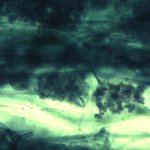
Arbúsculos, vesícula, hifas de la #micorriza arbuscular (hongo #Rhizophagus irregularis) en una raíz de #tomate tratado con #MYCOGEL (400X). #WeDoBio
Arbuscules, vesicle, hyphae of the #arbuscular #mycorrhiza in a #tomato root treated with MYCOGEL. #RockYourCrops #KimitecGroup

Maxym Reva retweeted

Since the start of Russia’s war against Ukraine, millions of people have suffered from its atrocities. Civilians have been killed in their homes, prisoners of war tortured and executed, and Ukrainian children taken from their families.
Russia has destroyed entire neighbourhoods and cities and attacked hospitals, schools, universities, cafés, shops, and kindergartens.
In recent months, Russia’s attacks against civilians have only intensified. Because Russia must face real consequences for its actions. It must receive a clear signal that its crimes will not go unpunished.
We call on our partners to step up pressure on Russia and strengthen support for Ukraine’s defence.
Photos: ivashchenko.reporter / Instagram; I Want to Live; libkos / Instagram; Evgeniy Maloletka / AP Photo; Dimitar Dilkoff / AFP; Natalie Zubar; Radio Liberty; National Police of Ukraine

Maxym Reva retweeted

Рятувальник витяг з-під завалів 5-річну Зоряну. Через кілька днів він прийшов до неї в лікарню - і почув те, від чого стислося серце.
Вона лежала під плитами, затиснута, з переламаною рукою, але жива - бо мама накрила її своїм тілом.
Це сталося у Прилуках, коли російська ракета влучила у п’ятиповерхівку. Зоряна з родиною жила на четвертому поверсі. Вибух скинув їх униз, під стіну будинку, і присипав плитами.
Рятувальник Павло Левченко прибув на місце одразу. Перше - розвідка. У сусідньому під’їзді знайшли жінку з вибитими очима, передали медикам - вона була жива.
Далі - тиша. Та сама хвилина тиші, коли всі мовчать і слухають. Під завалами почули звуки.
Павло почув голос жінки. Розкопав, дістав, передав швидкій. Це була мама Зоряни. Вона сказала: "Там ще моя маленька дитина".
Він знову почав копати. Побачив волосся. Зняв свою каску, надів на дитину, щоб не сипалося каміння. І почав говорити з нею:
- Як тебе звати? Що болить?
- Нічого не болить.
Нога затиснута, рука скручена. Але вона трималася. Бо мама накрила її собою. Тато був у сусідній кімнаті - він загинув.
Павло працював біля зруйнованої п’ятиповерхівки майже добу. А вранці повернувся знову - і прийшов до Зоряни в лікарню.
- Бачиш, яка ти сильна. Маленька, але сильна, - сказав він їй.
А вона тихо, йому на вухо:
- Це той, хто мене врятував.
Зараз Зоряна в лікарні. З нею працюють психологи. Вона малює, грає, усміхається. Головне - вона жива.
Ось кому потрібно ставити пам’ятники - звичайним рятувальникам.
Тим, хто голими руками розгрібає бетон, щоб почути дитячий голос під завалами. Тим, хто не спить добу, хто знімає свою каску, щоб захистити чужу дитину, хто приходить у лікарню зі словами: "Ти маленька, але сильна".
Вони - справжні герої нашого часу.

Maxym Reva retweeted
Millions of people around the world rely on Ukrainian food exports. Yet Russia is deliberately attacking fields, storage facilities, ports and vessels that help Ukrainian food reach global markets.
Despite constant danger, Ukrainian farmers continue to sow and harvest.
Russia’s attacks on Ukraine’s food and the infrastructure that carries it to the world must end. Protecting global food security means protecting these supply routes and holding Russia accountable for its crimes.
Maxym Reva retweeted

A fifteen-year-old Anastasiia Tkachenko wearing traditional Ukrainian attire in Merefa, Ukraine, on August 21, 1939...
She looks composed. Almost serene. She is dressed in an embroidered vyshyvanka (traditional shirt) and a dark vest, adorned with layered beaded necklaces (zardanky or coral beads) and a floral headpiece (vinok) with long ribbons hanging down the sides.
But the girl in this photograph had already survived something that had destroyed much of her family.
During the Holodomor of 1932–1933, Anastasiia lost her father, a younger brother, and two sisters. She and her brother Semen survived because their mother found work at an orphanage in Merefa and was able to bring her two remaining children with her.
The famine devastated communities across Soviet Ukraine. In Merefa alone, records associated with the Holodomor memorial project identify roughly 1,200 victims and a mass burial site near the railway station.
Anastasiia was still a child when she lived through it.
Six years later, someone pressed a camera shutter.
That ordinary moment is what makes this photograph so difficult to look at once you know the story. She is not pictured starving. She is not surrounded by ruins. She is simply fifteen, dressed beautifully, standing in front of a camera after surviving years that had already taken her father and three of her siblings.
And she kept living.
Anastasiia Tkachenko survived into old age, dying on April 26, 2018, at 94.
The photograph remained in her grandson’s family archive, a small surviving piece of one woman’s life after enormous loss.
#archaeohistories

Maxym Reva retweeted

“The real danger is not that computers will begin to think like men, but that men will begin to think like computers.”
- Sydney J. Harris
Human progress has always been closely connected to the tools we create.
From humanity’s early mastery of fire to the emergence of language, writing, and increasingly sophisticated machines, every major innovation has expanded what people are capable of while gradually influencing the way we think, work, and live.
Artificial intelligence represents the newest stage in this ongoing evolution. Rather than something entirely separate from humanity, AI is a creation of human ingenuity—one that greatly increases our ability to analyze information, identify patterns, and develop new ideas with remarkable speed and scale.
Whether AI ultimately becomes harmful or beneficial will largely depend on how people choose to develop and use it. The technology itself does not possess intentions of its own.
Many of the greatest concerns surrounding AI come from human choices: placing too much power in the hands of a small number of organizations, becoming so dependent on technology that independent judgment weakens, or failing to adjust education and economic systems as society changes.
At the same time, AI is already serving as a valuable partner in areas such as scientific research, medical diagnosis, engineering, and creative work. Its greatest potential may come from using it to strengthen and extend human abilities rather than attempting to replace them.

Maxym Reva retweeted
🇪🇸#Micorriza arbuscular dentro de una #raíz de #álamo tratado con #MYCOGEL. #WeDoBio
🇬🇧#Arbuscular #mycorrhiza within a #poplar #root treated with MYCOGEL (100X). #RockYourCrops
🇫🇷#Mycorhize #arbusculaire dans une #racine de #peuplier traitée avec MYCOGEL. #KimitecGroup

Maxym Reva retweeted
5 вересня минулого року російський дрон вбив фермера "Рембо", Олександра Гордієнко, атакувавши його авто просто в полі.
Він самотужки вивіз з полів 5000 протитанкових мін, збив мисливською рушницею більше 100 дронів. А потім продав mercedes дружини і купив два РЕБи.
Олександру присвоїли звання Героя України посмертно. А справу його життя тепер продовжує його 30-річний син, - Віктор Гордієнко, голова Асоціації фермерів Херсонської області. І він теж постійно із рушницею в руках.
Збір урожаю для фермерів Херсонщини перетворився на перегони зі смертю. Вони тепер тут усі немов "фермери Рембо".
Віктор каже: "Вже у кожного фермера або когось поранено, або вбило, або комбайн чи трактор згорів... А у нас із чотирьох комбайнів залишився останній".
Віктор: "Підтримки ніякої немає, державні компенсації не працюють. У поле вже ніхто не хоче виходити, щоб зараз скосити соняшник. Нерви здають. У мене на сьогодні 900 тисяч доларів боргу. Це с*ака повна. А в Києві можна розумничати й питати: "А чого ви не релокуєтесь?.."
Завжди у повному спорядженні: шолом, бронік, рація, рушниця. Без цього, каже, не виїжджають і не виходять із дому.
Співпрацюють з військовими. Та й вже самі частково як військові. Віктор жартує, що тут найкраща протиповітряна оборона - це фермери з РЕБами.
Збирання врожаю проходить під РЕБами. Виїжджає ціла команда, щоб закрити це поле. Стрілки, хлопці з рушницями, “чуйками”, раціями. У кожного тракториста в кабіні є рушниця.

Maxym Reva retweeted

Why so many Ukrainians speak russian? Let me explain.
But first, let me ask you a question: Why do Irish and Scotts speak English, Catalans and Basques speak Spanish, Bretons speak French, etc. You probably know the short answer. But let me put a longer one. Ukrainian language was banned by russia 134 times! Here are most notable events:
1720: A decree by Tsar Peter I banned the printing of books in Ukraine.
1753: A decree by Catherine II prohibited teaching in the Ukrainian language.
1768: A decree from the Synod of the russian Orthodox Church called for the confiscation of Ukrainian primers from the population.
1775: Closure of Ukrainian schools after russian troops destroyed the Zaporizhian Sich.
1830-1840s: russification of Ukraine intensified. Even the very name "Ukraine" was prohibited to be used.
1889: At an archaeological congress in Kyiv, it was permitted to read papers "in all languages except Ukrainian."
1895: A ban on Ukrainian children's literature.
1914: A ban on the Ukrainian press.
1938: Mandatory study of the russian language was introduced throughout Ukraine. At the same time, there was a mass closure of national schools, and the prestige of the Ukrainian language declined.
1926-1939: Physical deportations of Ukrainian activists accused of nationalism. Four family members on my mother’s side were deported.
1929: Newly printed dictionary of Ukrainian was prohibited.
1960s: Arrests and extermination of the young generation of Ukrainian intelligentsia.
130 years ago, Ukrainian-speaking area was not limited by Ukraine, but also some parts of russia and Belarus spoke it (see the red area, that's the result of russian Empire census in 1897, when people identified themselves by the language). So, when someone says that some region of Ukraine is “russian speaking”, read the above list again. It’s a miracle that Ukrainian language even survived, and many people sacrificed their lives for it.


Maxym Reva retweeted

It’s a mourning day in Ukraine. Russia brutally murdered 15 people yesterday in Kyiv. We will never forgive … #StopRussia #StandWithUkraine

Maxym Reva retweeted

👵 A grandmother was simply sitting on a bench in the courtyard of her own building — the Russians saw her with a drone and killed her.
I will not even speak about morality, because where Russia is, there can be no talk of morality. I will raise the value of a Ukrainian life to Russia: how much is a Russian — including companies that operate in Russia — willing to pay for the killing of an ordinary civilian Ukrainian, even if it is a child or a grandmother? An FPV drone with a camera costs Russia from $200 to $1,500. That is how much Russians pay for the murder of one Ukrainian.
Maxym Reva retweeted
Вона годувала чужих дітей у бункері з двох банок консервів на 30 літрів води. І обіцяла готувати, поки буде жива.
Коли 4-річний хлопчик не зміг вимовити її ім'я, вона сказала: "Давай я буду Тьотя Суп".
І це прізвисько стало її другим ім'ям на два місяці під землею - там, де діти малювали піцу, а вона годувала їх із нічого.
Наталії Бабеуш - 35. Вона з Маріуполя. На "Азовсталь" вони з чоловіком втекли, коли стрілянина почалася просто у їхньому дворі. Із собою у них було - дві котлети та півхлібини.
У бункері опинилося до 40 людей, із них вісім дітей - від 2,5 до 17 років.
Наталя не має власних дітей. Вона сказала: "Мій чоловік сирота, і я не хотіла, щоб ще якась дитина втратила маму. Тому я сказала людям, що поки жива, то готуватиму". Тому вона взяла ложку і стала кухаркою.
Її кухню двічі розбомбили. Тоді чоловіки змайстрували мангал на сходах бункера.
Основний раціон був - суп із двох банок консервів на 30 літрів води. Дорослі їли менше, діти - більше. Їли раз на день. Решту часу пили чай і спали, щоб не думати про голод.
Але Тьотя Суп творила дива. З гречки й консервів - гречаники. З рису й цукру - рисові кульки. З прокислого молока - вергуни.
Коли знайшлося чотири картоплини - деруни. А коли вдалося роздобути лаваш, сир і горошок - народилася бункерна піца. Діти були в захваті.
Найбільше Наталю вразило інше. Вона спекла млинці з варенням - а діти закричали, що це тістечко.
Дорослі плакали, бо розуміли: десь у світі діти їдять справжні тістечка, а тут - млинці стали святом.
Воду кип'ятили по кілька разів. Милися снігом. Зв'язку не було.
Наталя написала номери батьків на внутрішньому боці кофти - на випадок, якщо її знайдуть мертвою.
Їх евакуювали раптово. Давали п'ять хвилин. Вона забрала дитячі малюнки та ту саму ложку з дому.
Коли вона потрапила у Львів, то в їдальні вона просила половину порції, бо в бункері цього вистачило б на п'ятьох. Вона їла і плакала над тарілкою.
Зараз займається волонтерством на заході, допомагає переселенцям та військовим.
А зовсім недавно стало відомо, що історія Наталії стане основою документального фільму про життя людей в укриттях "Азовсталі" та про жінку, яка в надзвичайно складних умовах намагалася підтримати тих, хто був поруч.


Maxym Reva retweeted

In the 1990s, Canadian ecologist Suzanne Simard made a groundbreaking discovery that challenged everything we thought we knew about how forests work. While studying managed forests in British Columbia, she noticed something puzzling: when birch trees were removed to promote the growth of valuable Douglas firs, the firs did not flourish as expected, they actually struggled and grew more slowly.
Determined to understand why, Simard traced the movement of nutrients using radioactive carbon isotopes. What she found was astonishing. Trees were actively sharing resources through vast underground fungal networks known as mycorrhizae. These delicate, thread-like fungi connect the roots of different trees across the forest floor, forming a complex web that allows the exchange of carbon, water, nutrients, and even chemical signals, sometimes between entirely different species.
She discovered that older, larger trees often serve as central "hubs" or "mother trees," supporting younger saplings by redistributing vital resources and helping the entire ecosystem remain resilient. When these key trees are removed, the underground network weakens, and the health of the remaining forest declines.
Simard’s research overturned the traditional Darwinian view of forests as battlegrounds of ruthless competition. Instead, she revealed a far more sophisticated reality: forests operate as highly cooperative systems where trees communicate, support one another, and even warn neighboring trees about threats like drought, disease, or insect attacks.
What appears to the human eye as a silent, still forest is, in truth, a vibrant, interconnected living network, built not on isolation and rivalry, but on deep connection and mutual aid.

Maxym Reva retweeted
🇪🇸Micorriza arbuscular en una raíz de lechuga (100x, 40X). #WeDoBio
🇬🇧Arbuscular mycorrhiza in a lettuce root treated with MYCOGEL.
🇫🇷Mycorhize arbusculaire dans une racine de laitue. #RockYourCrops
🇺🇦Арбускулярна #мікориза: салат, корінь.
agrocode.com/en/producto/myc… @KimitecGroup


Maxym Reva retweeted
Los #inoculantes #micorrícicos arbusculares tienen 3 tipos de propágulos, 3 tipos de formulaciones y existen al menos 12 formas de aplicación de los hongos micorrícicos arbusculares (HMAs) en la #agricultura. Su uso crece cada año. helvia.uco.es/handle/10396/2… vía @Univcordoba

Maxym Reva retweeted

russian occupation is not peace.
This is Yanina Akulova, a 38-year-old massage therapist from occupied Melitopol.
russians kidnapped, tortured, and forced her to confess to a terrorist attack that never happened. Then they sentenced her to 9 years in prison.
She wrote to her mother:
"They beat me so badly that I no longer cared what happened to me. My whole body was covered in bruises."
Her only "crime" was loving Ukraine.
She evacuated her daughters because she refused to let them attend russian schools. Then she returned home to rescue her pets.
At a russian checkpoint, occupiers claimed they had "found explosives" in her car. She disappeared for two months.
When she finally appeared on russian TV, she was wearing a mask — likely to hide the signs of torture.
She has lost 15 kg in captivity. Her asthma has worsened. Her children have spent nearly four years without their mother.
This is what russian occupation really means.
Don't ever call it "peace."
Don't look away.
Don't stay silent.
Share Yanina's story. Demand freedom for every Ukrainian civilian imprisoned by russia.
Maxym Reva retweeted

The village of Kleshcheyevka, Donetsk region. This is how all the villages captured by the Russian army look like. No buildings, no people.
The Russian government calls this "help for the people of Donbas."
Maxym Reva retweeted

I missili balistici che anche stanotte hanno colpito Kyiv erano equipaggiati con schegge metalliche. Queste schegge sono completamente inutili se lanciate contro edifici. Il loro unico scopo è quello di aumentare il numero di morti e feriti

