

Joined November 2025
- Tweets531
- Following59
- Followers307
- Likes5.1K
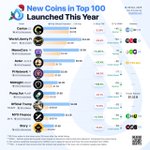




COINS LAUNCHED THIS YEAR AND IMMEDIATELY RANKED IN THE TOP 100 COINS
Someone will say that it was impossible to foresee, but that would be a lie, I have been tracking $night for more than 2 years. If you know where to look, then the chances of a successful search increase.


#CARDANO: ACTIVE ADDRESSES
The total number of daily active addresses $ADA is around ~22k per day.
I understand that other blockchains L1 have arbitration bots (like Solana) and the like that create most of the transactions. But if it's only about $ADA, it still looks too small at the moment. I would like to see more, and I hope that Midnight will significantly increase activity in Cardano

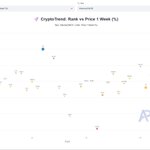
$NIGHT RANKS 1ST IN TERMS OF PRICE GROWTH OVER THE PAST WEEK AMONG TOP-50 CRYPTOCURRENCIES
At the same time, $ADA looks worse than the broader market. Could this signal a flow of liquidity from ADA to NIGHT? Yes, this is theoretically possible. Need to monitor correlations more closely in the coming months and probably research more on-chain data.

$FLOW COIN CONTINUES TO PLUMMET, FALLING BY MORE THAN -30% IN THE LAST HOUR. Without any news, the coin just rolled away, updating the bottom on October 10th...
And you know what? I made a post about the problems with the number of coins and the lack of liquidity in the market, and this is just the beginning. If you are still sitting in technologically weak blockchains, memcoins, etc., you still have time to think about switching to cryptocurrencies such as BTC, $ADA, and some others.


NO SHILLS. NO SHITCOINS. STOP IT.
Have you ever thought about why the crypto market is fundamentally different from the previous 3 cycles? I suggest you think about it together.
As of December 13, 2025, there are 59,381,191 tokens out there, if you count most blockchains SOL, XRP, BASE, TRON etc. These tokens are created with the support of blockchains and, in fact, there is a struggle for liquidity between blockchains. With every new token launch, the existing liquidity in the market gets split up-it's not hard to imagine where that's heading in the end. And exchanges looking to make a buck will obviously speed up the process by listing any token that can cough up a relatively small fee for it.
What was it like before?
During the ICO boom in crypto's second cycle (2014–2017), there were only 13,200 cryptocurrencies by the end of 2017. In the institutional cycle (2018-2021), when funds and big institutional investors started piling in and placing major bets on various altcoins, the number of altcoins ballooned to 3,124,000 by the end of 2021.
The logical question is, what's next? Will the number of tokens keep growing? I don't think so-we're close to a breaking point. You've probably already heard about the lightning-fast crashes in the altcoin market this year; that happened precisely because of the lack of liquidity. Market-making trading bots try to keep prices stable with minimal spreads using HFT orders, but you can't fake liquidity-it's just not enough.
I figure most altcoins will keep plunging -70% and more in a matter of hours, and this will happen over and over again until exchanges start mass delistings. Liquidity has gotten smarter; in 2026, the US is rolling out a softer monetary policy, but please, don't think your shitcoin is going to pump-that's deceptive. At least to me. I plan to focus on the strongest decentralized cryptocurrencies based on fundamentals, such as $ADA & BTC.
Be smart.

Is CARDANO not good enough? Nobody uses it?
But what if... Bybit exchange has become the leader (TOP1) in the daily volume of spot trading: $9.2 billion! according to CoinGecko
The main driver is the surge in popularity of the $NIGHT token in the Cardano ecosystem

$ADA Aggregated Liquidation Levels Heatmap
Main long positions: $0.34-0.32.
Main short positions: $0.52-0.48.
Check out this detailed liquidation levels chart for $Cardano on Alphractal. It breaks down potential long and short liquidation clusters across key price points, helping investors spot high-risk zones. Perfect for navigating volatile markets

NYTHING THAT CAN GO WRONG, WILL GO WRONG. (Murphy's Law)
Why do people buy $SOL, name at least one reason? If speed is important to you, then why do you need a blockchain at all, use Visa or Mastercard?
(!) Blockchain must be decentralized in the first place.
I probably will never understand the point of integrating a centralized system into an RWA, jeopardizing the centralization of the real business network. And this is not the kind of centralization where everything is controlled by the company itself, you need to trust the blockchain here.
Just one high-profile crash, which is (!) BOUND to happen with a centralized blockchain, will completely overestimate all blockchains. People who integrate blockchain into their companies will start thinking with their heads first.
Time is not on your side, study $ADA.


Cybercriminals have stolen more than $2.7 billion in cryptocurrency throughout 2025, according to new data highlighting a turbulent year for digital assets...
Be smart and explore cold wallets in my research. It is especially recommended for HOLDers $ADA
WHERE TO STORE $ADA AND OTHER? RANKING OF COLD #WALLETS.
Ledger | Trezor | SafePal | ELLIPAL | BitBox | Keystone | OneKey.
As soon as you bought Cardano or other cryptocurrencies, the following question appears on the radar: "what is the best way to store them?".
"Not your keys- not your crypto"
Remember this, my friend! This is the most important thing in the storage formula. There will only be COLD wallets in the post, in the future I will also analyze hot wallets for Cardano although it is less secure. I will also talk about the multisig storage method - this is the best way. But today it's only Cold wallets, we're getting started.
Calculation Methodology
The methodology involves a comprehensive evaluation of hardware wallets across 6 categories totaling 100%. Each category has a weight (%), with sub-parameters (%) summing to 100% overall. Scores are assigned as "score / max" (e.g., 9.5 / 10), where max matches the sub-parameter's weight. Scores are based on objective data: device specs, reviews, audits, user feedback, and competitor comparisons (from sources like official sites, Reddit, X, YouTube, Ledger com, Trezor io). High scores reward superiority (e.g., full air-gapped isolation boosts "Resistance to hacking attacks"); low scores penalize weaknesses (e.g., closed code lowers "Open-source code"). Total score is the sum of all parameter scores (out of 100 max). Comparison covers 7 wallets: Ledger Nano Gen5, Trezor Safe 7, SafePal X1, ELLIPAL Titan 2.0, BitBox02 Multi, Keystone 3 Pro, OneKey Pro. This analysis is the author's personal research. I don't pretend to be 100% true. DYOR
Conclusions
Based on scores, the best wallet is Trezor Safe 7 (95.6/100) due to full open-source code, strong security, and reputation. Followed by OneKey Pro (93.4) and Keystone 3 Pro (90.8), excelling in air-gapped design. Ledger Nano Gen5 (80.9) and ELLIPAL Titan 2.0 (82.3) lag due to partially closed code and vulnerabilities. SafePal X1 (85.0) is a budget option; BitBox02 Multi (84.0) suits open-source fans. Choose @Trezor if your long-term reputation and a combination of many advantages (including Cardano support) are important to you. If you need maximum security - @KeystoneWallet.
Save it to your bookmarks. Thanks.
#CARDANO EXCHANGE RESERVE
Key Trends from the Chart (2023–2025)
$ADA reserves crash to $618M USD by Dec '25 from $905M peak, mirroring ADA's 70% YTD wipeout to $0.38. Bearish signals amid sell pressure, but Midnight launch & US ETFs & possible US reserve inclusion offer hope. Are you HODL or sell?
*Info: Reserve on Exchanges (Stacked, USD)
This chart represents the total value of assets held on centralized exchanges, denominated in U.S. dollars and stacked by exchange. It provides a financial overview of how capital is distributed among major platforms, reflecting investor sentiment and liquidity trends. Significant increases or decreases in USD-based reserves may signal changing risk appetite, institutional inflows/outflows, or responses to market volatility.


#CARDANO: VALUE IN TOP 100 ADDRESSES
Between 2021 and 2025, the number of the 100 largest Cardano wallets increased the total balance from 7.1 billion ADA to 10.5 billion $ADA.
*Value in Top 100 Addrs - the sum of all native units held by the richest 100 addresses at the end of that time interval.

ALT #CARDANO: VALUE IN TOP 100 ADDRESSES
#CARDANO IN THE TRENDS OF 2025
AMONG CRYPTOCURRENCIES
I suggest you read the theses on Cardano and trends in 2025. The data for analysis is taken from the Alphractal platform, but there is also a double check in Google Trend.
Okay, I'm starting. Chronological Trends for $ADA (Dark Blue Segment).
Cardano's search interest strongly correlates with the black line (Pearson's r ~0.8 visually), peaking during upward trends (like..., early 2025 bull run) and dipping in downturns (e.g., late 2025). This implies searches are event-driven, reacting to price volatility or news (like...,, Charles Hoskinson's statements on Midnight not "killing" Cardano but expanding it 10x). If the line represents Bitcoin price (plausible given scales matching historical BTC charts extended to 2025), Cardano benefits from broader market rallies but doesn't decouple significantly.
Cardano ranks mid-tier among peers-behind Bitcoin, Ethereum, and Solana in average share (~12% vs. 35%, 18%, 14% respectively) but ahead of XRP, Chainlink, etc. Its growth in 2025 (doubling from 2024 averages) highlights resilience, possibly from unique features like privacy-focused Midnight or sustainable PoS model amid energy concerns for PoW chains.
This analysis positions Cardano as a solid but not dominant player in search trends, with growth tied to ecosystem maturity and market cycles.

Circle has printed $18,000,000,000 worth of #USDC since the massive collapse of the market on October 10.
Today, the next +500,000,000 USDC
...there is an opinion that this is the very "new money" that the crypt needs to start the altseason (but this is not accurate).
1
11
418
#CARDANO YEAR IN REVIEW 2025
PROGRESS 2025
February
Voltaire Era (fully decentralized governance)
February
Catalyst 2025 Project launch
May
Bitcoin integration into $ADA DeFi demo at Bitcoin 2025 Conference
September
Updated Foundation Roadmap announcement (focus on DeFi, stablecoins, RWAs)
October
Next-level smart contract verification update
November
Leios 24/7 development tracker launch
December
Input Output rebrand
December
Ouroboros Omega consensus advancement
December
Midnight $NIGHT token launch
December
UPLC 2025 programming language updates
December
Interchains multi-chain connectivity progress

CALENDAR OF EVENTS IN $BTC
THE HISTORY OF #BITCOIN
December 22–28, 2025.
Dec 22
Meeting. MetaPlanet holds an extraordinary general meeting to discuss proposals on future share issuance (Bitcoin-holding company similar to MicroStrategy).
Dec 22
Trading Event. Bitcoin price prediction market settlement on Robinhood (What will the price of Bitcoin be on Dec 22, 2025 at 9pm EST?).
Dec 23
Major News. US Q3 GDP preliminary estimate release, which may influence Bitcoin through broader market sentiment and dollar strength.
Dec 23
Major News. US Consumer Confidence Index and Durable Goods Orders data release, potentially impacting risk assets like Bitcoin.
Dec 24
Major News. Shortened US trading session ahead of holidays; lower liquidity may lead to sharper Bitcoin price movements.
Dec 25
Events. Christmas Day; US markets closed, crypto trading continues with reduced volume and potential for erratic Bitcoin moves.
Dec 26
Trading Event. Approximately $23 billion worth of Bitcoin options expire, likely increasing volatility and short-term price swings.
__________________
THE HISTORY OF BITCOIN
__________________
December 22, 2014
Bitcoin Skepticism
AOL publishes the article "Will Bitcoin Survive 2015?": 1 BTC = $319.24
December 23, 1913
Federal Reserve Act
The Federal Reserve Act of December 23, 1913, which established the Federal Reserve System and granted it authority to issue Federal Reserve Notes (later converted into U.S. dollars) and Federal Reserve Bank Notes, used as legal tender in the United States. This law essentially became the foundation for the greatest deception in history.
December 23, 2012
Hal on the First Bitcoin Transaction
Hal Finney admits to spending the coins he received from Satoshi in the very first Bitcoin transaction in history.
December 25, 2021
Can Bitcoin Survive the Apocalypse?
Bitcoin Magazine publishes the article "Can Bitcoin Survive the Apocalypse?"
December 26, 2022
Is the Lightning Network Centralized?
A post titled "Is the Lightning Network Centralized?" is published.
December 27, 2008
Bit Gold
December 28, 2017
The Complete History of Bitcoin Consensus Forks
BitMEX Research publishes the report "The Complete History of Bitcoin Consensus Forks."

ALT CALENDAR OF EVENTS IN $BTC THE HISTORY OF #BITCOIN December 22–28, 2025.
1
4
319
Weekly Spot US Crypto ETF Flows: December 12-19, 2025
Here's a quick snapshot of net flow changes for major spot US crypto ETFs over the past week, showing shifts from prior values with percentage changes.
There have been large outflows this week (BTC, ETH), but the overall global trend towards ETF purchases remains. It is noted that LTC is not interesting for ETF clients for 3 consecutive weeks, the negative dynamics persists. HBAR and DOGE are experiencing low interest amid a general downturn in the market
The next big step is approving US spot ETFs for $ADA and $AVAX. In my opinion, we could see this play out in the next few months. This will create additional pressure from buyers and may directly have a positive effect on the price in the long run.
Weekly (WoW) Total Net Inflow (USD):
BTC ETFs: +$286.6M → -$497.05M (-273%)
ETH ETFs: +$208.94M → -$643.97M (-408%) SOL ETFs: +$33.60M → +$66.55M (+98%)
XRP ETFs: +$93.57M → +$82.04M (-12%)
LINK ETFs: +$4.42M → +$3.62M (-18%)
HBAR ETFs: +$0.76M → $0.00 (-100%)
DOGE ETFs: +$0.17M → $0.00 (-100%)
LTC ETFs: $0.00 (0% for 3 weeks in a row)

ALT Weekly Spot US Crypto ETF Flows: December 12-19, 2025