
MD, PhD student @helsinkiuni @FIMM_UH
Helsinki, Finland
Joined November 2021
- Tweets29
- Following88
- Followers50
- Likes142



Max Tamlander retweeted

Extremely happy that our work got accepted in #ATVB! We functionally profiled 400 biobank samples, linking cellular lipid uptake, storage and handling to treatment outcomes of statin therapy and residual cardiovascular risk.
ahajournals.org/doi/10.1161/…

Max Tamlander retweeted
Out now! We established a platform for functional characterization of gene variants, providing insight for 315 LDLR variants. Functional data improves cardiovascular risk assessment, going beyond "pathogenic" and "benign" groups. Important for #FH
sciencedirect.com/science/ar…
Max Tamlander retweeted

Great attendance to the session on genetic contributions to cancer risk at @eshgsociety
Going on right now!!!
Very happy to chair this session together with @MaxTamlander
Thanks to the presenters for very good talks and the audience for excellent discussion.

Max Tamlander retweeted

What is the cardiovascular significance of adipose tissue surrounding the heart? Our study, published in @JAMACardio today, asked this question: jamanetwork.com/journals/jam….

Max Tamlander retweeted

In our latest paper @JCO_ASCO, we demonstrate how inherited factors perform for risk assessment in real-life breast cancer screening data. A special focus is on a breast cancer polygenic risk score (PRS), which is a more recently identified inherited risk factor.
🙍🏽♀️ 117,252 women in @FinnGen_FI
☢️693,730 breast cancer screenings from the nationwide Mass Screening Registry within @CancerRegFi
doi.org/10.1200/JCO.23.00295
Details follow in the thread:

Max Tamlander retweeted

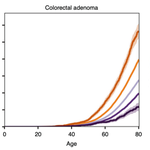
Hereditary risk of colorectal cancer should be assessed in a more comprehensive way, shows a study led by @FIMM_UH researchers. Using comprehensive genetic information, the age and frequency of screening could be tailored based on individual risk.
helsinki.fi/en/news/genes/ge…

Max Tamlander retweeted
Perinnöllistä suolistosyöpäriskiä tulisi arvioida nykyistä kokonaisvaltaisemmin, uusi suomalaistutkimus osoittaa. Kattavaa geenitietoa hyödyntämällä seulontojen aloitusikää ja tiheyttä voitaisiin räätälöidä yksilöllisen riskin mukaan.
helsinki.fi/fi/uutiset/geeni…
Max Tamlander retweeted
Out on @medrxivpreprint! We set-up an analysis platform and characterized >300 low-density lipoprotein receptor gene variants. Hope this will help in diagnosis of #FH and shed light on the genetic complexity of #hypercholesterolaemia @HelsinkiUniMed
medrxiv.org/content/10.1101/…

Max Tamlander retweeted

We are excited to share a pre-print of the flagship project of @intervene_eu!
medrxiv.org/content/10.1101/…


Max Tamlander retweeted
FIMM researcher @MaxTamlander presented at #ESHG2023 yesterday his work on the development of a polygenic risk score for colorectal cancer to identify individuals at high risk of developing the disease and hence improve current screening strategies. medicalnewstoday.com/article…

Max Tamlander retweeted
A very warm welcome to our new Director @samrip! 🎉
helsinki.fi/en/hilife-helsin…

Max Tamlander retweeted
I’m excited to share our publication on the genetics🧬 of central serous chorioretinopathy, now out in @JAMAOphth. We identify overlap with age-related macular degeneration and support roles for the choroidal vasculature and the complement system.
jamanetwork.com/journals/jam…

Max Tamlander retweeted

Polygenic risk scores or family history? New work from @samrip & colleagues that leverages @FinnGen_FI data concludes 'why not both'?
https://xitter.cf/t.co/9DN90MmG4R
Max Tamlander retweeted
What do polygenic risk scores (PRS) add to the seemingly simple question about family history (FH)?
We explored the interplay of PRS and FH in over 20 common diseases, showing that they have little overlap and provide complementary information.
Link: https://xitter.cf/t.co/xjgzEr7tf1

Max Tamlander retweeted
Much of cross-ancestry transferability research on polygenic risk scores (PRS) looks at lab values or other continuous traits.
What about diseases, which are more important for clinical utility? 🏥
Our work now out in @CellGenomics tackles this question.
https://xitter.cf/t.co/52cnx4RnNU
