

Evol biologist and behavioral ecologist. Sociality. Lifespan. Klarman Fellow at Cornell, working with Kern Reeve and Mike Sheehan. Director @AnimalBehavPod
Joined January 2017
- Tweets1.7K
- Following281
- Followers715
- Likes1.9K




Pinned Tweet
Out today in @CurrentBiology!
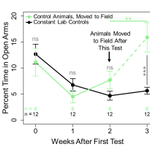
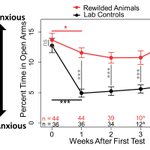
Living in a naturalistic environment blocks and resets the development of fear responses to a well known anxiety-inducing assay.
Exposure therapy for mice! a🧵below
w @IDsignals, Bryson Loflin, @dchangkuo, & Erin Tan
authors.elsevier.com/a/1mH79…

Matthew Zipple 🇺🇦 retweeted

AI experts largely agree about which policies would most reduce catastrophic AI risk.
The Longitudinal Expert AI Panel (LEAP) brings together forecasts from a representative group of over 250 experts that policymakers look to when considering the future of AI: computer scientists, industry figures, top economists, policy experts, and AI risk experts.
We asked panelists to forecast (1) how a menu of policies would affect AI risk; (2) which policies they each support; and (3) which policies they think will be implemented by 2030.
Key findings:
• Despite disagreeing on the level of AI risk, respondents broadly agree on policy
• Respondents believe government policy can substantially reduce catastrophic AI risk
• The most supported policy of those we asked about was the creation of an international body, including the US and China as members, with pre-release authorization power over frontier models
• Some US-only policies are forecast to reduce catastrophic AI risk, but not as much as bilateral policies involving the US and China
• Experts strongly oppose federal preemption and think it would increase AI risk
• The policies experts expect to reduce risk the most are those they think are least likely to actually be implemented
🧵 More, with key insights below:


An exciting career update to share!
Next month I'll be starting as a senior researcher at Rethink Priorities (@RethinkPriors), a think tank focused on promoting and safeguarding present and future human and animal flourishing.
rethinkpriorities.org

So I'm excited to enter a new stage of my career where my daily intellectual contributions will be directly aligned with those convictions.
And I'll be doing so in an ecosystem that values intellectual curiosity, epistemic humility, and evidence-based decision making.
Very pleased to be one of this year's finalists for the Blavatnik Regional Awards for Young Scientists!
We are working to change the way that we do biomedical science, putting the "organism" back in "model organism."

CHEMICAL SCIENCES 🧪 Congratulations to 🥇Laureate Trevor van Eeuwen @RockefellerUniv and Finalists 🥈Andreas Mueller @RockefellerUniv and 🥈Zhihao Cui @Columbia @UCIrvine @UCIChemistry for discoveries spanning hidden DNA, RNA synthesis, and the design of quantum materials

Matthew Zipple 🇺🇦 retweeted

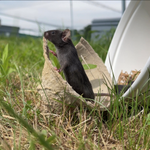
If you give a mouse some freedom: When researchers “rewilded” lab mice to large, enclosed fields, even well-established anxieties in the mice disappeared. @CurrentBiology @CornellNBB @MatthewZipple @NSF @NIH news.cornell.edu/stories/202…

In case this whole rewilding approach is new and you want more:
1. Overview of the system: pubmed.ncbi.nlm.nih.gov/3722…
2. Social competition and luck accelerate the development of individuality and inequality: science.org/doi/10.1126/scie…

3. Biological aging is different outside:
onlinelibrary.wiley.com/doi/…
4. Social status has causal impacts on behavior and survival: royalsocietypublishing.org/r…
5. Male lab mice outside look a lot like wild mice outside. Females look different:
link.springer.com/content/pd…
