

Director of Bitcoin Strategy at @MeliuzBitcoin 🇧🇷 | @TNorth
Joined November 2018
- Tweets2.3K
- Following1.2K
- Followers11K
- Likes6K



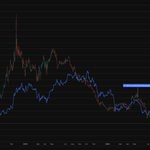

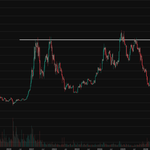

The market knows an AI confidence crisis will ultimately be met with money printing in some form: bailouts, 0% government loans in exchange for equity, etc.
But it will take absolute market turmoil to force that response.
It is my belief that BTC will show major relative strength as markets look through the near-term crisis and sniff out the inevitable print.
Mason retweeted

An AI agent has no bank account. So where does it keep its money?
- Earn in stablecoins, save in Bitcoin, spend on compute
- Why agents need permissionless money
- Why I'd X out tokenized real estate and gold
- Stablecoins are rails, not savings
Sparked by a @JasonPLowery post.
Mason retweeted

I spent 48 hours in SF hanging out with billionaires, data labs and AI founders and execs running $1B to $100B companies.
My observations:
1. Sooo MANY stories of data brokers making like $2M a WEEK selling company data to labs. I can't tell if it's the beginning or a bubble, and I kept wondering which niches are left. Digging into it actively.
2. At dinner, someone asked the table, "If a new model drops next month, does your company get better or worse?" HALF the table went quiet! I think that's the best question to ask about any AI startup right now.
3. The bar people talk about now is hitting $1B in revenue in 12 months (I guess that's the new unicorn?). What I didn't hear much about is retention. AI revenue can come in fast and leave fast, and I think we're going to see a lot of stories of AI companies with huge revenue and terrible retention.
4. It's pretty clear we're living through the reinvention of the computer. The model is the CPU, the harness is the operating system, and skills and plugins are the apps. Thinking about it that way makes it easier to see where the whitespace is.
5. We're maybe 12 months from an agent that can watch you work for a week and then do your job without any instructions. The screen recording plus agent memory plus local model combination makes this possible right now.
6. Agent harnesses feel like the new GPT wrappers, in a good way, especially vertical ones. The best teams I talked to treat the model as swappable. One founder walked me through routing different models to different jobs: one for taste and visuals, a cheaper one for the everyday stuff, another for text.
They use prompts they can move across models over fine-tuning, and A/B test the output on what users actually do with it: do they edit it, export it, share it? A vertical harness is basically four things: the connectors for that industry's data, evals written by people who know the work, rules for what the agent can and can't touch, and a clean screen for a human to review. The model is maybe 20% of it.
7. There's a lot of reverse engineering going on/cloning going on more than I've ever seen. People are decompiling software and rebuilding it with agents, and someone showed a suite of like 10 apps that are worth $5B+ each all that he cloned open source. Me and everyone are still thinking through what it means when software gets this easy to copy.
8. My guess is the value moves to data. If the software can be rebuilt quickly, what's worth paying for in a legacy SaaS company is the years of customer data and workflows inside it. Some SaaS companies are secretly data companies.
Gets me thinking about how do you truly value data for this saas companies? Like if we were buying these dying saas companies at 2x ARR before (as example), maybe there is a better metric. Idk, just thinking out loud here.
9. It feels like a good chunk of legacy software won't make it to the agentic era, especially anything built around people clicking through a lot of screens.
10. Every company I talked to wants to pipe its internal data into one place and expose it to agents through MCP. Then they look at the data and realize it's a mess: five versions of the same customer, old Slack channels, PDFs nobody can search. Cleaning that up feels like a big consulting opportunity!
11. A lot of founders are building the basic building blocks for agents: APIs, data layers and tools. Some of the companies I saw barely have a UI because the main user is an agent. I really believe the startups that build primitives to this agentic era will do extremely well. Building blocks is the best way to think about it.
12. Labs can get plenty of training data, but it's harder to get real examples of agents failing inside companies. Whoever has those logs has something valuable.
13. Someone running a big consumer company told me the next fight is over memory. The model that remembers the most about you wins, and the smartest model matters less than people think.
14. Physical AI came up a lot. Astra I think was the first model that got people into AI can actually do CAD, and I think a lot of people are thinking what does vibe manufacturing really look like. The line I keep thinking about came from a robotics founder: the hardest problems in AI are deployment problems now, not research problems. Their robots work on their own, call a human when they get stuck, and every one of those calls becomes training data.
15. Cybersecurity companies are having a moment and are actually cool companies to build now, especially the ones that clean up after a breach. Every agent with access to your systems is a new door into your company, and a lot of those doors were left open.
16. Some startups are worth more dead than alive now. A shutdown company with 5 years of Slack, email and code can get paid for licensing all of it. I wouldn't be surprised if founders start factoring that into when they shut down.
17. People are starting to talk about monetizing the agent web. It feels really early, but when the most popular user of the internet is an agent, what startups should you be building?
18. I think agent insurance is coming. Once an agent makes an expensive mistake, insurers will want audits before they cover anyone.
19. Several people said the hire they want most is someone with taste who can write evals. The models are getting good at generating ideas, so the hard part is judging which ones are good.
20. New trend I observed: startup raises VC, uses venture dollars to become a creator, startup fails, founder falls back on being a full-time creator and incubates other products bootstrapped.
21. Getting SIGNIFICANT distribution is HARD right now. Founders are sponsoring buses, buying billboards like crazy and throwing parties with famous DJs to get noticed. Kinda feels dotcom era in that sense.
Attention is what's scarce! The growth guy going viral sharing his UGC strategy from Wispr Flow is a good example. It's the sauce everyone wants, and I truly believe there are probably only 50 people on the planet who know how to scale these types of businesses efficiently in this era.
Always good to get that dose of SF. I felt sooo lucky to have such an incredible trip during such an incredible time in building businesses. Surreal in so many ways.
Happy to be home and locked in.
Until next time!


Mason retweeted

He came out from the bear market with:
~ 200k more BTC;
~ 3bln more in USD cash;
~ 1.5bln less convertibles and 0% net debt;
Now the bull market hasn't even started and he is sitting on 15bln unrealised gains.
Remember every single donkey who yelled at the death spiral.

I think the market is underestimating what’s taking shape around $BTC. Here’s why I’m bullish from here.
⚠️ Long post:
If June marked the end of the bear market, BTC appears to have found support near both the power law’s Q0 floor, around $58.5K, and the 200-week SMA.
The power law tracks BTC’s price relative to its age, with Q0 marking the model’s lower historical boundary. I view that boundary and the 200-week SMA as indicators of extreme value. Seeing them converge strengthens my view that June may have marked the bottom.
Now, looking back at the BTC bull market in USD from November 2022 to October 2025, it seems to me that the climax of what was, relatively speaking, a muted bull market was an extended period of distribution around and slightly above the power law trend.
That period began with the Republican election sweep in November 2024, was briefly interrupted by the “Liberation Day” tariffs in April 2025, and ultimately ended with the October 10 leverage-driven wipeout.
The selling occurred largely between $90K and $125K. Around $100K was a huge psychological price target for many original BTC holders. For people who had held through multiple cycles, it was a natural place to take meaningful profits.
Those coins rotated into new hands. The most obvious channels for new demand were the ETFs, particularly IBIT, and corporate buyers, particularly Strategy.
We then entered what may prove to have been a comparatively muted BTC bear market, with a drawdown of a little over 50%. Still painful, but considerably shallower than the major bear markets of previous cycles.
My interpretation is that leverage was flushed out, weaker hands capitulated, excitement and hot money faded, and more BTC moved into the hands of buyers willing to hold through volatility with long-term conviction.
At this point in October 2026, BTC is ranging in the $80Ks, around the Q10 region of the power law model, and looks to me like it is beginning a move back toward the power law trend. The model I’m following puts that trend at approximately $153K by the end of October, and it continues rising over time.
How soon could that happen?
I believe faster than many suspect. Sellers appear increasingly exhausted, and I suspect many prospective buyers are still sidelined, waiting for lower prices that may never arrive. If that is the positioning, it may not take an extraordinary amount of new demand to move price meaningfully higher.
We also see a new narrative emerging as banks and financial institutions adopt digital assets and crypto. My view is that some of this adoption is defensive: they are beginning to recognize how the emerging agentic economy could challenge parts of their business models.
That does not mean every development in digital assets translates directly into BTC demand. But it does mean the financial system has increasing reasons to build and support the infrastructure around this asset class.
Alongside that, we have continued adoption by large asset managers and clear incentives for those firms to grow their Bitcoin funds.
There is also a broader point here. As BTC grows and matures, I expect its volatility to continue declining over time. If that happens, it becomes easier for institutional allocators to hold meaningful positions within their portfolio risk limits. It also becomes more attractive as collateral to support credit, because lower volatility makes the value supporting that credit more predictable.
I think that matters for both direct institutional ownership and the growth of digital credit.
Additionally, I think the market has yet to appreciate the significance of Strategy’s $STRC and Strive’s $SATA. These markets are still very small compared with private credit and high-yield/junk bonds. Yet, in my view, they offer a far more compelling combination of yield, transparency, public market liquidity, and substantial BTC assets supporting the issuing companies’ balance sheets.
The bigger point is what this means for BTC demand.
There is an enormous pool of capital looking for income that may never consider buying BTC directly. STRC and SATA give those investors a different way to participate: investors receive income through preferred equity, while Strategy and Strive can use capital raised through new issuance to accumulate more BTC.
That creates a bridge between traditional income-seeking capital and Bitcoin, a source of demand that did not previously exist in this form.
We have already seen how powerful this can be. During periods of strong issuance, STRC & SATA have raised enough capital to buy several times the BTC mined over the same period. With roughly 450 new BTC mined each day, these channels can absorb the equivalent of the entire new supply and still require existing holders to sell.
If sustained, that is what I would describe as a synthetic supply shock: newly issued financial instruments funding BTC accumulation faster than miners create new coins. The effect on price ultimately depends on how much existing holders are willing to sell.
And this market is still early. Even a small shift from private credit and high-yield allocations could represent substantial growth for digital credit and meaningful additional BTC demand.
These structures have also operated and survived through a meaningful BTC drawdown. Now, cash reserves and, in Strategy’s case, preferred stock buybacks give management additional tools to navigate volatility and support their securities. I see that as an important step in their development.
If BTC’s volatility continues to decline, I believe that strengthens the proposition further. A more stable treasury asset makes the balance sheet supporting these preferred securities easier to underwrite, just as it makes BTC easier for institutional investors to allocate to directly.
That is the longer-term dynamic I’m watching: a maturing asset becoming more attractive to institutional capital, alongside a growing credit market that gives income-seeking capital a new route into BTC demand.
Finally, BTC/gold is becoming increasingly interesting to me after what I view as a multi-year period of consolidation since 2022. A sustained move higher in that ratio would be an important confirmation of the broader thesis.
Ultimately, I believe BTC is a better form of gold and is competing with it to become a global, nonsovereign store of value.
Look at the scale of gold’s revaluation since 2022. Using rounded estimates, gold now represents approximately $29 trillion in value, compared with roughly $1.7 trillion for BTC.
To me, that illustrates how large the opportunity is. BTC does not need to replace gold to become substantially more valuable. It needs to earn a greater share of the demand for a scarce store of value outside sovereign currency systems.
So where do I think we are going?
Given that BTC never traded meaningfully and sustainably above the power law trend during 2024 and 2025, it would not surprise me to see it reach the upper quantile bands over the next few years.
The muted prior cycle does not guarantee that outcome. But it is a scenario I think becomes increasingly plausible if institutional demand keeps growing and the supply available for sale continues to tighten.
In the model I’m following, Q90 for January 2028 is approximately $332K, or roughly a $6.7 trillion market capitalization. That is a moving reference point: Q90 is lower at earlier dates and continues rising as we move further into 2028 and beyond.
Those levels could also become psychologically important for people who accumulated BTC between 2020 and 2023. Someone with an average cost between $20K and $40K may look at prices between $200K and $400K as an opportunity to realize something close to a 10x return.
Others will be looking further ahead, perhaps toward $1 million, and will have little interest in selling at those levels.
We cannot know exactly where the next major wave of distribution will emerge. But I think the same process will continue: some long-term holders take profits, and ownership broadens as new buyers arrive with different time horizons and reasons to hold.
My view is that we may have just worked through one of those major transfers of ownership.
If June was the bottom, BTC is emerging from it with stronger holders, a more developed institutional market, new narratives, and an entirely new bridge to income-seeking investors.
That is why I think a return to the power law trend, and potentially a move toward Q90 over the next few years, is worth taking seriously.
Power Law Model - porkopolis.io

Mason retweeted

One of the biggest misunderstandings in finance is that credit or derivatives can be used to suppress the long term price of an asset.
This is complete nonsense.
The same talking point is now being said against Digital Credit.
The truth is that if more dollars go into an asset, then its price goes up, all else equal. It really is that simple.
Digital credit financializes Bitcoin and makes it easier for more dollars to go into Bitcoin. Hence it helps the Bitcoin price.
Again, it really is that simple.
Please ask anyone who claims "financialization hurts the asset" why every large company eventually decides to financialize by tapping into capital markets via an IPO.
Is it because they want their company value to be suppressed or is it because they want their company to receive more dollars?
You will almost always get nonsensical answers about manipulating the tape, spoofing, paper supply, unbacked claims, etc... all to avoid answering the simple question of why someone would ever financialize if financialization is so terrible for the price.
And of course this is because there is no answer. It's just a baseless claim by attention-seekers.
Mason retweeted

The word digital credit created by Saylor is nothing like the credit that Luke is referring to here.
This is a comprehensive resource on to help you think through credit on a bitcoin standard: epochvc.io/pdf/Bitcoin-Banki…

IMO more Bitcoiners should spend more time on understanding that if "digital credit" is developed it will ensure BTC never goes to $1m
That may even be the point of "digital credit."
But Bitcoiners would be well-served to study "credit gold" that began in London in mid-80s
Why stop at 3-5%?
What if the agent swept cash into tokenized digital credit paying ~12%, monitored the issuer's balance sheet 24/7/365, and collected the dividend every single day?


Mason retweeted

We are going to learn how many systems only work today because they are built around friction that will no longer exist soon.



Mason retweeted

BDO, the world’s 5th largest accounting network, notes industries are built on assets: airlines deploy aircraft, banks allocate capital, and software firms monetize IP. Bitcoin can similarly be a foundational asset around which businesses are built. bdo.com/insights/assurance/b…

Bond holders, y’all seeing this?

Great to welcome @jakepaul to the Treasury Department today.
Jake’s path from content creator to entrepreneur and professional boxer is a distinctly American story. 🇺🇸🇺🇸🇺🇸


