

Founding member of @DormRoomCap. Market participant (equities/options). Health/fitness. Likes/Retweets are not an endorsement.
USA
Joined October 2013
- Tweets26.5K
- Following828
- Followers897
- Likes59.2K






Pinned Tweet
The Path to Becoming a Millionaire lnkd.in/dZMrwVR
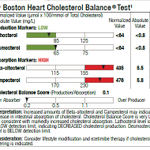
Direct proof of general vessel-wall weakening is sparse; most data are associative or from cell/animal work, and intensive-lowering trials show mixed or minimal hemorrhagic signals.
CC: @Drlipid @MohammedAlo @theproof @NutritionMadeS3

I used to think cholesterol was simple. High is bad. Low is good. Take a pill. Problem solved.
Then I read the Korean study. 14.9 million people. Nine years of follow up. No one on statins.
And the result was a U-shape.
Very low LDL. More cardiovascular death. Very high LDL. More cardiovascular death. The safest zone sat right in the middle.
How can both extremes kill you if the number itself is the problem?
Because the number was never the problem.
Low LDL weakens your blood vessel walls. Cholesterol builds every cell membrane in your body. It makes your hormones. Drive it to the floor and the body cannot maintain itself. The vessels get fragile. They rupture.
High LDL in someone with insulin
resistance, chronic inflammation, and a damaged arterial wall is dangerous. Not because LDL attacked the wall. Because it got trapped inside a wall that was already broken.
But here is what the system never tells you.
A lean, active person eating real food can have LDL of 300 and be one of the healthiest people in the room. High HDL. Low triglycerides. No inflammation. Clean insulin. The LDL is high because their body is running on fat and transporting energy efficiently. Not disease. Metabolism.
Same number. Completely different biology.
Two people sitting in the same doctor's office. Same LDL on the lab report. One needs intervention. One does not. But both get handed the same prescription.
Because the system was built to treat the number. Not understand the environment the number lives in.
Stop chasing numbers. Start understanding your body.
Jake H retweeted

The most disciplined people aren't fighting their emotions; they've just rearranged them so that doing the "right" thing feels easy.
“Shit happens in life. It always has and always will. The question is how we bounce back when it does.”
Shit Happens. Here's How to Bounce Back.
(via @Michael_Easter)
twopct.com/p/how-to-recover-…


"Elite" fitness = 5x lower all-cause mortality than low fitness!
In Mandsager et al. (2018), the elite group averaged 13.8 METs at the end of a treadmill test (~48 ml/kg/min VO₂ equivalent).
How rare is that level of fitness?
A VO₂max approaching 50 in your 70s is well beyond the 99th percentile, i.e. <1 in 100 people.
And yes, in that context...
"Elite" = elite endurance-athlete levels of training!
Better get to work.

Social Security retirement trust fund will run dry in 2032 unless Congress acts cnn.com/2026/06/09/politics/…


According to its latest annual report, @SocialSecurity can pay 100% of scheduled benefits through 4Q2032, one quarter earlier than projected last year … by 2033, with estimated $0.18 trillion in funds remaining, the program would be able to cover only 78% of benefits
@DataArbor

Social Security Is Running Out of Time. What Happens Then? | Social Security faces benefit cuts by 2032. Here’s how the next Congress might respond.
morningstar.com/retirement/s…

“The mistake would be to conclude either that thousands of positive experiences prove something works or that, because those experiences aren’t randomized controlled trials, they tell us absolutely nothing.”
What If the Plural of Anecdote Is Data? - @Brady_H
physiologicallyspeaking.com/…


Two people have died from black market "ret" peptides (retatrutide). Most of these unapproved drugs come from China. wsj.com/health/pharma/chines…
@kowsmann @saraashleyo

"The next time someone tells you that a gray-market peptide is a remarkable therapy that pharmaceutical companies refuse to develop because they have no financial incentive to do so, I would encourage you to be extremely skeptical."
(via @PeterAttiaMD)
peterattiamd.com/gray-market…

“The pattern is always the same: striking results in mice, a cheap pill available today, & a human trial that's coming soon. That’s the shape of it, worth recognising the next time a capsule promises to do what only a real study can prove.”
microvitamin.com/blogs/artic…

On what wellness influencers and longevity clinics are selling
pewresearch.org/data-labs/20…
statnews.com/2026/10/06/hosp…


No major RCTs have shown net harm from lowering LDL-C below specific thresholds. Trials like FOURIER and ODYSSEY achieved levels <20-40 mg/dL with continued ASCVD benefit and no excess cancer, cognitive issues, or overall adverse events.
CC: @Drlipid @MohammedAlo @theproof

A Giant Korean Study of 15 Million People Just Blew a Hole in the “Lower LDL Is Always Better” Story
Imagine tracking almost 15 million adults for nearly nine years and counting every death from heart disease and stroke. That’s exactly what Korean researchers did with 14.9 million people who weren’t even taking cholesterol drugs. What they found doesn’t match the simple message that “the lower your LDL, the safer you are.” Instead, the risk formed a U-shape. People with very low LDL died more often from cardiovascular causes, people with very high LDL also died more often, and the sweet spot sat right in the middle.
For overall cardiovascular death the lowest risk landed between about 90 and 149 mg/dL. Below that range or well above it, deaths went up. The pattern changed depending on the exact problem. For heart attacks and blocked arteries the best zone was lower (around 70–114 mg/dL). For some types of brain bleeds the risk kept falling only when LDL stayed higher. In plain terms, driving LDL as low as possible protected against one kind of death while raising the risk of others.
When the scientists looked only at the higher range (100 to 300 mg/dL) they still saw a clear rise in heart-attack deaths as LDL climbed. Each jump of about 40 mg/dL raised the chance of dying from ischemic heart disease by roughly 26 percent. But that rise was weaker in women and in older adults than in younger men. Even people in their late 70s and early 80s still showed some extra risk from higher LDL for heart attacks and ischemic strokes, yet the overall picture never became “lower is always safer.”
The study is huge, it followed real people instead of just guessing from lab tests, and it only looked at folks who were not already on statins. That makes the U-shape harder to wave away. Doctors still treat high LDL when people already have heart disease or several risk factors, because the top end of the curve is real. But the data also show that pushing every healthy adult toward rock-bottom LDL numbers is not free. Too low carried its own price in this massive population.
The takeaway is simple and uncomfortable: LDL cholesterol is not a one-way street. In nearly 15 million Koreans the safest zone for dying of cardiovascular disease was not the lowest number on the lab report. Both extremes cost lives. That single finding from one of the largest studies ever done keeps forcing the same awkward question—how low is actually low enough, and for whom?

“The big thing you need to understand is that there is no such thing as a “normal” rate of interest.”
What’s the Right Level of Interest Rates For the Economy?
(via @awealthofcs)
awealthofcommonsense.com/202…

A really good listen IMO:

Ever listen to a podcast episode so inspiring that you feel like you could run through a wall after listening? This is one of those episodes.
In 2025, Brian Driscoll became "accidental director" of the FBI through a clerical error.
Then he was asked to hand over the names of thousands of FBI employees who worked the January 6 investigations, a list that could have put their careers and safety in jeopardy.
He resisted and became a legend in the bureau. We talked about what pushing back cost him, and why he calls “it is what it is” the most accepted form of surrender.
We discussed:
-How Brian became the accidental FBI director
-The request for the names of thousands of agents
-From 9/11 to investigating the mob in NYC
-Lessons from the elite Hostage Rescue Team: be brilliant at the basics
-Getting fired with no reason given, and why standing up was worth it
-The motorcycle journey that came next
Listen or watch it here on @Substack
twopct.com/p/the-accidental-…

Jake H retweeted

Nearly two-thirds of builders said immigration enforcement is affecting their labor force, up from 23% in March and 13% a year ago, according to a September John Burns Research & Consulting survey.
“We’re almost dead in the water because our workforce is gone,” said Scott Brannock, president of Jacksonville-based Tidewater Homes and the Northeast Florida Builders Association.
“We have national builders who are missing projections, losing hundreds of thousands of dollars because they have slabs sitting on the ground and no one to frame.”
wsj.com/us-news/the-immigrat…



Jake H retweeted
No negotiating with your lazy self. Sure, rest and recovery as needed. But don’t deliberate unnecessarily. Action. @jockowillink

Stop negotiating with yourself when the alarm goes off:
The alarm goes off and there is no debate. No negotiating. Sort of robotic - the thing goes off and you do what you're supposed to do.
Then go work out. Break a sweat and you will feel better and you will get energy from it. That is a guarantee.
The only way it goes the other direction is going psycho hard: lift, run, surf and jujitsu in the same day. That is not a normal day.
@jockowillink on @hubermanlab
Jake H retweeted

Her tenure was less than one Scaramucci.

Breaking: Katie Zacharia is out as White House press secretary, a week after Trump announced her appointment on.wsj.com/47k5IF8

