

This page is monitored during normal business hours (9am to 5pm). Please see our guidelines for use here: https://xitter.cf/t.co/udN5fU9tkh
- Tweets4.2K
- Following677
- Followers1.1K
- Likes146




ALT Promotional image by Safe Transport Victoria titled "Boat Handling 101: Retrieving," featuring a boat tied to a wooden dock with calm waters.

ALT Graphic illustrating important steps for using a boat ramp safely. Text advises careful alignment with the trailer, securing the boat with a winch, and vacating the ramp quickly to finish securing the boat. Icons include an arrow and numbered points for clarity. Text reads: This is an important skill that should be practised at a quiet ramp. The key points: • Align the centre of your vessel to that of the trailer; proceed carefully up the trailer until the winch or safety chain can be secured • Secure a line to both the bow and stern to control the boat as you use the winch if you are not confident about driving your vessel on to the trailer • Vacate the ramp as quickly as possible and park in the appropriate preparation area to finish securing the vessel for towing."

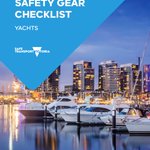
ALT Cover of a 'Safety Gear Checklist' carousel by Safe Transport Victoria, featuring an image of yachts docked at a marina with a city skyline in the background during twilight. Text reads: "Safety Gear Checklist".

ALT Image showing a "Yacht Checklist" with icons and text describing essential items for different sailing conditions: coastal and offshore, close to shore, enclosed bays and inlets, and inland lakes. Items listed include lifejacket, fire extinguisher, waterproof torch, and chair with lifejacket requirements varying by location. A note on fire extinguisher quantity is based on the vessel's length or electrical system.

ALT Safety equipment requirements for yachts, categorized by yacht location: Coastal offshore (>2 nm from coast), Coastal inshore (<2 nm from coast), Enclosed estuaries and bays, and Inland lakes and dams. Icons represent lifebuoys, torches, V sheet, bilge pumps, fire extinguishers, distress flares, life jackets, and radios, with labels showing their mandatory or optional status depending on the location.

ALT Image showing a Yacht Checklist divided into three columns for different types of waters: Coastal (more than 2 nm offshore from coast), Coastal (less than 2 nm from shore), and Inland (bays, lakes, and dams). Each column lists equipment like VHF Marine, identify or larger vessels, registered EPIRB, and one short range radio station with minimum 25 watt output, with icons indicating if they are mandatory or optional depending on the water type.


ALT Person next to a boat on rough waters, with text overlay stating "World Drowning Prevention Day".


