

Ph.D. student at the Brain and Sound lab (@tania_barkat) at @unibasel_en. Interested in how the brain learns. Avid reader.
Zurich, Switzerland
Joined February 2020
- Tweets120
- Following417
- Followers292
- Likes628



Pinned Tweet
Preprint alert! 🚨 Our latest study from the Brain&Sound lab (@tania_barkat) on Curriculum Learning(CL) is now live. We investigated how sequential acquisition of increasingly complex tasks (Easy → Difficult) enhances learning efficiency. 🐁 🧠
1/2

Curriculum Learning: sequential acquisition of task complexity enhances neuronal discriminability biorxiv.org/cgi/content/shor… #biorxiv_neursci
Maria Shujah retweeted

When does modular structure emerge in neural networks?
What are the consequences of this structure for learning and behavior?
New work with @StefanoFusi2 answers these questions and more: doi.org/10.1101/2024.09.30.6…
see 🧵below (1/11)
By analyzing neural activity, we uncovered how relevant task features are abstracted across stages, providing key insights into the neural correlates of CL. We are so excited for the community’s feedback on this project!
Lots more on this subject coming up. Stay tuned. 🙌🏽
2/2
Just got back from the @AllenInstitute ‘s SWDB’24. It was intense, challenging & absolutely worth it! Truly amazed by how much can be uncovered when brilliant minds come together. Cracking the brain’s code was never a solo gig. A big thanks to the incredible organizers & TAs! 🧠


Let’s face it, science is tough. So it’s important to join a lab that has an incredibly supportive team AND is stocked with (mostly) top-notch jokes. You’ll find both at the A-lab. I did my masters thesis with Alessio and I can’t recommend working with him enough! 😊

Hello! Are you highly motivated to investigate hippocampal spatial codes using "miniscopes" in mice (how cliché)? Then, join us as a Postdoc 🥼 ! We are a small lab @LIN_Magdeburg with a ton of experience in very hard experiments that rarely work... 👇

A moment from my talk on Curriculum Learning at the Basel Neuroscience Workshop yesterday. Grateful for the opportunity to exchange insights with the dynamic neuroscience community in Basel. Such a great place to brew science!

Maria Shujah retweeted

Excellent new study led by Sebastian Reinartz: primary sensory cortices do not merely relay stimulus information, but contribute to the perception of elapsed time.
doi.org/10.1038/s41467-024-4…
Officially at the halfway mark of my Ph.D. journey. So much learned, so much more to discover. Year 3, I am diving deep(er) into the learning conundrum. Hoping for a year with more eureka moments and less ‘why won’t this code run’! 🧠
#phdlife

Fascinating work @PValerio_
Congratulations! 👏🏽

Happy to share that a study developed during my #PhD has just been published in @ScienceAdvances!
We shed a light on how the brain develops an understanding of surprising sounds and how experience can influence such development 🧠👇
science.org/doi/10.1126/scia…

Recently, the brain & sound lab went for a retreat in the black forest where we discussed fallacies in neuroscience and machine learning tools we could explore in the coming academic year. All this with the backdrop of breathtaking views and knee-deep snow. ❄️ ⛄️
@tania_barkat


Maria Shujah retweeted

ChatGPT use shows that the grant-application system is broken go.nature.com/3rVYO7J
Just concluded a fantastic Ph.D. retreat in the Swiss mountains with the DBM fellows. The intellectual exchange, the stunning landscape and the honour of winning the Golden Pipette award for the best talk all have me feeling reengerized for the exciting challenges ahead🥇🏔️🧬 – at Morschach, Switzerland


Presenting our new lab member - a high pitched, sometimes aggressive, face recognizing robot that is oddly attracted towards images of Elon. Never imagined we would be making robots but here we are. Thanks to Neurokit by @Cajal_Training. We had SO much fun building this! 🤖

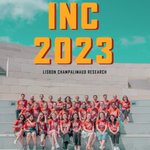
INC 2023 was like neuroscience on steroids. Very intense yet so rewarding! Thank you @Cajal_Training for this incredible opportunity.
The last 3 weeks will forever be a core memory.


The truth is that I belong to the small percentage of Pakistani women who get the opportunity to pursue primary education, let alone tertiary. For years I’ve only been able to silently acknowledge this disparity but by joining PAGE, I look forward to contributing to the change. – at Switzerland

PAGE Ambassadors for Girls' Education are the backbone of our work in supporting and promoting girls' education. We are very pleased to welcome @MariaShujah to PAGE Family. With her support we will be able to support more girls in Pakistan and reduce gender parity in education.

Maria Shujah retweeted

I have faced this glass ceiling as a citizen of a developing country since the start of my Ph.D. I am applying early for a visa for #CVPR2023, apparently, there is a 197 days processing time from Switzerland. Does someone know if they speed it up for conference presenters? @CVPR
