

Mara Predator Conservation Programme uses a research-driven conservation approach to conserve predators in the Greater Mara Ecosystem. | Kenya Wildlife Trust 🦁
Maasai Mara, Kenya
Joined January 2014
- Tweets2.1K
- Following124
- Followers3.4K
- Likes1.2K



Mara Predator Conservation Programme retweeted

Honoured to partner with @WRTIKenya, @KWSKenya, and @LionRecovery to advance homegrown ecological leadership and work toward a sustainable annual carnivore monitoring training for the continent.
@MaraPredator 🦁

The Institute has called for sustained investment in scientific capacity and collaboration to strengthen lion monitoring and conservation across Africa.
The call was made during the closing ceremony of the International Training Workshop on Lion Monitoring Using the Spatially Explicit Capture–Recapture (SECR) Method, held at Maasai Lodge, Kajiado County.
The two-week training, held from September 28 to October 8, 2026, brought together practitioners from nine African countries to build technical capacity in scientifically robust lion population monitoring.
The closing remarks by the Institute's Director, Dr Patrick Omondi, were delivered by Dr Shadrack Ngene, Head of the Biodiversity and Ecosystems Dynamics Department.
He commended the workshop’s practical approach, which combined classroom-based learning with intensive field training. Participants undertook a nine-day live-lion survey in Nairobi National Park, working in three teams conducting surveys twice daily.
The field exercise enabled participants to apply SECR methods in a real-world setting, from data collection and management to analysis and generation of lion population estimates for Nairobi National Park.
"The 2026 survey marks the fourth systematic lion survey conducted in the park, following surveys in 2018, 2021 and 2022. Previous surveys estimated lion densities at 18.52, 26.90 and 27.74 lions per 100 square kilometres, respectively, providing a valuable baseline for comparison with the latest findings," he said.
The Institute in collaboration with partners, will work towards establishing a sustainable annual short course to expand access to advanced carnivore monitoring skills across Africa.
We thank the training team led by Dr Nic Elliot, Dr Arjun Gopalaswamy, Kasaine Sankan and Dr Monica Chege, as well as the Lion Recovery Fund, Kenya Wildlife Service and Kenya Wildlife Trust for their support.


Mara Predator Conservation Programme retweeted

The science of lion monitoring is moving from theory to practice as the International Training Workshop on Lion Monitoring Using the Spatially Explicit Capture–Recapture (SECR) Method combines intensive classroom sessions with hands-on fieldwork.
Participants have taken their learning into Nairobi National Park, conducting a live-lion survey designed to test and apply key monitoring techniques in real-world conditions.
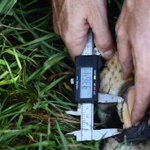
The field sessions are giving participants practical experience in individual lion identification, camera-trap deployment, detection and identification protocols, and systematic data collection, critical building blocks for generating robust wildlife population data.
The workshop is also equipping participants with analytical skills through sessions on Introduction to SECR Analysis using R. Here, participants are learning how spatially referenced detection data can be transformed into population estimates, while examining a fundamental question in wildlife monitoring: Was an animal not detected, or was it detected but not correctly identified?
This distinction between detection failure and identification failure is crucial when interpreting monitoring data and assessing the reliability of population estimates.
Other sessions are taking participants back to the fundamentals of population ecology and wildlife monitoring, covering individual identification protocols, camera-trap methodologies, data management and approaches that extend beyond conventional search encounters.
With every survey day comes new observations, new data and new lessons turning scientific concepts into practical tools for better lion monitoring and conservation.


Mara Predator Conservation Programme retweeted
"As scientists, we talk to ourselves too much. We must package our data to speak to decision-makers and communities. You can only manage what you know - and knowing requires rigorous, reliable science."
⁃ Dr Patrick Omondi, CEO, @WRTIKenya
A new generation of wildlife practitioners is being equipped with advanced scientific tools to improve how lion populations are monitored, measured and managed across Africa.
The Institute has convened an International Training Workshop on Lion Monitoring Using the Spatially Explicit Capture–Recapture (SECR) Method, bringing together 31 wildlife practitioners from Kenya, Tanzania, Uganda, Zambia, Zimbabwe, Mozambique, Botswana, South Africa, Cameroon and India.
Held at Maasai Lodge in Kajiado County, the two-week training, running from 28 September to 8 October 2026, is designed to strengthen participants’ capacity to apply modern, scientifically robust approaches to lion population monitoring.
Officially opening the workshop, the Institute's Director Dr. Patrick Omondi highlighted the critical role of reliable and timely data in addressing the complex challenges facing lion populations and their habitats.
“Reliable and timely data is critical in addressing the multifaceted challenges affecting lion populations and their habitats. This workshop has been convened to strengthen the application of modern methodologies in lion monitoring and inform management decisions,” Dr. Omondi said.
The SECR methodology provides reliable estimates of lion population size and density, generating evidence that can directly support wildlife management and conservation decisions.
Importantly, applying the same methodology consistently across ecosystems and over time allows population estimates to be compared. This creates a stronger scientific basis for tracking population trends and assessing whether conservation interventions are delivering the desired outcomes.
Dr. Omondi emphasised that the workshop is designed to translate scientific knowledge into practical conservation action.
“This training is not an academic exercise, you will be producing science that will be used in lion management. Data generated through the training will also contribute to the National Wildlife Database, strengthening the country’s long-term record of lion populations and supporting future monitoring and conservation planning,"he said.
The workshop is being convened by the Institute in collaboration with the Kenya Wildlife Service (KWS), Kenya Wildlife Trust (KWT) and the Wildlife Conservation Network’s Lion Recovery Fund, with trainers drawn from the Lion Recovery Fund.
The training builds on a similar workshop held in 2022 and marks another step towards strengthening the capacity of wildlife practitioners to generate high-quality data for lion research, monitoring and conservation across Africa.


Predator Watch 28 is out. 🦁
The 5-male Rongai Boys have officially taken over Rekero Pride, displacing the Six-Pack to begin a new breeding tenure. Meanwhile, Sampu Enkare pride faces heartbreak after an encounter near Ndorob.
Read more: bit.ly/4hdJaM5

How do lions navigate a changing landscape?
In @InsideNatGeo's new visual feature, “The Hard Reign of Africa’s Last Lions,” @KenyaWildTrust's MPCP collar data was used to map how lions of different ages move across the Mara.
Full story: bit.ly/4h6ZZqz

Predator Watch 27 is live. 🦁
Midway through month 2 of our Intensive Monitoring Session (IMS), the Mara River Pride navigates male turnover, anchored by a 16-yr-old matriarch. PLUS: Cheetah mom Nabaya is sighted in Olarro w/ 4 new cubs.
Read more here: bit.ly/3UHCzRj

Today on #WorldLionDay we celebrate the power of coexistence. Our Lion Ambassadors can warn herders of approaching lions by using GPS collars to trigger near-real-time alerts, preventing conflict before it happens.
@KenyaWildTrust
Read more: bit.ly/4glPQHo

Mara Predator Conservation Programme retweeted

🦁This #WorldLionDay, we celebrate one of Africa’s most iconic species and a symbol of our natural heritage.
🐾Lions play a vital role in maintaining healthy ecosystems, yet they continue to face threats from habitat loss, human-wildlife conflict, etc.
+

⏳ 3 DAYS TO #WorldLionDay! 🦁
"When we got predator-proof bomas, that problem was solved."
Hear how Recycled Plastic Pole Bomas (livestock enclosures) & Lion Lights are protecting livestock & securing livelihoods across the Mara.
📺 Watch: youtu.be/NZxliZoNnto
Mara Predator Conservation Programme retweeted

Meet Kio, a little cub with a big destiny.
Follow his real life journey in #NatGeoLION, a new National Geographic documentary series from executive producers Jon Favreau and Mike Gunton. Trailer dropping Thursday Aug 6.
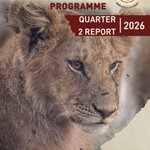
Our Q2 2026 Progress Report is out, and it is full of updates. See how science & community action delivered this quarter, from launching our first dedicated hyena research programme to seeing a 14.5% drop in livestock conflict.
🐾 marapredatorconservation.org…
📸 (c) @maureenwild_

#PredatorWatch 25 is live.
The Great Migration has brought abundant prey, allowing the Serena Rongai Pride to settle safely in their core territory. Meanwhile, Olope the cheetah survived a scuffle with domestic dogs.
@KenyaWildTrust
Read more: marapredatorconservation.org…
Mara Predator Conservation Programme retweeted
Swipe through to explore our 2025 impact, and click here to read the full report: bit.ly/4fd2Hdd


Mara Predator Conservation Programme retweeted
2025 was a year that tested our resilience, inspired our teams, and proved that the future of conservation must be community-led. Our teams achieved impact by putting science into practice & prioritizing the wellbeing of the communities who share their rangelands w/ predators.


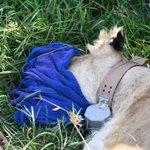
Three lions. Three new collars.
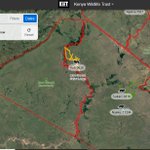
Over the past week, three LoRaWAN collars were deployed on two pride females and one coalition male in the Maasai Mara National Reserve, in partnership with The Safari Collection, @NarokCountyGvt, @KWSKenya and @Connected_Cons.
@KenyaWildTrust


Thank you to The Safari Collection Footprint Trust, Narok County Government, Connected Conservation Foundation, the Maasai Mara National Reserve team, Sala’s Camp, KWS, the Sheldrick Wildlife Trust and everyone who made this work possible.
Mara Predator Conservation Programme retweeted
We are proud to share the Q1 2026 Progress Report for KWT's flagship initiative, our @MaraPredator, and the 2025 Technical Report.
We invite you to read the full technical update here: bit.ly/449G1p5
Access the Q1 2026 Progress Report here: bit.ly/4at6Ecf

