

I tweet about Entrepreneurship, Leadership, Spirituality, Exploration, Philosophy, Travel, Technology, Marketing, Growth Mindset. Founder @e2msolutions
🇮🇳🇺🇸
Joined February 2010
- Tweets6.9K
- Following1.8K
- Followers2.4K
- Likes12.6K






One of the key highlights:
Mountains don’t know the geographically/politically defined national border. There’s oneness in Himalayas spreaded across India, Nepal, Bhutan, Tibet (China), and Pakistan.
It makes so much sense for all the nations to form a body to save the catastrophic of Himalayas which affect countries specifically like Nepal the most.

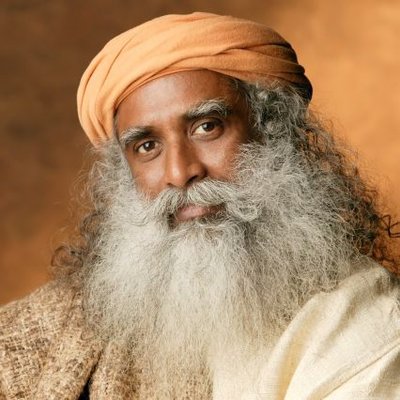
Join Sadhguru "In Solidarity with Nepal" | 30 August | Live at 4:45 PM IST
#NepalFloods
youtube.com/live/dzi4pSSy7mw…



Manish Dudharejia retweeted
Neuralink is needed to solve the super low & lossy output bandwidth of humans.
Our input bandwidth, thanks to vision, is many orders of magnitude higher than our output bandwidth, but could also be greatly improved.
By addressing these bandwidth limitations and greatly increasing our effective cognitive capacity, human-AI symbiosis will be far better, improving the probability of a great outcome for humanity in the future.
One of the ways to exercise our minds to keep them “fit” is meditation. I’d say self aware; more than keeping it fit.

AI acceleration doesn’t scare me…
…what scares me is AI ATROPHY.
Paul Graham nailed it.
Back in the day, people didn't need to exercise because the work itself kept us strong. Industrialization changed that. Now we need to work “out” because our actual work doesn’t keep us fit.
Similarly, we're coming out of an era (The Information Age) where our work kept us smart. The technology that made us fat is going to make us dumb, too.
So just like our post-industrialized ancestors needed to exercise their bodies to stay fit, we’re going to need to find ways to exercise our minds to keep them “fit”...
…or we’re going to get stupider.
The advantage goes to people who invest the time to think and process… who don't immediately turn to AI the second they have a question.
My rule for my team (and my kids): AI is 10-80-10.
The first 10% needs to come from human original thought…unprompted…before AI tells you what to think.
AI gets you to 80%.
The last 10% is human again. Quality control…humanizing…de-slopification.
(What I’m literally doing when I write “de-slopification”... a word no AI would ever use.)
Because the people (and brands) who still CHOOSE to think will have all the advantage in an AI-powered world.

Japan is known as one of the most accessible countries in the world for people with disabilities — locals and travelers alike. Almost all train stations, public restrooms, sidewalks, and tourist spots have wheelchair access, tactile paving for the visually impaired, and clear English signage. Even taxis and hotels are designed with accessibility in mind. It’s really impressive how thoughtful and consistent they are about it.
Either you take charge of shaping your life, or the world (especially social media) will do it for you. The difference is huge: when you shape it, you live by intention; when the world shapes it, you live by reaction.
Check out my latest article: Reflections at 41: Lessons on Life, Growth, and Perspective linkedin.com/pulse/reflectio… via @LinkedIn

Manish Dudharejia retweeted

Most people have no idea what it actually takes to be a founder. They talk about vision, grit, or passion. Those words are props.
What you really sign up for is a life where every decision feels like it costs something real. You will spend years being misunderstood. By your team, your family, even the people you hire to help you. You will fail in public and still need to keep the energy up in private. Every founder lives with the weight of knowing that you can do everything right and still get crushed by luck, timing, or somebody else’s mistake.
Founders aren’t braver than anyone else. They just get used to uncertainty, then stop waiting for clarity. Most of your wins won’t feel like wins at all. The first revenue will be too small. The first team will outgrow you or leave. The first product that feels right will barely matter to the market. You will doubt yourself in private, sometimes every week. The founders who last figure out how to keep moving while the ground shifts underneath them.
Most outsiders want the founder badge but none of the scars. They want the upside, not the drag. The hardest part is sticking around after every plan gets blown up and you have to rebuild with less optimism and more scar tissue. What makes it work isn’t relentless hustle or some mythical trait. It’s learning to make peace with constant discomfort, and then making decisions anyway.
If you need constant reassurance, you’ll give up before the real work begins. If you want everyone to like you, you’ll never make the calls that matter. If you can’t handle months where nothing feels certain, this life will eat you alive.
But if you can hold your own in chaos, get better at being wrong, and still want to show up and try again, you just might have a shot at building something that matters.
That’s what it actually takes. And nobody cares until you make it work.
Stop outsourcing your individual agency to AI. AI is powerful. It can draft, automate, and optimize faster than we ever imagined. But it should never replace your ability to think, decide, and act with intent. When you blindly follow AI outputs, you give up your judgment. You give up your edge. AI should extend your agency; not replace it. Use it to speed up research, test ideas, or structure your work. But the vision, the choices, and the accountability? That’s yours. Don’t hand over the steering wheel. Let AI sit in the passenger seat.
When you don’t have preferences, it leads to surprises. Now, surprises could be pleasant or unpleasant. On other side, having preferences avoid unpleasant surprises.