

Management One® specializes in independent business success by showing any company how to get a better return on their investments in inventory and people.
Tucson, AZ
Joined September 2011
- Tweets2.9K
- Following752
- Followers266
- Likes152







CHARTING PROFITABLE TRENDS
March 2018 through March 2019
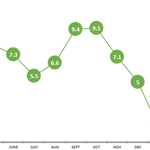
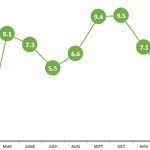
The graph below represents monthly sales increases, year to date, based on our clients who have comparable data from last year’s sales as Management One clients.

Try focusing on the “freshness” in each classification and see how quickly unsuccessful categories become successful.

the higher the freshness factor is, the better chance the store has of:
Profitable sales increases
Faster turnover
And, by extension, improved cash flow
facebook.com/ManagementOne/

This can become especially dangerous in stores that only look at past sales volume when planning next year’s or next season’s sales forecast.
read more at facebook.com/ManagementOne/

What typically happens in this scenario is that, when the average inventory builds at a rate faster than sales:
The turnover slows
The margins might suffer, if excessive markdowns are needed to clear remaining stock
And, believe it or not, the operating expenses can also increase

you cannot buy your way out of a problem. Sure, you might increase your sales volume a bit, but if you are not improving GMROI, what is the point?
facebook.com/ManagementOne/

The graph represents monthly sales increases, year to date, based on our clients who have comparable data from last year’s sales as Management One clients.

We have seen some remarkable - and frankly stunning - results by those retailers that have embraced these trends. And a big part is their enthusiasm to having adapted to these trends, and having created long-awaited changes to their own strategies.

Do you under buy to sell to extinction, as Stacey Pecor of Olive and Bettes in New York City does, to create demand and reduce markdowns?
And then, in turn, do you have a constant fresh flow of new merchandise - again bought to be sold to extinction?
Last month, I talked about the Long Tail strategy; this is definitely a component of scarcity in your merchandising strategy.

Be the first to create change. Following someone else, and letting them take the risk, is now the greater risk.
How fast do you return calls?
Do you still have a return policy?
Can clients make an appointment, or even call you from your website?
What services can you provide to make it easier and more convenient to shop?

I have been in store meetings around the country and we spend time brainstorming ideas, not on how great we are, but on how much better we can become.
We focus on one issue and that is how to create more convenience for the customer.
This should be at the center of every conversation you have with your staff - every day. Brainstorm everything from returns to how you can create a better experience for the customer.

Speed is also about how many visits your customers make to your store. Is it 4 times a year or 14 times a year? If you are not in the businesses of speed, you will bore your customers and lose them to a competitor who could be down the street or online.
Even if you are not in the Fast Fashion business, the concept has had a profound influence on the customer’s expectations of getting new merchandise on demand.

You are in a race.
A race to capture market share...
A race for the next great line or product…
A race to innovate before your competition does…
A race to build your social media and digital presence and footprint.

Trends evolve and become part of our customer’s expectation. Ignoring or fighting them is like swimming upstream against a current stronger than you.

