

Investor. Mortgage Broker- 24yrs experience. Independent inventor: electric actuator control architecture.
Joined October 2025
- Tweets147
- Following233
- Followers99
- Likes223




Pinned Tweet
I believe conventional actuator-control technology is approaching a wall in heat, reflex and proprioception because of limitations inherent in its underlying architecture. My control method was designed from the ground up around those problems. Larger actuators, stronger magnets and faster computation can improve performance, but they cannot solve every limitation embedded in the control architecture.
Over the past eight months, I have developed the architecture and repeatedly subjected its internal logic, operating boundaries and failure conditions to adversarial analytical review, including extensive AI-assisted attempts to identify contradictions and failure modes. That process cannot validate the physics, but it has brought the architecture to the point where hardware testing is the appropriate next step.
This is not an incremental PWM or FOC optimization. I have not yet built the prototype or produced experimental results. My role has been developing the systems architecture; I now need hands-on controls and hardware engineering, laboratory access and funding to implement and test it properly.
Counsel has substantially prepared the provisional patent draft, although it has not yet been filed. I would be glad to share a more detailed, non-enabling overview privately.
Architecting the next control architecture for the Machine Age.
@a16z @martin_casado

5
1,038
I’d love for engineers working in aircraft ice protection, aerodynamics, or power systems to weigh in. This is an early concept, and I’m open to it changing substantially—or learning why it isn’t practical.
If there’s something useful here, I hope someone with the expertise can take the discussion further. The goal is better protection against icing, wherever the engineering leads.
11
Follow up from just a few weeks back.
🎉 KAZ MADE IT HAPPEN!
When a closing needed help, I reached out to @nejatian on X.
He didn't hide behind a corporate account. He responded personally and immediately got his team involved.
That's the kind of leadership that gets my attention.
@Opendoor saves the closing! 🏡🥂
THANK YOU, KAZ, FOR CARING — AND FOR HAVING THE PRODUCT THAT MADE THE BUYERS' TRANSITION POSSIBLE!
Now, Kaz... about that idea I shared in our DM. You've got this under control, and I have a vision and some insight into something much bigger. 😉🤝
#KazNejatian #Opendoor $OPEN #MortgageBroker #MortgageIndustry #RealEstate #Leadership #WholesaleMortgage #LendexaMortgage
🤖 Made with AI

$SLNH $APLD $CIFR $GPUS
Soluna just announced a structure where:
Applied Digital contributes development capital.
Soluna contributes land and power-related assets.
Soluna retains 49% ownership of the project.
The facility could generate long-term lease revenue.
And here’s the part nobody seems to be emphasizing: Soluna isn’t issuing 49% of its company to finance this project!
Most data-center developers have barely scratched the surface of their planned capacity. Building out that infrastructure requires enormous capital.
Dilution is going to be part of the equation for many of them. But not all dilution is bad.
If the capital raised creates more asset value per share than it costs shareholders, that dilution can actually be accretive.
And partnerships like this offer another path: contribute existing assets, bring in outside development capital, and retain meaningful ownership of the finished project.
The question isn’t how many shares a company issues. It’s how much value each share ultimately represents.
That’s the metric shareholders should care about.
3
410
Technology should make life easier for consumers, not simply shift responsibilities from businesses onto them.
If the customer is doing more work so the company can do less, is that really innovation?
Use your powers for good
2
94
The Roadster doesn’t have to be street legal.
Because where we’re going, we don’t need roads. ⚡🚀
@Tesla
1
152
The AI data center dilution panic is missing the bigger picture.
Stop counting shares. Start examining what those shares are buying.
$CIFR just raised $850M through convertible notes with a $15.31 initial conversion price.
Retail sees dilution. I see capital being raised to construct revenue-producing infrastructure backed by $11.4 BILLION in signed AWS lease commitments.
That’s approximately 20 years of contracted revenue, with the $850M raise equivalent to less than TWO YEARS of average annual lease revenue.
This isn’t dilution for survival. It’s capital formation against contracted demand.
The distinction matters.
$SLNH $GPUS is pursuing a similar strategy on a smaller scale: raising capital to expand renewable-powered data center infrastructure.
Here’s the valuation framework investors should be asking about:
→ What is the capital raise funding?
→ How much contracted revenue will the completed infrastructure support?
→ What are the expected operating margins and cash flows?
→ How much incremental equity value is created PER FULLY DILUTED SHARE?
$CIFR: Approximately $3.7B in market capitalization against $11.4B in signed hyperscaler lease revenue.
Those contracts aren’t equivalent to NAV. But they provide a foundation for estimating the future cash flows and underlying asset value.
The question isn’t whether dilution occurs. It’s whether the assets being created are worth substantially more than the capital and dilution required to build them.
Bitcoin miners introduced investors to mNAV. AI infrastructure developers are bringing a new dimension to the conversation: long-duration contracted revenue backed by physical assets.
The investors who correctly value those future cash flows before they fully appear on the income statement may identify opportunities the market is overlooking.
Follow the capital. Follow the contracts. Follow the value created per share.
cc @RaoulGMI @APompliano @PrestonPysh @CathieDWood @rftylerpage @jbelizaireCEO @mikealfred @ToddAultIII
$CIFR $SLNH $GPUS
2
419
@nejatian I have a client selling to open door. Your Inspection is tomorrow. For three days they have not been able to reach anyone at open to help reschedule. They have left messages for a call back, waited a half hour to get someone on phone that said the couldn’t help w that but would have someone reach back out to them. They emailed, stress is high on this one for all parties involved and we really need a direct contact to help here- currently the purchase is scheduled 4 days before the sale to you, we wanna move closing up - if you can help have someone just call the client I’d appreciate it, because if we cannot juggle these closing dates it’s likely not closing at all and they lose the purchase.
UPDATE: Someone reached out, possibly from Kaz direction or possibly from a prior message they have left over the last few days. It seems that the sellers OPEN representative is on leave through 11/1/26; timing was not great for him to be away as we happened to need him, but someone from OPEN has reached out to them -the closing date was adjusted with no problem, the information we were missing was provided and we are back on track!
As a business owner, I understand I cannot control every nuance of a business. A company can put great systems in place, and sometimes those systems do not account for every single one off problem that could arise. Especially when there are as many people involved as in a real estate transaction. Whats important is how those problems are handled once brought to light and today they got handled.
Regardles if this was Kaz or their normal process that resolved this, Kaz reaction to the issue and the resolve is what me and my customer will remember.
I am now a shareholder once again.
Thank you again Kaz!
😂 And there's my hypothetical Wall Street business model: $CIFR
Jane Street: “We're selling.”
JPMorgan's trading algorithms: “Jane Street is selling? Short it.”
Citadel: “Momentum is negative. Reduce exposure.”
Susquehanna: “Volatility is rising. Adjust the hedges.”
Retail: “Why the hell is CIFR down another 6%? They just announced billions in contracts!”
Morgan Stanley Research: “Don't worry, everyone. We’ll publicize a price target of $54!” To find more retail buyers.
Retail: “It's $16! That's incredible upside!”
Morgan Stanley, three weeks later: “Due to changing market conditions, we're lowering our target to $51.50.”
Retail: “IT'S THIRTEEN FUCKING DOLLARS!”
Repeat from $30 to $10 - buy cheap
1
3
521
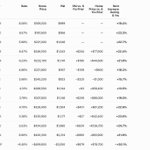
I wanted to know what actually happened historically when someone said:
𝗥𝗮𝘁𝗲𝘀 𝗮𝗿𝗲 𝘁𝗼𝗼 𝗵𝗶𝗴𝗵. 𝗣𝗿𝗶𝗰𝗲𝘀 𝗮𝗿𝗲 𝘁𝗼𝗼 𝗵𝗶𝗴𝗵.
𝗜’𝗹𝗹 𝘄𝗮𝗶𝘁 𝗳𝗼𝗿 𝗮 𝗯𝗲𝘁𝘁𝗲𝗿 𝘁𝗶𝗺𝗲 𝘁𝗼 𝗯𝘂𝘆.
So I took every even year from 2000 through today and compared it with 6 years earlier.
I used national median new-home prices and average 30-year mortgage rates, assumed 20% down, and calculated principal & interest.
𝗧𝗛𝗘𝗡 𝗜 𝗖𝗢𝗠𝗣𝗔𝗥𝗘𝗗:
• The mortgage payment vs. 6 years earlier
• The total difference in those payments over 6 years
• The change in home prices over those same 6 years
• And, just for fun, I added what happened to rent while you were waiting
𝗧𝗵𝗮𝘁 𝗹𝗮𝘀𝘁 𝗼𝗻𝗲 𝗺𝗮𝗱𝗲 𝗺𝗲 𝗹𝗮𝘂𝗴𝗵.
There isn’t a single 6-year period on this chart where rent decreased.
𝗡𝗼𝘁 𝗼𝗻𝗲.
Even 2006 → 2012, the period everyone remembers because housing crashed, rents still increased.
————————————
𝗔𝗡𝗗 𝟮𝟬𝟬𝟲 → 𝟮𝟬𝟭𝟮 𝗜𝗦 𝗜𝗠𝗣𝗢𝗥𝗧𝗔𝗡𝗧.
Waiting actually worked really well during that period.
Home prices were slightly lower six years later AND mortgage rates had dropped dramatically.
I’m showing that because I’m not trying to prove buying always wins or waiting always loses.
𝗛𝗶𝘀𝘁𝗼𝗿𝘆 𝗱𝗼𝗲𝘀𝗻’𝘁 𝘀𝗮𝘆 𝘁𝗵𝗮𝘁.
————————————
But look at some of the other six-year periods:
𝗟𝗢𝗢𝗞 𝗔𝗧 𝗛𝗢𝗠𝗘 𝗣𝗥𝗜𝗖𝗘𝗦:
2016 → 2022: +$126,700
2018 → 2024: +$93,900
2020 → 2026: roughly +$78,700
Yes, the later buyer sometimes had a substantially higher mortgage payment.
That’s why I calculated that too.
I took the difference in P&I and multiplied it across the entire 6-year period.
𝗜𝗻 𝗲𝘃𝗲𝗿𝘆 𝗽𝗲𝗿𝗶𝗼𝗱 𝘀𝗵𝗼𝘄𝗻 𝗼𝗻 𝘁𝗵𝗶𝘀 𝗰𝗵𝗮𝗿𝘁, 𝘁𝗵𝗲 𝗵𝗼𝗺𝗲-𝗽𝗿𝗶𝗰𝗲 𝘀𝗶𝗱𝗲 𝗼𝗳 𝘁𝗵𝗲 𝗲𝗾𝘂𝗮𝘁𝗶𝗼𝗻 𝘄𝗮𝘀 𝘀𝘁𝗶𝗹𝗹 𝗴𝗿𝗲𝗮𝘁𝗲𝗿 𝘁𝗵𝗮𝗻 𝘁𝗵𝗲 𝗰𝘂𝗺𝘂𝗹𝗮𝘁𝗶𝘃𝗲 𝗱𝗶𝗳𝗳𝗲𝗿𝗲𝗻𝗰𝗲 𝗶𝗻 𝗣&𝗜.
And if your plan was to rent while waiting?
𝗬𝗼𝘂𝗿 𝗿𝗲𝗻𝘁 𝘄𝗮𝘀 𝗺𝗼𝘃𝗶𝗻𝗴 𝘁𝗼𝗼.
𝗘𝘃𝗲𝗿𝘆. 𝗦𝗶𝗻𝗴𝗹𝗲. 𝗧𝗶𝗺𝗲.
————————————
That’s the part I think gets overlooked.
Waiting isn’t doing nothing.
𝗪𝗔𝗜𝗧𝗜𝗡𝗚 𝗜𝗦 𝗔𝗟𝗦𝗢 𝗔 𝗙𝗜𝗡𝗔𝗡𝗖𝗜𝗔𝗟 𝗗𝗘𝗖𝗜𝗦𝗜𝗢𝗡.
You’re betting that whatever happens to mortgage rates, home prices AND your rent while you wait leaves you in a better position later.
Sometimes it does.
2006 → 2012 proves it.
Sometimes it really, really doesn’t.
𝗔𝗻𝗱 𝘆𝗼𝘂 𝗱𝗼𝗻’𝘁 𝗸𝗻𝗼𝘄 𝘄𝗵𝗶𝗰𝗵 𝟲-𝘆𝗲𝗮𝗿 𝗽𝗲𝗿𝗶𝗼𝗱 𝘆𝗼𝘂’𝗿𝗲 𝗹𝗶𝘃𝗶𝗻𝗴 𝘁𝗵𝗿𝗼𝘂𝗴𝗵 𝘂𝗻𝘁𝗶𝗹 𝗶𝘁’𝘀 𝗼𝘃𝗲𝗿.
————————————
That was the point of my last post.
I’ve made the “I’ll wait for a better time” mistake myself more than once.
Don’t buy a house because I think prices are going up.
Don’t avoid buying one because somebody else thinks they’re going down.
𝗕𝘂𝘆 𝘄𝗵𝗲𝗻 𝘆𝗼𝘂 𝗳𝗶𝗻𝗱 𝗮 𝗵𝗼𝘂𝘀𝗲 𝘆𝗼𝘂 𝘄𝗮𝗻𝘁, 𝗮𝘁 𝗮 𝗽𝗿𝗶𝗰𝗲 𝗮𝗻𝗱 𝗽𝗮𝘆𝗺𝗲𝗻𝘁 𝘆𝗼𝘂 𝗰𝗮𝗻 𝗰𝗼𝗺𝗳𝗼𝗿𝘁𝗮𝗯𝗹𝘆 𝗮𝗳𝗳𝗼𝗿𝗱.
Six years from now, we’ll all know exactly what we should have done.
#mortgagerates #realestate #homevalues

1
173
Everybody thinks they missed the last cheap year to buy a house.
Everyone complains about rates no matter where they are at the time. I’ve been there and I’ve watched it for 24yrs.
I started in mortgages in 2002 already saying “if I was just born 5 years sooner I would have caught that bubble.”
2007: “I missed the boat again. Values will come down and I’ll grab it.”
2012: “I can’t believe I missed it again.”
2016 I moved to NC from NY where I felt cheated and completely priced out — living in illegal basement apartments.
2017, making about $85k commission only in a new place where I knew nobody, which is much harder than $85k steady pay BTW.
Charlotte was already too much money for me. (I missed the boat AGAIN.) So I bought a $176k ranch in Kings Mountain instead: 45 minutes from Charlotte, built 1938.
My hard rule: if I made nothing in my new commission-only job, rent had to pay the mortgage. It was a safety-net rule.
If I couldn’t find that, I’d move further from Charlotte until I could- other states were NOT out of the question. If I was doing it, others would too, and values would catch up with me.
Sold it in 2022 for $315k -That house is gone.
Same rule today is $250–$325k. Not $500k plus a $30k—50k car and a lot of angry rate posts.
Same story people run now: can’t afford NY, move to Charlotte. Can’t afford Charlotte, commute from Kings Mountain— Texas if I need too.
Here’s what’s true in every market: when rates are high and prices are compressed is when you buy. It’s when investors are buying most and capitalizing on the less optimistic. (Investor rates are higher than 7.5% w 20% down)
The people with a $3,800 payment are who I was at 25. I’ve learned that the market does not wait until the comments say it’s fair.
Every generation thinks they’re the first. In 5–10 years you’ll see a post about how lucky they were to have our shed with only a $3,800 payment, and the young person posting it will be telling you how lucky you are and how they got screwed.
Most people cannot afford to buy the house they live in 5–10 years later. That’s not a failure. That means they capitalized.
#MortgageRates #HousingMarket #realestate
1
86
Every housing post is doom.
They hike to fight inflation, overshoot, crack something, then leave a window. Then they let it run too far the other way. That’s the boom and bust that made people rich in real estate.
It sucks in the middle. It has always sucked in the middle. The people who can buy through it are usually the ones sitting pretty when the cycle turns.
Negativity is the product. The cycle is the market.
#Housing #RealEstate #MortgageRates
44
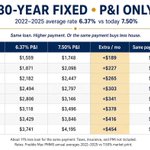
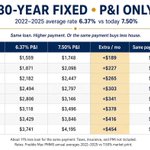
The viral math is 2021 vs today. This is last-four-years vs today.
Same $400k loan: about $300 more per month. Same payment as a 6.37% loan: you still get about $357k of the $400k.
Not painless. Not a collapse. Just the actual number.
Edit: The sting is the speed. We went from the mid-6s to 7.5 in about two weeks. That’s what rattled people — not a 2021-to-now reset.
#Housingcrash #realestate #mortgagerates

35