

Manuscripts After Print c.1450-1550, a project funded by @ahrcpress. What happened to #manuscripts after the invention of #print? @Aditi_Nafde @mattconeys
Joined February 2019
- Tweets260
- Following284
- Followers1.1K
- Likes174



Pinned Tweet
Today is the last day of our project!
Thanks to everyone who has engaged with our tweets over the last 18 months. We’ll still be posting occasionally, so stay tuned.
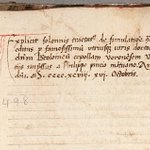
For now, it seems fitting to leave you with this colophon copied directly from a printed book by a C15th scribe.

Columbia University, Rare Book and Manuscript Library X281.1.B45: Bartolomeo Cipolla, 'Tractatus de simulatione contractum'. Copied from the Venetian edition of Philippus Pincius (1498).
#manuscriptsafterprint
19 essential tools for the C16th scribe, from Giovanni Antonio Tagliente's 'Lo presente libro' (1524):
Booklet
Candlestick
Dividers
Ink
Ink stand
Lamp
Penknife
Mirror
Pen
Quill
Straight edge
Sand glass
Seal
Set square
Shears
Stylus
Pounce
Thread
Sealing Wax.


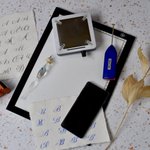
Luxuries for the modern calligrapher – a fascinating post by Gab at Dunwell Calligraphy on the tools she uses in her everyday work:
dunwellcalligraphy.com/blog-…

Luxuries for the modern calligrapher – a fascinating post by Gab at Dunwell Calligraphy on the tools she uses in her everyday work:
dunwellcalligraphy.com/blog-…
Manuscripts After Print retweeted

Delightfully playful interaction between handwriting & print : an 18th c. Breton reader used book signatures as initials to inscribe his name & place of residence @GallicaBnF - Le Mirouer de la la mort, 1575, RES P-YN-1 #bookhistory #typography #Morlaix ☠️📖✍️


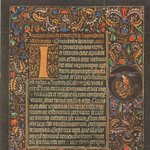
Inspired by Tivina's work, here's another stunning example of late medieval chrysography: the Sforza Black Hours (ÖNB, Cod. 1856), produced in Bruges in the 1460s/70s. The miniature shows the four evangelists at work, with Mark and Luke carefully preparing their quills.


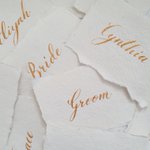
Chrysography = writing with gold ink. Here's a beautiful modern example by the talented Tivina of Nibs and Notes (nibsandnotes.co.uk). Gold ink, applied with a Nikko G nib on handmade paper. (1/4)

Chrysography = writing with gold ink. Here's a beautiful modern example by the talented Tivina of Nibs and Notes (nibsandnotes.co.uk). Gold ink, applied with a Nikko G nib on handmade paper. (1/4)
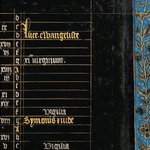
Crysography never entirely disappeared from Latin Europe, however. One stunning later example is the Morgan Black Hours, produced in Bruges around 1470. The contrast of the gold and silver script against the black vellum is both highly unusual and visually striking.
(3/4)

You can see more of Tivina's work by visiting nibsandnotes.co.uk or following her on Instagram ([at]nibs.and.notes).
Theodore Psalter: BL Add. MS 19352
Morgan Black Hours: Morgan MS M.493 (fully digitised at themorgan.org/collection/Bla…)
(4/4)
Any suggestions much appreciated!

Where could I find pictures of letters in English dated 1450-1500 for my database of early modern hands? @MSS_AfterPrint ?
Writing in 1581, the writing master Marcello Scalzini noted that roman and gothic scripts “are especially useful for the elderly, who cannot see well or only with glasses”.
It's fascinating to learn how similar concerns affect modern calligraphers! tinyurl.com/y7rwkcgu

Over the coming weeks we’ll be featuring some talented contemporary calligraphers. First up is Gabrielle from Dunwell Calligraphy, who writes about her creative process as a modern calligrapher – in terms of both artistic style and the digital marketplace. tinyurl.com/y7rwkcgu
Over the coming weeks we’ll be featuring some talented contemporary calligraphers. First up is Gabrielle from Dunwell Calligraphy, who writes about her creative process as a modern calligrapher – in terms of both artistic style and the digital marketplace. tinyurl.com/y7rwkcgu
While the technology has changed, there are fascinating similarities with how pre-modern scribes carefully promoted their work. Calligraphy albums were the Instagram of the 16th century, showcasing both the scribe’s individual style and the range of scripts at their disposal.

You can see more of Gabrielle's work at dunwellcalligraphy.com or by following her on Instagram [@]dunwellcalligraphy.
MS: Columbia, Plimpton MS 296 (Spain, C16)
Manuscripts After Print retweeted

Frances Legh’s copy of Abel Evans poem @NTLymePark contains gaps which invite the reader to annotate their copy. Legh writes the name of the doctor, Tindall, and fills in gaps within the poem. This is a type of directed annotation invited by the text. #EMQuon 10/14


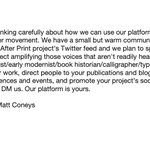
Of course, our list above is not exhaustive – so if there are other ways we can use our platform, we would welcome your responses. We are actively contacting people whose work we might showcase. (1/2)
While this is our online response, if you would like to talk about our offline responses we have opened our DMs for anyone who would like to continue this conversation privately. (2/2)
#MedievalTwitter #twitterstorians #bookhistory
Manuscripts After Print retweeted

#MedievalTwitter #manuscriptstudies I am looking for references to examples when early editors/printers destroyed mss used for printed editions and/or commented on their intention of doing so. My zotero does not want to help me where I read it... I would appreciate your help.