

Chair @UMichRadiology; "We are hope, despite the times" --REM
Ann Arbor, MI
Joined April 2009
- Tweets1.9K
- Following265
- Followers1.5K
- Likes4K




Pinned Tweet
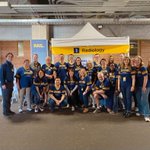
Paul Lauterbur put this up in our lab in 1996, original writing in red ink. Take heart, people, even the paper describing MRI was first rejected. Also, moving is hard, but digging up these gems from the past is beautiful. @NeuroDx @MRInicole #MRI #ISMRM

Vikas Gulani retweeted

The U-M Board of Regents has approved construction of the Nathan and Catherine Forbes Sports Medicine Institute, a 100,000-square-foot facility that will serve as the hub of U-M Health’s statewide sports medicine network. Learn more: michmed.org/kNXqw

Vikas Gulani retweeted

One Meeting, Many Reasons.
Why Savannah this October? Dr. Hersh Chandarana, Professor of Radiology at @nyugrossman @NYURadRes, shares his reason for joining #SABI2026.
Savannah, GA | Oct 11–14
Register: sabiradiology.org
#OneMeetingManyReasons #AbdominalImaging
Vikas Gulani retweeted

We’re excited to introduce Fritz Schick, M.D., Ph.D., the 2027 Mansfield Lecturer! ow.ly/9fpi50ZPU5F
Join us in Vancouver as we welcome our named lecturers to the ISMRM & ISMRT Annual Meeting & Exhibition, 08-13 May 2027: ow.ly/uOh450ZPU5E
#ISMRM2027 #ISMRM

Vikas Gulani retweeted
One Meeting, Many Reasons.
Dr. Matthew Davenport, SABI President-Elect and Program Chair, shares why #SABI2026 is worth the trip to Savannah.
Savannah, GA | Oct 11–14
Register: sabiradiology.org
#OneMeetingManyReasons #AbdominalImaging
Vikas Gulani retweeted
Put your energy and skills to work for the MR field you love!
Active volunteers are vital to every association. If you are interested in contributing to the ISMRM, click here to learn more: ow.ly/Kj6950ZlLfK
#ISMRM #MRImaging #Radiology #MedicalImaging #Volunteers #MRI

Vikas Gulani retweeted
Our 2027 ISMRM Lauterbur Lecturer is Karla Miller, Ph.D.: ow.ly/bPTN50ZPTZy
Join us in Vancouver as we welcome our named lecturers to the ISMRM & ISMRT Annual Meeting & Exhibition, 08-13 May 2027: ow.ly/vIWE50ZPTZz
#ISMRM2027 #ISMRM #ISMRT #MRI #MagneticResonance #MR

Vikas Gulani retweeted
Submitting an abstract for the 2027 ISMRM & ISMRT Annual Meeting & Exhibition? Start here.
Join us for The Basics of Submitting an Abstract, an ISMRM Virtual Meeting designed to help you prepare for the upcoming abstract submission window.
REGISTER NOW: ow.ly/r4ng50Zz7WT

Vikas Gulani retweeted
We’re excited to introduce the 2027 ISMRM Named Lecturers!
Join us in Vancouver as we welcome our named lecturers to the 2027 ISMRM & ISMRT Annual Meeting & Exhibition.
LEARN MORE: ow.ly/JzSi50ZMNaX
#ISMRM2027 #ISMRM #MRI #MedicalImaging #Radiology #HealthcareInnovation
Vikas Gulani retweeted
Submitting an abstract for ISMRM 2027 Vancouver?
Join our virtual meeting, The Basics of Submitting an Abstract, and get ready before submissions open.
24 September 2026 | 16:00 UTC
FREE: ow.ly/r4ng50Zz7WT
Abstract submissions open 01 October.
#ISMRM #Abstracts

Vikas Gulani retweeted

Radiology used to have something that was almost invisible because it was so routine:
The reading room consult.
Rounding teams came down.
Surgeons pulled up their cases.
Internists brought the scan that didn't quite fit the clinical picture.
Sometimes the radiologist solved the problem.
Sometimes the clinician supplied one piece of history that completely changed how the images were interpreted.
And usually everyone simply walked away a little sharper.
But something else was happening during all of those conversations.
We were learning each other.
As a radiologist, I learned what individual physicians cared about.
I knew which findings mattered to a particular surgeon.
Which measurements an oncologist was following.
Which details a specialist wanted emphasized.
What questions they were really asking, even when the order just said "pain."
And they learned me.
They knew who was reading their study.
They knew they could walk in, point at something, challenge an interpretation, or ask, "What do you think?"
That relationship created context.
It created feedback.
It created trust.
And over years, it created a kind of institutional knowledge that never appears in the medical record.
When radiology becomes a report produced by someone hundreds or thousands of miles away, we don't just lose proximity.
We risk losing that entire feedback loop.
The report may still be technically excellent.
But the radiologist knows less about the physician.
The physician knows less about the radiologist.
The radiologist sees less of what happened after the report.
And both sides lose opportunities to make each other better.
The reading room was never just a room.
It was where imaging became part of the clinical conversation.
We should think very carefully before designing that conversation out of medicine.
Inspired by a conversation yesterday with @PaleoOnc . Also @909One and @brianchiong .

Vikas Gulani retweeted

🩻From our Radiology Vault series: Dr. Stephanie Patterson, @umichmedicine Breast Imager, shares key positioning techniques for screening mammography, common pitfalls and tips to improve image quality and reduce technical recalls.
Watch: tinyurl.com/bdfdnern

Vikas Gulani retweeted
We are thrilled to welcome back to Radiology, Dr. Ramon Sanchez! 🎉
Dr. Sanchez returns to @UMichRadiology bringing his expertise in pediatric radiology to care for our youngest patients.
Welcome to the Pediatric Radiology Division!

Vikas Gulani retweeted

Library staff celebrates R.E.M.'s "It's the End of the World and We Know it (and Feel Fine)" in book form.
This was an absolutely delightful watch. 🤓
R.E.M.’s Document was released 39 years ago yesterday.
(📹 via @hooverpubliclibrary)
Vikas Gulani retweeted
Why choose one specialty when you can gain expertise in two?
Our NEW Combined Abdominal + Cardiothoracic Radiology Fellowship provides comprehensive training in abdominal and chest imaging through one unique program.
Explore the program and apply: tinyurl.com/5c58dnwb

Vikas Gulani retweeted

Something i've realized about some of the best doctors I know:
They seem to have great ways of talking to themselves.
You can't always hear it. But you can see it in how they respond.
-> When a procedure doesn't go to plan, the first instinct isn't "Why is this happening"
It's - "What's the next step to fix this"
-> A complication happens and once the immediate problem is dealt with, the internal conversation becomes: "what can I learn from this"
-> When they see someone with better skills or judgement, they don't feel threatened. They get curious:
"What are they seeing that I'm not?"
The same situation can result in very different internal dialogues.
We spend years teaching doctors how to communicate with patients, families and colleagues.
But almost no time teaching them how to communicate with themselves.
I'm starting to think the conversations we have internally matter far more in medicine that it initially seems.
Maybe that internal dialogue is a skill we should be teaching too?
Our is to enable our residents to become leaders in radiology. 4 tracks. Infinite opportunities @UMichRadiology

Our mission is to create national leaders in Radiology.
The Resident Leadership Training Tracks are designed to do just that. Our program provides specialized pathways in Research (NIH T32), Health System Administration, Education, and IT.
Read more michmed.org/VRR94

Vikas Gulani retweeted
Why Our Teaching Rotations Will Remain in Person
In-person teaching is more than delivering knowledge, it’s about developing the next generation of radiologists and physician leaders.
Read more from #RadFaculty @KaraUdagerMD and @DavenportMatt

This Viewpoint advocates for maintaining in-person radiology teaching rotations, emphasizing the irreplaceable benefits of side-by-side mentorship for developing professional identity, teamwork, and leadership skills. ajronline.org/doi/10.2214/AJ…

Vikas Gulani retweeted

🏥 RAD-AID teams recently traveled to Appalachia to support patient care at the Health Wagon Clinic while providing hands-on training for Bellin College students. Together, we're expanding access to healthcare and preparing the next generation of global health professionals.

Vikas Gulani retweeted
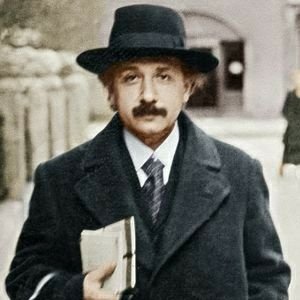
Today marks 134ᵗʰ Birth anniversary of Louis de Broglie, one of the most brilliant physicists of the 20ᵗʰ century. A French aristocrat who came to physics through history, he proposed in his 1924 doctoral thesis that if light could behave as particles, then particles must behave as waves. His examiners had no idea what to make of it and sent the thesis to Einstein, who replied that de Broglie had lifted a corner of the great veil.
Three years later, electron diffraction confirmed it, and in 1929 he became the only person to win a Nobel Prize for a PhD thesis. The idea underwrites every electron microscope built since.

Vikas Gulani retweeted
What are the fundamentals of perfusion-weighted MRI of the brain? 🧠
@umichmedicine neuroradiologist Dr. John Kim breaks down this imaging technique. Part of our Radiology Vault video series, where we'll be highlighting videos in the coming weeks!
Watch: tinyurl.com/4uh5hjwj
