

I will call out nonsense! POSTS ARE NEVER INVESTING/Financial ADVICE! With God all things are possible!
In the INTERNETS! I SEE YOU!
Joined February 2024
- Tweets35.3K
- Following23
- Followers365
- Likes45.5K




Cancer Cure? It's cured many overseas!
Money in MITIGATION, not in Cures!
$NWBO not enough funds to pay off
@FDA for approval like #BigPharma does!
rasmussenreports.com/public_…

MMTLPtrch retweeted

The FDA Should Grant Americans the Right to Try New Cancer Treatments
A Commentary By Stephen Moore
Every few months, a young 19-year-old woman from South Carolina boards a plane to London.
Full story is in the comments...


I wonder what happens when you import people
that HATE YOUR COUNTRY?
thegatewaypundit.com/2026/10…

I wonder if bringing in Islamic "immigrants"
into your country is a bad idea?
I guess time will tell!
thegatewaypundit.com/2026/10…

What will it take for the self destruction clowns
to realize, they let the ENEMIES IN!?
foxnews.com/world/limoges-to…

My heart breaks for Kaylub Gianmarco who had to shoot the mentally ill 16yr old.
I'm happy Kaylub Gianmarco did it, but the horror of having to kill someone, justified or not will haunt him.
God Bless that Hero!
foxnews.com/us/hero-dad-took…


Was she afraid Canada would #Euthanize her?
Singer Joni Mitchell Becomes U.S. Citizen breitbart.com/entertainment/…

MMTLPtrch retweeted

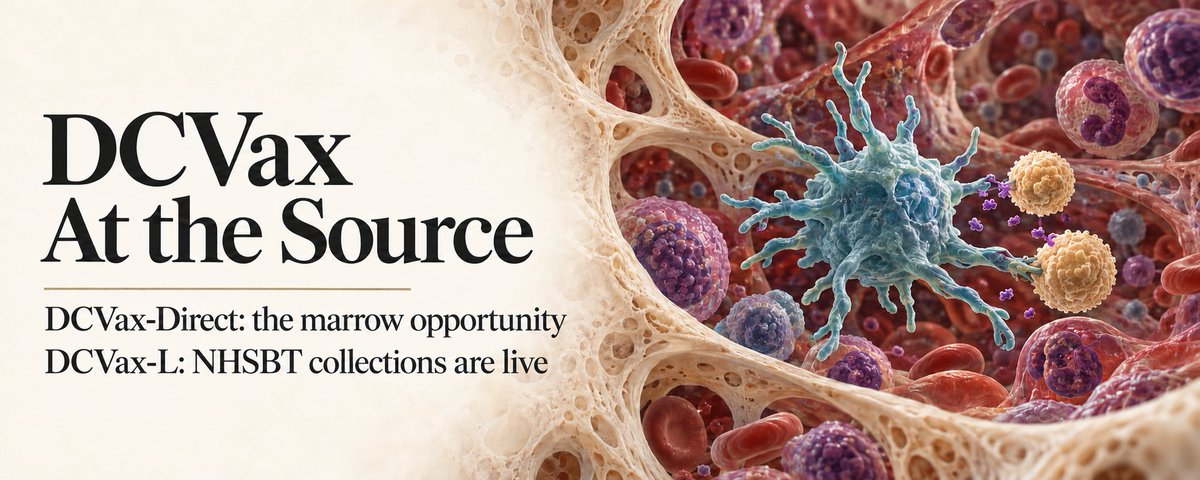
𝗗𝗖𝗩𝗮𝘅: 𝗔𝘁 𝘁𝗵𝗲 𝗦𝗼𝘂𝗿𝗰𝗲
The case for an immune reboot in blood cancer: local antigen acquisition, reciprocal instruction and lasting surveillance.
A development proposal grounded in mechanism and human evidence.
$NWBO #CancerVaccines
xitter.cf/andrewcaravello/articl…
Is this a way for @ABC to donate funds to Trump's?
ABC News quietly republishes gutted version of story on Trump sons it had deleted without explanation
foxnews.com/media/abc-news-q…

MMTLPtrch retweeted
𝗧𝗵𝗲 𝗽𝗿𝗼𝗺𝗶𝘀𝗲 𝗼𝗳 𝗰𝗮𝗻𝗰𝗲𝗿 𝘃𝗮𝗰𝗰𝗶𝗻𝗲𝘀 𝗶𝘀 𝗽𝗲𝗿𝘀𝗼𝗻𝗮𝗹𝗶𝘀𝗮𝘁𝗶𝗼𝗻. #𝗗𝗖𝗩𝗮𝘅-𝗟 𝗶𝘀 𝘁𝗿𝘂𝗹𝘆 𝗽𝗲𝗿𝘀𝗼𝗻𝗮𝗹𝗶𝘀𝗲𝗱, 𝘄𝗵𝗶𝗰𝗵 𝗶𝘀 𝘄𝗵𝘆 𝗶𝘁 𝗶𝘀 𝘀𝗮𝗳𝗲. No donor cells and no genetic engineering: the patient's own tumour is processed into lysate and loaded onto their own dendritic cells, so the antigens come from that cancer rather than from a prediction about it.
𝗔𝗻𝗱 𝘁𝗵𝗲 𝗱𝗲𝗻𝗱𝗿𝗶𝘁𝗶𝗰 𝗰𝗲𝗹𝗹 𝗶𝘀 𝘁𝗵𝗲 𝗶𝗻𝘀𝘁𝗿𝘂𝗰𝘁𝗼𝗿, 𝗻𝗼𝘁 𝘁𝗵𝗲 𝗰𝗮𝗿𝗴𝗼: injected into the skin, it carries that information to the lymph node and presents it to the patient's own T cells. 𝗧𝗵𝗮𝘁 𝗶𝘀 𝘁𝗵𝗲 𝗳𝗿𝗼𝗻𝘁𝗶𝗲𝗿. 𝗣𝗮𝘁𝗶𝗲𝗻𝘁𝘀 𝗱𝗲𝘀𝗲𝗿𝘃𝗲 𝘁𝗼 𝗰𝗵𝗼𝗼𝘀𝗲.
$NWBO #DCVaxForBraelyn

“This is a completely new frontier.”
In @nytimes, @DrKarenKnudsen, Parker Institute CEO, tells @ginakolata about the promise of cancer vaccines and a new NIH initiative to accelerate their development.
Parker researcher Dr. Catherine Wu of @DanaFarber and Dr. Vinod Balachandran of @MSKCancerCenter are among the scientists advancing personalized cancer vaccines through promising early research. With greater collaboration and coordinated efforts, the field has an opportunity to accelerate progress and bring new treatment options to patients facing some of the hardest-to-treat cancers.
Read more: nytimes.com/2026/10/09/scien…

MMTLPtrch retweeted
$NWBO #DCVax #DCVaxForBraelyn #GBM #SolidTumors #CancerVaccines
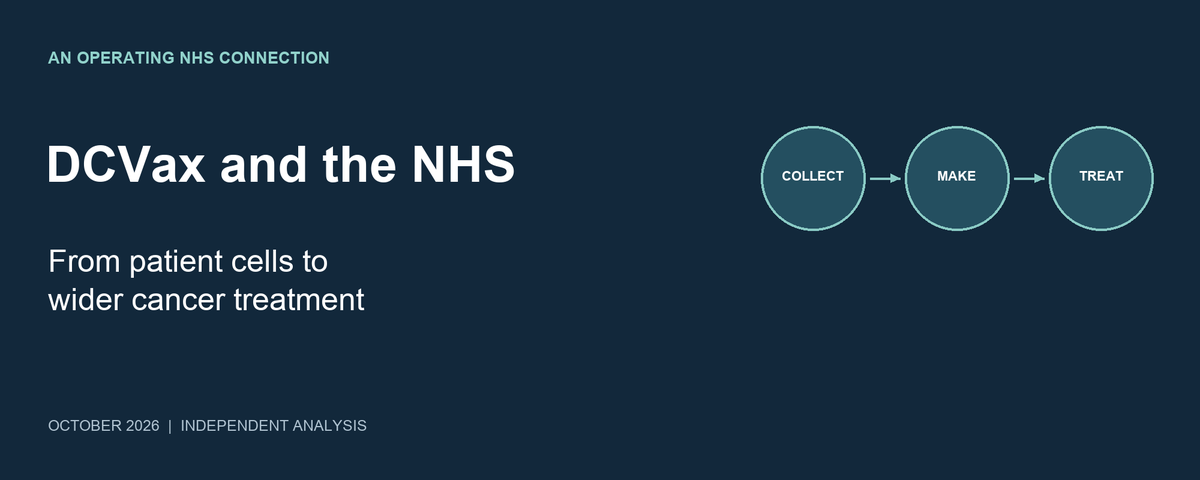
𝗧𝗛𝗘 𝗡𝗛𝗦 𝗖𝗢𝗡𝗡𝗘𝗖𝗧𝗜𝗢𝗡 𝗧𝗢 𝗗𝗖𝗩𝗮𝘅 𝗜𝗦 𝗔𝗟𝗥𝗘𝗔𝗗𝗬 𝗢𝗣𝗘𝗥𝗔𝗧𝗜𝗡𝗚
A manufacturing bottleneck that affected patients now has a named NHS operating partner.
On April 21, Northwest reported difficulty obtaining timely leukapheresis appointments for its UK compassionate-use programme. Patients could deteriorate while waiting for the white-cell collection needed to manufacture treatment. The company announced a dedicated clinic at the London Welbeck Hospital to address that constraint.
On October 8, NHS Blood and Transplant (NHSBT) confirmed that its teams were collecting cells and providing specialist processing and handling for DCVax-L. The collaboration initially involves Leeds and Oxford, follows months of joint work and includes exploration of expansion to further NHSBT locations. Its Cellular and Molecular Therapies service has also acknowledged the contribution of its Stem Cell Processing Laboratories, naming Advent and Northwest.
For a therapy made from a patient’s own material, access to collection is part of access to treatment.
𝗔𝗡 𝗜𝗗𝗘𝗡𝗧𝗜𝗙𝗜𝗘𝗗 𝗕𝗢𝗧𝗧𝗟𝗘𝗡𝗘𝗖𝗞 𝗡𝗢𝗪 𝗛𝗔𝗦 𝗔𝗡 𝗡𝗛𝗦 𝗣𝗥𝗢𝗗𝗨𝗖𝗧𝗜𝗢𝗡 𝗣𝗔𝗥𝗧𝗡𝗘𝗥
NHSBT brings established expertise and facilities to the beginning of the production pathway. Its apheresis network spans ten English cities, with Leeds and Oxford named in this collaboration. Extending that starting model would give more patients a route into manufacture through existing services.
Personalised manufacture can fit inside care a patient is already receiving. In the phase III programme, the batch was produced during postoperative chemoradiotherapy and stored for later dosing. The April release identified an earlier bottleneck: obtaining the collection appointment needed to start that process. NHSBT adds capacity at precisely that entry point. Its practical value begins with getting the patient’s cells into the planned treatment sequence.
Properly authorised compassionate treatment can proceed before marketing approval through the applicable UK unlicensed-medicine arrangements. Advent holds a Specials licence for cell therapy products at Sawston. Northwest reported patient manufacture there from Q1 2022, following Specials and trial licences obtained in late 2021.
Access is assessed through the treating team, with individual arrangements for supply and funding. Marketing authorisation and routine NHS commissioning are separate decisions. The NHSBT partnership strengthens the production support needed for treatment plans that can be made now.
𝗡𝗢𝗪 𝗣𝗨𝗧 𝗢𝗖𝗧𝗢𝗕𝗘𝗥 𝟲 𝗕𝗔𝗖𝗞 𝗜𝗡𝗧𝗢 𝗧𝗛𝗘 𝗣𝗜𝗖𝗧𝗨𝗥𝗘
Two days before the production announcement, the conference programme placed the NHS Cancer Vaccine Launch Pad (CVLP) at 12:35 and Bosch’s personalised, multi-target immunotherapy keynote at 12:55.
The sequence brought the trial-access framework and the cellular platform before the same oncology audience, while a separate NHS operating relationship was already being developed.
CVLP’s protocol covers personalised cancer-vaccine trials requiring biological samples for manufacture and accommodates multiple cancer types, trials and partners. A DCVax-L trial proposal fits that category. CVLP can identify and refer patients into accepted studies; NHSBT can support collection and handling; specialist manufacture can supply the product. Formal DCVax participation in CVLP remains unannounced.
The October 8 agreement gives the conference positioning operational substance: a named NHS organisation is already doing essential work in the production pathway.
𝗙𝗢𝗟𝗟𝗢𝗪 𝗧𝗛𝗘 𝗧𝗪𝗢 𝗜𝗡𝗣𝗨𝗧𝗦
DCVax-L begins with tumour material obtained during surgery and monocytes collected from the patient’s blood.
The tumour supplies the antigen repertoire. The monocytes supply the cells developed into dendritic cells outside the body. Manufacturing brings the two together, preparing an antigen-presenting cell carrying information from that patient’s cancer.
The incoming material has a demanding journey. Northwest’s annual report describes fresh tissue and cells that must reach manufacturing within a defined window, in usable condition. Chain of identity keeps the material linked to its patient; chain of custody records the handoffs.
NHSBT’s announced contribution is collection and cellular handling. Advent supplies specialist manufacturing at Sawston. Every part has to work for the patient-specific batch to reach treatment.
𝗢𝗡𝗘 𝗠𝗔𝗡𝗨𝗙𝗔𝗖𝗧𝗨𝗥𝗜𝗡𝗚 𝗥𝗨𝗡 𝗖𝗔𝗡 𝗦𝗨𝗣𝗣𝗢𝗥𝗧 𝗠𝗔𝗡𝗬 𝗩𝗜𝗦𝗜𝗧𝗦
The published phase III process produced individual frozen doses from one patient-specific batch. A full batch supplied ten doses on the trial’s schedule.
That is a major logistical advantage. Repeat treatment need not require a new operation, a new collection and a new manufacturing run before every injection. The initial production effort creates a supply for later visits.
The company and Bosch describe about eight days for DCVax-L manufacture, followed by quality and release testing. In the phase III programme, production took place during postoperative chemoradiotherapy. Personalised manufacture was integrated into the existing treatment sequence.
Cryogenic storage then separates the production date from the treatment date, subject to validated stability and handling. The next dose can already be made when the next visit is due.
𝗧𝗛𝗘 𝗟𝗔𝗦𝗧 𝗝𝗢𝗨𝗥𝗡𝗘𝗬 𝗜𝗦 𝗕𝗜𝗢𝗟𝗢𝗚𝗜𝗖𝗔𝗟
The released dose is delivered frozen and prepared for an intradermal injection into the upper-arm skin.
The purpose is an immune encounter. Dendritic cells can migrate towards draining lymph nodes, present antigen and help organise tumour-directed T-cell activity. Antigen recognition, costimulation and appropriate cytokine instruction work together. Activated helper T cells can reinforce receptive dendritic cells through CD40L–CD40 licensing.
This explains why a living-cell product needs more than correct labelling and transport. The cells must retain the function needed to perform their part of the response. Bosch’s slides connect the argument to human observations: antigen display, expanded T-cell clones and T cells present in glioblastoma (GBM) tissue after upper-arm vaccination.
The logistics protect the biological work the treatment is intended to do.
𝗧𝗛𝗘 𝗖𝗟𝗜𝗡𝗜𝗖𝗔𝗟 𝗙𝗢𝗨𝗡𝗗𝗔𝗧𝗜𝗢𝗡 𝗙𝗢𝗥 𝗪𝗜𝗗𝗘𝗥 𝗗𝗘𝗩𝗘𝗟𝗢𝗣𝗠𝗘𝗡𝗧
The published phase III externally controlled analysis provides the principal clinical foundation for DCVax-L development. In newly diagnosed GBM, median overall survival from randomisation was 19.3 months with DCVax-L versus 16.5 months in the external controls; estimated five-year survival was 13.0% versus 5.7%. In recurrent GBM, the median comparison was 13.2 versus 7.8 months from recurrence.
An organised treatment service can also make future evidence stronger. Manufacturing records identify which product a patient received. Consented clinical follow-up records what happened afterwards. Connecting them prospectively would make compassionate-use experience more useful for subsequent development.
𝗔𝗗𝗩𝗘𝗡𝗧 𝗢𝗪𝗡𝗘𝗥𝗦𝗛𝗜𝗣 𝗖𝗢𝗡𝗡𝗘𝗖𝗧𝗦 𝗧𝗛𝗘 𝗧𝗘𝗖𝗛𝗡𝗢𝗟𝗢𝗚𝗬 𝗧𝗢 𝗜𝗧𝗦 𝗘𝗫𝗘𝗖𝗨𝗧𝗜𝗢𝗡
Northwest acquired all of Advent on October 24, 2025. Advent brought the organisation responsible for manufacturing, quality and release testing, storage, distribution and product-development work into the group.
Northwest already owned Flaskworks. Owning the automation technology and the manufacturing organisation puts the engineering and its implementation under one corporate owner. Staffing, facility investment, process changes and clinical supply can be coordinated inside that group.
The closing release explicitly connected this integration to additional applications, next-generation technologies and what Linda Powers called a “dominant franchise.” The repeatable asset is an organisation that can turn process knowledge into controlled production. That is why Advent matters beyond one site or one indication.
𝗧𝗛𝗘 𝗦𝗧𝗔𝗙𝗙𝗜𝗡𝗚 𝗦𝗛𝗢𝗪𝗦 𝗧𝗛𝗘 𝗪𝗢𝗥𝗞 𝗕𝗘𝗛𝗜𝗡𝗗 𝗧𝗛𝗘 𝗣𝗟𝗔𝗧𝗙𝗢𝗥𝗠
As of October 9, Advent was recruiting a Biobank Technician for its biological-sample storage services. The advert seeks biobank experience under good manufacturing practice (GMP), with cryogenic storage, laboratory information management systems (LabWare/LIMS) and regulatory audits among the desired skills. It also includes covering for the Biobank lead. Applications go directly to Advent by email.
Robert Ridenour has separately announced that he is starting as Northwest’s Director of Information Technology. That is a role at the parent company, distinct from Advent’s vacancy.
The connection is information continuity. Scaling an autologous therapy multiplies patient-specific identities as well as batches. The patient, the biological material and the records must remain linked through collection, processing, manufacture, storage and delivery.
The biobank role concerns Advent’s general storage business. Its relevance to this analysis is the operating discipline it makes visible: living material must arrive in usable condition with a trustworthy record of whose material it is and how it has been handled.
𝗘𝗗𝗘𝗡 𝗔𝗗𝗗𝗥𝗘𝗦𝗦𝗘𝗦 𝗧𝗛𝗘 𝗡𝗘𝗫𝗧 𝗖𝗔𝗣𝗔𝗖𝗜𝗧𝗬 𝗖𝗢𝗡𝗦𝗧𝗥𝗔𝗜𝗡𝗧
The Flaskworks team documented the EDEN name in a 2018 research paper. Northwest’s later DCVax-L automation programme aims to reproduce the relevant characteristics of the established product through a closed process. Its February 2024 update reported substantially comparable composition, function, purity and dose yield from the optimised prototype.
The proposed gain is more separate patient batches supported by the same laboratory space and specialist workforce, with fewer manual steps. Each patient’s material remains separate.
Deployment requires equipment qualification, process validation, comparability and acceptance for the intended manufacturing use. The 2025 annual report still described development and stated that the systems had not operated at commercial scale. Those steps establish the distinction between demonstrated prototype performance and accepted production capacity.
Existing manufacture already supports current supply. In the supplied December 2025 meeting transcript, management said it would “anticipate launching, with just the two existing Grade B suites,” with Grade C intended to add capacity. Eden’s significance is the capacity and economics of reproducing the product as the service grows.
𝗧𝗛𝗘 𝗙𝗜𝗟𝗜𝗡𝗚𝗦 𝗦𝗛𝗢𝗪 𝗔 𝗪𝗜𝗗𝗘𝗥 𝗖𝗔𝗣𝗔𝗖𝗜𝗧𝗬 𝗦𝗧𝗥𝗔𝗧𝗘𝗚𝗬
The June 2026 quarterly report describes several ways to expand the same pathway: obtain collection capacity through existing facilities without capital expenditure, explore additional tumour-lysate processing locations, discuss a second UK production operation and pursue grant funding for Sawston.
Each addresses a different constraint. More collection appointments supply starting material. Additional processing capability can release central capacity. Automation targets the labour and space required for manufacture.
The UK already has a relevant operating precedent. Autolus established company-controlled production inside Cell and Gene Therapy Catapult’s Stevenage centre, with Innovate UK project support, its own process and its own recruited team. Catapult also operates Braintree facilities. Northwest has not identified either as its second-site partner; its disclosed grant pursuit concerns Sawston.
NHSBT has four licensed advanced-cell manufacturing laboratories and expertise in development, technology transfer, manufacture, release, storage and logistics. Its reference to exploring broader laboratory collaboration therefore reaches well beyond the collection appointment.
𝗧𝗛𝗘 𝗖𝗔𝗣𝗔𝗕𝗜𝗟𝗜𝗧𝗬 𝗖𝗔𝗡 𝗧𝗥𝗔𝗩𝗘𝗟
The US disclosures show how that programme can expand. In late 2025, Northwest described site selection and recruitment for its in-licensed technologies. By June 2026 it reported completed DCVax-L technology transfer, engineering runs and validation at a US company. It was also considering a parallel transfer there for the Kalinski products while separate lease negotiations continued.
A company can carry process knowledge, specifications, training and quality oversight into qualified facilities without constructing and owning every building. Each product and site needs its own validation and permissions.
The non-binding SPIMACO memorandum adds a named regional route: discussions cover DCVax-L approval, supply and commercialisation in Saudi Arabia, with separately negotiated localisation and technology transfer. It starts with GBM and allows mutually agreed expansion.
This connects Advent, NHSBT and the Catapult precedent: retain control of the work that makes a personalised therapy reproducible, then use established infrastructure to extend the programme.
𝗧𝗛𝗘 𝗣𝗟𝗔𝗧𝗙𝗢𝗥𝗠 𝗢𝗣𝗣𝗢𝗥𝗧𝗨𝗡𝗜𝗧𝗬 𝗘𝗫𝗧𝗘𝗡𝗗𝗦 𝗕𝗘𝗬𝗢𝗡𝗗 𝗚𝗕𝗠
Bosch’s overview describes 16 tumour types treated in DCVax clinical trials, plus additional compassionate-use cases. The presentation includes ovarian-cancer observations and Direct’s phase I programme in 40 patients across 13 tumour types.
DCVax-L receives tumour material obtained during surgery. Direct addresses inoperable tumours by placing prepared cells into tumour tissue to acquire antigen there. They connect the patient’s cancer to the presenting cell at different points.
One of Bosch’s Direct slides follows five lesions in a clear-cell sarcoma patient after injection into only one lesion. Several uninjected lesions also fell below their screening measurements. The significance is activity beyond the injection site: an individual clinical observation supporting further investigation of systemic immune effects from local treatment.
Advent also solved a documented manufacturing problem for Direct after an earlier contractor failed to meet specification. Northwest reported completion of its Sawston transfer programme in 2025. Bosch describes Direct manufacture as closed and automated; this is distinct from proving deployment of the Eden implementation for L. The next clinical programme still requires its own authorisation, sites and funding.
The broader development opportunity is to combine complete compassionate-use records, prospective cancer cohorts and reliable supply to establish benefit in defined populations. Those data can support applications for additional indications.
There is a public-funding precedent: the National Institute for Health and Care Research (NIHR) funded ImmunoTACE, a different dendritic-cell vaccine programme in liver cancer. NHS England funds CVLP. NIHR’s Efficacy and Mechanism Evaluation (EME) researcher-led call is open as of October 9, with outline applications due November 25, 2026. An eligible team can develop a defined proposal this autumn, with a sponsor, supply arrangements and a budget.
𝗧𝗛𝗘 𝗟𝗜𝗖𝗘𝗡𝗦𝗘𝗗 𝗧𝗘𝗖𝗛𝗡𝗢𝗟𝗢𝗚𝗜𝗘𝗦 𝗚𝗜𝗩𝗘 𝗧𝗛𝗔𝗧 𝗔𝗥𝗖𝗛𝗜𝗧𝗘𝗖𝗧𝗨𝗥𝗘 𝗠𝗢𝗥𝗘 𝗧𝗢 𝗗𝗘𝗩𝗘𝗟𝗢𝗣
The Roswell Park and Pittsburgh portfolios extend the programme through enhanced dendritic-cell preparations, conditioning approaches and combination strategies. The Roswell licence includes antigen-loaded dendritic-cell therapies and versions intended to acquire antigen after intratumoral administration.
The biological task is coordinated immune instruction. The presenting cell needs suitable antigen information, the functional signals to direct a cellular response, and a route into the relevant immune encounter. Type-1-polarized preparations aim to preserve that instructional capacity. This is more than a question of how much cytokine a cell produces.
Bosch and Bhandary’s New York Academy of Sciences (NYAS) work on dendritic cells prepared for intratumoral injection shows why controlled preparation matters. Different combinations changed cytokine and migration-related profiles; the summary reported additive, complementary and antagonistic effects. Those laboratory findings guide clinical development of candidate preparations.
The September 2025 filing explicitly connects the licensed portfolios to new Direct trial designs involving conditioning, accompanying agents and additional administration routes. The company is developing a broader treatment programme around the cellular therapy.
𝗧𝗛𝗜𝗦 𝗛𝗔𝗦 𝗔 𝗣𝗥𝗘𝗦𝗘𝗡𝗧 𝗣𝗨𝗥𝗣𝗢𝗦𝗘 𝗔𝗡𝗗 𝗔 𝗪𝗜𝗗𝗘𝗥 𝗗𝗘𝗩𝗘𝗟𝗢𝗣𝗠𝗘𝗡𝗧 𝗣𝗔𝗧𝗛
The strategic asset is a controlled treatment process that can be repeated around different patients’ biological material.
NHSBT strengthens the route into production. Advent places manufacturing execution inside Northwest. Eden targets the next capacity step, and the licensed technologies extend the clinical-development programme. Existing compassionate supply gives that infrastructure a present purpose.
The October 6 conference placed the platform beside a national access framework. The October 8 announcement showed NHS teams already supporting its production. The opportunity is to extend that operating capability, generate the evidence for additional uses and secure the corresponding access and funding decisions.
The treatment is personal. The service has to be dependable at every handoff. That is the importance of the NHS connection.
Sources
NHSBT collaboration: prnewswire.com/news-releases…
April capacity statement: nwbio.com/northwest-biothera…
Bosch presentation: nwbio.com/wp-content/uploads…
CVLP: southampton.ac.uk/ctu/cancer…
MHRA access guidance: gov.uk/guidance/advanced-the…
NIHR funding call: nihr.ac.uk/funding/eme-progr…
Advent acquisition: nwbio.com/northwest-biothera…
June 2026 quarterly filing: sec.gov/Archives/edgar/data/…
Autolus precedent: ct.catapult.org.uk/resources…
Licensed portfolio: nwbio.com/northwest-biothera…
NYAS presentation: nwbio.com/wp-content/uploads…
September 2025 filing: sec.gov/Archives/edgar/data/…
Historical EDEN publication: doi.org/10.18609/cgti.2018.1…
Patient manufacture at Sawston: nwbio.com/northwest-biothera…
Advent employer recruitment: uk.linkedin.com/company/adve…
Saudi memorandum: nwbio.com/northwest-biothera…
Phase III publication: jamanetwork.com/journals/jam…
Direct clinical report: pubmed.ncbi.nlm.nih.gov/3001…
2025 annual report: sec.gov/Archives/edgar/data/…
December 2025 management discussion: supplied transcript; official meeting date verified at nwbio.com/annual-shareholder…
IT appointment: Robert Ridenour’s LinkedIn announcement, reproduced in the accompanying image; profile at linkedin.com/in/robertrideno…


MMTLPtrch retweeted

A Major Milestone for Quantum BioPharma & Lucid-MS
Quantum BioPharma (NASDAQ: QNTM) is moving Lucid-MS forward toward Phase 2, entering into a Study Start-Up Agreement with the PPD™ Clinical Research Business of Thermo Fisher Scientific.
Following FDA clearance to proceed, formal study start-up activities are now underway for the planned Phase 2 multiple sclerosis trial.
A significant step forward in our mission to develop a potentially first-in-class neuroprotective approach for MS.
The next chapter for Lucid-MS starts now.
#QNTM #QuantumBioPharma #LucidMS #MultipleSclerosis #Phase2 #Biotech #Innovation #ThermoFisherScientific
🤖 Made with AI
MMTLPtrch retweeted

🚨MARKETS: Housing Costs May Return To ‘Normal’ In 5 Years, Says Senior Economist
franknez.com/housing-costs-m…
#HousingMarket #MarketNews

MMTLPtrch retweeted
Trending again… xitter.cf/i/trending/21078670264…