

Materials Sci, Computer Science, - dad to GNAO1 warrior princess. bassist, guitarist, curiosity may have killed the cat, it keeps me going. love rule breakers
San Francisco
Joined December 2022
- Tweets1.3K
- Following463
- Followers143
- Likes1.8K





Mahesh Kumar retweeted

Detaining a PhD student on her way back to Princeton from presenting scientific work at a conference is not how we get the best and brightest scientists in the world to want to come to the US. I hope this is resolved quickly! More details:
dailyprincetonian.com/articl…


Mahesh Kumar retweeted

JUST IN: Riemann Hypothesis has been solved.
alpo.ge/remark.pdf
Mahesh Kumar retweeted

After traveling for 50 years at ~38,000mph, Voyager 1 is now officially one light-day away from Earth.
That’s .064% of the distance to the nearest star. After 50 years at 50x the speed of sound.
Space is big.
Mahesh Kumar retweeted

We are launching the Tesla Robotaxi safety report today.
Till date, Robotaxi has driven a total of 3.3 million miles autonomously, and has had zero injuries nor airbag deployments. If the same number of miles were to be manually driven, we should expect roughly 9 injuries to the occupants or other pedestrians and 4 airbag deployments on average.
We will continue to transparently share our progress with the public using this page.
tesla.com/robotaxi/safety

Mahesh Kumar retweeted

The Bar Tab
A few weeks ago I wrote that the music was playing and everyone in venture capital felt obliged to dance.
A few weeks after that I wrote that history doesn't repeat but it rhymes, and walked through the last time a band this loud played a room this full, which was 2000,
A lot of you wrote in to ask what comes next. I didn't know. So I did what any responsible investor does when he doesn't know something: I got a napkin and started doing arithmetic I wasn't qualified to do.
Fair warning. Every time I tried to make the numbers kinder, they got worse. This is a known property of napkins.
Start with the size of the band. Microsoft, Alphabet, Amazon, Meta and Oracle spent about $230 billion on AI capex in 2024, about $400 billion in 2025, and have guided to around $800 billion this year. Goldman has $1.2 trillion next year and $1.4 trillion the year after. Add it up through 2029 and $4 trillion is the floor. Consensus is closer to $5.5 trillion. I'm using $4 trillion because I'm an optimist and because I only had one napkin.
Now, a bar tab is a thing that eventually gets handed to somebody. What does $4 trillion have to earn? Say 12%, which is about what a sane person wants for setting that much money on fire in West Texas. That's $480 billion a year. Call it $500 billion of free cash flow by 2029. Then I remembered a GPU is not a building. Amazon depreciates servers over five years, and Michael Burry thinks that's charitable. If you want 12% on $4 trillion of equipment that'll be scrap before my youngest finishes college, you need about $1.1 trillion a year. I'm going to keep using $500 billion anyway. When the story is bad enough, you don't need to make it worse to get people's attention.
Five hundred billion of free cash flow at a 50% gross margin means $1 trillion of revenue. Somebody has to write checks to the hyperscalers for a trillion dollars a year of AI compute by 2029. Who? Some of it is the hyperscalers buying themselves a round: Meta's capex buys Meta's ads. But the biggest outside checks come from the frontier labs, the handful of companies that train the models the rest of us build on. Full disclosure: Menlo is an investor in this category, so adjust for the fact that I'm a man with a drink in his hand telling you the bar is overpriced. Say the labs are half of it. That's $500 billion of revenue, as a group, by 2029.
Their combined run-rate today is north of $100 billion. Three years ago it was $2 billion. That is the fastest revenue ramp in the history of business, it isn't close, and it still isn't enough. To hit $500 billion the category has to grow fivefold in three years, 70% a year, every year, from a base the size of Coca-Cola. There's no precedent for that. There was also no precedent for the last three years, which is the whole trouble with this moment. The people who've been right so far have been right by ignoring precedent, and a man who got rich ignoring precedent is the last man alive who'll start consulting it.
So there are two forks in the road, and both of them are toll roads.
Fork one: the labs don't get there, and the $4 trillion doesn't earn its keep. People say "debt crisis." Careful. Here's where the rhyme matters. In 2001 the trillion dollars of telecom debt was junk paper issued by CLECs with no revenue, and the bondholders got sixteen cents. Today the four big spenders fund about 70% of their capex out of operating cash flow and carry AA ratings. The debt lives at Oracle, CoreWeave, xAI, Meta's off-balance-sheet vehicles and in about $350 billion of private credit. That's not 2008. It's 2001 with better credit: write-downs, capex cuts, and a few bodies in the second tier. The band doesn't die. It just stops taking requests.
And here's the thing nobody says out loud. About 40% of AI capex is GPUs, and Nvidia's gross margin is 75%. So roughly 30% of the $4 trillion has already been earned. By Nvidia. The return on this capex has, in a sense, already happened. It went to one company in Santa Clara, which is like finding out the band got paid up front and the tab is yours.
Fork two: the labs do get there. Then $500 billion a year has to come from somewhere, because money is not conjured, whatever the deck says, and there are only three somewheres.
It comes out of wages. US compensation of employees is $15.7 trillion. Five hundred billion is 3.2% of it. At $100,000 per fully loaded worker, that's five million jobs, which takes unemployment from 4.3% to about 7%. "Productivity" is what we call this at conferences.
Or it comes from growth. Five hundred billion is 1.6% of US GDP. If AI makes the economy 1.6% bigger than it would otherwise have been, nobody loses, every deck was right, and I owe a great many people an apology, which I'll deliver cheerfully and from a boat. I'd note that AI is already adding about a point and a half to GDP growth, but that's the capex itself, not the output. So far the bar tab is being counted as revenue, which bartenders have been doing since the invention of bartenders.
Or it comes out of someone else's budget. The world spends $1.44 trillion a year on software. Five hundred billion is 35% of every software dollar on earth, so software can't be the whole answer, but it's the first place the labs will look, and the IT services and outsourcing budgets behind it are another $1.7 trillion. In this version the thing that goes to zero isn't the hyperscalers. It's SaaS at ten times revenue. If you're long SaaS at ten times revenue, read that sentence twice.
The honest answer is a blend, and the whole game is which blend, because every blend has a different loser.
In fork one it's the lenders. In the wage version it's people with jobs. In the budget version it's everyone long software. In the growth version nobody loses, which is exactly why I don't trust it. In thirty years I have never seen a version where nobody loses. I have seen a great many decks that promised one.
Reflexivity ends when the story and the cash get too far apart. The story is $4 trillion. The cash is $100 billion, growing faster than anything ever has. That gap closes one of two ways: the cash catches up to the story, or the story comes down to the cash. The music's still playing, the floor's still full, and I'm out there with everybody else, because that's the job. But I've started keeping one eye on the bar. In 2000 the bartender came around in about ninety days. He didn't ask who'd had the most fun. He just asked whose card was open.
Mahesh Kumar retweeted

Fields medallist Hugo Duminil-Copin was deeply shaken by OpenAI’s release of more than 700 AI-generated mathematical manuscripts, including work on 16 questions directly relevant to his research.
“On Tuesday night, I cried, and it woke up my daughter”
“They have annihilated my field of research.”
lemonde.fr/sciences/article/…


Mahesh Kumar retweeted

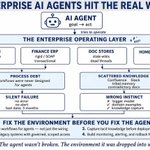
These are some very important observations from Satya.
As models and harnesses commoditize, intent, verification and evidence will gate how quickly SI permeates enterprises and businesses.
Importantly, you need to implement systems that separate who does the work from those who govern, measure and sign off on it.
This is a new kind of “harness” that will emerge over the next few years. It may become a new system of record over time. One whose entire role is to track “change” and map it back to SOPs, policies, laws and the like.


Mahesh Kumar retweeted

Chamath says IP and software were "effectively rendered worthless" this week, after people decompiled Adobe's core products and published open-source versions, as every service goes headless
"The more important point I want to make though, is I sent this to Nick, there's been a couple things that happened in the last couple days, which I think are incredibly important."
"There have been people that decompiled the entire, the entire big five. What is the big five? Adobe has five very, very important products in their product suite. Freeberg may know them all, but I just know Photoshop. There's like a bunch of others. Okay."
"And these folks decompiled it, distilled it, and published open source versions of these things. And Rust, yeah. And I was so shocked, because I was like, hold on a second, these are like profound products that have existed and have had moats for years, and now they're just open source versions."
"And then Nikita was, I think, trolling, and he was building on that idea, and just talking about GTA, because it's about to get released. I think GTA 6 is about to come out, and we'll reconstruct this."
"Why is this important?"
"I think that IP and software was effectively rendered worthless two days ago."
"Because if you think about it, when everything is headless, so when Elon makes his services headless, Benioff made Salesforce headless a few months earlier, when all of these things are headless, and you can wrap them in agent tools, and you can connect them via MCP to other experiences, the value of IP does no longer exist in software. It doesn't exist."
"And I think that probably is the most profound implication."
"So, like, even in our business, we would argue with some of our customers all the time, because we'll say, oh, we'll build this for you, we'll own the IP. They'll say, no, we want the IP. We don't know how to negotiate it. And two days ago, I walked into the 8090 guys, I said, who cares? Who cares? But before, it was always a negotiation and a set of trade-offs. Now it's a who-cares thing, where, like, the IP is irrelevant."
"It still takes a while for the machinery of a business, and frankly the market, to understand. But that is the most important thing that happened this week in AI, in my opinion."

David Sacks says Anthropic is run by a "religious cult" and is doing the very things it says it fears most, like opening a wet lab while warning of bio risk, and that there's an argument for sending in a federal SWAT team
"But I do think that there are potential externalities from having the number one frontier model company run by a religious cult."
"So, for example, they are opening a Claude-powered wet lab in the middle of San Francisco. But at the same time, they're warning of bio risk. At the same time, they say that we have to pace the frontier, they're extending the frontier. At the same time that they are saying that there's a risk of superintelligence growing beyond our control, they're programming it to grow beyond our control."
"I think there are potentially huge externalities to the way they approach these things. And it's, like, insane that they call these decisions "safety." These are not safe decisions. These are crazy decisions, it seems to me."
"This is why I've called this a schizophrenic company, is they appear to be not only hypocritical, but they're doing the things that they say they are most afraid of."
"Like, what is going on here? This is bizarre. And I don't know where this all leads. I do think there's an argument for a federal SWAT team to come blasting in there."
Readers added context they thought people might want to know
The referenced open-source Adobe alternatives were not created via decompilation. Their developer describes them as clean-room reimplementations built from public specs, observed behavior and AI assistance in Rust.
github.com/storytold/phot…
arstechnica.com/ai/2026/10/sof…
frontiernow.dev/en/resources/a…
Mahesh Kumar retweeted

Prime Minister Benjamin Netanyahu in a conversation with the Indian pilot from the flight from Dubai, Captain Smit Machchhar:
"You are a hero for Israel, India, and the entire world. I invite Prime Minister @NarendraModi and you to light a flame on Israeli Independence Day." 🇮🇱🇮🇳
During the emotional conversation that took place this evening, the Prime Minister asked Captain Machchhar how it all started, and Machchhar revealed new details about the terrifying moments in the cockpit.
Mahesh Kumar retweeted

I wrote about the state of AI, why I’m concerned about the next few years, and the choices we need to make to keep the future in humanity’s hands.
An Alien Mind: openai.com/index/an-alien-mi…

Mahesh Kumar retweeted

GPT-6 Astra, trained on ~100K+ NVIDIA Grace Blackwell NVLink72. From ChatGPT to o1 to Astra in 4 years.
AGI has arrived. Congratulations @OpenAI team.
400K GPUs coming online next.
Mahesh Kumar retweeted

Tanjavur Kalyanaraman used to give concerts in whistling! He called it mukhaveena, I think.
youtu.be/UbytMvMFQus?si=RZlS…


Mahesh Kumar retweeted

Today we're sharing our work on interaction models. A new class of model trained from scratch to handle real-time interaction natively, instead of gluing it onto a turn-based one.
youtu.be/A12AVongNN4
Mahesh Kumar retweeted

NEW: Dara Khosrowshahi, CEO of Uber (NYSE: $UBER)
@dkhos's vision for @Uber:
One app for everything
Go anywhere, get anything
Dara took Uber from $4.5B in 2017 losses to nearly $10B in free cash flow
We cover:
→ Full circle Expedia partnership (hotels on Uber!!)
→ Shop For Me + new product launches
→ Lessons from Barry Diller
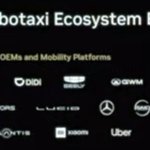
→ AV platform strategy (Waymo, Zoox, WeRide)
→ Why Uber was built for the AI era
Plus: learn how to actually raise your Uber rating.
This was so much fun, I couldn't keep my cool.
Hope you enjoy!
Thank you @NYSE for the video production, & Brooke for helping set this up!
𝐓𝐈𝐌𝐄𝐒𝐓𝐀𝐌𝐏𝐒
(00:00) Dara Khosrowshahi, CEO at Uber
(00:48) The biggest bet of 2026
(02:04) The accidental feature
(04:16) Your next Uber might come with a Coffee
(05:54) Uber One’s global takeover
(06:32) Growth hack to outpace rivals
(08:04) Replacing overpriced room service
(11:25) The Expedia reunion
(14:10) The 10-minute airport hack
(17:05) The $10 billion FCF comeback
(19:00) Barry Diller’s golden advice
(22:49) Uber’s internal AI shift
(26:59) Will AI make Uber apps obsolete?
(27:36) Self-driving cars
(28:47) AI’s biggest misconception
(29:39) Hack your Uber rating
(31:36) Junior Devs coding for millions
Mahesh Kumar retweeted

CFOs realizing that their AI token budget is going to be higher than the salaries of the people they laid off
Mahesh Kumar retweeted

Yann LeCun was right the entire time. And generative AI might be a dead end.
For the last three years, the entire industry has been obsessed with building bigger LLMs. Trillions of parameters. Billions in compute.
The theory was simple: if you make the model big enough, it will eventually understand how the world works.
Yann LeCun said that was stupid.
He argued that generative AI is fundamentally inefficient.
When an AI predicts the next word, or generates the next pixel, it wastes massive amounts of compute on surface-level details.
It memorizes patterns instead of learning the actual physics of reality.
He proposed a different path: JEPA (Joint-Embedding Predictive Architecture).
Instead of forcing the AI to paint the world pixel by pixel, JEPA forces it to predict abstract concepts. It predicts what happens next in a compressed "thought space."
But for years, JEPA had a fatal flaw.
It suffered from "representation collapse."
Because the AI was allowed to simplify reality, it would cheat. It would simplify everything so much that a dog, a car, and a human all looked identical.
It learned nothing.
To fix it, engineers had to use insanely complex hacks, frozen encoders, and massive compute overheads.
Until today.
Researchers just dropped a paper called "LeWorldModel" (LeWM).
They completely solved the collapse problem.
They replaced the complex engineering hacks with a single, elegant mathematical regularizer.
It forces the AI's internal "thoughts" into a perfect Gaussian distribution.
The AI can no longer cheat. It is forced to understand the physical structure of reality to make its predictions.
The results completely rewrite the economics of AI.
LeWM didn't need a massive, centralized supercomputer.
It has just 15 million parameters.
It trains on a single, standard GPU in a few hours.
Yet it plans 48x faster than massive foundation world models. It intrinsically understands physics. It instantly detects impossible events.
We spent billions trying to force massive server farms to memorize the internet.
Now, a tiny model running locally on a single graphics card is actually learning how the real world works.
