

Internet Policy Research Initiative at MIT
Cambridge, MA
Joined March 2016
- Tweets243
- Following49
- Followers597
- Likes98
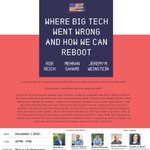




On 12/1 join us for an intimate conversation with Stanford University professors Rob Reich, Mehran Sahami, and Jeremy Weinstein as we discuss their newly published book, "System Error: Where Big Tech Went Wrong and How We Can Reboot."
12-1pm ET
mit.zoom.us/j/94521256257

No good way yet to benchmark ransomware defenses or track progress over time. MIT's IPRI proposes new Ransomware Readiness Index and assessments via its SCRAM platform. Paper out today. internetpolicy.mit.edu/ranso…

"Critical infrastructure #cybersecurity policy should be guided by a broader vision of success that addresses not only the technological challenges to cybersecurity, but its economic and behavioral foundations as well.”
Read the full blog post here: buff.ly/3eKUDCO
InternetPolicy@MIT retweeted

And the follow up paper: arxiv.org/abs/1901.06560 with my @MIT_IPRI colleagues @ctestart @nhfruchter and @julius_adebayo
Join us tomorrow at 2:00 p.m. for a free virtual event about what constitutes long-term “success” in U.S. critical infrastructure #cybersecurity policy.
Register here: buff.ly/372vQpA

What legal risks do security researchers face? Find out in a new guide written by IPRI alum Sunoo Park and Kendra Albert ⬇️
buff.ly/36AiPlO
What if we could securely aggregate #cyberrisk measures without disclosing sensitive data, even to trusted third parties? A newly released #cybersecurity paper shares a cryptographic platform called SCRAM that can do just that. Read more here: buff.ly/3mIfKrb

InternetPolicy@MIT retweeted

Very excited about our new research developing cybersecurity risk metrics based on actually attack data from multiple enterprises. Lays foundation for better risk management and rational cybersecurity insurance underwriting news.mit.edu/2020/helping-co… @MIT_IPRI

Catch @tj_tweets, @drlouiseivers, & @djweitzner discussing #ContactTracing apps during a @gmfus webinar tomorrow at 11 a.m. EDT: buff.ly/39MkJRD
InternetPolicy@MIT retweeted
Great new work on election security with *practical* advice for voters faced with voting technology choices. Thank you @jhalderm and @mspecter. Also great coverage from @nicoleperlroth @AllMattNYT and @SangerNYT nytimes.com/2020/06/07/us/po…


1/ In a new research paper today, @MSpecter and I perform the first public, independent analysis of the security and privacy risks of Democracy Live's OmniBallot online voting platform.
Full paper:
internetpolicy.mit.edu/omnib…
Advice for voters:
internetpolicy.mit.edu/omnib…

1 hour until @djweitzner talks about digital contact tracing technology, the PACT project, and more on @techreview Radio Corona.
Watch it live here: buff.ly/36CxDja
.@MassGovernor during #ImPACT2020 :"This is one of the most important initiatives we’ll be pursuing in our efforts to keep people safe and provide them with confidence that we can get past this and on to whatever the next new normal looks like.” Join here: buff.ly/2XFzG3z
InternetPolicy@MIT retweeted

Starting in 30min: @MassGov @MassGovernor opens up the #imPACT2020 Virtual Conference @MIT @MIT_CSAIL
pact.mit.edu/impact-2020/


Only 1-hour until #ImPACT2020, featuring remarks from @MassGovernor, @ronrivest, @djweitzner, and many more. Join us here ➡️ buff.ly/2XFzG3z

Happening tomorrow: Join a discussion on how contact tracing can help fight the spread of COVID-19, how privacy-preserving automated contact tracing can augment manual contact tracing, & more.
Find virtual event details here: buff.ly/2VuZCfR
InternetPolicy@MIT retweeted
So proud of the outstanding technical work done by my students, showing serious risks of mobile app voting in a system that is actually being used today.
And thanks to @andy_sellars + @BUTechLaw who gave us confidence to pursue the truth.

Today, myself and co-authors @jimmykoppel and @djweitzner released a paper discussing a slew of vulnerabilities we found in @voatz, a blockchain voting app that's been used in US federal elections. You can read about it in the @nytimes! nytimes.com/2020/02/13/us/po…

"If we’re going to govern AI, we need to recognize it for what it is: a tool, with innumerable uses."
Read more in this @washingtonpost op-ed by @R_D: buff.ly/3a7qicQ
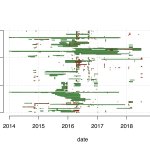
Can we leverage the behavior of BGP serial hijackers to trace attacks back to the hijackers themselves?
New research from @ctestart et al. answers this question: buff.ly/2rNOkIi

. @94Wajeeha and @ElizabethDethy share 5 privacy provisions that “allow cities to benefit from smart city data while preventing the creation of surveillance cities.” 🏙️
Learn more: buff.ly/2QIfxX4