Latest news and research from MIT's Department of Civil and Environmental Engineering

Cambridge, Massachusetts
Joined January 2012
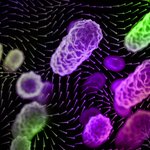
Excited to share our latest paper in @Nature, featuring the fantastic work of Andi Sichert. A systems ecology approach to understanding how microbial communities digest complex carbohydrates in the ocean: nature.com/articles/s41586-0…
1
11
2
27
2,717
MIT CEE retweeted
Inspired by pinecones, tree bark, and seedpods, MIT researchers developed a mathematical framework for designing manufacturable, adaptive materials that mimic complex behaviors found in nature — with applications from robotics to aerospace. bit.ly/4zr0VOK
7
12
661
For 250 years, discovery, courage, and tenacity have driven this country forward and will continue to. From medicine to infrastructure to breakthroughs we can't yet imagine, science touches every part of daily life because someone, somewhere followed their curiosity. What are you curious about?  #CuriosityOnAMission curiositymission.org/
13
46
3
165
21,691
🚀 New at @MIT: the MEng in Data Science for Engineering Systems! Training engineers to tackle the big challenges: 🌍 energy ⚡ infrastructure 🔁 materials 🚚 supply chains 🏙️ cities. 📅 Info session: lnkd.in/d7gsSjEm Let’s build resilient, sustainable systems together!
2
8
888
In engineering, connecting hard and soft materials is notoriously difficult, often leading to stress concentrations and failure in joints, implants, and electronic components. We show how Nature solves this challenge through subtle, built-in molecular programming at the nanoscale. At the tendon-bone interface, the enthesis, weak H-bond interactions between collagen and mineral particles prevent a rigid network from forming, preserving compliance, toughness, and durability. Durability comes not from stronger bonds, but from weak hydrogen bonds that tune structure - an unexpected concept, giving us deeper understanding of the design language in protein materials. These findings point toward new ways of designing real-world resilient biomaterials and engineered interfaces, from medical devices to electronic circuits. Proud to share this work, published in @acsnano, with @GuyGenin and Stavros Thomopoulos, led by Amadeus Alcântara, Mario Milazzo & Eesha Khare.
2
9
2
59
3,614
Jesse Kroll, a professor in @MIT_CEE, and Angela Belcher, a professor in @MITDeptofBE, are the recipients of this year's Capers and Marion McDonald Award. 📸: Conor McArdle
3
13
1,279
New podcast episode out today with the brilliant (and very down-to-earth) environmental chemist Desirée Plata. @MIT_CEE She believes we need to innovate while anticipating #environmental and #health problems. #methane buzzsprout.com/2464891/episo…
1
3
218
Anyone in the world can learn chemical engineering, electrical engineering, and more from 5 @MIT researchers recently elected to @theNAEng. Try 11 free online courses by 🧪 @MITChemE, 🚚 @MIT_CEE, and 🤖 @MITEECS (available on @MITOCW & @MITxCourses) ➡️ bit.ly/4lb9TsD
1
5
1
18
2,835
How were humans able to recognize that Newton's laws of motion govern both the flight of a bird and the motion of a pendulum? This ability to identify the same mathematical patterns across vastly different contexts lies at the heart of scientific discovery—whether studying the aerodynamics of bird wings or designing the blades of a wind turbine. Yet, AI systems often struggle to discern these deep structural similarities. 💡The key may lie in mathematical isomorphisms—patterns that preserve their relationships regardless of context. For example, the same principles of fluid dynamics apply to blood flowing through arteries and air streaming over an airplane wing, or the motion of a molecule. This raises a fundamental question in artificial intelligence: how can we enable machines to understand the world through these invariant structures rather than surface features? 🚀Our work introduces Graph-Aware Isomorphic Attention, improving how Transformers recognize patterns across domains. Drawing from category theory, models can learn unifying structural principles that describe phenomena as diverse as the hierarchical assembly of spider silk proteins and the compositional patterns in music. By making these deep similarities explicit, Isomorphic Attention enables AI to reason more like humans do—seeing past surface differences to grasp fundamental patterns that unite seemingly disparate fields. Through this lens, AI systems can learn and generalize, moving beyond superficial pattern matching to true structural understanding. The implications span from scientific discovery to engineering design, offering a new approach to artificial intelligence that mirrors how humans grasp the underlying unity of natural phenomena. Some key insights include: 1️⃣ Graph Isomorphism Neural Networks (GINs): GIN-style aggregation ensures structurally distinct graphs map to distinct embeddings, improving generalization and avoiding relational pattern collapse. 2️⃣ Category Theory Perspective: Transformers as functors preserve structural relationships. Sparse-GIN refines attention into sparse adjacency matrices, unifying domain knowledge across tasks. 3️⃣ Information Bottleneck & Sparsification: Sparsity reduces overfitting by filtering irrelevant edges, aligning with natural systems. Sparse-GIN outperforms dense attention by focusing on crucial connections. 4️⃣ Hierarchical Representation Learning: GIN-Attention captures multiscale patterns, mirroring structures like spider silk. Nested GINs model local and global dependencies across fields. 5️⃣ Practical Impact: Sparse-GIN enables domain-specific fine-tuning atop pre-trained Transformer foundation models, reducing the need for full retraining. Other impacts: ✅Real-World Relevance: Whether we are looking at protein structures, designing new materials, or working on social network analytics, graph-aware Transformers can capture subtle relational patterns traditional architectures may miss. ✅The juncture of graph isomorphism theory, category theory, and sparsification, these GIN-Transformers step beyond sequential modeling to tackle the relational nature of complex data. #Transformers #GraphNeuralNetworks #AI #MachineLearning #Isomorphism #CategoryTheory #ArtificialIntelligence #DeepLearning Link to paper & code in response ⤵️
6
22
5
68
19,493
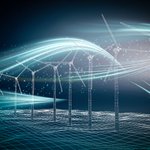
Our lab @MIT_CEE partnered with @VineyardWindUS for community outreach and education focused on the power and opportunities of offshore wind energy at the AHA! New Bedford event
1
2
11
1,019
Dr. Gregor's paper shows B vitamin limitations and cell lysis play crucial roles in shaping coastal marine bacterial communities, highlighting the intricate dependencies within microbial ecosystems. For more from this ECR: rachel-gregor.com/ (2/2)
4
17
1,585
"#Concrete is perhaps the most commonly used building material in the world. With a bit of tweaking, it could help to power our homes too." Damian Stefaniuk and our carbon-cement supercapacitor research were featured in @BBC @BBCScienceNews bbc.com/future/article/20240…
4
1
5
952
Since plants use CO2 to grow, won’t they do better in a world with more CO2? Tune into the season premiere of TILclimate tomorrow where Professor David Des Marais (@mit_cee) helps answer this question. 🎧 You can listen to TILclimate wherever you get your podcasts.
1
3
430
📢New paper on river restoration with wood placement! 🌊🌲 Our experiments reveal the significant impact of a single log on flow variability and morphological changes. ➡️ doi.org/10.1016/j.geomorph.2… Thanks to @snf_ch for funding 🤓 @WSL_research @MIT_CEE @eth_dmavt #flumefriday
1
9
44
2,952
Watch Franz-Josef Ulm join @PeteButtigieg @USDOT for a @NASEMTRB panel, "New Materials for Infrastructure: Reinventing the Roadway, Runway, & Railway" below. @MIT @ConcreteAdvFdn @MIT_CEE #TRB #TRB2024 #climate #infrastructure youtube.com/watch?v=7rvCGns2…
1
3
567
Final #TRBAM ballroom session today - New Materials for Infrastructure: Reinventing the Roadway, Runway, and Railway panel discussion with @SecretaryPete and DAS Robert Hampshire @NASEMTRB
10
8
1
20
2,003
Introducing MechGPT 🦾🤖 This project by @ProfBuehlerMIT is one of the coolest use cases of 1) fine-tuning an LLM, and 2) generating a knowledge graph that we’ve seen (powered by @llama_index 🦙). The end result is a system capable of understanding a diverse range of scientific disciplines 🧪, generating new hypotheses/ideas, and importantly - connect concepts between disparate concepts of research 🤯 Let’s take a concrete example of this: “relate hyperelasticity in dynamic fracture with protein unfolding” 🧬 A knowledge graph is generated with @llama_index abstractions from sampled LLM conversations. Take a look below at the screenshot 🖼️. We see some key concepts in common between hyperplasticity and protein unfolding! 💡 Dynamics of Energy Transfer 💡Mirror-symmetry effect Finally, this knowledge graph can itself be used for retrieval-augmentation to answer questions + develop new hypotheses. Check out the full paper below - there’s a lot of details that we didn’t cover: AMR: asmedigitalcollection.asme.o… ArXiv: arxiv.org/pdf/2310.10445.pdf
15
169
16
874
281,238
2023 Design Fellow James Brice worked as a zookeeper before coming to MIT. Pursuing a dual Master in @mitarchitecture & Science in @mit_cee, he's designing nature-based solutions for coastal adaptation with oyster reefs for coastal resilience. buff.ly/3tS1FPM
3
4
1,457
Germicidal UV lights could be producing indoor air pollutants, study finds: While useful for killing pathogens including SARS-CoV-2, the lights may cause unwanted chemical reactions and should be used with ventilation, researchers say. mitsha.re/Go1p50PYx1X
6
20
3
67
19,452