







MIT LIDS retweeted

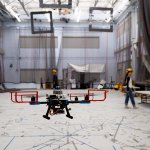
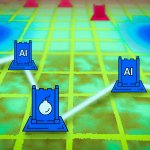
It is legal to break the law! New paper on game theoretic motion planning arxiv.org/pdf/2610.22277
MIT LIDS retweeted

Congratulations to @drmapavone @GioeleZardini and team on this fantastic achievement! Principles of Robot Autonomy is poised to become a go-to textbook for anyone interested in learning about robotics.

Ever wondered what it’s like to learn robot autonomy @Stanford? Now you can.
Today, we’re opening up the robot autonomy teaching materials that my collaborators and I have been developing over the past several years—for anyone, anywhere, completely free.
At the heart of this effort is Principles of Robot Autonomy (PoRA), a textbook inspired by the Stanford robot autonomy course series I’ve been teaching since 2017.
Robot autonomy has evolved from a research discipline into a technology deployed in the real world. Building capable autonomous systems requires more than understanding individual algorithms: it requires understanding how perception, state estimation, planning, control, and learning work together in a complete autonomy stack.
That’s what we set out to teach with PoRA: bringing classical robotics and modern AI together in one coherent framework, grounded in both theory and practice.
Coming soon in print from Cambridge University Press, Principles of Robot Autonomy is also freely available online and comes with a comprehensive collection of open educational resources:
📖 Textbook, arxiv.org/abs/2608.03496 — Foundations of robot autonomy, from classical methods to modern AI-based approaches.
🎥 Video lectures, porabook.com/lectures/ Lectures from my Stanford courses on robot autonomy and on optimal and learning-based control.
💻 Interactive exercises, porabook.com/exercises/ — Hands-on Python implementations and Jupyter notebooks.
📝 Teaching materials, porabook.com/instructors/ — Lecture slides and resources for instructors.
🌐 Explore all PoRA resources, porabook.com/ — Including Ask the Book, an AI study assistant integrated throughout the textbook to answer questions, explain derivations, and connect ideas across chapters.
📣 Read the Stanford announcement: news.stanford.edu/stories/20…
Our goal is simple: to make high-quality education in robot autonomy accessible to students, researchers, engineers, educators, and anyone curious about how autonomous robotic systems work.
I believe that sharing knowledge is fundamental to the mission of a university. Autonomous robotics—and Physical AI more broadly—are among the defining technological frontiers of our time. We want to help more people understand these technologies, build with them, and advance the field.
A huge thank you to my co-authors, @DanieleGammelli, Joseph Lorenzetti, @katielulula, and @GioeleZardini, and to everyone who helped bring this project to life.
Explore the resources, use them in your own learning or teaching, and please share them with anyone who might find them useful!
#Robotics #PhysicalAI #ArtificialIntelligence #AutonomousSystems #Education
@Stanford @StanfordEng @StanfordAILab @StanfordHAI

MIT LIDS retweeted
great work from Harry and Nicolas at @MITAeroAstro and @MITLIDS
- Video: youtu.be/l_hArumdj1s?si=FHjv…
- Paper: arxiv.org/pdf/2606.08277
#mitSparkLab #robotPerception #uncertaintyQuantification

MIT LIDS retweeted

Did you know the original Claude — the chatbot’s namesake, according to Anthropic lore — was a renowned MIT professor? Claude Shannon SM ’40, PhD ’40, who taught at MIT from 1956 until his retirement in 1978, was known to many as the father of information theory and of modern digital communications.

ALT At left, grayscale photo of an older Claude Shannon posing at a blackboard. At right, color photo of a bust of Shannon, pensive and looking down, in front of glass windows on a sunny day.
MIT LIDS retweeted

Thinking about adding machine learning to your engineering toolkit? Start by hearing from the person who teaches it.
On Wednesday, September 9 at 12pm ET, MIT professor Youssef Marzouk will walk through MIT xPRO's machine learning, modeling, and simulation: engineering problem-solving in the age of Ai. You'll learn what to expect from the program and get to ask the course team directly.
Register now: bit.ly/3UD0lxE

MIT LIDS retweeted

📣 Planning to submit our #NeurIPS2026 workshop? we are using OpenReview this year, & account creation can take up to 2 weeks. We recommend creating your OpenReview account by Aug 15 to ensure you can submit on time for the Aug 29 deadline.
👉Learn more: climatechange.ai/events/neur…

MIT LIDS retweeted
Hiring a postdoc at @MIT 🚨
Compositional design, applied category theory, optimization → autonomy stacks, control architectures, multi-agent systems, agentic AI, mobility & energy networks.
Rolling review, first pass Sept 15 👉
MIT LIDS retweeted

The 2026 volume of the Annual Review of Economics is now online. Take a look at the most read article, "Large Language Models: An Applied Econometric Framework" by @jensottoludwig, @m_sendhil, and @asheshrambachan
bit.ly/4wI35an
MIT LIDS retweeted
MIT Researchers combined an efficient algorithm with dedicated hardware to rapidly generate 3D maps for navigation using minimal memory and power. news.mit.edu/2026/new-chip-c…

MIT LIDS retweeted
Deep learning runs on math, but we've never had a formal language for architectures!
Now we do. Our new work is out on @TmlrOrg , led by @Vincent Abbott 🎉
arxiv.org/pdf/2604.07242

MIT LIDS retweeted

Ashia Wilson, a professor in @MITEECS, is a recipient of the 2026 Junior Bose Award. The award is given annually to an outstanding contributor to education.
📸: Conor McArdle
engineering.mit.edu/news/ash…

MIT LIDS retweeted

🚢🌊 Our latest paper introduces ORCA (Observation-informed Real-time Correction with Attention), a transformer for correcting numerical weather prediction (NWP) over the ocean.
🧵

MIT LIDS retweeted
great to see our work "DAAAM: Describe Anything Anywhere At Any Moment" with Nicolas Gorlo and Lukas Schmid featured on the MIT News: news.mit.edu/2026/could-ai-t…
if you are interested in robot memory, scene graphs, mapping, or question answering, check it out!
#mitSparkLab #CVPR2026

MIT LIDS retweeted

Super excited for this year's CCAI Virtual Summer School. To be effective, #AI for #climate action must be shaped ground-up by diverse stakeholders around the world. This program provides essential knowledge & skills to enable this. Consider registering and/or spreading the word!

Excited to announce the fourth @ClimateChangeAI Summer School (virtual, July 19–August 22, 2026)! 🎉
Are you an #AI or #DataScience expert who wants to tackle #ClimateChange? Are you a #climate expert trying to use #ML in your work?
Register here 👉 climatechange.ai/events/summ…

MIT LIDS retweeted

Is your #weather app good enough for deciding whether and when to go outdoors? A recent study co-authored by several MIT CS3-affiliated researchers introduces a new method for evaluating the accuracy and reliability of today’s #airquality forecast tools. tinyurl.com/w7vvsbk3

ALT As our changing climate fuels more frequent wildfires, there’s a growing concern about the health impacts of particulate matter (PM2.5) pollution, especially among people with pre-existing respiratory conditions. (Source: South Coast Air Quality Management District)
MIT LIDS retweeted

⚖️ 🔨 When removing one bias from an AI model, it can create or amplify other biases. This can lead to what AI researchers call the "whac-a-mole dilemma." A new paper from @aihealthmit researchers proposes a smarter debiasing approach. news.mit.edu/2026/smarter-wa…

MIT LIDS retweeted

Watch the full conversation here: youtu.be/D6f1IMPHCuY?si=MbY5…

MIT LIDS retweeted
If you are in Rio for @iclr_conf , check out Vincent’s work!!!

I'll be in Rio 🇧🇷 for @iclr_conf next week! I'll be presenting a poster for FlashAttention on a Napkin. Get in touch, I'm keen to meet people IRL while there ~~

MIT LIDS retweeted

For @iclr_conf, I’ll be presenting FlashAttention on a Napkin today (Friday)!
Pavilion 3-622
3:15-5:45

MIT LIDS retweeted
Check out our ICLR poster for our TMLR paper which got J2C certification!!!
