

Operated by former Division 1 Catching Coach | Main Account - @max_schrantz
Joined January 2020
- Tweets150
- Following117
- Followers806
- Likes135




Pinned Tweet
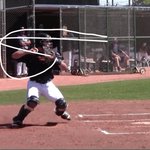
Flexed to Extended VS. Extended to Flexed Receiving Study:
This past season, catchers following one of the two methods above were constant with top end talent. While catchers following the generic "stick where pitched" method fell behind.

Anyone interested head over to my main account 👍

🔦🔦MAX OUT PLAYER SPOTLIGHT 🔦🔦
Dedicated to those who have/are expected to make notable jumps.
Xander Payne '22 (Medina) Current FB top at 84mph with more coming. Elite baseball name. Uncommitted.
Profile ✏️ bit.ly/2KrM3w4
@Xpayne11 @WNYTomPrince @PBRNewYork
Dug this up from deep in the camera roll.
-Teaching point was to show catcher being on time VS the two directional stick later in video.
-Also talked about elbow placement and why it forced catcher to chase in the last clip.
15
Not all catchers fit into the same mold and the combo of a quick exchange and throwing velocity needs to be found. Figure out how your body moves and above all be an athlete. For more I encourage all to check out my Controlling the Running Game thread from January.
4
More of the same with Castillo. Average exchange time of .65 seconds. The reason why Castillo and Martin Maldonado both averaged a 1.96 pop in 2019, despite Maldonado having a throwing Velo 8mph faster.
Tony Wolters utilizing the transfer method. Having downward movement on receive to create strong arm path. Receiving that ball and sending it on its way in one fluid motion. Average exchange time of .65 seconds.
From a side view this is the projected arm path. Compare the smooth, one directional arm circle like the video above. To the two directional "throw up to ear" arm path. Best advice for individuals who are having a hard time understanding, would just be to go out and feel it.

1
3
Video above shows using the low pitch momentum to utilize quick/strong arm action. Now see Braves catchers working towards similar transfer/arm action through various pitch locations.
1
2
Manipulating body and transfer location of the low strike. Transferring at the bodies midline, at waist level, with arm action being one smooth movement. Can see plenty of middle infield actions. See slight body movement pre-catch to gain momentum.
1
4
Transfer at chest method on the low pitch. Generally top catch & throw guys manipulate their body/transfer location based off pitch location, here Grandal does not. Remember the more distance glove has to travel before transferring to hand, the slower the exchange time.
1
4
Through the "throw up to ear" method, catchers naturally evolved into transferring at chest level and at the midline of the body. A comfortable and efficient position that still works for many big league catchers.
1
3
In previous years, I have heard the phrase "throw up to ear" when referring to the transfer. In theory to shorten arm path and exchange time. In reality, the method robs catchers of arm strength and puts their body in an uncomfortable position.
1
3
When game time comes, the transfer should be an automated response, an athlete using their preparation and athleticism to make plays. Catchers with a mental block often dig deep in to glove, leading to bobbles. Catchers who are confident deflect from glove to hand in one motion.
Transfer Location Study
Diving into what an efficient transfer truly is. Including the different mindsets of transferring at chest, throwing up to ear, and transferring at the bodies midline.

Shout out to @tannerswanson for continuing to bring the catching community together. Awesome Stuff. #CoachesVsCOVID @fredhutch
MAX Catching retweeted

#CoachesVsCOVID Catching webinar #5 is set! Excited to talk shop with @Orioles Field Coordinator/Catching Instructor Tim Cossins. Tim is a master teacher & about as genuine as they come. Tune in!
🗓️Sat, May 2
⏰10 am PST / 1 pm EST
💰Free ($5-25 Donation)
💯 to @fredhutch

Just like when working below the low strike, when reaching glove side we use pre catch momentum to bring glove parallel.
With our game focused around receiving the low strike, continuing working thumb under on glove side pitches ties in great. Since we are already working below the baseball, this only helps us not go past parallel on inside pitches. Notice elbow.
Gomes working parallel glove on a 96mph missed spot heater. Compare to tweet number 2 for parallel vs vertical glove on missed spot FB.
As soon as a catcher decides to go vertical glove, in the eyes of an umpire, they are essentially presenting the pitch as a ball. Chasing or "Framing" the pitch outside of their body.