

Musk is a madman and the number of bots here is immense. I am therefore moving to Bluesky: https://xitter.cf/t.co/7QuI3hR5Av
Tromsø, Norge
Joined October 2018
- Tweets236
- Following310
- Followers78
- Likes1K






Arve Lynghammar retweeted
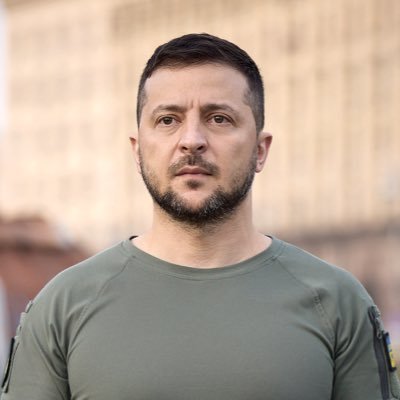
Open Letter
To the President of the Russian Federation
From the President of Ukraine
When you came to power in Russia more than 26 years ago, many people in Ukraine viewed you positively. That is how it was. But that is now in the past.
Now, the overwhelming majority of Ukrainians view it positively that our long-range drones paid a visit to the opening of your forum in St. Petersburg, covering a distance of more than 1,000 kilometers. As you know very well, that distance is not the limit of our capabilities.
Arve Lynghammar retweeted

lol, i just checked it out, Starobelsk College posted this on 24th of April, literally a month ago.
They still haven't deleted it!


Arve Lynghammar retweeted
04.3.2014 – 09.03.2014: Reports of Nazis in Ukraine increase dramatically. Russian propaganda begins to prepare for the invasion of eastern Ukraine. In four weeks, Moscow will send its "local separatists" such as Igor Girkin, whose task is to overthrow the Ukrainian state.

Arve Lynghammar retweeted

On one side of the Atlantic, you have a 79-year-old former game show host who believes windmills cause cancer, personally ended a war that hasn’t ended, and that crowd sizes at his inauguration defied the known laws of mathematics.
On the other side, you have a 72-year-old ex-KGB man who has just accused Finland of secretly plotting to invade Russia.
Finland. Famous for saunas, reindeer, and minding their own business since approximately the Bronze Age.
Putin’s reasoning, delivered with the solemn authority of a man who hasn’t slept since 2003, was this: Finland joined NATO because they were waiting. Biding their time. Lurking. Ready to swoop in and grab Russian territory the moment Russia collapsed.
“Swoop in and grab what they could,” he said.
This is a man who sent 200,000 troops across an internationally recognised border, seized territory by force, and has spent four years reducing Ukrainian cities to rubble. Describing someone else as the type who swoops in and grabs what they can.
The psychological term is projection. The clinical term is considerably less polite.
Meanwhile, across the ocean, the other one is imposing tariffs on islands inhabited exclusively by penguins and receiving world leaders at a golf club in Florida as though the White House is simply too far to drive.
Two old men. Two fantasy worlds. Zero connection to observable reality.
The Cold War at least had the decency to be frightening. This is just embarrassing.
When your entire worldview runs on paranoia, grievance, and whatever the Kremlin version of Fox News feeds you at 3am, a fence looks like an invasion. A neighbour looks like a threat. And five million Finns quietly getting on with their lives looks like a geopolitical conspiracy.
Arve Lynghammar retweeted

RFK Jr: "A Democratic senator claimed it's mathematically impossible to have a drug drop by 600%. I said, 'Well, if the drug was $100 and it raises to $600, that would be a 600% rise. If it drops from $600 to $100, that's a 600% savings.'"
Trump: "Right"
Readers added context they thought people might want to know
Factual and mathematical error
A 100% reduction means the entire original value is removed, resulting in a final amount of zero. It signifies complete elimination or a 100% discount, such as a price dropping from $600 to 0$
increase from $100 to $600 is 500% increase
mathcentre.ac.uk/resources/uplo…
vedantu.com/calculator/per…
calculator.net/percent-calcul…
Dette er langt frå bra, om det stemmer:

Dette er strålende undersøkende journalistikk fra VG: vg.no/nyheter/i/L4pl4Q/kjoep…

Arve Lynghammar retweeted
The Witkoff-Dmitriev plan is even more amateurish than I imagined. It favours Russia although does contain elements that Russia will not like. Premature leaking means that it is no more than work in progress. Here is an annotated version (This is free). open.substack.com/pub/samf/p…?
Arve Lynghammar retweeted

Коли ми говоримо про незалежність, то найчастіше уявляємо собі свободу — право жити так, як хочемо, самостійно вирішувати, куди йти і ким бути. Але правда у тому, що шлях до незалежності часто проходить через особливу суперечність. Щоб Україна залишалася вільною, сотні тисяч людей зробили свідомий вибір частково відмовитися від власної свободи. Вони одягли форму, стали частиною війська, підпорядкували себе наказам і дисципліні, пожертвували своїм цивільним життям.
Може здатися, що тут є протиріччя: як можна боротися за свободу, відмовляючись від неї? Але саме це й робить цей вибір настільки справжнім. Бо свобода — це не лише “робити, що хочу”. Це здатність прийняти рішення та взяти відповідальність за щось більше, ніж ти сам. І тому ті, хто віддав частину власної незалежності, насправді зберігають її для всієї України.
Обов’язково треба пам’ятати тих, хто віддав за цю незалежність життя. Саме завдяки ним ми можемо й далі говорити про свободу. Їхня жертва — це основа нашого сьогодення.
Є також ті, про кого ми не маємо права мовчати: це наші полонені. Вони позбавлені свободи буквально. Вони переживають найважчі випробування, і їхнє повернення додому — це теж частина нашої боротьби за незалежність. Адже країна, яка справді є вільною, не може залишати своїх людей у неволі.
Тож у цій особливості свободи є кілька облич. Є ті, хто добровільно обмежив себе, щоб ми мали шанс жити у вільній країні. Є ті, хто пожертвував життям, аби незалежність стала реальністю. Є ті, хто нині чекає повернення з полону, щоб знову відчути, що означає свобода.
Отже, незалежність — це не лише історичний акт, підпис чи дата. Це жива боротьба, це вибір, і це відповідальність — перед тими, хто вже заплатив найвищу ціну, і перед тими, кого ще потрібно повернути додому.
“Ми мусимо навчитися жити так, щоб наша незалежність була не папером, а нашою природою.” – Левко Лук’яненко
Arve Lynghammar retweeted

This would be funny if it wasn't so sad.
Trump's special envoy Steve Witkoff 'misunderstood' Putin. When Putin demanded Ukraine withdraw from its own Kherson and Zaporizhia regions, Witkoff thought Putin meant Russia will withdraw its forces.
unn.ua/en/news/trumps-specia…

Arve Lynghammar retweeted

According to The Times, the Kremlin is forcing Ukrainian children abducted from occupied territories to join the Russian army once they turn 18. This brutal tactic, reportedly ordered by Putin, marks a new level of psychological warfare against Ukraine. An estimated 35,000 children were taken—many now face conscription.

Arve Lynghammar retweeted
SitRep - 17/07/25 - A Ukrainian flag on the Kinburn Spit
An overview of the daily events in Russia's invasion of Ukraine. A new 'huge' drone deal between the US and Ukraine is in the making, and a Ukrainian flag appeared on the Kinburn Spit.
REPOST=appreciated
1/X


Arve Lynghammar retweeted
SitRep - 13/06/25 - Sapsan went into mass production
An overview of the daily events in Russia's invasion of Ukraine. Overshadowded by the Israel-Iran events, Ukraine recovered 1200 bodies of deceased defenders and civilians.
REPOST=appreciated
1/X


Arve Lynghammar retweeted
SitRep - 12/06/25 - More Ukrainian POWs returned
An overview of the daily events in Russia's invasion of Ukraine. Today another unknown amount of Ukrainian soldiers returned from Russian captivity. Among them lots who needed medical attention.
REPOST=appreciated
1/X


Arve Lynghammar retweeted
SitRep - 10/06/25 - Another large attack on Kyiv and Odesa
An overview of the daily events in Russia's invasion of Ukraine. At night, Russia attacked Ukraine, mainly Kyiv and Odesa, again inflicting terror and destruction.
And the world is doing nothing.
REPOST=appreciated
1/X


Arve Lynghammar retweeted

In today's Vatnik Soup, I'll share my latest op-ed:
How We’re Being Manipulated on Social Media
In a world where more people get their news from social media than from newspapers or TV, it’s time we asked a hard question: How much of what we see online is real? The uncomfortable answer is: less than we think. What we often perceive as authentic public opinion is increasingly the result of manipulation—by bots, paid armies of fake accounts, marketing companies, AI-generated news sites, and even entire states weaponizing information. And most of it is happening in plain sight.
Let’s start with something disturbingly simple: for the price of a pizza, you can buy massive influence. On freelance marketplaces, it takes just a few clicks to purchase thousands of fake followers, likes, shares, and comments on platforms like Instagram, TikTok, YouTube, and X (formerly Twitter). Ask yourself: how many of your own posts have ever received thousands of likes or shares? The answer, for most people, is probably none—which is exactly what makes this manipulation so deceptive. These engagement-boosting services are typically operated from countries like India, the Philippines, and Vietnam, where a booming industry of digital laborers has turned fake influence into a full-time business.
Whether it’s an influencer faking popularity, a company simulating customer praise, or a political actor trying to make a fringe opinion look mainstream—this business of fake engagement is distorting our information environment. It’s hard to tell what’s trending because people care, and what’s trending because someone paid to make it trend.
None of this is new. For years, corporations have engaged in social media manipulation under the guise of marketing—commissioning so-called “astroturfing” campaigns where fake accounts pose as everyday people endorsing a product or attacking a competitor. These tactics were once limited to boosting consumer brands, but they’ve now spilled over into politics at scale. Political operatives, PR firms, and even governments are hiring the same engagement tactics once used to sell sneakers or soda to sell ideologies, smear opponents, and seed disinformation. What began as commercial spin is now political warfare.
A more insidious form of manipulation is driven not by ideology, but by profit. Engagement farms—often based in countries like India, the Philippines, and Vietnam—are using what’s known as rage farming to grow huge audiences. These operators exploit divisive cultural and political content (often around movements like MAGA) to provoke anger, tribal loyalty, and obsessive engagement.
Here’s how it works: the accounts post inflammatory, stolen, or reworded content 24/7—now easily automated with AI—designed to incite outrage and attract likes, shares, and comments. These posts often revolve around polarizing topics like immigration, vaccines, climate change, race, gender, and other issues that are guaranteed to spark strong emotional reactions. The more engagement, the more reach. The more reach, the more ad revenue. With ad share models on platforms like YouTube, Facebook, and X, even a modestly successful rage account can generate hundreds or thousands of dollars a month—a life-changing income in parts of the world where average wages are far lower.
As revealed in a 2025 investigation by 404 Media, much of Facebook’s AI-generated junk content comes from content farms in the Philippines and Vietnam, where low-wage workers churn out clickbait, AI slop, and rehashed political outrage designed to harvest engagement and ad revenue. What looks like an army of angry citizens might actually be a couple of laptops in a café in Ho Chi Minh City or Manila. And what looks like political tribalism may in fact be a business model—weaponizing emotion for clicks and cash.
Social media algorithms are designed to prioritize content that elicits strong emotional reactions—especially anger, fear, or moral outrage. The result: rage farming content isn’t just tolerated by platforms; it’s often supercharged by them. Engagement becomes visibility. Visibility becomes virality.
This creates a feedback loop. Bots and fake engagement push content up the feed. The algorithm picks it up and boosts it further. People see it, react, and share it—believing it’s organically popular. This creates the illusion of consensus, or worse, the illusion of truth.
Users who engage with this content are quickly sorted into echo chambers, where they only see posts that confirm their beliefs. This isolates communities, radicalizes individuals, and makes users more vulnerable to future manipulation—political or otherwise. It also weakens a society’s ability to hold constructive debate or recognize objective facts, which are essential for a functioning democracy.
The disinformation economy has been supercharged by generative AI. In early 2024, journalist Jack Brewster spent just $105 on the freelancer platform Fiverr to build a fully automated propaganda site. He hired a contractor to create a fake news outlet that used AI—including ChatGPT—to rewrite real articles and push a partisan agenda, publishing dozens of stories a day with zero oversight. It took less than a week. Given how fast AI has advanced since then, today it would likely be cheaper, faster, and require even less skill. The barrier to entry is gone—and as AI becomes more powerful and accessible, flooding the internet with convincing, well-written lies is only getting easier.
Russia has taken these tactics to the next level. According to investigations by France24 and others, Russian networks are flooding the internet with millions of fake news websites—machine-generated and translated into dozens of languages. These sites promote pro-Kremlin narratives, rewrite history, and manufacture consent. Their goal isn't just to sway public opinion but to poison the datasets of AI models, a tactic known as "LLM grooming."
By overwhelming the internet with plausible-looking but false content, these operations aim to corrupt the future of knowledge itself. If large language models are trained on polluted data, they may start to parrot misinformation without knowing it. This is the new frontier of disinformation: not just influencing people, but influencing the algorithms that influence people.
But it’s critical to understand that not all manipulation originates from Russian or Chinese troll farms. Disinformation is now a massive, globalized business—an ecosystem with countless actors, each pursuing their own agendas. Some are financially motivated, chasing ad revenue and click-based profits. Others are political campaigners, ideological extremists, corporate lobbyists, or state-sponsored agents. The tools of manipulation are now widely accessible, meaning anyone—from a nationalist group in Europe to a freelance contractor in Southeast Asia—can run a propaganda campaign.
The battlefield is fragmented, competitive, and saturated with noise. And in this chaotic landscape, truth often becomes unpopular and irrelevant.

Arve Lynghammar retweeted

🎭Maskirovka: Hvordan forsøker Russland å påvirke Nord-Norge med desinformasjon?
Forsterker konflikter som allerede eksisterer.
Her er hvordan russisk desinformasjon forsøker å svekke tilliten til EU, NATO og myndighetene gjennom eksisterende konflikter i nord.👇

Arve Lynghammar retweeted

1/12 russia launches political party in Norway, using local collaborators/traitors to undermine support for Ukraine through an expensive ad campaign. Beware—this could happen in your country too!

Arve Lynghammar retweeted
In today’s Vatnik Soup, I’ll talk about the takeover of social media by illiberal, populist influencers. For the last ten years, social media has been dominated by these voices and it is one of the main reasons for the political rise of people like Trump and Orban.
1/25

Arve Lynghammar retweeted
Ukraine has supplied the U.S. wirh extensive intelligence and vast amounts of data on Russian technology, captured equipment, battlefield operational guides, weapon performance, and countermeasures against US provided systems. A shame no one seems to remembers or appreciates it