

PhD student at @Mila_Quebec, focusing on autonomous driving. Previously @Waymo and @torc_robotics.
Montréal, Québec
Joined February 2022
- Tweets114
- Following178
- Followers217
- Likes1.1K





Pinned Tweet
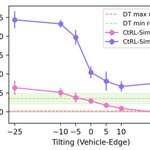
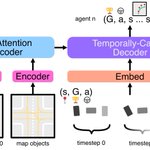
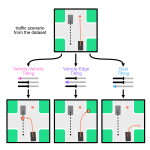
Excited to share Gigapixel: a high-throughput driving simulator for scalable self-play training of E2E driving models: montrealrobotics.ca/gigapixe…. To make E2E training feasible, we propose self-play DAgger, which trains robust policies in ~3000x fewer steps than self-play RL, achieving SOTA on closed-loop driving benchmarks without human trajectory supervision!
Luke Rowe retweeted

We’re bringing the magic of Waymo to Toronto! 🇨🇦
In the coming days, you’ll begin seeing Waymo’s all-electric vehicles driving through Toronto’s streets as we lay the groundwork for our ride-hailing service.
Our goal is to begin serving riders in 2028.
Sign up for future updates: waymo.com/waymo-in-canada

Luke Rowe retweeted

ScenarioControl (ECCV 2026) enables end-to-end controllable generative simulation 🚗✨for autonomous driving, allowing users to generate diverse traffic scenarios with fine-grained actor control while preserving realistic scene dynamics.
We have released the code, and we’re looking forward to seeing what the community builds with it!
🔗 Check out our project page for the paper & code:
princeton-computational-imag…
👏 Thanks to the first authors @Lili_Gao_ , @Yanbo_Xu_ , @WilliamKoc61157
Luke Rowe retweeted

A super long overdue (3+ years?) post on scaling laws.
Compute is expensive. Scaling laws are a way to help us reason about the optimal compute allocation between data and model size before committing to a large run.
The post covers what scaling laws predict, how compute-optimal allocation works, why Kaplan et al. and Chinchilla disagree, and how data limits + fitting details make extrapolation tricky.
lilianweng.github.io/posts/2…
ArXiv: arxiv.org/abs/2606.19641
Project Page: montrealrobotics.ca/gigapixe…
GitHub: github.com/montrealrobotics/…

Shout out to my amazing collaborators: @rogg1111, @rdescc, @daphne_cor, @GrandhiAlaap, @_FelixHeide_, @EugeneVinitsky, @chrisjpal, @duckietown_coo!
Luke Rowe retweeted

New Paper: Human-like Autonomy Emerges from Self-Play and a Pinch of Human Data.
We trained self-play RL on 60 years of simulation on 1 GPU in ~15 hours. Regularizing with 30 minutes of demonstration data produces much more human-like driving policies!
Luke Rowe retweeted

We’ve just released the #Alpamayo Chain-of-Causation (CoC) Autolabeling Pipeline — a feature that has been highly requested by the community!
The pipeline automatically derives:
🔹 Meta-actions: high-level categorical descriptions of ego motion
🔹 Chain-of-causation labels: causal links between scene factors and the ego vehicle’s intended behavior
Autolabeling pipeline: github.com/NVlabs/alpamayo-c…
Learn more about the Alpamayo open platform: huggingface.co/blog/drmapavo…
We’re excited to see what the community builds with it, and we hope this tool will help accelerate research in the rapidly growing area of #reasoning models for #Physical #AI.
@NVIDIADRIVE @NVIDIAAI

Luke Rowe retweeted
Excited to introduce #TruckDrive 🚛 at #CVPR2026: a new long-range driving dataset built specifically for long-range truck autonomy, where safe braking and anticipatory planning demand perception hundreds of meters ahead, far beyond existing robotaxi datasets.
📦 TruckDrive includes:
🔹 475K samples, with 165K densely annotated frames
🔹 Benchmarks for end-to-end driving, tracking, planning, depth estimation, and up to 1,000m for 2D detection and 400m for 3D detection 📏🎯
🛰️ A purpose-built long-range sensor suite:
🔸 7 long-range FMCW LiDARs (range + radial velocity)
🔸 3 high-res short-range LiDARs
🔸 11× 8MP surround cameras for short and long-range📷
🔸 10× 4D FMCW radars 📡
⚠️ Key finding: current state-of-the-art models break down at long range
📉 with 31% to 99% drops on 3D perception tasks beyond 150m. TruckDrive exposes a long-range generalization gap that current architectures and training signals are not closing yet - a benchmark for the next generation of long-range highway autonomy research 🚚
🔗 Project and Data: torc-ai.github.io/TruckDrive…
Fun work together with @torc_robotics led by Filippo Ghilotti, Edoardo Palladin, Samuel Brucker, Adam Sigal, and Mario Bijelic.
Luke Rowe retweeted
Are we done with object detection? What about tiny objects beyond 200 meters? 🔎
Telescope 🔭 addresses long-range perception by explicitly tackling extreme scale imbalance ⚖️ in images. It hinges on a learnable hyperbolic foveation transform from a low-resolution image, magnifying distant regions 🔍 while compressing nearby ones - effectively normalizing object scales with minimal computational overhead. Objects are detected in the transformed (Riemannian) space using a novel bounding box parameterization and are then mapped back to the original image.
Project: light.princeton.edu/telescop…
Luke Rowe retweeted
New preprint led by @saeedrmd! “Artificial Intelligence for Modeling and Simulation of Mixed Automated and Human Traffic."
Drawing on 200+ papers, it offers a snapshot of where the field stands and outlines promising directions ahead.

ALT https://arxiv.org/abs/2604.12857
Luke Rowe retweeted
ScenarioControl 🚗🛣️ - Scenario Generation from a single Dashcam Image 📸 or Text Prompt 💬!! Excited to introduce a new vision-language control mechanism for learned driving scenario generation. Given a single dashcam image or a scene prompt or an image, we generate a full scene layout 🧩, temporally consistent rollouts, including map 🗺️, agents 🚗, and ego video🛣️
ScenarioControl enables direct, fine-grained control over layout and traffic while preserving realism. It operates in a vectorized latent space with a new cross-global control mechanism to fuse vision-language inputs with scene structure while preserving realism. Interfaces seamlessly with generative video models!
Project: light.princeton.edu/Scenario…
Super fun project by Lili Gao, @Yanbo_Xu_ , William Koch, Samuele Ruffino, @Luke22R , Behdad Chalaki, Dmitriy Rivkin, Julian Ost, @rogg1111, Mario Bijelic.
Luke Rowe retweeted

Reasoning VLAs can think. They just can't think fast. Until now.
Introducing FlashDrive⚡
🚀 716 ms → 159 ms on RTX PRO 6000 (up to 5.7×)
✅ Zero accuracy loss
FlashDrive = streaming inference + DFlash speculative reasoning + ParoQuant W4A8
Real-time reasoning for autonomous driving is here!
z-lab.ai/projects/flashdrive…
Luke Rowe retweeted
Chop the gradients ✂️! We found that truncating decoder gradients in latent video diffusion to a fixed window allows us to finetune on videos with pixel-wise perceptual losses without running out of memory. Pixel losses have been essential for image generation and reconstruction, but until now, they haven't scaled to long-duration, high-resolution video diffusion due to recursive activation accumulation in causal decoders, leading to OOM during training 💥📉.
Project: light.princeton.edu/chopgrad…
Video diffusion models can do a lot more 🚀 when you can backprop the decoder! Post-process neural rendered scenes, super-resolve videos, harmonize lighting in controlled synthetic driving scenes, and inpaint videos — all in a single step ⚡ with a quick finetune from a standard diffusion model.
Luke Rowe retweeted
WorldFlow3D: Unbounded 3D World Generation 🌍 by Flow Through Hierarchical Distributions, without VAEs !
We reformulate 3D generation as flowing through sequentially finer 3D distributions, cutting training time by more than half ⏱️ compared to existing approaches! Vectorized map layouts provide full scene controllability 🗺️, and a novel flow-field alignment process enables causally coherent, spatially unbounded generation 🌍. This generative method generalizes across both real and synthetic data distributions!
Project: light.princeton.edu/worldflo…
Project led by @amogh7joshi and Julian Ost — will be super fun to build on this! 🔥

Luke Rowe retweeted

We’re releasing OmniReset, a framework for training robot policies using large-scale RL and diverse resets for contact-rich, dexterous manipulation.
OmniReset pushes the frontier of robustness and dexterity, without any reward engineering or demonstrations.
Try the policies yourself in our interactive simulator! weirdlabuw.github.io/omnires…
(1/N 🧵)
Luke Rowe retweeted

🎮 Can we learn interactive world models from letting robots “play”?
➡️ Introducing ✨PlayWorld: a framework for training high-fidelity video world models from large-scale autonomous play experience that enables:
→ Accurate dynamics prediction
→ Reliable policy evaluation
→ RL fine-tuning entirely inside the world model
🌐robot-playworld.github.io
Luke Rowe retweeted

🚨 New Paper 🚨
TL;DR we derive scaling laws of lr, momentum, and batch size for modern first-order optimizers through the lens of recent convergence bounds for LMO, a framework that includes normalized SGD, signSGD (approximating Adam), and Muon
xitter.cf/orvieto_antonio/status…


Luke Rowe retweeted

JEPA are finally easy to train end-to-end without any tricks!
Excited to introduce LeWorldModel: a stable, end-to-end JEPA that learns world models directly from pixels, no heuristics.
15M params, 1 GPU, and full planning <1 second.
📑: le-wm.github.io