

Custom software and AI development company. 400+ products shipped, from funded startups to Coca-Cola, Amex, Zapier, Sotheby's.
Miami, FL
Joined June 2020
- Tweets1.5K
- Following123
- Followers1.4K
- Likes33





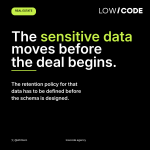
Where does the compliance risk actually live in your architecture?
Which tools will sign a BAA for your specific use case?
Both answered before any integration is selected.

We built no-code apps for years. Now, almost everything we build is custom code.
What changed? AI flipped the economics of software development.
In our latest podcast episode, we break down why we made the switch and what it means for your business.
🔗 lowc.dev/TVrcq

We mapped which formulas encode regulatory requirements, which edge cases need a dedicated code path, and which outputs require a human decision before the build started.
The product worked correctly from the first close cycle.

Financial product validation tests the full range of inputs, including the edge cases.
An error that runs undetected for six months costs more than the same error caught before launch.
That cost scales with how wrong the calculation is and how long it runs.

We broke down 6 legal RAG development companies and compared:
• Their focus
• Ideal use cases
• Access-control approach
• Document handling
• Deployment support
Read the full breakdown here 👇
lowc.dev/wqvbm
So when evaluating a legal RAG development company, ask 5 questions:
1. How is privilege enforced?
2. How are ethical screens handled?
3. What does citation look like?
4. How are legal documents chunked?
5. How are updates and re-indexing managed?
Vague answers are 🚩🚩🚩
The most useful legal RAG systems tend to focus on workflows like:
• Contract precedent retrieval
• Legal research
• e-Discovery review
• Agreement analysis
• Internal policy retrieval
• Deposition + transcript search
🔄 Then comes document freshness.
Case law changes.
Regulations change.
Contracts get amended.
Policies get superseded.
A legal RAG system needs structured re-indexing workflows so outdated documents don’t quietly become the system’s source of truth.
📚 Citations aren’t a “nice to have.”
Every retrieved passage should let the attorney trace the answer back to:
→ Source document
→ Page number
→ Section or provision
If the source can’t be verified quickly, the retrieval isn’t production-ready.
⚖️ Legal RAG also needs jurisdiction-aware retrieval.
A technically relevant case can still be useless if it comes from the wrong jurisdiction.
Retrieval should account for things like:
• Court
• Jurisdiction
• Authority level
• Document type
Not just semantic similarity.
🧩 Generic chunking can break legal documents.
Contracts, briefs, depositions, case law, and regulatory filings all have different internal structures.
Split them blindly by paragraph or token count and you can destroy the context attorneys actually need.
Matter-level access controls are just as important.
An attorney working on Matter A should not accidentally retrieve documents from Matter B.
That means:
• Matter assignments
• Ethical screens
• Retrieval permissions
At the retrieval layer — not just inside the DMs
🔒 Privilege isn’t a metadata problem.
Attorney-client privilege and work product protections need to be built into the indexing architecture and enforced again at retrieval.
Filtering sensitive documents after retrieval is already too late.
Most RAG vendors can build retrieval.
Very few can build retrieval that is safe enough for a law firm.
Legal RAG has to solve:
🔒 Privilege
📁 Matter access
📚 Citations
🧩 Document structure
⚖️ Jurisdiction
Before it solves search.
Here’s what that actually requires 👇🧵
We built a financial reporting product by starting with the billing logic.
The contract structures the client assumed were too specific to mention were the ones that mattered most.

More AI agents ≠ better automation.
What matters is context, clear responsibilities, and human oversight.
In our latest podcast episode, we break down why 2 well-designed agents can outperform 30 poorly managed ones.
🔗 Hear the full episode: lowc.dev/IjtCR

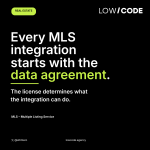
Building real estate software means navigating MLS data agreements, Fair Housing guidelines, and evidentiary standards inside every transaction. Wallace, our project manager, brings direct domain expertise from working with brokers to ensure your application operates securely.
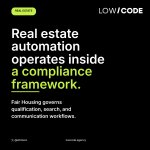
Real estate workflow automation operates inside a compliance framework.
Qualification flows. Listing filters. Communication sequences.
Fair Housing governs all three.

If you’re planning a financial services RAG project, don’t start with model selection.
Start with compliance architecture, document structure, permissions, integrations and re-indexing.
Read the full guide + company breakdown here 👇
lowc.dev/YaytT