

End back pain without quitting the gym. Helping lifters & desk workers overcome persistent low back pain.
Pune
Joined May 2020
- Tweets5.2K
- Following246
- Followers163
- Likes4.1K






Pinned Tweet
5 years.
Constant lower back pain.
I tried treatments. I tried random exercises. I kept hoping someone else would fix it. Nothing lasted.
Then I stopped asking,
"Which exercise fixes back pain?" and started asking,
"Why does my back keep hurting?"
That question changed everything.
I learned that my lower back wasn't the only problem. My hips, pelvis, strength, and movement patterns all mattered.
I rebuilt my body one piece at a time and eventually became pain-free.
Now I share what actually helped:
• pain science explained simply
• movement mechanics
• practical exercises
• common recovery mistakes
• lessons from my own journey
No miracle cures. No fear. No gimmicks. Just evidence-based strategies to help you understand your body and build a stronger back.
Your pain is real. But the painful spot isn't always the real problem.
If you're tired of thinking you'll have to live with back pain forever, follow along.

Lift to build strength.
Read to sharpen thinking.
Write to clarify ideas.
Save to create freedom.
Work to earn leverage.
Sleep to recover faster.
Walk to stay consistent.
Learn to stay relevant.
Most chase comfort, not progress.
The outcome follows the standard you keep.
Stretching gave me about twenty minutes of relief.
Then everything tightened back up exactly as before. I assumed I was not stretching enough or holding long enough.
The problem was not the dose.
Passive stretching reduces muscle tone temporarily. It does not build the capacity to handle load. The same weak links that were overloading your spine before the stretch are still there the moment you stand up and move again.
• Couch Stretch paired with Loaded Butterfly addressed the tension with real positional demand.
• Back Extension Reps added the capacity the stretching never could.
Relief that lasts requires more than releasing tension. It requires building something in its place.
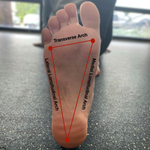
What are signs my foot arches may be affecting my posture?
There is no single sign that can tell you your foot arch is causing a posture problem.
But there are a few things worth noticing.
One foot may collapse or load differently from the other. Your shoes may wear unevenly. You may feel more tired than usual while standing or walking, or repeatedly notice tightness or discomfort around your feet, ankles, knees, hips, or lower back.
You may also notice changes in your balance or in the way you stand over time.
None of these signs automatically means your foot arch is the cause. They can have many explanations.
But they may be a reason to look at how your feet are moving, how they handle load, and how the rest of your body is adapting.
The goal is not to find a “perfect” arch. It is to understand whether your feet are moving well, tolerating your daily activities, and supporting the way you want to move.
Can foot alignment affect the nervous system, balance, and coordination?
Your feet are constantly giving your brain information about pressure, movement, and your position on the ground.
Your brain combines this information with what you see and what your inner ear senses to help you maintain balance and coordinate movement.
So, if the way your foot moves or takes load changes, the information coming from the foot may change as well. Your body may then adjust how it controls the ankle, knee, hip, and trunk.
But this does not mean that a particular foot shape automatically causes poor balance or a nervous system problem.
It simply means that your feet do more than support your body. They also provide important information that your brain uses to control movement.
Series: How Your Foot Arch Shapes Your Pelvis, Spine, and Posture?
Why doesn’t pain always show up where the problem starts?
Because the body does not work as separate parts.
If one area is not moving or handling load well, other areas may start adapting to keep you balanced and moving. For example, a change in how your foot loads the ground can influence the ankle, knee, hip, and pelvis.
But the area doing the extra work is not always the area that hurts.
You may have changes in foot movement without any foot pain, while feeling discomfort in your hip or lower back.
That does not automatically mean the foot is the root cause of your pain. Pain is more complex than that.
It simply means that when pain continues, it is worth looking beyond the painful area and understanding how different parts of the body are working together.
I exercised regularly and still felt stiff every time I bent forward or walked any distance.
The missing piece was not fitness. It was pelvic movement.
Your pelvis is supposed to tilt and rotate as part of normal bending and walking. When it stops moving freely, the lumbar spine absorbs the motion instead.
Repeated across every step and every hinge, that substitution accumulates into persistent stiffness regardless of how often you train.
Seated Good Mornings restored pelvic movement within the hinge pattern. 90/90 Hip Rotations rebuilt the rotational freedom that walking depends on.
Fitness does not guarantee movement quality. They are different things.
5 essential stretches and exercises that you can incorporate into your day.
These target mobility, flexibility, and strength in key areas of your body to support your chiropractic care program.
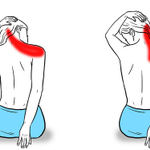
5. Quadruped Thoracic Spine Mobility
What it does: Improves mid-back mobility.
How to do it: On hands and knees, place one hand behind your head and rotate your torso, bringing the elbow up toward the ceiling. Repeat 10 times on each side.

What problems are associated with high arches?
High arches, or pes cavus, can make the foot more rigid. This may reduce how well the foot adapts to the ground and absorbs load.
As a result, some people may feel more pressure around the heel or ball of the foot. Others may experience ankle instability or discomfort during prolonged standing and walking.
A more rigid foot can also change how the ankle, knee, and hip move. But that does not automatically mean high arches will cause back, hip, or knee problems.
The shape of the arch is only one part of the picture. What matters more is how the foot functions and how the rest of the body adapts to it.
Most people stop sitting on the floor years before their back becomes a serious problem.
The two things are connected.
Floor sitting requires hip rotation and abduction that chairs never demand. When those ranges disappear from disuse, the spine compensates to keep you upright in positions the hips can no longer support.
That compensation does not stay on the floor. It follows you into every other movement.
Horse Stance rebuilt the hip abduction capacity I had completely lost. Loaded Butterfly restored the rotation. 90/90 Hip Rotations reinforced both.
The floor is an honest test of what your hips can actually do.
Move to stay healthy.
Learn to stay valuable.
Spend less to keep control.
Invest more to build future.
Think long to avoid regret.
Work deep to create value.
Rest well to stay sharp.
Stay patient to let gains compound.
Most want speed over durability.
The long game wins.
Can flat feet or loss of arch cause back or hip pain?
They can contribute, but having flat feet does not automatically mean you will develop back or hip pain.
When the arch changes how the foot absorbs and transfers load, it can influence the way the ankle, knee, and hip move. In some people, this may also affect how the pelvis and trunk move during standing or walking.
But many people have flat feet without any symptoms. So the shape of the arch is only one part of the picture.
What matters is how the foot functions, how much load it can tolerate, and how the rest of the body adapts to it.
If you have back or hip pain, it may be worth looking at the feet but they are not necessarily the cause.
I had groin tightness and lower back pain at the same time for years.
I treated them as separate problems. They were not.
Your adductors connect directly into your pelvis. When they are stiff or weak, pelvic mechanics change. The pelvis loses frontal plane stability and the lumbar spine absorbs the consequences of every movement where that stability should have been provided.
Copenhagen Plank built adductor strength in a way no passive stretching ever approached.
Loaded Butterfly developed the end range control that was missing entirely.
The groin and the back were always the same problem.
Train to become reliable.
Read to expand perspective.
Save to reduce fear.
Invest to create freedom.
Plan to direct effort.
Build to create ownership.
Recover to preserve longevity.
Repeat to become elite.
Most chase hacks over habits.
Habits decide trajectories.
Picking something up while slightly twisted used to catch me every time.
Not a dramatic movement. Just a small rotation combined with a reach and my lower back would fire immediately.
Your lumbar spine is not built for significant rotation under load. Your hips are supposed to provide that.
When hip rotation is restricted, the lumbar spine compensates by rotating more than it should every time the movement demands it.
90/90 Hip Rotations restored the range my hips had quietly lost. Cossack Squats built that range under real load.
The rotation stopped being dangerous once my hips were doing it.