

Since 1936, Lort Smith has been here for Melbourne’s pets and their people – not for profit. Australia’s largest not-for-profit animal hospital.
North Melb & Campbellfield
Joined April 2011
- Tweets2.8K
- Following826
- Followers1.8K
- Likes1.4K




Meet Pabalina, a three-year-old Cattle Dog who has been waiting for someone to see just how special she is.
Sadly, no one has come to meet this sweet girl yet.
After her previous owner moved overseas, Pabalina found herself looking for a new home, and she’s still waiting for her person to walk through the doors and fall in love with her.
Pabalina is the sweetest, smoochiest girl who absolutely adores her people. Belly rubs are high on her list of priorities, and if you stop, she’ll happily roll over and remind you that she’s not finished yet!
She also loves playing with her favourite soft toy, especially when she can proudly bring it over and present it to you. It’s her way of saying, “Look what I’ve got!”
Pabalina is happiest when she’s spending time with her people, whether that’s playing with her toys, chasing a ball or getting out for a walk. Her ideal home will be active and ready to keep her body and brain busy with daily walks, games of fetch and plenty of enrichment.
She’s currently working towards losing a little weight, so her new family will need to help her stay active and support her on her journey towards a healthy weight. And after a day of walks, games and adventures, she’ll be more than happy to curl up on the couch for some well-earned snuggles.
Come and visit her at our Campbellfield Adoption Centre or fill out an expression of interest today.
Microchip no: 956000016259671
Source code: BR296075
lortsmith.com/adoption/avail…
Spring has sprung!
Warmer weather means more time outdoors, but it can also bring a few seasonal health considerations for our pets.
From parasites becoming more active to grass seeds causing problems, spring is a good time to check in on your pet’s health and make sure they’re ready for the months ahead.
Here are five things to keep in mind this spring:
Check for grass seeds: grass seeds can become trapped in paws, ears, eyes and coats and, in some cases, work their way under the skin. After walks, particularly through long grass, check your pet’s paws, ears and coat and remove any seeds you spot.
Stay on top of parasite prevention: as temperatures rise, fleas and ticks can become more active. Make sure your pet’s flea, tick and intestinal worm prevention is up to date and appropriate for their age, lifestyle and species.
Wash their bedding: Pet beds collect fur, dirt, dander and other debris over time. Give bedding, blankets and favourite sleeping spots a good clean as part of your spring tidy-up.
Watch for seasonal allergies: spring can mean more pollen, plants and other environmental allergens. If your pet is suddenly itchy, licking their paws more, developing irritated skin or experiencing respiratory symptoms, it’s worth speaking with your vet.
Check the garden: spring means more time outside, so check what fertilisers, pesticides, snail pellets and herbicides are being used in your garden. Follow product directions and keep pets away from treated areas for the recommended time.
A little preparation now can help keep your pets happy, healthy and enjoying everything spring has to offer.


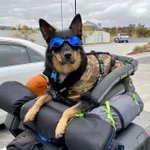
For Harley, going to the vet isn’t so scary when it comes with a motorcycle ride.
The eight-year-old Australian Kelpie’s dad is Jimmy, who volunteers in the kennels at our Campbellfield Adoption Centre. And when it’s time for a vet visit, Harley knows exactly what’s coming: goggles on, onto the back of the bike and off they go!
“When I first got him, I didn’t have a car, only a motorcycle, so I had to be resourceful,” Jimmy said.
He slowly introduced Harley to the bike, with his very first trip actually being to the vet.
“Now, when he sees I’m going for a ride, he comes running to the bike. He absolutely loves it,” he said.
As Harley grew, Jimmy upgraded him to a purpose-made cockpit with plenty of padding, giving him a comfortable spot to lie down while they ride.
And, of course, Harley has his very own goggles. 😎
“He’s always pretty happy to go to the vet because he gets to go on a ride as well,” Jimmy said.
The unusual duo has certainly attracted plenty of attention over the years.
Jimmy remembers one time they pulled up next to an elderly woman who became so excited she was pointing and laughing. On another occasion, police followed them through several sets of traffic lights before finally pulling alongside them.
“I was worried I was going to get in trouble for something,” Jimmy said, “Then they rolled down their windows and said it was the coolest thing they’d ever seen!”
For Harley, it’s just another day on the road with Dad. 🐶🏍️


Today we celebrate a very special milestone: Lort Smith Animal Hospital’s 90th birthday!
We also had a sneak peak of our new Cat Adoption Centre which opens to the public on October 3rd.
For 90 years, Lort Smith has been part of Melbourne’s community, caring for animals and the people who love them.
Our story began in 1936, when founder Louisa Lort Smith opened the Lort Smith-Lyle Hospital for Sick and Injured Animals with a simple but powerful belief: animals belonging to people experiencing hardship deserved access to care, too.
That belief still sits at the heart of Lort Smith today.
From our original home on Villiers Street, we have cared for more than one million animals and grown into Australia’s largest not-for-profit animal hospital, providing veterinary care, adoption and support services to help keep pets and people together.
And now, 90 years on, it feels fitting to celebrate our history by opening a new space dedicated to giving cats a second chance at finding a loving home.
Our new North Melbourne Cat Adoption Centre will give even more cats the opportunity to meet their future families, right here where Lort Smith’s story began.
From Louisa’s vision in 1936 to the incredible team, volunteers, supporters and community who keep that vision alive today, 90 years later, we’re still here for pets and people.
Here’s to 90 years of compassion, community and keeping the human-animal bond at the heart of everything we do.
🐾🎉
Simba is usually the kind of little dog who never seems to stop moving.
The one-year-old Toy Poodle loves to jump, climb and investigate anything he can get his paws on. But when Simba suddenly became very lethargic and stopped eating his mum, Madeline, knew something was seriously wrong.
“He is normally so playful and energetic, but he was just really flat,” Madeline said.
Simba stopped eating and was very thirsty, but would vomit after drinking, Concerned, Madeline brought him to Lort Smith’s Emergency Department.
X-rays revealed that Simba had swallowed one of her children’s squishy toys, which had become stuck in his digestive tract.
Simba needed surgery to remove the toy and then spent two days in hospital recovering.
Thankfully, Simba is now home and is on his way back to his happy, energetic self.
“He’s a lot better now, hopefully he’ll be back to himself soon,” Madeline said, “He’s my little baby, my son,”
The experience has also prompted some changes at home. Simba loves to jump and climb, and although the family thought they had stored the children’s toy box high enough, he managed to get to it.
Madeline is now installing a room divider to keep Simba out of the children’s playroom. When he’s home alone, he’ll only have access to spaces without toys.
Squishy toys can be dangerous for pets if they are chewed and swallowed. Not only can pieces of the toy cause a blockage known as a foreign body, but the gel, foam or other filling inside can also cause problems if ingested.


For someone experiencing homelessness and hardship, their pet can mean everything in the world.
When so much else feels uncertain, they are a constant, a source of comfort, companionship and unconditional love. They are family, a best friend and often the reason to keep going through the hardest of days.
That’s why Lort Smith and Pets Of The Homeless share a deeply held belief that everyone should have access to quality veterinary care for the pet they love, regardless of their circumstances.
Through the Fix-A-Friend program, our organisations came together to help 22 much-loved pets receive affordable desexing and the veterinary care they needed.
Desexing is an important part of preventative healthcare, helping protect pets from reproductive diseases, some cancers and the health risks associated with pregnancy and birth.
By bringing together our resources, expertise and shared commitment, we’re helping people experiencing homelessness care for their best friends and protect the irreplaceable bond they share.
Meet Shivers, a 12-year-old Ragdoll who recently got a little lighter, and a lot more comfortable.
Shivers came into Lort Smith with severely matted fur that had become difficult to manage. His dad, Robert, said Shivers has been regularly shaved throughout his life, but over the past year it had become increasingly difficult to find someone who could groom him.
“I tried to do it myself, but Shivers would get bitey and swipey,” Robert said.
Shivers’ matted coat needed careful attention from our veterinary team. His welfare groom took more than four hours, with the team gently shaving away the tightly tangled fur.
When Shivers arrived, he weighed 5.1kg. After his groom, he was 4.7kg, meaning he had been carrying around almost half a kilogram of fur!
With all that fur gone, Shivers is certainly living up to his name. He’s been spending his days tucked up beside the heater while he adjusts to his much lighter coat.
Matting isn’t just a cosmetic issue. When fur becomes tightly tangled, it can pull on the skin, cause discomfort and tightness, and make it harder for a cat to move normally. If severe matting is left untreated, it can also contribute to skin problems and infections.
Regular grooming can help prevent mats from becoming severe, particularly for long-haired cats like Ragdolls. If your pet’s coat becomes heavily matted, avoid trying to cut the mats out yourself, as it’s easy to accidentally cut the skin underneath. Speak with your veterinarian or a professional groomer about the safest way to manage it.
Thankfully, Shivers is now more comfortable and content, and Robert says he’s even become a little more affectionate.
“He is almost unrecognisable from what he looked like before, it must such a great relief to him,” Robert said.


It was terrific to have the State Minister for Agriculture, the Hon. Michaela Settle MP, tour our North Melbourne Animal Hospital today.
The Minister saw the extremely important work taking place across Lort Smith, from providing quality, accessible veterinary care to supporting people and their pets through some of life’s most difficult moments.
The visit forms part of our advocacy work in raising awareness of the matters that are critical to moving to a one health, one welfare approach.
The health and wellbeing of people and animals are deeply connected, and recognising this connection is essential to building healthier, more resilient communities.
Every day Lort Smith sees first-hand the difference pets make in people’s lives, and why protecting the human–animal bond matters.
We thank the Minister for her interest in our work and taking the time out to see some of this important work first-hand.

lortsmith retweeted

🐽Snorting & loud breathing in flat-faced dogs isn't "normal for the breed"—it’s a warning sign of #BOAS (Brachycephalic Obstructive Airway Syndrome).
Ahead of #PetBirthDefectAwarenessDay, meet Archie the Pug and discover how surgery changed his life 🐶👇 australiandoglover.com/2026/…

ALT Two-panel composite image showing a vet performing BOAS airway surgery on Archie the Pug on the left, and Archie standing happily with a bandaged leg after a successful recovery on the right.
Meet Archie, a nine-year-old Pug who has been given a little more room to breathe.
Archie came into Lort Smith’s care after his previous family could no longer look after him.
When Archie arrived, our veterinary team identified that he was affected by Brachycephalic Obstructive Airway Syndrome (BOAS), a condition that can affect flat-faced breeds such as Pugs, French Bulldogs and Bulldogs.
BOAS occurs when anatomical changes in a dog’s airways restrict the flow of air. Signs can include noisy or difficult breathing, excessive panting, exercise and heat intolerance, coughing, gagging, regurgitation and, in severe cases, collapse.
While snoring or noisy breathing can sometimes be considered ‘normal’ for flat-faced dogs, they can actually be signs that a dog is struggling to breathe.
For Archie, surgery was recommended to improve his airway and make breathing easier, which was performed by Dr Ben.
“BOAS surgery aims to improve airflow by addressing areas of narrowing throughout the upper airway,” Dr Ben explained, “Every patient is different, so careful assessment and surgical planning are important.”
The goal of surgery is to help dogs breathe more comfortably, improve their exercise tolerance and support their quality of life.
“Brachycephalic patients can present some unique challenges during anaesthesia and surgery, which is why specialist assessment and management are important,” Dr Ben said.
For Archie, it means a fresh start and the opportunity to enjoy his next chapter with a little more room to breathe.
If you have a flat-faced dog, don’t assume noisy breathing or difficulty exercising is simply ‘part of the breed’. Speak with your veterinarian if you notice signs that your dog may be struggling to breathe.
Learn more about our specialist services: bit.ly/3SeoA4n
There’s nothing quite like the happiness a cat can bring into a home.
For Marian, it had been 10 years since she’d lost her last cat and two years since saying goodbye to her dog. But when her grandson started asking for a cat, Marian thought it might be time to welcome a pet into the family again.
Then they met Clementine at our Campbellfield Adoption Centre.
“We all liked her, but my grandson was determined to have her. She looked at us and he went straight to her, and we thought, she’s the one,” Marian said.
Since coming home, Clementine has wasted no time making herself comfortable. She’s taken over every room in the house, has her own room, and loves sitting by the window watching the birds and trees outside.
“She’s made a big impact on us. She’s quite happy here and we love her,” Marian said, “I love to brush her fur, it’s very lovely. Although, she doesn’t like when I do her legs!”
Even Marian’s grandson has been visiting regularly to spend time with his new feline friend.
They’re working on harness training, although Clementine isn’t quite convinced yet, and Marian already has plans to one day adopt her a friend.
It is Cat Happiness Month and we are celebrating cats like Clementine and the joy they bring to the people lucky enough to call them family.
We couldn’t be happier to see Clementine settling into her new home and making such a big impact on Marian and her family.


With possum breeding season officially underway, adorable little joeys just like these are increasingly being brought to Lort Smith by members of the public after being found alone on the ground.
Last year, 143 possums receiving care across our North Melbourne and Campbellfield sites. So far this year, more than 100 possums have arrived already, with many more expected in coming months.
Spring can be a dangerous time for baby possums, with many needing urgent care after becoming separated from their mothers.
Dr Nicole says baby possums can fall or be blown from their mothers’ backs during storms and high winds. They can also be injured by dogs and cats while exploring the ground or low branches.
“If you find a deceased female possum, safely check her pouch if you can,” Dr Nicole says. “A joey may still be inside and can survive for days in the pouch.”
If you find an injured or orphaned possum, gently place them in a secure, well-ventilated box or carrier and take them to your nearest open veterinary clinic.
‘’It is also important to remember that keeping a possum as a pet is illegal,’’ said Dr Nicole, ‘’The only legal way to house a possum temporarily is if you are a licensed wildlife carer rehabilitating an injured or orphaned animal for release back into the wild. This is to safeguard our native wildlife and ensure that injured wildlife receive the best chance for returning to the wild.’’


Four-year-old Sweetie is lucky to be back to her happy, affectionate self after a frightening case of accidental medication poisoning.
Sweetie’s mum, Anne, had been treating her cats when she realised she had accidentally applied a dog flea treatment instead of a product intended for cats.
“I gave the cats the medication and then looked at the packaging and realised it was the wrong one,” Anne said, “I started wiping it off straight away.”
Later that night, Anne knew something wasn’t right. Sweetie became restless and wouldn’t sit still. She was constantly scratching and playing with her ears, rubbing up against Anne and felt unusually warm. She stopped eating, began hiding and developed twitching around her ears.
“I was really upset. I knew something wasn’t right,” she said,
Sweetie had been exposed to permethrin, an insecticide commonly found in some dog flea and parasite control products. While these products can be safe for dogs when used as directed, they can be highly toxic to cats.
Sweetie was taken to Lort Smith’s Emergency Department, where she was treated for suspected permethrin toxicity. She required medication to control her symptoms, as well as intravenous intralipid therapy. Intralipid can help bind to the toxin in the bloodstream, allowing the body to process and eliminate it before it causes further harm.
After spending a day in ICU, Sweetie was well enough to go home.
Thankfully, she’s now back to her usual self, following Anne around the house and happily getting back to life as normal.
“She’s alright now. She’s happy,” she said.
For Anne, the experience has been a frightening wake-up call.
“It was an accident, but I would have been devastated if something had happened to her,” Anne said.
Sweetie’s story is a reminder for pet owners to always check the label before giving your pet flea or parasite control. Products designed for dogs can contain ingredients that are dangerous, and potentially life-threatening, to cats. Never use a dog product on a cat unless specifically advised by your veterinarian.


Eight-month-old Border Collie cross, Pampa, is a bright and energetic girl who is ready to become your best mate! After her previous family could sadly no longer look after her, Pampa came into our care ready for her next chapter.
If there’s a ball nearby, Pampa will know about it. In fact, we’re fairy sure she has a sixth sense for them! Like many Border Collies, she’s smart, curious and happiest when she has something to do. Whether that’s chasing a ball, learning a new trick or putting her clever brain to work, Pampa is always ready for her next adventure.
Pampa is looking for an active home with teenagers, a secure yard and plenty of space to run, play and burn off her impressive supply of puppy energy. She’ll need a family who understands that a Border Collie cross doesn’t just need exercise, she needs to keep her brain busy too! Think learning a new trick, agility work, puzzle mats, hide and seek, and plenty of positive guidance.
Give Pampa the time, patience and stimulation she needs, and you’ll have a loyal companion who will be right by your side for every adventure. Just be warned: you may never throw a ball again without a very enthusiastic supervisor watching your every move.
Come and meet Pampa at our Campbellfield Adoption Centre or submit an expression of interest today.
Microchip number: 900164002394471
Source code: BR296075
lortsmith.com/adoption/avail…
For Ross, Head of Planned Giving at Lort Smith, animals have been part of his life for as long as he can remember.
After years working with animal charities, Ross has dedicated his career to helping animal lovers create a lasting legacy through gifts in their Wills. Now, he’s made that decision himself, leaving a gift to Lort Smith.
“Lort Smith is a very special charity. It’s been here for such a long time, founded by people who were really passionate about caring for animals,” says Ross, “I think the heart of the cause, caring for the most sick and injured animals in our community, is a really special thing to do.”
For Ross, his own dog, Ollie, a cheeky Jack Russell, is a constant reminder of the bond we share with our pets. Adopted eight years ago, Ollie has been by his side throughout his journey in animal welfare.
“He’s a reminder of how animals can be such a special part of your life, but also how they can get into trouble and need some extra special help,”
Through his gift, Ross hopes Lort Smith can continue being there for animals and the people who love them, for generations to come.
“I think leaving a gift in your Will is such a wonderful thing to do. It’s a small addition, but it can make such a huge difference to the lives of animals in the future,” Ross says.
This week, as we celebrate Include a Charity Week, we’re shining a light on the people helping create a kinder future for animals.
To find out more about leaving a gift in your Will to Lort Smith, visit: lortsmith.com/support-our-wo…

Four-month-old Staffy Terrier cross, Rambo, came to Lort Smith Animal Hospital after injuring his leg in a collision with a piece of furniture.
Our team began with X-rays to understand the extent of his injury. Rambo had fractured the growth plate at the top of his tibia, an injury that can be seen in young, growing dogs.
With the fracture confirmed, Rambo was prepared for surgery.
Using fluoroscopy, a real-time X-ray machine, Dr Ben was able to see Rambo’s bones throughout the procedure and accurately place several pins to repair the fracture and get everything back into position.
From diagnosis and imaging to surgery and recovery, our team was there every step of the way to help this adventurous little pup get back on his paws.
Because sometimes being a puppy is dangerous work… especially when furniture is involved.
Learn more about our specialist services: bit.ly/3SeoA4n
Our 2026 Pet Care Crisis Appeal has come to an incredible end, and thanks to the generosity of our amazing community, we have raised $301,985.86!
All the money that was generously donated will help provide urgent veterinary care for pets whose families are facing financial hardship.
From all of us at Lort Smith, and from every pet whose life will be changed because of your kindness, thank you 💙
Thank you for being there for pets in crisis. We couldn’t have done it without you!

So far, we’ve raised $122,771 through our 24-hour Pet Care Crisis Appeal!
But with your support we can help even more pets and their people access the urgent care they need.
Every donation made during our 24-hour Giving Day will be doubled, helping provide vital treatment, pain relief, diagnostics and surgery.
We are so lucky to have so many incredible friends in the community support our work including our Lort Smith ambassador, Dave ‘Hughesy’ Hughes with this special message.
Support our furry friends here: bit.ly/4zREaDV
WE’RE LIVE!
The Pet Care Crisis Appeal is officially underway!
For the next 24 hours, every donation will be DOUBLED until we reach out target, helping more pets in crisis access the urgent, life-saving care they need.
As living costs continue to rise, more families are finding themselves facing impossible choices when their beloved pet becomes sick or injured.
For some, the cost of urgent veterinary care can mean choosing between putting food on the table and getting their pet the treatment they desperately need.
That’s why Giving Day matters. Every donation will help provide urgent vet care to pets in crisis, helping keep them with the families who love them.
Your support could help provide emergency consultations and diagnostics, immediate pain relief and live-saving surgery needed to treat pets in critical condition.
A huge thank you to our wonderful ambassador Tyra Stowers for helping us spread the word for pets and their people.
🚨Please share this post and help us reach as many animal lovers as possible!
Donate now: bit.ly/4x8BZJH
#PetCareCrisisAppeal #GivingDay #LortSmith #charity #animalwelfare