

#交易紀錄與日常發現 Dream investments of buffett type #ASTS #ABTC “I hope my followers don't mind me enjoying a little NSFW content from time to time”
Taipei City, Taiwan
Joined May 2017
- Tweets7.7K
- Following450
- Followers135
- Likes17.3K









Pinned Tweet
僅遵守此份調查報告維持原持有之股份並在每次回調時觀察狀況適時買入🐦

$ASTS The big boss has revised down the number of satellites needed to break even (previously 20 instead of 25). This has some profound implications on when the company will get to cashflow breakeven. Basically all it now has to do:
> Build 16 satellites
> Launch them via New Glenn (2x) or Falcon 9 (4x), probably a combo of 1x New Glenn (8 birds per flight) launch and 2x Falcon 9 (4 birds per flight) launches before end of 2025
> MNO's will handle the go live and deployment model to their hundreds of millions of subscribers
How realistic is this before end of 2025?
Based the Q3 2024 earnings call I think this is quite realistic, although at Q4 2024 earnings call we will probably get the fine details, however by that point the stock price might already go on a run, since then institutions will do the napkin math I do below as well.
Below is a long assessment, but the TDLR is that this company is about to hit the sweet spot of the S-curve and the market is not yet fully understanding how profound these implications will be.
The road to cashflow break-even requires:
Launch
First in March/April via ISRO the first block 2 bluebird will go up as a sort of "test" satellite for the new Block 2 generation. Judging that last time they require 2-3 months of calibration it is likely to assume the subsequent two launches with SpaceX are likely set in Q3 2025. Considering ISRO's and SpaceX track record with the vehicles I consider these "slam dunks". This would mean by end of Q3 then ASTS has 14 birds (plus Bluewalker) in orbit and operational or a close equivalent. Abel then confirmed one New Glenn launch is booked for 2025 as well, meaning the constellation would get to 22 birds, which would then mean cashflow break-even. With Vodafone's recent announcements of end of 2025 / beginning of 2026 I think an European launch for intermittent service will get the company to breakeven. Since New Glenn is a new vehicle with now just one (succesful) launch there is definitely some uncertainty in that launch that is bookmarked for end of 2025, but management confirmed they can backfill this with SpaceX. I think it is likely they have an option in the contract. Might cause a quarter delay.
If I look at it from launch perspective end of 2025 is the everything goes as planned scenario and Q1 2026 is the reasonable prediction factoring in some delay type of scenario. That would mean the company is just one year away from cashflow breakeven.
Satellites
The company confirmed in the call that they have scaled the production to meet the 45-60 birds target in 2025 and 2026. Pointing out the building blocks of block 1 (Microns) are for the most part identifical to block 2. Lessons have been learned on block 1 and those will be put to fruition on block 2. In earlier calls we also got the number of production of 2 birds per month that has the goal of scaling to 6 per month in 2026. Basically if we do the conservative math AST building 2 birds per month for nine months that would get them to have 18 birds ready in Q3 2025, which is in time for the launch campaign. This seems doable, especially after the convert were management said they are going to fast track satellite production even further then iterated in their Q3 2024 earnings. Will need to get more details on this in the next call. ASIC production seems also on schedule, but again birds can also be launched with the FPGA configuration if there are any delays. Based on my assessment I conclude that from satellite production perspective nothing will be in the way for a end of 2025 launch. Q1 earnings call will likely be a confirming event with more details
MNO
Judging on recent MNO action it is obvious they will be ready when AST is ready to launch the service, that's a no brainer for me, so no delay from this angle.
Cashrun way
After the convert the company has a close to 1 billion warchest. Based on management comments we can calculate the capital expenditures and conservatively assume nothing is paid yet: (which is not entirely true)
> 16 birds costs on average 20 million to build (source: Abel Avellan) = 320 million.
> New Glenn is rumored to cost $100 million (AST might get some discounts due to signing before first launch), Falcon 9 costs 70 million. ISRO probably in the 20 million ballpark = 260 million.
> Opex burn rate is 30-35 million, lets asumme 40 million to be conservative = 160 million.
Conclusion
Basically to get more then 20 birds up this would cost the company 580 million, with 320 million capex and 160 million of regular OPEX. With the close to 1 billion war chest this goal is easily obtainable without any additional funding or prepayments (which is extremely unlikely) and even if you factor in 2 quarters of delay there still will be sufficient cash. To conclude this basically means AST has a very credible path to cashflow break-even end of 2025 or Q1 2026. I think the stock could easily more then double if this goal is attained, which would mean from today's price within a year you get a double.
But Tim management is going to accelerate again right? Yes, I think what happens is that management before convert was very focused on that 20-25 bird scenario, but I think now management is really going to put the pedal to the medal to get as fast as possible to continous coverage of 40-60 birds. Meaning instead of optimizing the cash position everything will be focused on accelerating sattelite production and probably buying additional launch capacity from SpaceX. We will know more during the Q4 call, but this is how I think it will play out.
Very excited about the next 1-2 years. It will be a game changer for the company and my portfolio :)
Attachments
Relevant extracts from the Q3 2024 earnings call:
Launch
"As Abel and Scott detailed, during the early fourth quarter, we secured launch contracts with providers to enable us to launch up to approximately 45 Block 2 BlueBird satellites with options for additional launch vehicles up to approximately 60 Block 2 BlueBird satellites through 2025 and 2026"
Launch schedule
"So we will -- the cadence will be probably 1, 4, 4, 8, 8, 8 until we get to 60. And the New Glenn is designed to be reused 25 times and the multitude of them being built and with the first one scheduled to actually be this year."
Operating costs burn rate
"Consistent with the first, second and third quarters of 2024, we estimate that our adjusted cash operating expenses for the fourth quarter, excluding some remaining ASIC costs, will come in within a range of $30 million to $35 million as we continue to scale production of our Block 2 BlueBird satellites in preparation for our 2025 and 2026 launch schedule."
ASIC chip integration for Block 2 birds (Block 2 will both have FPGA and ASIC chips)
"And post that later in '25, mid-2025 to third quarter 2025, we will be including our ASIC in our subsequent launches."
Scaling up Block 2 production
"In Midland, we basically have scaled up to have the ability to produce the Microns that are required for Block 2 and then basically meet our target of 60 satellites during '25 and '26. We have done the vast majority of all the investment required for that. And basically, the same technology that we did launch in Block 1, it will be what it will be used on Block 2 satellites as it relate to the Microns for subsequent Block 2 satellites. So they're basically the same Microns, the same infrastructure for the next few launches. using our current Micron that is successfully operating now in Block 1."
&
"We currently expect our average costs of direct materials and launch expense per satellite for our Block 2 constellation to be in the range of $19 million to $21 million, an increase from our prior estimate of $16 million to $18 million per satellite as a result of actual launch costs recently contracted"
Mojo YoYo 🅰️🛰️📱🅰️ retweeted

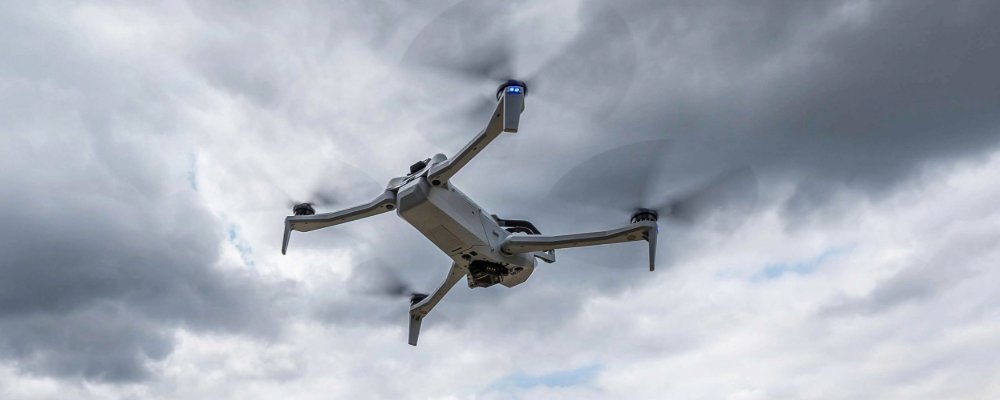
PASSED: FCC Opens More Cellular Spectrum for Drones
“Today, we give drone operators a new source of spectrum and open up new business models for aerial connectivity.” - Chairman @BrendanCarrFCC
Read More 🧵⬇️


2026/10/28西班牙高鐵追撞 難以理解高速鐵路會追撞


Starlink Mobile is providing free connectivity to @orange_es and @Telefonica customers affected by the devastating train collision in Spain. Families, communities, and businesses with compatible LTE phones can stay connected via apps and texts even when cell towers are down 🛰️📱
Mojo YoYo 🅰️🛰️📱🅰️ retweeted
BREAKING: FCC Approves Amazon Leo's Acquisition of Globalstar
@BrendanCarrFCC announces the news live on @MTSlive —
“This is part of this new, robust investment we’re seeing in direct-to-device technologies.”
Learn more about the approval🧵⬇️
Amazon Leo (Project Kuiper):亞馬遜旗下低軌衛星服務確定收購Global Star
Amazon Leo 台灣由遠傳電信取得授權經銷商。
低軌衛星直連手機的這個服務,目前只有AST SpaceMobile 和 SpaceX 跟Amazon 三家公司做競爭,簽署最多MNO的是AST 單顆衛星直連最快的是AST,只有衛星沒有火箭的也是AST


Mojo YoYo 🅰️🛰️📱🅰️ retweeted

Starlink Mobile is now live in Brazil with @vivobr! 50M customers can use apps and messaging in cellular dead zones — with 7M phones already connected. This is the first nationwide service to cover the entire country.
The next-gen service - Starlink Mobile V2 - will make sure all Brazilians have access to high-speed mobile internet, from small fishing villages deep in the rainforests to remote stretches of highways 🛰️📱

Mojo YoYo 🅰️🛰️📱🅰️ retweeted

Verizon's CEO said today that SpaceX will need at least 4-6 years and $300B-$500B to fully build out its @Starlink Mobile U.S. carrier network:
"Their service just can't compete with a terrestrial network. In suburban and urban areas, where 98% of our revenues are, we're somewhere between 100x–1,000x more efficient than they are. We know exactly what they're going to do. We know who they're talking to on towers. There's no magic wand. There's no secret sauce. There's no shortcut.
They're going to look at 65,000–80,000 macro sites. They're going to need backhaul, RAN, and a tremendous amount of spectrum. It's going to take a minimum of four to six years to fully build that out. It's going to cost hundreds and hundreds of billions of dollars, I assume somewhere between $300 billion and $500 billion.
Then they need to build retail, customer service, back office systems, et cetera. All of that gets them basically the same network and same capabilities and same cost structure as what we have today. Then sometime over the next four to six years, they have the possibility of becoming the sixth, not the fourth, the sixth competitor in the market.
You can be sure over these next three to five years or six years, we are not going to be standing still. Four to five years from now, we will be two to three generations better than where we are today. We will have high-speed broadband gig-plus coverage across the country with our millimeter wave. We are ahead of most people and already experimenting with what 6G applications will look like."
(via Verizon's Q3 earnings call earlier this morning)


Mojo YoYo 🅰️🛰️📱🅰️ retweeted

AST SpaceMobile Advances Brazil Expansion with Anatel’s Approval for S-band Spectrum and Secondary Use of the 700 MHz Band, Agreements with Four Regional Operators and Planned Ground Infrastructure
businesswire.com/news/home/2…

Mojo YoYo 🅰️🛰️📱🅰️ retweeted

Blue Origin's New Glenn GS-2 is being loaded into NASA's Pegasus Barge for the trip to NASA Stennis for testing.
nsf.live/spacecoast
Mojo YoYo 🅰️🛰️📱🅰️ retweeted

Musk's SpaceX is still restricting Starlink in Ukraine and the toll is rising cnbc.com/2026/10/23/ukraine-…

Mojo YoYo 🅰️🛰️📱🅰️ retweeted

WHY STARLINK MOBILE COULD TURN $ASTS INTO A $100B GIANT
The market is completely misreading what $SPCX ambitions with Starlink Mobile could mean for AST because what initially looks like another competitive threat might actually become one of the biggest catalysts for AST SpaceMobile's long term valuation.
Bloomberg is now reporting that SpaceX wants access to at least 80,000 cell tower sites across the United States and is already in discussions with major infrastructure providers, including Crown Castle, as it works toward becoming the fourth nationwide wireless carrier.
This comes shortly after SpaceX acquired additional low band spectrum and received regulatory approval for up to 15,000 satellites, which makes it increasingly clear that Elon Musk isn't simply trying to supplement existing wireless networks with satellite connectivity but is positioning Starlink to compete directly with AT&T, Verizon and T-Mobile.
I think that's an incredibly important development because the moment SpaceX transitions from being a satellite connectivity partner into a potential competitor for traditional wireless subscribers, the strategic importance of having an independent satellite partner like AST SpaceMobile increases considerably.
What makes this particularly interesting is how differently SpaceX and AST are approaching the same enormous opportunity because SpaceX is spending billions acquiring spectrum and pursuing terrestrial infrastructure to build its own wireless network, while AST SpaceMobile is essentially integrating its satellite technology into the networks, spectrum and existing customer relationships of established mobile carriers.
That distinction becomes increasingly important when you consider that AT&T and Verizon already have commercial agreements with AST, while the three largest U.S. wireless operators recently formalized a joint venture focused on expanding satellite connectivity and preserving competition among satellite providers.
AST also has partnerships with more than 60 mobile network operators representing over 3 billion subscribers globally, which gives it access to an enormous potential customer base without having to independently acquire every subscriber or recreate the terrestrial infrastructure those carriers already operate.
In other words, SpaceX is trying to build an entirely new wireless competitor, while AST is positioning itself to help existing carriers defend and expand their businesses, and I think those very different incentives could make AST an increasingly attractive strategic partner as Starlink Mobile becomes a more credible competitive threat.
The other reason I think this development could prove incredibly bullish for AST is that SpaceX is effectively validating how enormous the direct to device connectivity opportunity could become, particularly after Musk recently discussed a potential path toward several hundred billion dollars in annual connectivity revenue across SpaceX's broader communications business.
Obviously, that's an ambitious long term vision rather than a guaranteed financial outcome, but I think it demonstrates that SpaceX views connectivity as a massive standalone opportunity rather than some relatively small extension of its existing satellite business. Meanwhile, AST is targeting approximately 45 satellites in orbit by early 2027, with commercial service expected to expand as its constellation and ground infrastructure reach sufficient scale, potentially giving the company an important window to deepen carrier integrations while SpaceX continues assembling its terrestrial network.
What I find especially compelling is that AST doesn't necessarily need to replace traditional wireless infrastructure or convince billions of consumers to abandon their existing providers because its business model is designed to monetize incremental satellite connectivity through those same providers.
If that approach works at scale, even relatively modest adoption across its existing partner ecosystem could eventually translate into substantial recurring revenue, particularly as satellite broadband expands beyond emergency connectivity into everyday cellular data, enterprise applications and government communications.
Ultimately, I think this is how $ASTS could potentially become a $100B company because the market may still be underestimating how valuable a carrier aligned satellite network becomes when the largest satellite operator in the world is actively trying to compete with those same carriers.
That doesn't mean a $100B valuation is inevitable because AST still needs to execute on satellite manufacturing and launches, demonstrate reliable commercial service, secure regulatory approvals and prove that its revenue sharing arrangements can generate attractive economics as the network scales.
However, I think the combination of its existing carrier relationships, increasingly capable satellite technology and the enormous addressable market creates a much more compelling opportunity than simply connecting smartphones in remote areas.
The irony is that investors appear worried about SpaceX taking market share away from AST, while I think SpaceX's push to become a nationwide wireless carrier could actually accelerate the urgency for AT&T, Verizon and other operators to strengthen their relationships with an independent alternative.
If AST can successfully translate those relationships into meaningful commercial adoption over the next several years, I think the company has a credible path toward becoming one of the most valuable communications infrastructure platforms in the world, and SpaceX's aggressive expansion might ultimately be one of the biggest reasons that opportunity materializes.

Mojo YoYo 🅰️🛰️📱🅰️ retweeted

Elon Musk says that “US taxpayer money [that goes to Ukraine] comes back through multiple laundry machines to fund political campaigns in America.” 🇺🇦 🇺🇸
Elon Musk is asking a very simple question that someone in Washington should have asked long time ago. Who is getting rich off this war, and why does nobody in Congress want to find out?
The Council on Foreign Relations estimates about $106 billion directly aids Ukraine’s government, a government that Transparency International has ranked among the most corrupt in Europe every single year it has been measured, a government whose defense procurement chief was arrested for embezzlement while soldiers were dying for lack of equipment.
The people fighting this war did not choose it, and the people profiting from it are not fighting.
🤖 Made with AI
是的我也受夠你了Elon,我也要跟著受夠你了

Here’s a video of Ukrainian elites growing “very rich” off hundreds of billions from financial aid to Ukraine.
Did Trump throw you under the bus, or did you do this?
Why can’t you just fucking run your companies, Elon? Each of your tweets makes you less popular.
Most normal Republicans, centrists and Democrats hate you because of tweets like these two. I’m done.
來了來了,把你們的基地台交出來

AT&T, Verizon, and T-Mobile are jointly lobbying the FCC to preserve existing rules as @SpaceX moves closer to launching its own independent cellular network that would compete directly with the three major U.S. carriers.
On Oct 20th, reps from all three major U.S. wireless carriers met with FCC officials to push back against proposed changes that would give satellite companies more freedom to offer cellular service.
The carriers urged the FCC to:
• Block satellite companies from using certain 5G frequencies currently used by wireless carriers.
• Keep rules requiring satellite companies to get permission from wireless carriers before using their licensed spectrum.
• Allow wireless carriers to maintain control over these agreements, including the ability to end them.
• Reconsider proposed interference limits to protect existing cellular networks.
Based on all the public communications from these carriers, and the lobbying, they are clearly worried that SpaceX's @Starlink Mobile network is going to be a major competitor to them. Starlink Mobile will become the first network operator to deploy both satellite and terrestrial spectrum.
The FCC recently announced that they are considering new rules that could make it easier for satellite companies like SpaceX to offer cellular service without relying as heavily on existing wireless carriers, so this is partly what the three big carriers are fighting against.

Mojo YoYo 🅰️🛰️📱🅰️ retweeted
The AST SpaceMobile network is taking shape, in orbit and on the ground.
Today, over 60 gateways are in various stages of completion, installation and planning worldwide.
Initial, intermittent coverage targeted before year-end 2026 in the U.S. and other key markets around the world.
A new layer of connectivity, designed to connect directly to the smartphones people already use.
🇺🇸 📶🌎📱
#ASTSpaceMobile #ConnectingtheUnconnected
Mojo YoYo 🅰️🛰️📱🅰️ retweeted
Welcoming Sharad Sriwastawa - Co-CEO of @Rakuten_Mobile and President of @RakutenSymphony - and his team to Midland as we work together to bring space-based cellular broadband connectivity to Japan.
Together, we are advancing a space-based resilience network to expand everyday connectivity where coverage is limited or unavailable and keep communities and emergency responders connected when disasters strike. 🇺🇸 🇯🇵📶🌎📱
#ASTSpaceMobile #ConnectingtheUnconnected

美國需要第三個發射場

BREAKING: The U.S. Space Force says America needs a THIRD major rocket launch range by 2030 as military and commercial launch demand accelerates.
Lt. Gen. Philip Garrant, commander of Space Systems Command, confirmed that the service has formed a planning team to evaluate a new spaceport capable of supporting medium- and heavy-lift rockets.
The expansion would supplement Cape Canaveral in Florida and Vandenberg in California, which face growing capacity constraints as SpaceX, Blue Origin and other operators increase launch activity.
The White House has projected that U.S. launch demand could reach 1,000 missions annually by 2030, approximately five times the 2025 level.
The Space Force is evaluating government-owned facilities, commercial property and public-private partnerships.
Garrant described the 2030 timeline as ambitious. No location or construction plan has been finalized.
A third launch range could provide additional capacity and redundancy for deploying military satellites during a crisis.
