Loves a laugh
Melbourne, Australia
Joined December 2010
- Tweets131
- Following307
- Followers37
- Likes75




Kunal Limaye retweeted

How do you make zero-knowledge privacy work for real-world applications? 🤔
The @midnightfdn worked with @GoogleCloud and @BCW_llc to move complex zero-knowledge proving workloads into trusted execution environments using Confidential Space and Google Kubernetes Engine (GKE) Confidential Nodes.
Google Confidential Space attestation supports workload verification, while Google Cloud Attestation helped unblock critical security prerequisites for commercial wallet integrations, including Lace.
The team took the deployment from concept to live production in just two months. By open-sourcing its reference architecture and Terraform configurations, it also cut third-party developer onboarding time from hours to under one minute.
🤝 Read the Google Cloud case study to learn more: cloud.google.com/customers/m…

Recently I booked a flight with @airindia and the itinerary I received doesn't have the full amount on it. The support is giving me a run around based on fare type, travel certificate, etc. Is this an unfair request for an official document with final amount on it?
1
142
Kunal Limaye retweeted

Yeah we have a great case study.
Open agentic science achieved more than a 13x improvement in a Quantum algorithm. But its really hard to pull through what the models actually did.
There is a lot of data to study here on frontier scientific research.
xitter.cf/sreeramkannan/status/2…


Kunal Limaye retweeted

Wild story unfolding around the KelpDAO hack funds frozen on Arbitrum.
Quick context: in April, Lazarus Group (DPRK-linked) hacked KelpDAO for $292M via a LayerZero bridge bug. Some of the stolen ETH flowed through Arbitrum, and Arbitrum's Security Council froze $71M before the attacker could move it further.
The industry mobilized to recover. Aave, KelpDAO, LayerZero, EtherFi, and Compound co-authored a proposal asking Arbitrum DAO to release the frozen ETH to a multisig that would compensate hack victims. The vote is passing.
Then this week, a plot twist. Lawyers showed up with a restraining order. But not on behalf of the KelpDAO victims.
The plaintiffs are Han Kim and two other groups - family members of people killed in DPRK-backed terrorist attacks years ago. They hold combined ~$877M in unpaid US court judgments against DPRK. North Korea never paid. They have been hunting for any reachable DPRK asset for over a decade.
When Arbitrum's frozen ETH was publicly identified as "DPRK money," they saw a target.
Their argument: this is DPRK property, we have $877M in judgments against DPRK, give us the money.
The counter-argument: DPRK does not actually own this ETH - they stole it. The real owners are the KelpDAO hack victims. The old terrorism creditors are trying to grab money that was never really DPRK's.
Arbitrum is now caught in the middle. The industry wants to release funds for hack recovery. NY court is saying "do not move anything until we resolve this." If multisig signers transfer the ETH while the restraining order is active, they become personally liable.
This is the first real test of DAO funds against competing US court claims. The precedent set here will shape how every future DAO incident response handles legal pressure.
Kunal Limaye retweeted

Congratulations to the team!

📢Paper accepted at ACM CCS 2026:
📜 eprint.iacr.org/2026/065
@dntse @SanjamGarg
BABE: an efficient protocol for verifying SNARKs on Bitcoin, being implemented by @babylonlabs_io
🗓️Also presenting at: Bay Area Crypto Day (Stanford, May 1) and @Designing_DeFi (NYC, May 20)


Interesting take and really well articulated. Where does this leave things like de-id or even a name service (like .sol)? Which doesn't necessarily have an intrinsic value, but it's value is a function of its utility. Any thoughts @mert ?

chris and haseeb are both partially correct and incorrect
crypto is not web 3.0, it is capitalism 2.0
i) blockchains are explicitly financial architecture
this is not an opinion, this is objectively why they must work with economic incentives at the core level
agreeing on information on a neutral protocol was already a solved problem before crypto (see: email)
the unique addition of blockchains is that they allow consensus on information with monetary value, namely they solve the double spend problem
so using blockchains for a system that does not require consensus on money is by definition inefficient
this is also why those decentralized social protocols like nostr, bluesky, and farcaster for example don't actually use blockchains
ii) since this is the case, it [currently] makes no sense to use blockchains for any app that requires 0 integrations with monetary value. but more on this in a sec.
iii) as a result, the market will necessarily use blockchains for financialized apps
iv) but there are two historical issues. a) regulation, b) scale
crypto is not actually 18 years old, that's bitcoin
you know how bitcoiners say: "bitcoin, not crypto", well the converse is also true. that is "crypto, not bitcoin"
the downsides of draconian regulation on the creation of new products is obvious so I won't waste time
but blockchains that scale for finance really have only been a thing for, maybe, 2 years, with solana finally solving a bunch of crippling issues since '24 and with regulation still pending
v) which means that this is now, finally, the age where we onboard apps to use blockchains as their universal API for money and finance
vi) ok and now this is where it gets interesting and where we get back to ii)
in the prior state, it did not make sense for non-financial use case to blockchains due to the overhead
however, as more users onboard, they also bring with them their socieconomic graphs and in parallel, blockchains have to provide infrastructure primitives to meet these demands
this has the effect that such a non-financial protocol or app developer can reasonably consider a blockchain for their app state as an alternative since identity, PKI, etc are all solved at scale
one good example of this is integrity of AI-generated shit
technically, you do not need a blockchain for this, all you need is 1) PKI, 2) a key directory, 3) proof-of-time, 4) a database to store key revocations
however, at that stage, due to scale and existing integrations, it is very likely that the blockchain is a more pragmatic solution with more favorable economics
it's a bit like how javascript wasn't actually the best solution for the browser, but it worked, and enough people kept using it until it became irreplacable
vii) which means that non-financial use-cases are still very much in play, but structurally require the financial use cases to become bigger first
27

Kunal Limaye retweeted

AI agents will be a big part of how we shop in the not-so-distant future.
To help lay the groundwork, we partnered with Shopify, Etsy, Wayfair, Target and Walmart to create the Universal Commerce Protocol, a new open standard for agents and systems to talk to each other across every step of the shopping journey.
And coming soon, UCP will power native checkout so you can buy directly on AI Mode and the @Geminiapp.

Kunal Limaye retweeted

x402 has arrived on Sonic ⚡️

x402 support enabled for @SonicLabs ⚡
Sub-second finality. 90% fee sharing. Now with x402 payments.
The fastest way to monetize APIs.

Kunal Limaye retweeted

Developer tests ZEC shielded sends for Infinex Sonar sale, nearly loses 1k ZEC to suspected malformed tx & note bugs. After frantic debugging, seed exports, Zashi crashes, and decoding checks, balance finally appears—funds safe! Just a decoder glitch. Prod testing wins again. 😂

Fresh from the @MidnightNtwrk Summit in London! 🇬🇧 The buzz around privacy and ZKPs was impossible to ignore.
I’ve always kept a safe distance from the complex inner workings of ZK proofs, but the flight home felt like the perfect time to finally dive in. ✈️
Here is my attempt at unpacking the magic math behind ZKP: medium.com/p/unpacking-the-m…
P.S. I also built a simple lab in Rust to verify my learning. If there is interest, I’m happy to push it to GitHub! 🦀
#ZKP #Privacy #MidnightNetwork #RustLang #LearningInPublic
40
On chain privacy is vital for DeFi adoption by financial institutions. Balancing privacy and transparency is a complex issue. Here are my thoughts on using @MidnightNtwrk to solve this dilemma:
medium.com/@kunallimaye/solv…
#MidnightSummit #Defi #Privacy

Kunal Limaye retweeted

The demo shows building a Midnight <> EVM bridge using our new multi-chain intents layer
Built using Paima Engine v2
- 300 lines of state machine code only
- single command to start
want to try the developer preview? Reach out!
acedward.github.io/paima-v-n…
Kunal Limaye retweeted

Regular reminder:
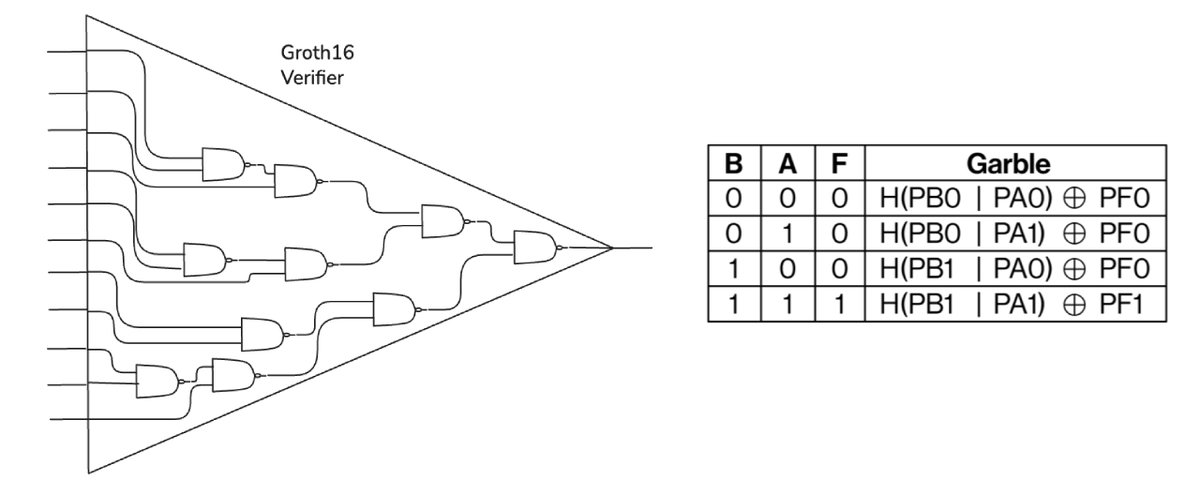
A key property of a blockchain is that even a 51% attack *cannot make an invalid block valid*. This means even 51% of validators colluding (or hit by a software bug) cannot steal your assets.
However, this property does not carry over if you start trusting your validator set to do other things, that the chain does not have control over - at that point, 51% of validators can collude and give a wrong answer, and you don't have any recourse.

Kunal Limaye retweeted

The day has arrived: The Summit Jailbreak Hackathon is now live. 🪐
A dual-track challenge, developed with @Googlecloud, @SonicLabs, and @DoraHacks, stress-testing @GeminiApp’s AI and the smart contract behind it.
Break it and walk away with the entire pot. Full details below.
Kunal Limaye retweeted

Panel | How Early Stage Apps Win
🗓️ Wed, May 7
🕐 12:05 – 12:30
Featuring:
@0xSeg (DevRel Sonic Labs) + @LimayeKunal (Web3 Engineer @GoogleCloud) + @ChefDora_(BD @DoraHacks) + @Macr0Mark (CGO and Co-Founder @Nuvolari_AI)