

British Institute for Libyan & Northern African Studies (BILNAS) is a membership body sponsored by @BritishAcademy_ We support scholars in Libya and the region
London, England
Joined January 2014
- Tweets2.6K
- Following2.3K
- Followers1.7K
- Likes4.8K





Pinned Tweet
📢 BILNAS Archivist Vacancy
BILNAS is looking for an experienced Archivist to join the School of Heritage and Culture at the @uniofleicester, providing maternity leave cover for the internationally-significant BILNAS Archive.
For full details go to: jobs.le.ac.uk/vacancies/1385…


🏛 Journey through the BILNAS archives
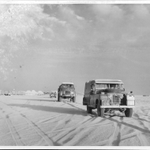
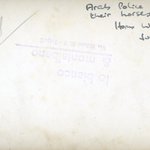
📸 Convoy of jeeps in the desert forming part of an oil exploration team. Captioned on verso “Departure for Fly Camp of Oil Exploration Crew”. 1960s.
Leisure camp of the British Petroleum Company Ltd in Fezzan.
© BILNAS/D8/1/11, D8/1/13


BILNAS🏺📜📚🇱🇾 retweeted

Book Club: Mohammed Alnaas's award-winning Libyan novel explores masculinity, tenderness and the cost of conforming to society's expectations of manhood.
newarab.com/features/bread-u…

BILNAS🏺📜📚🇱🇾 retweeted

Hellenistic and Roman-era portraits of Libyans from the "Sanctuary of Cyrene". These were most likely high-status and wealthy Libyans who were integrated into Cyrenean society. It shows that foreign origins and customs did not prevent social integration (from Hodos 2006)


BILNAS🏺📜📚🇱🇾 retweeted

JIM 17/4 is out! Ibadi Manuscripts in Libya: Ibāḍī Manuscript Samples Documented by Ennami; Libyan Heritage in the Sormani Library (Milan) and the Archive of the Lincei (Rome); the Libraries of Nafusa Project; the Library of al-Mzābī; an Omani in Nafusa.
academia.edu/179134475/JIM_1…

🏛 Journey through the BILNAS archives
📸 Photograph of a young man throwing clay on a pottery wheel. A note on the reverse of the image says “Pottery is an ancient craft widely practiced in Libya”. 1960s.
© BILNAS Archive: Roland C. Shaw Photographs BILNAS/D8/1/10


📣 Just 2 DAYS to go until the first BILNAS lecture of the new academic year:
'The AFRIPAL Project in Musti: An Epigraphical Component' by Karol Kłodziński, Associate Professor at the University of Gdańsk.
📆 Thurs 15 Oct, 5pm (UK time)
💻 To Register: us02web.zoom.us/webinar/regi…

BILNAS🏺📜📚🇱🇾 retweeted
BILNAS General Secretary, Dr Victoria Leitch, recently renewed her SOAS Library card – for FREE thanks to membership of BILNAS, which is just £30 per year.
So why not join BILNAS today to take advantage of this privilege, as membership of @SOASLibrary normally costs £200 p.a.?


🏛 Journey through the BILNAS archives
📸 A man standing among tobacco plants in the Tripoli area. The photograph features the stamp of the Kingdom of Libya’s Ministry of Information and Guidance on verso along with the manuscript notes:
“Tobacco growth in Tripoli area...
1/2

BILNAS🏺📜📚🇱🇾 retweeted
Daily life scenes in the extraordinary roman mosaic of Zliten in Libya. Dating back to the 2nd century. This fabulous opera was found in 1913-14, as part of the excavations of a Roman Villa, by the Italian Archaeologist Salvatore Aurigemma. It describes gladiator games, ANIMAL HUNTS and everyday life scenes. Preserved at the archaeological museum of Tripoli, Libya

BILNAS🏺📜📚🇱🇾 retweeted
📢 BILNAS Archivist Vacancy
BILNAS is looking for an experienced Archivist to join the School of Heritage and Culture at the @uniofleicester, providing maternity leave cover for the internationally-significant BILNAS Archive.
For full details go to: jobs.le.ac.uk/vacancies/1385…
BILNAS🏺📜📚🇱🇾 retweeted

World famous Hunting Baths in Leptis Magna. Looked at the site with local Libyan colleagues and ASOR.org @AncientRomeLive
BILNAS🏺📜📚🇱🇾 retweeted
The greatest archaeological museum you’ve never seen! Here’s a short intro to the Tripoli archaeology collection - and why I’m in Libya this week! @AncientRomeLive project, of course!
BILNAS🏺📜📚🇱🇾 retweeted
Happy October. Sousse Roman mosaic showing October. From Sousse Archaeological Museum, Tunisia

BILNAS🏺📜📚🇱🇾 retweeted
Today: inside the magnificent new Tripoli archaeological museum, newly re-opened this year!


BILNAS🏺📜📚🇱🇾 retweeted

Ancient Roman mosaics in Libya have been reburied after years of exposure, vegetation growth and deterioration threatened their survival.
At Sabratha, researchers covered the fragile 1,800-year-old floors with protective layers of soil, sand and gravel to preserve them.


