

A group of engineers, social scientists, policy folks | Leveraging tech to improve public service delivery | Transparency and accountability
Joined November 2018
- Tweets740
- Following94
- Followers1.6K
- Likes799



No Order Yet on Additional 50 Days of MGNREGA Work for FRA Title Holders
Under the earlier MGNREGA framework, eligible Scheduled Tribe households in forest areas holding titles under the Forest Rights Act (FRA) received an additional 50 days of wage employment beyond the standard 100 days, subject to specified conditions.
The new VB-G RAM G Act provides for up to 125 days of wage employment per rural household annually. However, as reported by The Hindu, the Union Rural Development Ministry confirmed that, as of October 6, 2026, no separate order or guideline had been issued clarifying the status of the additional 50 days for eligible FRA title holders.
All entitlements and provisions must be clearly documented in policy to guide implementation and ensure that intended beneficiaries can access them on the ground. As we transition to the new framework, identifying and addressing gaps in the policy is crucial to prevent ambiguity and ensure that eligible households do not lose access to their entitlements.
Read the full article in The Hindu:
thehindu.com/news/national/f…
#LibTechIndia #VBGGRAMGAct #MGNREGA #ForestRightsAct #AdivasiRights #RuralEmployment

Are People Being Informed About Changes to the PDS System?
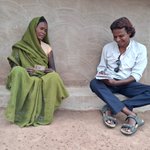
The LibTech India team met with a PDS operator at the block level in Manika to understand the process of linking Aadhaar with ration cards.
During the discussion, we learned that citizens cannot link their Aadhaar to their ration cards themselves and must approach the block-level PDS operator to complete the process. The operator also informed us that no application is required; citizens only need to provide their Aadhaar.
At LibTech India, we track changes in welfare delivery systems and the processes through which these changes are implemented. It is equally important to understand whether people are informed about these updates and know what steps they need to take to access their entitlements. This helps us understand not just how the system is changing, but also how these changes are communicated to the people who depend on it.


Poshan Tracker and Barriers to Nutrition Entitlements in Agency Areas
LibTech India team members recently visited Alluri Sitharama Raju district, Andhra Pradesh, and interacted with Anganwadi Workers to understand how the Poshan Tracker app functions in practice.
During the field visit, the team observed how difficulties in registering eligible beneficiaries on the app can prevent them from receiving Take-Home Ration (THR). Anganwadi Workers also shared the challenges they face, sometimes walking 1–3 km to find internet connectivity just to complete beneficiary registrations.
These experiences highlight the gap between digital systems and the challenges specific to agency areas. When internet connectivity becomes a barrier, both frontline workers and eligible beneficiaries face difficulties in accessing essential nutrition services.
At LibTech India, we believe digital systems should be designed to reduce exclusion and ensure that people receive the entitlements they are eligible for. Technology must make access to welfare services easier and more inclusive, not create additional barriers for those it is meant to serve.


From Policy on Paper to Practice in the Field
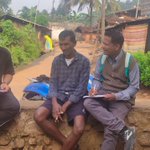
As part of their internship, economics students from APU interacted with farmers in ASR District to understand how NREGA is implemented in villages, how it supports farmers, and how the works undertaken through the programme contribute to rural livelihoods and village development.
At LibTech, we encourage interns to engage directly with communities and observe the implementation of public programmes firsthand. These interactions help bridge the gap between what students learn about policies in the classroom and how these policies are implemented in practice. By listening to farmers and learning from their experiences, students gain a deeper understanding of how programmes like NREGA function, the role they play in rural communities, and the challenges involved in their implementation.
We believe that learning goes beyond textbooks. Such field experiences help students connect concepts with practical insights, develop a better understanding of public service delivery, and learn from the people these programmes are designed to support.
#LibTechIndia #APUEconomics #MGNREGA #RuralDevelopment #FieldLearning #PublicServiceDelivery

Understanding how communities respond to challenges.
During our field visit to Itki, Ranchi, we spoke with community members about challenges they face while accessing Aadhaar, pensions and the Public Distribution System (PDS).
Rather than looking only at individual experiences, we explored what happens when multiple people face similar challenges: - Do they approach these issues individually, or do they come together and respond collectively?
At LibTech India, we engage with communities to understand not only the challenges in accessing welfare systems, but also how people navigate and respond to these challenges.


Social Security Pensions: Field Days
During a recent field visit to Heerapur Gram Panchayat in Raichur district, LibTech India team members spoke with social security pension beneficiaries, including elderly persons and widows.
Their experiences offered a glimpse into the different layers involved in accessing a pension: - from verification and payment processes to receiving the entitlement at the beneficiary’s end.
For people who rely on social security pensions, each of these layers can shape how easily and regularly they are able to access their entitlements.
At LibTech India, we engage with people at the last mile to understand these layers of welfare delivery and bring ground-level experiences into conversations around how public systems can work better for everyone.


At LibTech India, we ask a simple but important question: Are the people these schemes are designed for actually able to access the benefits they are entitled to?
Field engagement helps us understand how schemes work in people’s everyday lives, identify gaps in access, and bring ground realities into conversations around improving public systems.
Because a scheme’s promise matters only when it reaches the people it was designed to serve.
#LibTechIndia #PVTG #PublicServices #SocialProtection #GroundRealities #Fieldwork


Learning from people. Understanding policy through practice.
As part of their internship with LibTech India, APU @azimpremjiuniv interns visited Adivasi villages in the Eastern Ghats. They engaged with Antyodaya Anna Yojana (AAY) cardholders to understand their experiences with the Public Distribution System (PDS) and access to food entitlements.
Such engagement helps young people connect classroom learning with everyday realities—listening to people, asking questions and understanding how public schemes work in practice.
Every year, LibTech welcomes interns from leading institutions across the country. This year, we also hosted interns from Europe.
We see internships as a space for learning, reflection and contribution, with people’s experiences at the centre.


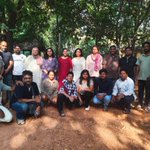
The LibTech India team came together for our six-monthly retreat on 25th, 26th, and 27th at Visthar, Bengaluru.
Three days of reflection, learning, meaningful conversations, and collective thinking as we looked back on our work and looked on way forward.

AI, Rights and Accountability: Consultation on Social Protection and Justice Delivery
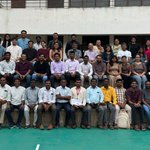
LibTech India, along with partners, hosted a one and half day consultation at NLSIU, Bengaluru, bringing together researchers, practitioners, lawyers and activists to discuss the growing role of AI and technology in public systems.
The consultation explored how technology is shaping welfare and justice delivery, and the need for transparency, accountability and safeguards when technology affects people’s rights and entitlements.
#AIRights #AIAccountability #SocialProtection #DigitalRights #LibTechIndia

Glimpses from Day 1 of our Consultation “Ai Rights and Accountability: Social protection and Justice Delivery”


LibTech India’s research on social security pensions in Andhra Pradesh has been featured in Deccan Herald.
Our analysis of two years of pension data shows that the number of sanctioned pensions declined from 65.18 lakh in July 2024 to 62.20 lakh in July 2026—a reduction of nearly 3 lakh beneficiaries.
The findings also highlight the continued absence of regular new Enrollments and gaps in pension coverage, including among eligible beneficiaries in Adivasi areas.
Read the full coverage by Deccan Herald to learn more about the findings and what the data tells us about access to social security pensions.
Click on the Link to Access the Article:- deccanherald.com/india/andhr…
#LibTechIndia #SocialSecurity #Pensions #AndhraPradesh #WelfareEntitlements #SocialProtection #AccessToEntitlements
LibTech India conducted a two-day Aadhaar Master Trainers’ Training for partner organisations working in the Santhal Pargana area of Jharkhand, at HRDC, Ranchi.
The training focused on building a practical understanding of the Aadhaar system and strengthening participants’ ability to navigate Aadhaar-related challenges and support communities in finding appropriate avenues for resolution.
Through discussions and hands-on learning, participants explored common challenges and ways to respond to them.
The aim was simple: To strengthen community organisations’ capacity to understand, navigate and address Aadhaar-related issues.
#Aadhaar #DigitalRights #AccessToEntitlements #CommunityOrganisations #LibTechIndia #Jharkhand #DigitalInclusion


Workshop for Adivasi Grassroot Activists on usage of Ai Tools
A two-day workshop by YESS and LibTech India concluded today in Kurupam, exploring how AI tools can support welfare access and community empowerment.
#LibTechIndia #YESS #AdivasiCommunities #Socialwelfare #GrassrootsActivists

Understanding Welfare Access Through Fieldwork
At LibTech India, field visits are an important part of how we understand people’s experiences with welfare systems.
Our ongoing fieldwork with PVTG communities focuses on understanding their experiences of accessing social security pensions. Through conversations with community members, we are learning how welfare processes are experienced beyond what administrative systems and data can show.
Interactions with people help us understand the everyday realities behind an application, a verification process, or a payment—and identify where processes may create difficulties that are not immediately visible in official records.
For us, fieldwork is not just about collecting information. It is about listening, learning from people’s experiences, and bringing those insights into our research and engagement on welfare access.
#LibTechIndia #Fieldwork #PVTG #WelfareAccess #SocialSecurity


Adivasi agriculture and digitalisation in focus
@the_hindu has covered our two-day consultation on Adivasi Agriculture and Digitalisation, held in Visakhapatnam on August 26–27.
The consultation brought together Adivasi farmers, researchers, civil society organisations and practitioners to discuss how digital systems are shaping access to agriculture-related services, land records and entitlements.
The conversations highlighted the need to ensure that digitalisation responds to the realities of Adivasi and tenant farmers—and does not create new barriers to access.
Read the full article in The Hindu:- thehindu.com/news/national/a…
#LibTechIndia #AdivasiAgriculture #Digitalisation #AdivasiRights #Agriculture #DigitalInclusion

Reflections from the Consultation on "Adivasi Agriculture and Digitalisation"
Dr. G. V. Ramanjaneyulu
Centre for Sustainable Agriculture
Sharing his reflections and perspectives on the way forward, highlighting pathways for meaningful engagement and collective action.
#LibTechIndia #Adivasi #Agriculture #Digitalisation #Consultation #Reflections
Understanding Welfare Access Beyond the Numbers
The LibTech India team visited Adivasi villages in ASR district to understand how digital systems shape access to welfare schemes.
Through conversations with communities, including PVTGs, we explored challenges in accessing PDS, social security pensions, PM-KISAN and other entitlements.
High delivery rates on dashboards don’t always reflect people’s experiences on the ground. Field visits help us look beyond the numbers, learn from communities and strengthen our action research towards more people-centred welfare systems.
#LibTechIndia #WelfareAccess #AdivasiCommunities #FieldResearch #ActionResearch


