








Pinned Tweet
In 1218, Genghis Khan wanted to establish a trade alliance with a neighboring ruler who didn't like him.
The ruler was Shah Muhammad II of the Khwarazmian empire.
Initially, the Shah pretended to agree...
But when Genghis sent a caravan of 500 merchants to the Khwarazmian empire, a governor of one of the provinces accused them of being spies, seized their goods and had most of them executed.
Big mistake...
The Khwarazmian empire was located in Central Asia, it included present-day Iran, Turkmenistan, Uzbekistan, parts of Kazakhstan, Afghanistan, and Pakistan.
Trying to smooth things over, Genghis Khan sent three of his envoys to the Sha, one of them a fellow Muslim as the Shah.
He asked for the return of the caravan, and for the governor, Inalchuk, who executed the merchants to be punished.
Instead, the Shah had two of the envoys shaved and the Muslim envoy beheaded. Then he sent them back to the Khan with the head.
In response, Genghis Khan launched a massive invasion of the Khwarezmian Empire with an army of over 100,000 soldiers.
And Khwarezmian, which was one of the most powerful and prosperous states in the Islamic world, was destroyed by the invasion.
This also marked the beginning of the Mongol conquest of the Islamic States.
The Mongols pursued the fleeing Shah Muhammad II until he escaped to an Island in the Caspian sea, where he died shortly afterward, perhaps from shock.
And ss for governor Inalchuk, the Khan captured him and poured molten silver through his eyes and ears as payback for his actions.
Lesson: Over the course of your life, many times, you will have cause to turn down people or proposals that do not align with your needs.
However, it is important to not be insulting, condescending or to gloat over it.
A rejection is hard enough, but pouring salt on the wound by being condescending could have devastating consequences.
You never know when you might be dealing with a Genghis Khan.

Ike retweeted

You want the real answer? Here it is:
You institutionalize your power so that it becomes more efficient to wield.
All entities who develop or acquire hard power tend to institutionalize it.
If you don’t, you have to continuously exercise your power nakedly while wielding it, i.e. “do X or I will use my power to hurt you.” This also engenders resentment and breeds resistance.
Institutionalization takes advantage of the human mind to conform to rules out of habit. An institution is just a set of rules. You make them up. So you make up a bunch of rules that say things like “if you do any of these things, the institution says you must be punished [and it will be enforced via my power]” or “if you do this, you will be rewarded by the institution [where I will be the one to dole out the reward]” and most importantly “if you want to do X, you must do it according to process Y [which happens to benefit me and not threaten my other interests].”
This obscures the threat of naked power behind a set of “fair” rules. All institutions and rules have existed like this since the dawn of civilization. They are a way of telling the people who are being dominated when and how they can expect their rulers to act, what tribute they must pay, and what protection from competing rulers they will receive. And, many people conflate consistency with fairness, or at least familiarity, so it reduces resentment at being dominated.
At the end of WW2, the US ruled by way of military supremacy over Western Europe. NATO was an institution that used the threat of a competing ruler (Russia) to say “if you conform to our rules and do things our way, we’ll protect you.” By and large Europe conforms to US-led cultural and economic wishes, and the US even lets them shirk their military contributions because by doing so, it keeps the other countries weak (vs competing rulers) and dependent on the US for protection.
Yes, they are freeloaders. This is by design. The best way to dominate someone is to provide them free protection and material comfort (turn them into a freeloader), and then they become dependent on you and you can control them. If you think Europe isn’t controlled by the US, it’s because you’ve probably grown up in a world where that was assumed. As a contrast, a developed country that isn’t controlled by the US is China, and that’s so bizarre to the typical US experience that many Americans consider China an *enemy* when it’s merely just not under US control. That’s what it looks like.
Western Europe, on the other hand, allows the US to put military bases on its sovereign territory which, if you think about it objectively, is pretty much the greatest act of submission a sovereign country can commit. And it does so because it’s done under the guise of NATO (“we’re all in this together… uhh even though the US runs 90% of the show”).
So the benefit to MY COUNTRY is that NATO lets the US be completely in charge of Western Europe without looking overtly like it’s in charge, and do what is in effect what used to be called colonization by maintaining military bases in foreign territory (imagine how this would look to any country prior to 1900) and all sorts of cultural and economic dominance besides. It has been able to maintain this dominance system for DECADES now without any of the countries getting mad (getting mad for real constitutes kicking out the US military bases, not whining about freedom or other crap).
Incidentally, the World Bank and IMF and other institutions like this all serve the same purpose. They are largely run by the US, and used to control everyone else who participates by obscuring US hard power behind - and here it is - “an international rules-based order” because getting to make up the rules (because you have the hard power) sets up a system where everyone else plays by YOUR rules, the ones that benefit you.
Lesson: Be yourself...
In 1985, The Coca-Cola Company decided to change the near 100-year-old taste and formula for Coke.
All hell broke loose...
They didn't just do this on a whim.
They had been steadily losing marketing share to other competing cola products, especially to Pepsi – which the younger generation of cola drinkers preferred.
After WWII, Coca-Cola's share was 60%, but by the 1980's it has sunk closer to 20%. And in blind taste tests, consumers preferred the sweeter taste of Pepsi to Coke.
In an attempt to arrest this trend, they decided to copy Pepsi and taste more like it.
So they retired the Coca-Cola everyone had known for generations and introduced one with a new flavour called "New Coke".
It was a marketing disaster and consumers were outraged...
The Coca-Cola company received over 40,000 letters and phone calls from angry customers. There were boycotts and people pouring the drink in the streets in protest.
A psychiatrist who they hired to evaluate the calls reported that some callers sounded like they were discussing the passing of a loved one.
Some guy named Gay Mullins filed a class action lawsuit and spent $100,000 of his own money pursuing it.
Even Fidel Castro, a regular Coke drinker, chimed in that this was a sign of American capitalist decadence.
When the old stock of the original Coke ran out in the US, where New Coke was initially introduced, consumers started importing it from overseas markets where the new one had not yet been introduced...
There was even the real prospect of their bottlers boycotting them.
Finally, reading the tea leaves, the Coca-Cola Company capitulated and reintroduced the original Coke formula 79 days after discontinuing it.
"Imitation is suicide." ––– Ralph Waldo Emerson

Lesson: Make an example of one person and others will fall in line...
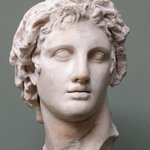
In 336 BC, when the 20-year-old Alexander the Great ascended the throne of Macedonia, following his father's sudden demise, some Greek city-states his father had subdued saw it as an opportunity to rebel.
However, the first to openly do so was Thrace – a collection of "barbarian" tribes to the east.
Without hesitation, Alexander set out to pacify them!
So while he was away fighting the Thracians, Thebes, a Greek city-state also took their chance...
First, they attacked a garrison of Macedonian soldiers stationed in Thebes, killed the officers who lived outside the citadel and besieged the rest.
To their surprise, Alexander quickly subdued the Thracians and made straight for them.
To reports of Demosthenes, the Athenian politician and orator, calling him a boy and riling up the other city-states to oppose Macedonian dominance, Alexander famously said, “They say I am a boy. I am coming to teach them that I am a man.”
When Alexander arrived at the walls of the city, he first gave them a chance to surrender, but they refused.
He eventually defeated their army and sacked the city.
Since everyone was watching the young upstart, after pardoning many, he sold 30,000 into slavery and smashed the city into ruins.
After Alexander dealt with Thebes with an iron fist, for the other city-states – especially Athens – all consideration of rebellion vanished from their thoughts.
"Punishment is not for the benefit of the sinner, it is for the salvation of his comrades." ––– General George S. Patton

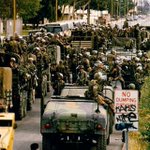
During the 1992 Los Angeles riots, U.S Marines and some police officers responded to a hostage situation...
You see, the Marines are not the guys you want for domestic duties. Their primary focus is on combat operations.
The 1992 L.A. riots were intense...
There was massive looting, over 3,000 fires, a billion dollars in property damage, 2,383 injuries, 12,000 arrests, and 63 lives lost.
It was a big deal, so in addition to the 10,000 National Guard deployed, President George Bush Snr. invoked the Insurrection Act and sent in active-duty troops to help bring the situation under control.
Back to the hostage situation...
As two police officers approached the door, a shot rang out from inside the building. They docked. Then one of them shouted to the Marines, who were behind them, "Cover me!"
Big mistake...
For the police, "cover me" means "be prepared to fire if the situation necessitates it".
To the Marines, "cover me" means "provide covering fire".
So the Marines unloaded 200 rounds into the building...
Luckily, no one was hurt.
Lesson: In the course of life, you will inevitably interact with people from different backgrounds, cultures, and with different perspectives.
If you wish to communicate effectively with them, or to form a connection, then you have to speak to them in their "language".
“To effectively communicate, we must realize that we are all different in the way we perceive the world and use this understanding as a guide to our communication with others.” ––– Tony Robbins

In the 6th century BC, while Cyrus the Great was still in the womb, his grandfather marked him for death...
His grandfather, King Astyages of the Median Empire, had two dreams that troubled him.
And when he summoned his dream interpreters, he didn't like what they had to say...
In these dreams he saw a stream, and then vines, come out of his daughter's genitals to cover the whole of Asia.
They told him it meant his daughter's son would replace him as king.
He did not like that...
So when his daughter gave birth to Cyrus the Great, he ordered his most loyal general, Harpagus, to take the boy and kill him.
Harpagus didn't want to do this himself, so he took the baby and in turn ordered one of the king's shepherds, a slave named Mitradates, to do it.
(Harpagus will regret this)
Mitradates' wife also gave birth about the same time, but her baby was stillborn, so they swapped the stillborn baby with Cyrus and presented it to Harpagus as proof.
Then they raised Cyrus as their own.
When Cyrus was 10 years old, he was playing a game with the other kids where they select someone as king.
They chose him...
And when the son of a nobleman, Artembares, refused to carry out one of his orders, he ordered the boy held and then whipped him severely.
An angry Artembares went to the king and complained about how his son was treated by one of his slaves – the son of a Shepherd.
The king summoned Cyrus, and in the ensuing run of events, discovered his real identity.
To punish Harpagus (his trusted general) for failing to kill baby Cyrus, the king had his only son killed and served to him during a banquet.
And without knowing it, Harpagus ate his own son.
Lesson: In many instances, delegation is good, but in critical moments you might want to take on certain responsibilities by yourself.
"If you want something done right, do it yourself" –––– Napoleon

ALT Harpagus brings infant Cyrus to the shepherd. Sebastiano Ricci (1659 – 1734)
In 1563, a man was caught hiding under the bed of the Queen of Scotland, Mary I...
He was a French poet named Pierre de Bocosel de Chastelard.
He was infatuated with the queen and wanted to surprise her in private and proclaim his love for her.
Actually, he wasn't a complete stranger to the Queen...
They were friends, of sorts. But sneaking into the Queen's bedroom was crossing a huge line.
In the conservative Scottish society, that was incredibly scandalous.
And at that point in the Queen's life, her husband, the King of France, Francis II was late. So she was looking to the powerful nobility of Europe for another marriage.
After this incident, she banished Chastelard from Scotland.
But that wasn't enough to keep him away or blunt his passion...
Just two days later, he stalked the Queen to another Castle and again sneaked into her bedroom – while she was undressing...
So to keep him away permanently, she had him beheaded.
True to form as a poet, on the scaffold, just before he lost his head, he cried out, "Farewell to you, so beautiful and so cruel, who kill me and whom I cannot cease to love".
Lesson: When you share the friendship of a more powerful person, know your boundaries.
Do not abuse the opportunity.

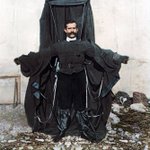
On February 4th, 1912, a French tailor, named Franz Reichelt, decided to test his new parachute design by jumping off the Eiffel Tower.
In 1912, aviation was still in its infancy so there were a lot of crashes.
Because of this, there was a lot of interest in a means by which pilots could safely jump out of aircraft if they encountered trouble.
One Colonel Lalance even offered a prize of 10,000 francs to anyone who could come up with a practical design.
So the race was on among inventors to solve this problem.
After one year of trying, Franz Reichelt finally obtained permission from the police to perform a test from the Eiffel Tower.
On the day of the test, a large crowd of onlookers, including 30 journalists, gathered to witness the event. The police were also present.
Then he surprised everyone by telling them he was going to make jump himself and not use a dummy.
His friends tried unsuccessfully to dissuade him...
Another inventor named Gaston Hervieu, who was also working on a parachute, tried to talk him out of it. He provided him with technical details as to why the parachute wouldn't work, but he wouldn't listen.
As he climbed up the Eiffel Tower to make the jump, he turned to the crowd and shouted, "See you soon!".
They did see him soon.
After hesitating on the ledge for about forty seconds, he jumped off...
The parachute did not deploy.
It wrapped around him, and he plummeted 187 feet to his death.
Lesson: What Franz Reichelt did was similar to jumping headfirst into a pool in order to determine its depth.
Had he dropped a dummy of equal weight from the Eiffel Tower, it would have failed too, but he would still have the opportunity to iterate and try new designs.
Before trying new things that could end in disastrous failure we should test safely first.
"Do not test the depth of a river with both feet." --- African Proverb

In 1462, Vlad the Impaler was in big trouble...
His tiny principality of Wallachia was about to be invaded by a large Ottoman army led by Mehmed the Conqueror.
(Mehmed II is the guy who conquered Constantinople, and Wallachia is a part of modern-day Romania.)
Vlad the Impaler, renowned for his excessive cruelty got his nickname "The Impaler" because of his favourite method of disposing of his enemies...by impaling them.
Being impaled is particularly gruesome. It involves driving a large stake through the victim's anus or torso, then displaying them by mounting the other end into the ground.
Impaling people was by no means his only way of killing his enemies. He also burned, boiled, skinned and beheaded his victims.
So to dissuade Mehmed II from invading, Vlad the Impaler had 20,000 prisoners impaled and displayed on the route the Ottoman army would take.
Shocked by this macabre forest of corpses, the invading Ottomans turned around and returned to their empire.
Today, Vlad III is celebrated as a hero in Bulgaria for saving his country from Ottoman conquest.
Also, the Dracula vampire character in movies is based on him.
Lesson: Sometimes, to stop an adversary in their tracks, you have to show them how far you are willing to go.

In 1737, when Benjamin Franklin (the guy on the $100 bill) was renominated as clerk for the Pennsylvania General Assembly...
Another member who didn't like him very much made a long speech about why the job should instead be given to someone else.
Being the clerk was a lucrative opportunity for Ben Franklin. In addition to the pay, he also made money from printing the votes, laws and other documents.
But Instead of Ben Franklin hating this man, he decided to turn him into a friend instead...
How did he do it?
I'll let Mr Franklin continue in his own words...
===
Having heard that he had in his library a certain very scarce and curious book, I wrote a note to him, expressing my desire of perusing that book, and requesting he would do me the favor of lending it to me for a few days.
He sent it immediately, and I returned it in about a week with another note, expressing strongly my sense of the favor.
When we next met in the House, he spoke to me (which he had never done before), and with great civility; and he ever after manifested a readiness to serve me on all occasions, so that we become great friends, and our friendship continued to his death.
This is another instance of the truth of an old maxim I had learned, which says, "He that has once done you a kindness will be more ready to do you another than he whom you yourself have obliged."
===
Lesson: People want to feel important – including your rivals, opponents and enemies.
By letting them do something for you, from which they derive a sense of importance, you could build rapport with them.
"Do I not destroy my enemies when I make them my friends?" ––– Abraham Lincoln

In the 4th Century BC, Philip II of Macedon, Alexander the Great's father, threatened Sparta with an invasion...
At this point, he was on a roll and had already defeated and subdued all the major Greek city-states, with the exception of Sparta.
He sent them this message: "You are advised to submit without further delay, for if I bring my army into your land, I will destroy your farms, slay your people, and raze your city."
The Spartans simply replied, "If".
Sparta was located in an area of Greece called Laconia, and they had a reputation for terse, concise responses.
That's the origin of the English word "laconic".
Lesson: In a confrontation, there is just something very intimidating about not running your mouth.
It communicates a certain level of confidence and self-assurance.
Even if there's nothing you can do, stfu, and let them twist their brains in a knot imagining all the possible variants of hell you could rain on them.
"Barking dogs seldom bite." --- English proverb.
[Encourage me to write more stories like this by retweeting]

In 1805, when Muhammad Ali Pasha was appointed the Ottoman governor of Egypt, he only had control of the Capital Cairo...
Everywhere else, he was fighting for control with the Mamluks, a warrior caste of slave soldiers who had ruled Egypt for centuries.
But when the British invaded Egypt in May 1807, fearing that the Mamluks would ally with them and overwhelm him, he quickly sent emissaries to the Mamluks and promised to grant all their demands, if they joined him to expel the British.
The Mamluks agreed...
After they successfully expelled the British, they still continued to have a frosty relationship, with Muhammad Ali granting some of their demands, and skirmishes erupting between their soldiers from time to time.
In 1811, Muhammad Ali scheming to be finally rid of this torn in his flesh once and for all, devised a plan...
He invited the Mamluks as honored guests to the ceremony of his son's appointment as commander of the army.
When the Mamluk chiefs arrived, Muhammad Ali graciously received them in the citadel and offered them coffee.
(The Ottomans – present-day Turkey – received guests with coffee. The brewing of coffee originated in their Empire. They served it in elaborate coffee ceremonies for honored guests.)
When it was time for the Mamluks to leave, they formed a procession towards the citadel gates. Ali's troops were before and behind them in the procession.
As they arrived at the narrow path just before the citadel gates, the gate was suddenly shut and they were trapped...
Then Ali's soldiers climbed the surrounding buildings, opened fire and massacred all four hundred and seventy of them.
The Mamluk chiefs were then decapitated and their heads sent to Istanbul.
The betrayal at the citadel was just the beginning. Governors throughout Egypt also had prior instructions to eliminate all Mamluks in their provinces.
And in one fell swoop, Muhammad Ali Pasha rid Egypt of the powerful Mamluks who had ruled the country for centuries.
Lesson: If your "former" enemy invites you to dinner after a sudden U-turn, better think twice.
"Trust not a new friend nor an old enemy." ––– Irish Proverb

In the 3rd century BC, King Hiero II of Syracuse commissioned a goldsmith to create a crown using a specific amount of gold...
When the crown was delivered, the king suspected that the goldsmith had cheated him by substituting some of the gold with silver.
But he had no way to prove it without melting down the crown...
So he tasked Archimedes, the famous ancient mathematician (among other things), with proving this suspicion.
Archimedes thought about how to solve this for a long time...
Until one day, while taking his bath, he noticed that the water level in the bathtub rose as he submerged himself in it.
He then realized that the volume of water displaced was equal to the volume of his body.
With this observation, he has discovered how to measure the volume of irregular objects, and so can solve the king's problem.
(He reportedly ran through the streets naked shouting "Eureka", which means "I've found it")
And when he performed an experiment with the crown, he found that the goldsmith had indeed cheated the king.
Lesson: Trust your gut. Maybe you aren't paranoid.
Perhaps they really are ripping you off, or are cheating on you, or are not to be trusted.
You just have to find a way to prove it.
[Encourage me to write more stories like this by retweeting this post]
Also, are there times you trusted your gut and you were proven right? Tell me about it below.

In 330 BC, Alexander the Great uncovered a conspiracy to murder him...
The plot was exposed because the person who hatched the plot, Dimnus, revealed the plans to his gay lover, Nicomachus.
Nicomachus, in turn, told his brother, Cebalinus, about it and Cebalinus exposed the plot.
Dimnus, the leader of the conspiracy, was a part of Alexander the Great's Companions (Hetairoi in Greek), an elite cavalry unit that goes into battle with the king. They also form his bodyguard.
The commander of the Companions, Philotas, wasn't part of the plot, but he knew about it and did not expose it, so he was charged with treason and executed along with the conspirators.
However, executing Philotas created a big problem for Alexander...
You see, his father Parmenion was a very powerful general.
He was Alexander's second in command and one of his most experienced generals. He also had a large army under his command.
Alexander was also in Parmenion's debt because when he ascended the Macedonian throne, Parmenion helped him eliminate Attalus, another general who opposed his ascension.
So fearing Parmenion's reaction, Alexander sent assassins to speedily eliminate him before news of his first son's execution could reach him.
Lesson: While you shouldn't go assassinating people, sometimes in life you might have to take necessary preemptive action in other directions to prevent a future calamity.
Also, if you want your secret to remain hidden, do not share it with your friends, lovers, or relatives.
Your secret is safest in your head.
Once you reveal it to a supposed "trusted" confidant, they too will surely reveal it to their own confidant, and their confidant will in turn spread it to theirs. And in no time your secret will no longer be a secret.
"Three may keep a secret if two of them are dead" ––– Benjamin Franklin
[Encourage me to tell you more stories like this by retweeting this post]

If you are interested in:
- Copywriting services: sales letters, website copy, ad copy, etc.
- SEO writing.
- Marketing automation.
- Conversion-focused web design.
- Or no-code app development with Bubble...
send me a DM.
Read more about Alexander the Great here: en.wikipedia.org/wiki/Alexan…
In 75 BC, Julius Ceaser, the future dictator of Rome, was captured by Cilician pirates in the Aegean Sea.
Big mistake...
At the time, he was just a 25-year-old nobleman, on his way to study oratory in Rhodes.
When the pirates demanded a ransom of 20 talents of silver (about 620 kg) he scolded them that it was too low for someone of his caliber and that they should ask for at least 50. So they did.
Ceaser was not your usual captive...
He would demand the pirates stop making noise at night when he wanted to sleep.
And during the day he would recite to the pirates the poems and speeches he wrote out of boredom (they held him captive for almost 40 days).
If they were not impressed, he'd call them illiterates.
He had fun with them, even partaking in their games, but he also promised to have them all crucified once they release him.
They laughed and thought he was joking...
After his ransom was paid, and the pirates set him free, he raised a naval force and set out in search for them.
Surprisingly, the pirates were still on the Island where they had held him captive.
Making good on his promise, he had them all crucified.
To show them mercy, he first had their throats slit...
Then he took back his ransom as well as all the other possessions of the pirates.
Lesson: Make good on your threats. Exact some sort of consequence when people cross you, so that by reputation others will know what is coming if they mess with you.

If you are interested in:
- Copywriting services: sales letters, website copy, ad copy, etc. - SEO writing.
- Marketing automation.
- Conversion-focused web design.
- Or no-code app development with Bubble... send me a DM.
Btw, you can read more about Julius Ceaser here: en.wikipedia.org/wiki/Julius…
In the 1860s, during the American Civil War, an embarrassing letter from Abraham Lincoln's Secretary of the Treasury, Salmon P. Chase, was leaked to the press.
When it was published in the papers, it caused quite an embarrassment for President Lincoln.
The letter was highly critical of the President's handling of the war, etc.
How did President Lincoln react?
You see, Salmon P. Chase genuinely considered himself superior to the president. He felt he was more qualified for the presidency than Lincoln.
He contested against Lincoln in the 1860 Republican presidential primaries and most people were surprised when Lincoln won the nomination ahead of him and the other two top contenders.
Lincoln wasn't very well known on the national stage at the time, and the other contenders all had better profiles than he did.
Salmon P. Chase was a founding member of the Republican party and also had better abolitionist/anti-slavery credentials than Lincoln.
He had already served as Governor of Ohio and as a U.S. Senator, and believed he had a stronger political background and more comprehensive plans than the President.
After Lincoln won the presidency, he hired his three main rivals from the Republican presidential primaries into his cabinet...
Because they were competent and capable men.
William H. Seward as Secretary of State, Salmon P. Chase as Secretary of Treasury, and Edward Bates as Attorney General.
So, when the letter leaked to the press, Salmon P. Chase wrote his resignation letter and handed it to President Lincoln...
He refused to accept it and told him to speak no more of it.
Lesson: Even though the leaked letter publicly embarrassed President Lincoln, he put the interest of the country ahead of his personal feelings.
He understood that Salmon P. Chase was very competent in managing the funding for the civil war, and that the interest of the country had priority over his hurt feelings.
Today's lesson is, that even if you have a rival or a sworn enemy, and there is some benefit you can derive from them, don't let petty feelings get the way of that.
Always put your goals and mission first.
By the way, Salmon P. Chase went on to become the Chief Justice of the U.S. Supreme Court. His face is printed on the $10,000 dollar bill (not a typo).
He submitted his resignation a total of four times (on different occasions) before President Lincoln finally accepted it.
He still nominated him for the Supreme Court afterward.
