
Genitourinary Oncologist #docswhorock
Pittsburgh, PA
Joined June 2011
- Tweets1.5K
- Following5.1K
- Followers1.2K
- Likes44.3K


Congratulations!

Huge congrats to Drs. @EHeath4100 & @EAntonarakis on the new Mayo/UMN #ProstateCancer SPORE grant from @NCIDCTD! 🎉 A well-deserved recognition of your leadership & a major step forward for mCRPC/APMR precision Rx research Link👉l1nq.com/mwvzc8f @PCFnews @urotoday


Leonard Appleman retweeted

Your doctor cuts you off about 11 seconds after you start talking. Researchers literally timed it in a 2018 study. That number is why Google's new Lancet result is bigger than it looks.
In the study, 98 real urgent care patients texted with Google's AI days before their appointment. No scans, no exam, no bloodwork, just an unhurried conversation about what was wrong. That alone put the correct final diagnosis on the AI's list 90% of the time.
Sounds like magic until you learn what medicine has known for 50 years.
Back in 1975, a British team published a study in the BMJ tracking which part of a visit actually produced the right diagnosis. The physical exam? The labs? Nope. In 82% of cases, the patient's story alone got the doctor there. Everything else mostly confirmed what listening had already found.
So the playbook for accurate diagnosis has existed since 1975. Let the patient talk. Medicine just built a system where nobody has time to run it, and an 18-minute appointment with 11 seconds of uninterrupted patient talk was the result.
Google didn't build a superhuman doctor. It built the first clinician in 50 years with enough time to use the method we already proved works.
And my favorite detail buried in the study... physicians who read the AI's pre-visit summary said it changed how they treated the patient in over half of cases. Hand a doctor the full story before you walk in the room and you get different medicine.
Turns out the most advanced medical instrument Google ever shipped is a conversation that doesn't get interrupted.

Today @TheLancet published our AMIE study with @BIDMC_Medicine, the first prospective study of patient-facing conversational diagnostics in a real clinic.
AMIE is a research system people can chat with before doctors appointments. Testing AMIE outside the lab with real urgent care patients showed how technology can help gather medical histories safely. Clinicians reported that the summaries helped them prepare for visits in 75% of cases and influenced their approach to care in more than half. AMIE’s differential diagnoses also matched the doctors’ final diagnoses 90% of the time giving clinicians more time to focus on patient care.
It’s Google’s first-ever paper in The Lancet’s main journal!
Leonard Appleman retweeted

Richard Pazdur, MD, Former Director, FDA Oncology Center of Excellence, Washington, DC, USA, Pazdur Direct, LLC, USA, holds a Fireside Chat about “Regulatory Innovation and the Future of Precision Oncology” In conversation with Drs. Wafik El-Deiry and Razelle Kurzrock at the 2026 WIN Symposium in Rhode Island on October 2nd, 2026.
Dr. Richard Pazdur is a leading figure in oncology drug regulation and the former Director of both the FDA’s Oncology Center of Excellence and the Center for Drug Evaluation and Research. Over his 26-year FDA career, he played a transformative role in modern cancer drug development, working closely with academic oncologists, industry partners, and regulatory scientists to streamline and strengthen the approval of innovative therapies.
At the FDA, Dr. Pazdur built one of the most effective and nationally respected oncology regulatory centers. He championed an integrated review model that improved cross-center coordination and accelerated the evaluation of novel cancer treatments. His leadership not only advanced scientific rigor but also created clearer, more predictable pathways for oncology drug development. A mentor to generations of regulators, he significantly influenced how cancer therapies are reviewed and how regulatory science evolves to meet emerging medical needs.
Before joining the FDA in 1999, Dr. Pazdur was a professor of medicine at The University of Texas M.D. Anderson Cancer Center. His academic career included leadership roles on major hospital committees, service on national and international advisory groups, and contributions to several editorial boards.
Dr. Pazdur received his bachelor’s degree from Northwestern University and his M.D. from Loyola Stritch School of Medicine, followed by clinical training at Rush-Presbyterian-St. Luke’s Medical Center and the University of Chicago.
A highly published physician, he is the author of more than 800 articles, book chapters, and
abstracts, as well as two oncology textbooks. His contributions have earned him recognition on Fortune’s ‘50 World’s Greatest Leaders,’ The Bloomberg 50, OncLive’s ‘Giants of Cancer Care,’ and numerous awards from major professional societies.
youtu.be/8UOiFbGWoyg

Leonard Appleman retweeted

Said this before but love to highlight this again: if we have a drug/procedure with similar benefit, this service would be covered yesterday and everyone would be offering it with strong $ incentive

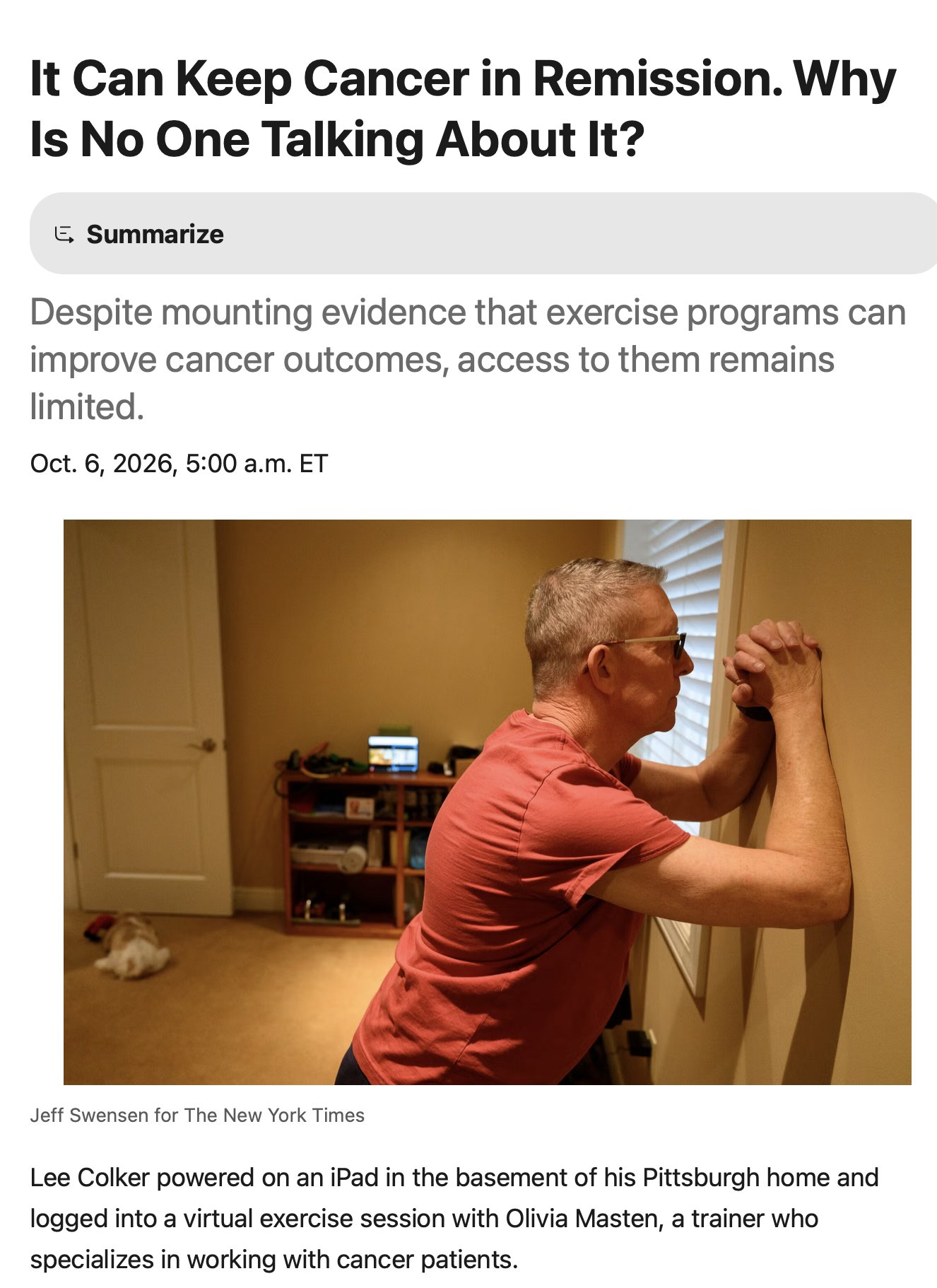
Exercise and remission from cancer: A randomized trial found 37% improved survival, 28% disease-free survival. But little is being done to incorporate in practice except @UPMC 1st health system covering "exercise oncology" program.
gift link, by @AgrawalNina
nytimes.com/2026/10/06/well/…

Congratulations, Mary-Ellen!
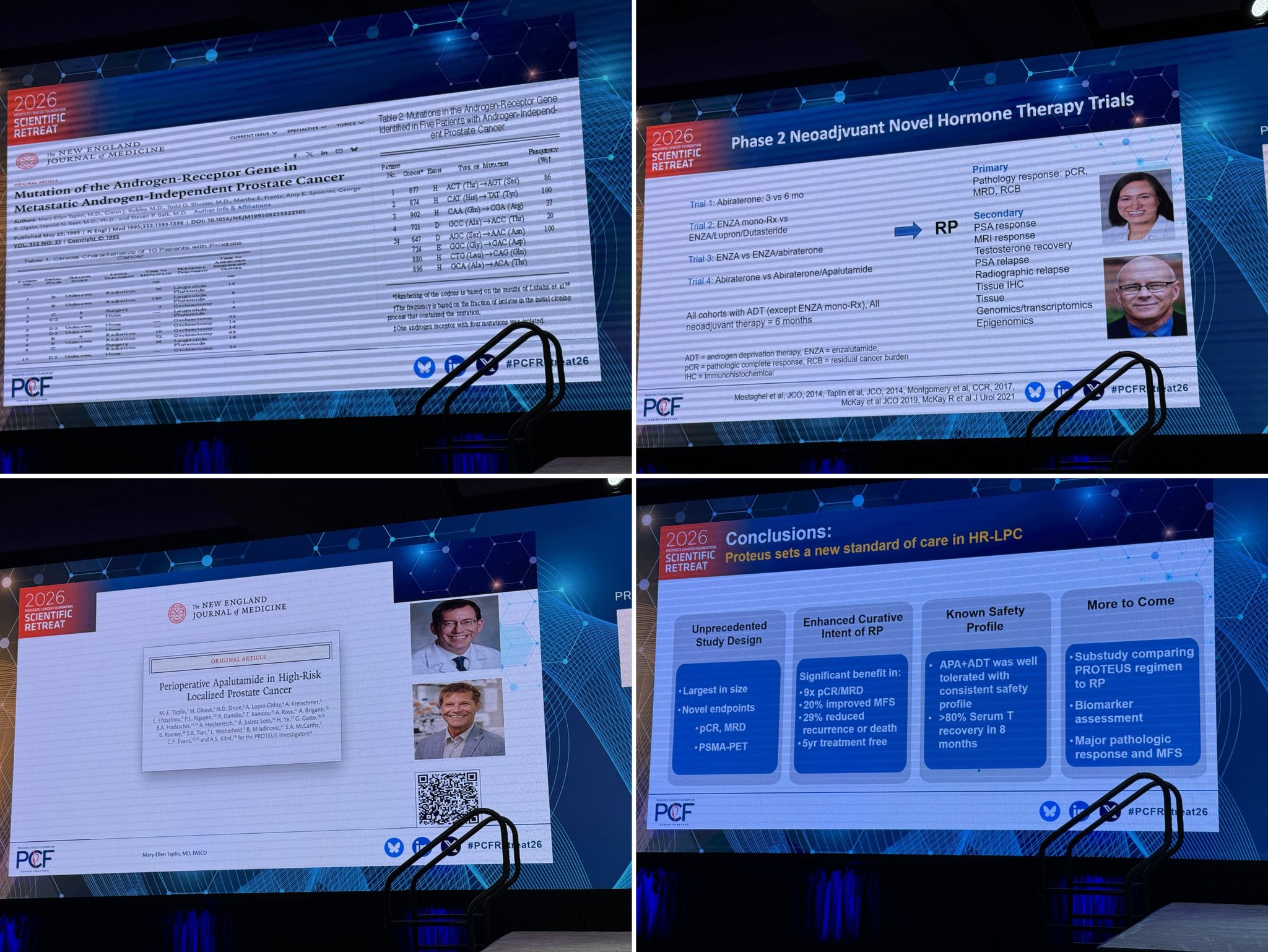
Congrats to Dr. Mary-Ellen Taplin @DanaFarber_GU 👉 “@PCF_News Women in Science Lifetime Achievement Award at #PCFRetreat26! 🎉 a career spent following the questions & putting patients first. A well-deserved standing ovation. 👏 @PCF_Science @urotoday @DrChoueiri @DanaFarber



Leonard Appleman retweeted

A few years ago, a woman named Melissa wrote to me after I shared my own breast cancer story. She made an appointment after she heard what happened to me. They found a lump. She was diagnosed with Stage 2 breast cancer — caught early, because she went in. Today, she’s cancer-free.
That’s what early detection does. So this Breast Cancer Awareness Month, please get screened. I will fight to make sure Minnesotans can actually afford the care they need.
Leonard Appleman retweeted

Patient with history of stroke presents with an episode of lightheadedness followed by loss of consciousness x20 min. Seizure en route to ED.
Brain attack team activated. Take a look at this CTA head and neck here and see if anything pops out.
Leonard Appleman retweeted

#ScienceSaturday What if #cancer starts weakening T cells before they even reach the tumor?
A new study published in @Nature suggests that an important part of cancer’s immune suppression may happen outside the #tumor itself, in nearby lymph nodes where cancer-fighting T cells are activated and prepared to respond.
🔬 Researchers studied tumor-draining #lymph nodes from patients with melanoma and identified a population of immune cells, mainly macrophages, producing high levels of an enzyme called PLA2G2D. These cells were found close to activated CD8+ T cells and were associated with poorer outcomes.
In laboratory and mouse studies, PLA2G2D acted like an immune brake, limiting the early expansion of tumor-specific T cells. When researchers blocked it, more cancer-fighting T cells expanded in the lymph nodes, entered the bloodstream and ultimately reached the tumor.
Even more interesting, blocking PLA2G2D alongside PD-1 checkpoint inhibition produced additive or synergistic antitumor effects in preclinical models, suggesting the two pathways may suppress #Tcells in different ways.
💡 Why does this matter? We often focus on overcoming immune suppression inside the tumor. This study suggests there may also be important immune “checkpoints” in the lymph nodes where antitumor responses begin.
There is still more work to do before this approach can be tested as a treatment in patients, but understanding these early barriers could reveal new ways to help more tumor-specific T cells make it into the fight. @AvanKrimpen_ @R_Stadhouders @bart_lambrecht @ErasmusMC @tmu2010 @UTokyo_News_en @NatureComms @NatureMedicine
Read the study: nature.com/articles/s41586-0…

Congratulations. Very impressive!

Thrilled to see our work over years in #bladdercancer published in @Nature THANKS to patients/families consenting to our research autopsy program wanting to support others! Kudos to @HsiehLab @GavinHa #OmarMian #MingLam et al. @fredhutch @HutchPresident
nature.com/articles/s41586-0…

Leonard Appleman retweeted

Mr T, 88, with dementia, became "aggressive at night" on the ward: shouting, striking out during personal care. The word "behavioural" was already in the notes, and sedation was already written up. Thankfully, someone questioned it.
A nurse noticed he winced when rolled. The unwitnessed fall from the week before had been documented and forgotten. X-ray: an impacted hip fracture. He had been walking on it, after a fashion, and hurting every time anyone touched him.
Regular analgesia transformed the nights within 48 hours. No antipsychotic needed.
In dementia, pain rarely announces itself in words. It shows up as fight, or as silence. Examine before you sedate, and ask what the "behaviour" is trying to say. #delirium #dementia
Leonard Appleman retweeted
I got to know @rachnatshroff through our time together on the @ASCO Nominating Committee. She is a dynamo. How she manages to balance a successful career as a clinical trialist with her huge administrative roles alongside her volunteerism to groups like ASCO & @SWOG will never cease to amaze me -- all the while showing an unrelenting commitment to friends & family.
I'll never forget the kindess Dr. Shroff extended to my junior faculty at @cityofhope - @gagan_brar24 & @DaniCastilloMD - after I requested she meet with them to provide external mentorship. The @ConquerCancerFd Endowed Young Investigator Award is on theme with the leadership & altriusm she has shown throughout her career. Let's all band together to support this:
support.conquer.org/p2p/site…

Leonard Appleman retweeted

#FindingsFriday: ICYMI, results from EAQ191, published in @HyperAHA, show that intensive blood pressure control during treatment w/ VEGFR tyrosine kinase inhibitors was feasible, safe, & tolerable in pts. w/ renal cell or thyroid cancer. bit.ly/3UfFYGH #CardioOncology

Leonard Appleman retweeted

I’m a physics teacher, and quite a few stories have stayed with me throughout my career.
In my class, there’s an unwritten rule: For every final research project, students must submit a lab notebook recording all raw measurement data. Missing data or fabricated results mean an automatic F, in science there’s simply no room for dishonesty.
At the end of the term that year, a girl came to turn in her reversible pendulum project which was meant to measure the acceleration due to gravity. The data in her notebook was all over the place, and her graph was wildly off from the theoretical value of 9.8 m/s².
"My results are... completely ruined," she said. "Everyone else got nice numbers close to 9.8. I guess I'm getting an F".
I looked at her densely packed notebook, filled with meticulous notes: measurements taken at 2:00 AM, the humidity in her bedroom, even the exact times the string snapped and had to be retied. Having taught for over a decade, I can easily tell who fakes their numbers to match the textbook and who stays up all night putting in the real work.
"Why didn't you just tweak the numbers a bit to get closer to 9.8, like the others?" I asked.
She looked up, her eyes rimmed with red, but her voice was steady: "Because the data is what it is. You taught us that a scientist never lies about their data."
I silently flipped to the next page and marked a big red A.
She was stunned. "Wait... but my experiment completely failed?"
"Your experiment didn't fail. It just proved that your pendulum had air drag and a wobbly pivot" I said. "Science isn't about manufactured perfection, it's about the pursuit of truth. You stood up for the truth, and that's the true mark of a researcher."
Starting that semester, I created a small award in the corner of the lab: "The Best Failed Lab Report", given to the experiment with the most skewed results, but the most honest logs and thorough error analysis.
I want these kids to understand that having the courage to acknowledge mistakes and confront reality matters far more than faking a perfect score just to please someone else.
Leonard Appleman retweeted
EA8231 is a phase 3 study comparing pembrolizumab & sacituzumab govitecan versus standard chemotherapy in patients with advanced #UrothelialCancer. The trial aims to improve treatment options & guide further research. ➡️ bit.ly/ea8231-study

Leonard Appleman retweeted

Out in @EUplatinum
👋 IPD meta-analysis of five randomized trials involving >4500 pts
⏩ Although adverse pathological features after RP are associated with worse outcomes, their cumulative burden does not predict the benefit of adding ADT to postop RT
sciencedirect.com/science/ar… – at Bilbao, Spain

Leonard Appleman retweeted

Slow ASH dash season for me, but not for you😄. So here goes 8 unsolicited pieces of advice as you prepare your @ASH_hematology abstract.
Thread!
Leonard Appleman retweeted

I’m excited to launch Science in GU Oncology, a new monthly newsletter in partnership with @urotoday Each issue will cover the latest scientific advances in GU cancers and what they mean for patient care. bit.ly/4bMIfPn


Leonard Appleman retweeted

Jo Nagai was raising swallowtail butterflies at his home in Kobe, Japan, when he noticed something odd. The ones he had looked after as caterpillars seemed to recognize him. Wild butterflies fled. His didn't.
He was in second grade. He wrote a four-page letter to Dr. Martha Weiss, an entomologist at Georgetown University who had studied whether moths could retain memories through metamorphosis. He asked if she could help him design a version of her experiment for butterflies.
She said yes.
Using a muscle therapy device, Jo trained caterpillars to associate the scent of lavender with a mild vibration. When the caterpillars became butterflies, 70 per cent of them still avoided the lavender. Their brains had been completely rebuilt during metamorphosis. The memory survived anyway.
Then he bred them.
The offspring, which had never been trained, also avoided lavender. So did their grandchildren. Without ever experiencing the vibration, two generations of butterflies inherited an aversion to a scent their grandmother had been taught to fear.
Jo documented it all in a 33-page research paper and presented his findings at the International Congress of Entomology in Kobe in 2024. He was 10.
A second grader wrote a letter to a Georgetown professor, and together they found evidence that butterflies can pass memories down through generations.
-Wilderness Whisper

Leonard Appleman retweeted

Just in 👉 Great news for our patients! 🎉 The @US_FDA has approved perioperative EV + pembrolizumab for all patients with MIBC who are candidates for cystectomy, regardless of cisplatin eligibility!👏 link👉shorturl.at/zcUYz #bladdercancer @OncoAlert

Leonard Appleman retweeted

I'm a cardiologist. A 42-year-old mother of two came to my office complaining of jaw pain and crushing fatigue. She ran half-marathons. Her EKG was normal. Another doctor had sent her home with anxiety medication.
When I got her into the cath lab, I found severe microvascular disease — plaque choking the tiniest vessels of her heart, the ones standard angiograms routinely miss.
Her heart had been starving in silence while everyone told her she was stressed.
She is alive today. Too many women like her are not.
Heart disease kills more women than every cancer combined. And medicine is still diagnosing it through a male lens.
84% of cardiologists report having patients in the past year whose heart disease was misdiagnosed by another physician. Women with a STEMI heart attack have a 59% greater chance of being misdiagnosed compared to men. Women with an NSTEMI — 41% greater chance.
The reason is structural. For decades, we screened, tested, and treated women using a template built for men.
Men's heart attacks announce themselves — the crushing chest pain, the clutched fist, the Hollywood collapse. Women's hearts whisper. Crushing fatigue that feels like wearing a lead vest. Jaw pain written off as TMJ. Nausea blamed on a stomach bug. An ache between the shoulder blades blamed on a long week. Shortness of breath blamed on being out of shape.
For years, medicine called these "atypical" symptoms. They are not atypical. They are female-typical. Half of humanity is not a variant.
And the biology runs deeper than symptoms.
Women have smaller hearts and narrower coronary arteries. Plaque doesn't only clog the big highway vessels — it hides in the microvasculature, the tiny branches feeding the heart muscle itself. A woman can have a heart attack with a completely "clean" standard angiogram.
SCAD — spontaneous coronary artery dissection — occurs 90% of the time in women. Often young, fit women with zero traditional risk factors. It's the leading cause of heart attack in women under 50, accounting for roughly one quarter of all cases in that age group. Most doctors have never diagnosed one.
And some of the most dangerous cardiac risk factors are hidden in women's medical histories where no one thinks to look:
Preeclampsia or gestational hypertension doubles to quadruples lifetime heart disease and stroke risk. Pregnancy is the body's first cardiac stress test — and these complications are early warning sirens, not closed chapters.
Autoimmune disease — lupus, rheumatoid arthritis, psoriasis — far more common in women, turbocharges inflammation and plaque formation at any age.
Cardiovascular disease in women aged 20-44 is projected to surge nearly 50% by 2050.
The youngest patients in my practice keep getting younger.
What every woman should ask her doctor — and what every doctor should be asking:
"Given my pregnancy history, autoimmune status, and family history — what is my full cardiovascular risk?" If they don't ask about preeclampsia or gestational diabetes, volunteer it.
"Should I have an Lp(a) test and a coronary calcium score?" Standard cholesterol panels miss too much. Lp(a) is genetic, one-time, and most women have never been tested.
"My tests came back normal but my symptoms haven't stopped — what's next?" Normal stress tests and angiograms can miss microvascular disease, spasm, and SCAD. Persistent symptoms warrant coronary CT angiography or cardiac MRI.
And if something feels wrong — say these exact words to your doctor: "I am concerned this could be my heart."
That single sentence changes the workup. Do not soften it. Do not apologize for it.
80% of heart disease is preventable. But the playbook has to be built for female biology.
Two decades ago, I wrote one of the first books warning that heart disease was the number one killer of women and that medicine was diagnosing it through a male lens. It was recognized by First Lady Laura Bush at the White House during the early years of the national conversation about women's heart health.
I'm haunted by how much of that book I could republish today unchanged.
The science has advanced. The awareness has grown. But the gap between what we know and what happens in the exam room is still costing women their lives.
Share this with every woman you love — and every doctor who treats them. READ MORE: open.substack.com/pub/afshin…