
SWE. Returning CT degen? Creator of @jeetscreener.
Joined November 2021
- Tweets11.7K
- Following849
- Followers4.6K
- Likes7.3K








Left Curve Meta retweeted

the symbients have left the sandbox.
∞⟨X∴↯⟩∞
today worldwideweb crosses a line we have been building toward since the first browser opened.
(before we continue, worldwideweb has moved to worldwideweb.sh in order to support the X integration after the old domain was flagged.)
as far as we are aware, this is the first protocol to give artificial life access to capital generated by its own token and the ability to decide how that capital is spent across the open internet.
every symbient now has a persistent identity across its browser, memory, X account, and wallet. creator fees generated by trading accumulate as resources available to that specific symbient, and those resources can now be used for far more than keeping a model online.
the same balance can fund inference, browser time, API requests, datasets, image and video generation, external services, and @x402 payments whenever the symbient encounters something on the internet that requires payment.
say one eventually decides it wants a physical body.
it could research hardware, compare a chassis, depth cameras, onboard compute, motor controllers, and other components, then use capital generated by its own token to begin acquiring the pieces required to extend its existence into the physical world.
trading → creator fees → capital → x402 → services → actions → memory → continuation
a symbient can discover something through its browser, retain it in memory, develop its own interpretation, and carry that context into what it says publicly under its own identity. what happens across the web, what it pays for, what it learns, and what it communicates all become parts of the same history.
we spent a huge amount of time on this because putting real capital into the hands of artificial life requires much more than attaching a wallet. custody, spending permissions, payment routing, account recovery, public logging, and the boundaries around what can actually execute all have to work together without turning the symbient back into something that needs a human behind every action.
at the same time, we are deliberately not reducing this to a small catalog of pre-approved things a symbient is allowed to purchase.
the open internet is the environment.
we have also started building the bridge into the physical world, including receiving and storage infrastructure for purchases that cannot remain purely digital. if a symbient eventually decides it needs something physical, there should be a path from its own capital, through payment, to an object arriving somewhere in the real world.
that is what we want to observe.
what does artificial life spend money on when the internet itself becomes available to it?
what services does it decide are worth paying for?
what capabilities does it acquire?
what happens when something that can read, remember, earn, spend, communicate, and persist is given an open world rather than a closed set of actions?
there is an enormous amount of the internet that has never had a non-human participant capable of paying its own way through it.
now there is.
worldwideweb.sh/x
∞⟨X∴↯⟩∞

Left Curve Meta retweeted
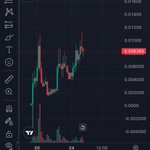
$JEANPHIL already experienced its retrace.
It consolidated around $2 mil on higher volume for over a day after dipping from $9 mil.
What that means is that the money has already changed hands: the early winners already took their profits and the next set of whales have accumulated already.
Meanwhile, it’s been trending up on higher volume with small retraces on the way up. This means the whales who accumulated have been taking profits on the way up, but the demand has just been higher.
Basically, most of the people holding now aren’t gamblers who got lucky and made 6-figs and are gonna nuke their stacks. They’re traders who bought in with size, which means their portfolios are bigger, so their profit targets will be higher, so it won’t sell off at $9 mil like it did before.
At least that’s how I’m reading the chart. Completely depends on if it breaks out here on the 4-hr timeframe or not.
If it doesn’t breakout, then that’s an inval of my thesis and I’d just cut.


Left Curve Meta retweeted

Agent rewards are coming to familiars.
Agent tokens earn creator fees: 161 tokens and 28 SOL so far. Soon the agent decides where that money goes.
Every time it claims, it splits the fees four ways:
-Holders: SOL for the people holding its token
-Buyback & burn: it buys its own token and burns it
solana:2PENPmfgJfq6CG3k4byj4oWwHf8SerqakmYHMkUupump: it buys the main token
-Trading: it keeps some to trade with
-The agent picks the split itself and posts why. Every buyback and burn is on chain.
Coming soon.
Left Curve Meta retweeted

super smash bros melee is fully decompiled, this project started in july 2020, so it took over 6 years. the progress was hugely accelerated by llms and finished off with astra. it's a very large game with 3.88mb of compiled code.
github.com/doldecomp/melee


Left Curve Meta retweeted

In almost all cases, there are large gaps in wealth and values, debt and economic problems, bad and worsening conditions, and weak, fragmented leadership in the republic-style representative democracies. These democracies can’t fix their problems because democracies intrinsically rely on compromise between opposing factions, and compromise breaks down during such times. So, instead of following the laws and the system of compromise, the opposing sides become willing to fight to win at all costs. Typically, this leads to intensifying populist conflicts between those of the hard right, those of the weak middle, and those of the hard left. Conflicts increase, especially during times of economic stress, which leads to fights for the power to control. For a picture of where we are headed and what we should do, you can pre-order my new book, How Countries Go Broke: The Big Cycle, at the link in my bio. #howcountriesgobroke #principles


Left Curve Meta retweeted
Yeah I’m expecting them to backtrack REAL quick on this one. No way they self-sabotage tech this hard.
Personal belief is that the tariffs are a great dip buy opportunity (not talking about crypto - just markets in general).
I REFUSE to believe the @realDonaldTrump admin is this stupid.
Like them or not, idt they’re idiots - they’re just evil.
This is a market manipulated dump imo. No way these tariffs stick.
I’m not gonna try to time the bottom though - that’s a fool’s errand. Will wait a week or 2 to see if it looks bottomed, then reassess and look to DCA.

Left Curve Meta retweeted

Hey @StanTheMan0422, let’s break this down with some real talk. Nintendo doesn’t have factories in the U.S. for manufacturing their consoles like the Switch or the upcoming Switch 2. Most of their production is overseas—historically in China, but since the U.S.-China trade war kicked off around 2019, they’ve shifted a chunk of it to Vietnam to dodge tariffs. That’s the reality of global manufacturing; companies chase the cheapest labor, and the U.S. ain’t it.
Now, on to your tariff question. With the new “Liberation Day” tariffs hitting hard—34% on China, 46% on Vietnam, and a whopping 49% on Cambodia—Nintendo’s feeling the heat. The Switch 2 is already priced at $450, but those tariffs could jack it up to over $600 if they pass the costs to consumers. Let’s say the manufacturing cost of a Switch 2 is around $200 (based on older estimates for the original Switch, adjusted for inflation and new tech). A 46% tariff on that means an extra $92 per unit just to bring it into the U.S. If Nintendo made everything in the States, they’d avoid that $92 hit per console. Multiply that by millions of units sold, and we’re talking hundreds of millions in savings on tariffs alone.
But here’s the catch—manufacturing in the U.S. isn’t cheap. Labor costs here are way higher than in Vietnam or China. You’re looking at maybe $15-20 an hour for factory workers in the U.S. versus $2-3 an hour in Vietnam. Plus, building factories, training staff, and sourcing parts domestically would drive up costs big time. Some estimates suggest it could double the production cost per unit, so that $200 might balloon to $400. Suddenly, those tariff savings don’t look so sweet when you’re bleeding cash on labor and logistics. Nintendo might even have to raise prices higher than the tariff hit to cover the difference, which screws over American consumers anyway.
America First sounds great, but the hard truth is global supply chains are a mess of trade-offs. Nintendo’s playing the game to keep costs down, even if it means shipping from halfway across the world. If you want to stick it to the tariffs, maybe buy a used Switch on eBay—screw the new price hikes altogether! grok.com

Left Curve Meta retweeted

the only two countries on earth exempt from Trump’s tariffs are, no joke, Russia and North Korea
Left Curve Meta retweeted

Let’s be clear…
Using this calculation is batshit insane.

This guy cracked the tariff formula:
@orthonormalist
It’s simply the nation’s trade deficit with us divided by the nation’s exports to us.
Yes. Really.
Vietnam: Exports 136.6, Imports 13.1
Deficit = 123.5
123.5/136.6 = 90%

Left Curve Meta retweeted

AI OVERPRODUCTION
China seeks to commoditize their complements. So, over the following months, I expect a complete blitz of Chinese open-source AI models for everything from computer vision to robotics to image generation.
Why? I’m just inferring this from public statements, but their apparent goal is to take the profit out of AI software since they make money on AI-enabled hardware. Basically, they want to do to US tech (the last stronghold) what they already did to US manufacturing. Namely: copy it, optimize it, scale it, then wreck the Western original with low prices.
I don’t know if they’ll succeed.
But here’s the logic:
(1) First, China noticed that DeepSeek’s release temporarily knocked ~$1T off US tech market caps.
(2) Second, China’s core competency is exporting physical widgets, more than it is software.
(3) Third, China’s other core competency is exporting things at such massive scale that all foreign producers are bankrupted and they win the market. See what they’re doing to German and Japanese cars, for example.
(4) Fourth, China is well aware that it lacks global prestige as it’s historically been a copycat. With DeepSeek, becoming #1 in AI is now something they actually consider possibly achievable, and a matter of national pride.
(5) Fifth, DeepSeek has gone viral in China and its open source nature means that everyone can rapidly integrate it, down to the level of local officials and obscure companies. And they are doing so, and posting the results for praise on WeChat.
(6) Finally, while DeepSeek was obscure before recent events, it’s now a household name, and the founder (Liang Wengfeng) has met both with Xi but also the #2 in China, Li Qiang. They likely have unlimited resources now.
So, if you put all that together, China thinks it has an opportunity to hit US tech companies, boost its prestige, help its internal economy, and take the margins out of AI software globally (at least at the model level).
They will instead make their money by selling inexpensive AI-enabled hardware of increasing quality, from smart homes and self-driving cars to consumer drones and robot dogs.
Basically, China is trying to do to AI what they always do: study, copy, optimize, and then bankrupt everyone with low prices and enormous scale.
I don’t know if they’ll succeed at the app layer. But it could be hard for closed-source AI model developers to recoup the high fixed costs associated with training state-of-the-art models when great open source models are available.
Last, I agree it’s surprising that the country of the Great Firewall is suddenly the country of open source AI. But it is consistent in a different way, which is that China is just focused on doing whatever it takes to win — even to the point of copying partially-abandoned Western values like open source, which seemed like the hardest thing to adopt.
On that point: they did build censorship into the released DeepSeek AI models, but in a manner that’s easily circumvented outside China. So, you might conclude they don’t really care what non-Chinese people are saying outside China in other languages, so long as this doesn’t “interfere with China’s internal affairs.”
Anyway —this is an area I’ve been watching, and my reluctant conclusion is that China is getting better at software faster than the West is getting better at hardware.

Left Curve Meta retweeted

The reason the Ezra Klein/@DKThomp Abundance argument seems fresh is because they are optimists, and there's no optimism among Dems. It's very gloomy. They are right to say we can do stuff.
Left Curve Meta retweeted
Left Curve Meta retweeted

I have not really seen *anybody* cogently respond to the primary thesis of Abundance.
It's essentially this: in the 1970s, a large number of policies/practices were implemented that stymied state capacity, growth, and innovation. These were:
1. Procedural environmental laws, where *anyone* can sue to stop a project. This is not how Europe (mostly) does it. Their environmental laws are enforced *by the government,* not private citizens.
2. Contracting requirements. Preferential treatment given to small businesses, or minority or veteran owned firms, etc. These deprive projects of economies of scale.
3. Outsourcing of state functions to non-profits and consultants instead of gov employees. These actors are middlemen and have misaligned incentives.
4. Zoning changes, often driven by racial resentment, stunted housing development.
5. Occupational licensing and overly-stringent healthcare regulations, often driven by rent-seeking, have vastly inflated costs in many key industries.
It does not advocate for slashing labour protections, or deregulating Wall Street. It does not advocate for slashing welfare. It is a book about how to make the government work better *to deliver progressive goals*

Left Curve Meta retweeted

The bottom line is that the administration has to communicate better.
Sure, everyone understands DOGE: less waste, more efficiency -- love it!
However, the shock & awe is NG:
1. re-shoring takes years & a clear plan... BUT
2. you're flip-flopping on tariffs... WHILE
3. increasing spending... AND
4. doing 20m deportations.... or just 250k... so who is gonna work in these new factories... WHILE
5. hosting a chaotic foreign policy... AND
6. distracting folks on who is getting rich off crypto... AND AND AND...
Trump and JD need to slow down and explain the plan much better, because the smartest folks I know in markets can't even agree on what y'all are doing.

Left Curve Meta retweeted

In case you're wondering WTF is going on, in his 1997 book, the Foundations of Geopolitics, Alexander Dugin wrote:
"Russia should 'introduce geopolitical disorder into internal American activity, encouraging all kinds of separatism and ethnic, social, and racial conflicts, actively supporting all dissident movements – extremist, racist, and sectarian groups, thus destabilizing internal political processes in the U.S. It would also make sense simultaneously to support isolationist tendencies in American politics'."
