

The NRCS-led Lesser Prairie-Chicken Initiative helps private landowners voluntarily improve rangeland to benefit lesser prairie-chickens and their operations.
TX, NM, CO, KS, OK
Joined December 2015
- Tweets637
- Following45
- Followers120
- Likes88




Pinned Tweet
Thank you following the Lesser Prairie-Chicken Initiative on Twitter. Moving forward, we will be shifting our Twitter communications to a new Working Lands for Wildlife Twitter Channel.
Please follow us at xitter.cf/WLFWildlife for continued updates and news.
Many thanks!
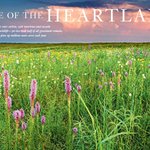
Did you get a chance to read this great article from the @NWF? It's all about what America's grasslands do and features some of WLFW's conservation work and research. buff.ly/3mKZ8Qn

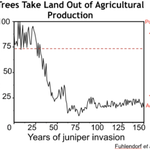
Are you a producer curious about how much forage you may be losing to trees? This blog post and companion webinar detail how the Rangelands Analysis Platform can help producers and managers learn exactly how much forage they've lost to encroaching trees. buff.ly/3qw15Rl

The @USDA_NRCS has announced funding windows for many financial programs. Each state sets its own deadlines, but this site has information for each state with links and deadlines. If you're a landowner, this is useful information to have: buff.ly/3pqQFoa

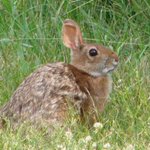
DYK that Working Lands for Wildlife is a nationwide effort? Across the country, from the Plains to the forests of New England, landowners are improving habitat through WLFW's win-win voluntary conservation approach. Just ask Peter Rabbit 🐰 🐰 buff.ly/3pjKJxi

LPCInitiative retweeted

Check out this Rangeland Management for Livestock and Wildlife Workshop!
Thursday, October 21st, 6:30-8:30pm
Central Tech, Sapulpa, OK
Cost: $20
@prairierestored
bit.ly/TechRangeWorkshop

ALT Flyer for Workshop Questions that will be answered include... - How do I know if my rangelands are healthy? - How do I calculate a stocking rate? - What plants are desirable for wildlife & livestock - How do I spray & burn for management? - What about cedar trees? - How do I manage grazing?
Heads up: The Canada-based Native Prairie Restoration and Reclamation Workshop is calling for Presentations, Abstracts and Posters for it's upcoming 2022 virtual workshop (February 8-10, 2022). Submissions due 11/16/21. Learn more: buff.ly/2YY8Jvm

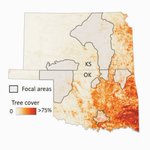
Take a look at this map. Notice how the focal areas where we are targeting woody species encroachment aren't where tree cover is the most severe. When we target these "cores," our conservation $ goes farther and we make more a difference. Protect the Core, Grow the Core.

Check out this awesome cover story from the @NWF. It's about grasslands and all they do. From storing carbon underground to providing habitat for a incredible diversity of wildlife to powering rural communities, healthy grasslands are incredible! 👍👍 buff.ly/3mKZ8Qn

It's the perfect day to share this inspiring story about youth from the Fort Belknap Reservation collecting native prairie seeds for future restoration projects on tribal and federal lands in Montana. What a great project! buff.ly/3lqnIqh

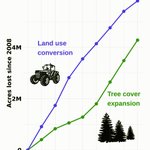
What are the two primary drivers of grassland loss in the Great Plains? Conversion of native range to cropland is the largest, followed closely by woodland expansion. That's why we're focusing on these two threats over the next five years. Learn more: buff.ly/3x8dfmZ

Keeping native range intact is a key strategy to maintaining and restoring wildlife populations, like the LEPC. This recent purchase by New Mexico does just that and more - it links other native grassland habitat to make even more room for wildlife. 👍👍 buff.ly/3lnAzJw

Kicking off the first work week of October with this amazing shot by Linda Rockwell. 👊 #birdsoftwitter #grasslandbirds #conservation #GreatPlains

As we expand and scale up our work across the Great Plains, the co-production of science will become even more important. Learn about the decade of science support WLFW has produced for the sagebrush biome: buff.ly/2Y7bae2

Sharing this cool event from @OklahomaLands:
Learn about tree thinning & #rxfire to manage for #livestock, #quail, #deer, #turkey & #timber. Register now. Event on Oct 8th.
buff.ly/39OxMCU

LPCInitiative retweeted

WE'RE HIRING!
*OK State Coordinator
*MN Membership Services
*WI Farm Bill Wildlife Biologist
*KS Habitat Specialist
*Database Manager
*SD Easements Habitat Specialist
*MN CWB Grazing Specialist
*OR Local Implementation Team (LIT) Coordinator
See all bit.ly/3CQPdPs

The Rangeland Analysis Platform is an incredible tool for managing and monitoring rangelands. But as with any powerful computer-based application, it can feel daunting to learn. Fortunately, our team has developed an awesome support site to help: buff.ly/3m2AERR

The low-tech mesic restoration work we promote mimics how beavers interacted with the landscape historically. Many times, after we implement these practices, beaver move back in to the restored area, further improving it. This graphic details how beavers benefit the land.


Less work than farming? More control over the land? When Rex Schmidt worked with the NRCS to sustainably graze expired CRP lands rather than replant them as crops, he saved on equipment and effort and found he had more control over how he used the land. buff.ly/3EnaXnG
