

Supporting the Bitcoin Ecosystem🟠
Los Angeles, CA
Joined August 2025
- Tweets284
- Following16
- Followers132
- Likes382


LAB Network retweeted

And you thought he was just hiring podcasters to make more content…
@ColeMacro @Strive
$ASST $SATA $BTC
LAB Network retweeted
Fiat (government-decreed money) is killing millions of good people, destroying families, and deteriorating the culture of humanity.
Wake up call: The stock market is not going up. Dying companies propped up by fake money won’t withstand gravity forever.
Your paper-thin fast food burger isn’t suddenly worth $18 because it’s bigger or better. It just costs more.
Fiat is a house of cards getting rapidly more flimsy as its foundation weakens and crumbles beneath its own corrupt design.
“AI will eradicate humanity,” is just the latest distraction in the Fiat fear factory. The greatest threat is not AI. AI is part of the solution. The greatest threat is Fiat.
Money has no place in government. A government cannot determine the true value of anything. Only a REAL, hard money can do that.
Money is not meant to be controlled. It is meant to be harnessed. It should just be available to all people at all times, like air or sunlight.
Bitcoin and AI solve the problem of broken money. Together, they could end Fiat’s evil reign and bring humanity back into balance.
This would theoretically lead to an age of abundance, where everyone has enough by default, and those who want more can provide additional value to ascend higher.
Can you see it?
LAB Network retweeted
Bitcoin is not a meme coin. Bitcoin is not a project. Bitcoin is not gambling. Bitcoin is not crypto.
Bitcoin is the only hard, digital money.
It’s a top 5 invention in human history, enabling the next stage of our evolution.
Don’t get scared.
Don’t get confused.
Don’t get distracted.
Anyone can leverage the upside while the rest of the world slowly realizes the truth.
Clowns will be clowns.
Focus.
LAB Network retweeted
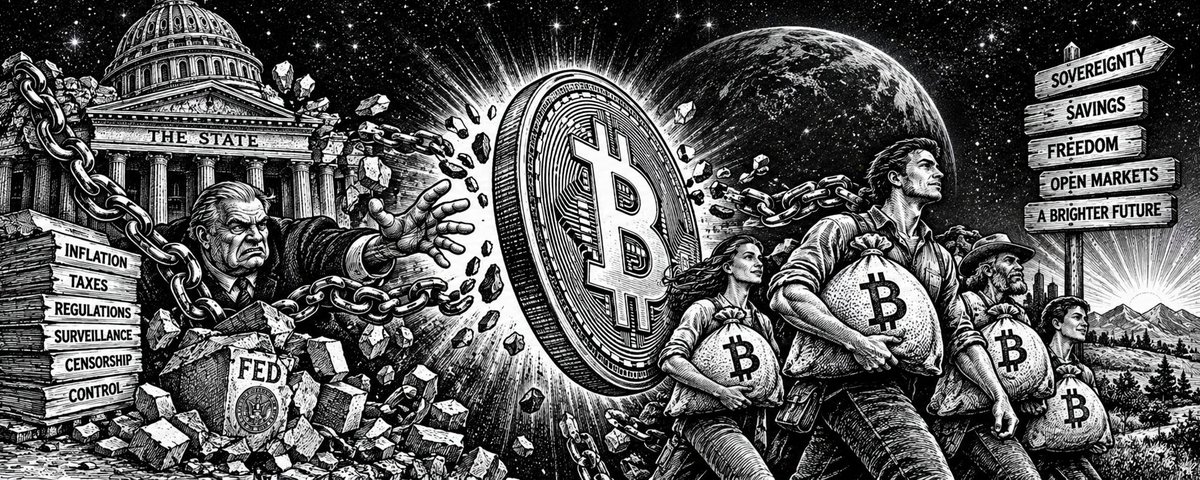
Below are some thoughts from my visit to El Salvador for @btchistoricosv, nearly a year ago.
As we progress through Bitcoin’s inevitable but tumultuous adoption curve, it’s helpful to think macro.
Like many of my articles on X, this is an adapted except from my book, Life After Bitcoin.
Those who take the time to understand Bitcoin will do well in life.
Here’s to a bright orange future 🥂

LAB Network retweeted
Love this approach from @Strive. The future of work is meritocratic, powered by Bitcoin.

A FIRST PRINCIPLES FRAMEWORK FOR MANAGEMENT COMPENSATION AT BITCOIN TREASURY COMPANIES (LONG READ)
There has been a lot of discussion recently around executive compensation, management ownership, founder ownership, dilution, and incentives across digital asset treasury companies. It is healthy that investors are digging deep here. Trust is critical to the long-term success of this industry and foundational to the operating model Strive has built. It is part of why we publish The Hurdle Rate every week. Shareholders should have a regular window into how management thinks, how we make decisions, and how we approach difficult questions. As this conversation develops, the best place to start is with first principles and make sure we are measuring the things that actually matter.
Compensation philosophy has three primary purposes: recruit the best people, retain the best people, and incentivize them to create value for shareholders. The amount has to make sense for the size, complexity, opportunity, responsibilities, and performance of the company. Set it too low and you will likely fail to recruit or retain exceptionally talented people. Set the incentives poorly and even a modest package can drive the wrong behavior. The way management earns its compensation is critical. The goal needs to be a meaningful carrot for exceptionally talented people, with incentives that make management more successful when shareholders are more successful.
Strive comes at this conversation from an unusually beneficial starting point. Corporate governance was why Strive existed as an asset management company in the first place. We were founded around a belief in shareholder primacy, meaning the shareholder is the most important stakeholder. Period. Employees, customers, communities, and other stakeholders obviously matter, but when interests conflict, management has to know whose capital it is stewarding and whose interests come first. Most of the asset management industry had moved toward stakeholder capitalism, where shareholders, employees, customers, governments, and other constituencies were increasingly treated as co-equal. Our view from day one was that you cannot serve multiple masters equally when their interests diverge.
That principle shaped the way we approached corporate governance from the beginning. We focused on whether boards and management teams were acting in shareholders' interests, whether executive incentives were aligned, whether fiduciaries were staying within their mandates, and whether ESG, DEI, and other considerations were introducing incentives that could conflict with shareholder value. Management incentives and executive pay were therefore already embedded in Strive's DNA long before we became a Bitcoin treasury company. Applying that same framework to the Bitcoin treasury landscape is natural for us. When shareholders look under the hood at Strive, they find both transparency and a compensation framework designed from day one around shareholder alignment.
Our own compensation program was built within that same framework. Under our Board's direction, we used an independent compensation consultant to develop it and initially benchmarked overall compensation around the 50th percentile for comparable roles. At the time, our Bitcoin strategy was new and we had not yet built a performance record. The 50th percentile was a starting point, not a permanent ceiling or floor. As the company grows, responsibilities increase, and a performance record develops, the Board will continue assessing where compensation belongs using the same disciplined framework. Sustained exceptional performance would likely increase the amount of compensation that could be earned, just as sustained underperformance would likely move it in the other direction.
That background is also why I disagree with an important part of VanEck's recent analysis of digital asset treasury compensation:
vaneck.com/us/en/blogs/digit…
VanEck deserves credit for bringing more attention to the issue and highlighting legitimate governance concerns. But one of the key parts of its framework put too much weight on the relatively simple question of whether executive awards had a performance hurdle. That analysis does not go nearly far enough for a balance sheet company, and it produces a set of conclusions I fundamentally disagree with. BitMine, for example, ranked near the top of their analysis. That makes it a useful example to examine more closely, particularly because it is an Ethereum treasury company and avoids turning this into a direct comparison with one of Strive's Bitcoin treasury peers.
BitMine's disclosed hurdles include stock price, market capitalization, and reaching specified percentages of total ETH supply. All three are measurable. The problem is what those measurements incentivize. If ETH appreciates substantially, the stock can appreciate even if shareholders would have been better off simply owning ETH. Market capitalization can rise through additional share issuance. Reaching a larger percentage of total ETH supply encourages accumulating more ETH, which can also be facilitated through issuing additional equity. Management can therefore meet the goals of those incentives by increasing the absolute size of the company without necessarily creating superior value for each share outstanding relative to Ethereum. I view that performance structure as inappropriate for a balance sheet company because it introduces meaningful potential for misalignment with shareholders.
A balance sheet company built around a primary asset should have to outperform that asset, full stop, for the biggest management paydays to occur. Otherwise, management can be rewarded substantially while shareholders would have been better off simply buying the asset.
Strive provides a useful contrast. If Bitcoin rose 300% and Strive rose 200%, we would have underperformed Bitcoin. The most important component of our long-term incentive framework would therefore not have been satisfied. If we were underperforming Bitcoin, it would also be very unlikely that we were simultaneously generating a strong positive Bitcoin Yield, which would put pressure on our short-term incentives as well. You can quickly see why the design of a performance test is critical. We do not want the majority of management incentives earned simply because Bitcoin appreciated, the company became larger, or we issued more shares and bought more Bitcoin.
Our short-term and long-term incentives are designed to answer different questions over different time horizons. Short-term incentives focus on Bitcoin Yield because a well-run Bitcoin treasury company can reasonably underperform Bitcoin during an individual year while still making accretive decisions that improve Bitcoin exposure per share. Our long-term relative performance framework is measured over three years, which gives management enough time to demonstrate whether those decisions actually produced superior shareholder outcomes versus Bitcoin. That combination keeps management focused on per-share value creation in the near term while preserving Bitcoin as the long-term hurdle rate.
Strive's early scoreboard is encouraging. As of the September 21, 2026 close, Strive has outperformed Bitcoin by more than 100% year to date. Since we announced our Bitcoin treasury strategy in May 2025, Strive has outperformed Bitcoin by approximately 157%. Our long-term incentives are measured over three years, so roughly sixteen months is still an interim result and it is important to zoom out. But both year to date and since the strategy's inception, Strive has delivered substantial outperformance versus Bitcoin. Ultimately, company performance matters most. Shareholders would rather own a company producing exceptional results with an imperfect compensation framework than one with a theoretically perfect framework that fails to perform. Incentives matter because over time they shape behavior, and better incentives should increase the probability that strong performance is sustained.
It is also important that investors separate backward-looking and forward-looking analysis. Looking backward is largely about trust. Was the company transparent? Was management accessible and willing to answer difficult questions publicly? Did management treat shareholders fairly? Did insiders compensate themselves responsibly? Did management do what it said it would do? Has management earned investors' trust through its historical actions? Looking forward, investors should start with the talent of the people actually running the company today, then ask how much they can earn, how they earn it, what behavior those incentives encourage, and whether management creates more value for itself by creating more value for shareholders.
Founder ownership established when a company was founded belongs in that historical analysis. At Strive, that distinction is particularly important because Vivek founded the company but is no longer part of Strive's management team. His ownership is legacy founder ownership, not compensation being paid for managing the public company today. A founder creates a company, begins with an ownership position, and then makes decisions over time about raising capital and dilution. Once outside shareholders are invested, ongoing management compensation should be evaluated based on the work being done today and the value being created going forward. If a founder diluted themselves, that dilution is not a debt owed by future shareholders simply because they still carry the title of founder. Using a legacy founder stake as a benchmark for what current management should be paid obscures compensation analysis. Neither founders nor employees are entitled to anything. Compensation always has to be earned.
When investors evaluate management compensation at any treasury company, they should look at the full framework. Is the package sufficient to recruit and retain exceptionally talented people? Does the amount make sense for the scale, complexity, opportunity, responsibilities, and performance of the company? What does management actually have to accomplish to earn it? Can management earn more simply by increasing the size of the company, or must it create value on a per-share basis? Does management have to outperform the underlying asset for the largest awards? Can dilution make targets easier to reach? How transparent is the company about the framework and its historical results? No framework will ever be perfect, but those questions establish a useful standard for assessing whether incentives are likely to serve shareholders.
That is where investors should push the industry conversation to go. The size of an award matters. Performance conditions matter. Serious governance analysis also has to get underneath those headline numbers and understand the economic incentives management is actually responding to. At the end of the day, company performance is the scoreboard. The purpose of compensation philosophy is to recruit and retain the people capable of producing exceptional results and align their incentives so that the path to exceptional compensation runs through exceptional outcomes for shareholders.
I have written quite a bit about this already. For anyone who wants the underlying data and complete context, I would recommend reading these together. You can also put them into whatever AI system you use and conduct your own analysis with the full information:
1. Strive's compensation philosophy and forward-looking incentive framework
- My original deep dive into how Strive thinks about management compensation, including benchmarking, Bitcoin Yield, relative performance, and the philosophy behind the program.
xitter.cf/ColeMacro/status/20951…
2. A framework for evaluating Bitcoin treasury company compensation
- A broader framework for separating backward-looking trust from forward-looking incentives and evaluating both how much management can earn and how it earns it.
xitter.cf/ColeMacro/status/21023…
3. Forward-looking compensation deep dive
- Additional detail on Strive's current incentive framework, performance metrics, and how management earns compensation going forward.
xitter.cf/ColeMacro/status/21009…
4. Backward-looking compensation deep dive
- What Strive management has actually been paid historically and the context necessary to evaluate that record.
xitter.cf/ColeMacro/status/21009…
5. Founder ownership versus current management compensation
- Why founder equity established at formation, merger consideration, and compensation paid to today's management team need to be evaluated separately.
xitter.cf/ColeMacro/status/20974…
6. Additional context on legacy founder ownership
- Why a legacy founder position reflects the company's formation and financing history rather than a benchmark for what current management should earn.
xitter.cf/ColeMacro/status/21023…
7. Neither founders nor employees are entitled to equity
- Why compensation has to be earned and why dilution previously accepted by a founder is not an obligation future shareholders have to repay.
xitter.cf/ColeMacro/status/21024…
Shareholders should dig deep, ask hard questions, understand the incentives, and then watch the scoreboard. That combination of transparency, alignment, and performance is how this industry earns durable trust.

LAB Network retweeted
Whoever builds the thing that reliably safeguards humanity from an AI-induced extinction event will be in a position of extreme wealth, leverage, and power.
It’s not about pacing AI or slowing it down. It’s about prioritizing the right thing to build and letting anyone build it.
We need safeguards. Ethical protocols. Reliable transactions. Constant monitoring.
Part of the solution will be rooted in Bitcoin. Sats. Energy units.
Evolution has no pace. It’s like water. It flows with physics. You heard it here first.
Like Jack Dorsey, I know that slowing down, pacing, and monopolizing AI is not the way.
A decentralized future must be built with decentralized production frameworks.
I stand with @jack.
When I said, “Evolution has no pace,” this is exactly what I meant.
xitter.cf/jtevelow/status/209921…
Thanks for expounding so eloquently, Jack.
LAB Network retweeted
I stand with @jack.
When I said, “Evolution has no pace,” this is exactly what I meant.
xitter.cf/jtevelow/status/209921…
Thanks for expounding so eloquently, Jack.

LAB Network retweeted
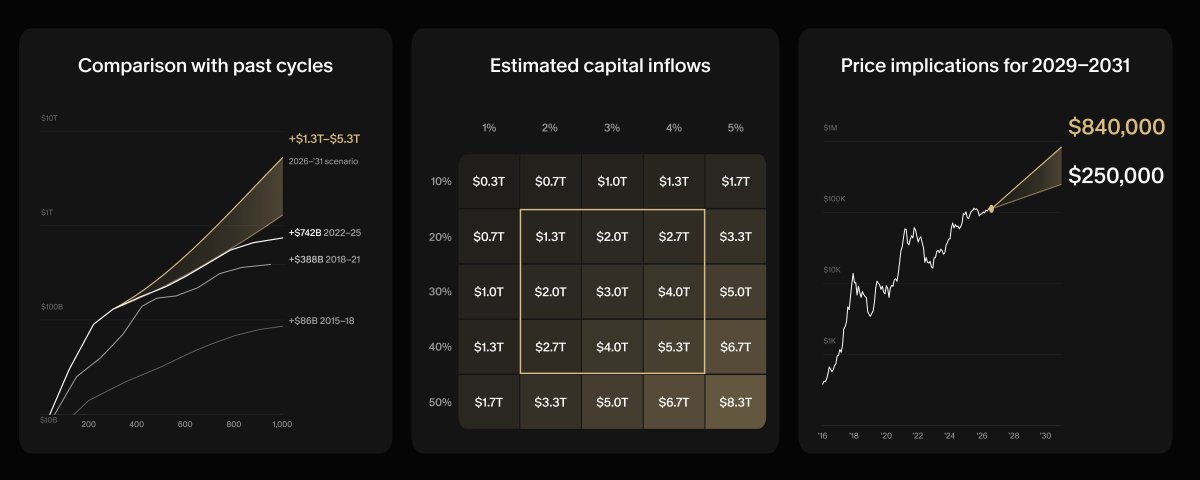
Solid argument from @River that points to $840k within 5 years—mainly from a financial and institutional perspective. Once $1M is that close, human psychology will create a time crunch that lifts the price up to the psychological mark ($1M) relatively quickly. Then I would expect a drop back down again before the next journey from $1-5M per coin. That leg up might take a decade or more, which would be around 2041-45. And that takes us into mainstream adoption where Bitcoin is widely used as a means of exchange and the base settlement layer across the planet. If the dollar’s value goes down more rapidly than expected, it could accelerate this timeline. If the dollar stays dominant for a longer period, it decelerates this timeline. Other similar factors include nation state adoption and tools from entrepreneurs that could speed things up. xitter.cf/river/status/209517295…

LAB Network retweeted
You know I’m your buddy, @GaryCardone, but thinking Bitcoin can’t get to $5M per coin is a logical fallacy. I would argue $5M is a near certainty. If you want to talk percentages, I’d put it above 99%.
Think about it logically:
Fiat has no capped supply. We keep printing more. The dilution of value is infinite.
Now consider Bitcoin’s fixed supply. As we print more dollars, each Bitcoin is “worth” more dollars in dollar terms, even if Bitcoin isn’t getting more adoption.
Now consider that an entire industry is building tools to spread Bitcoin’s usage, which has been gong on for 17 years. Game theory inherent in Bitcoin’s rigid design drives the incentive for people to support and grow the network once they are in. So this is very unlikely to stop.
The logical fallacy in your head is that there must be a cap on Bitcoin’s value relative to other assets. This is wrong, because the supply of other assets is a moving target. Gold’s supply grows, and it will continue to grow at a faster rate as we build more tools to better mine gold from the ocean and the stars. Gold has an unlimited supply. Bitcoin does not.
The other fallacy confusing your brain is the false assumption that there isn’t enough time. “It will never happen.” Humans have difficulty understanding rate of change. Gold has been used as a store of value for thousands of years. Your brain takes that info and converts it into a sense of security. “It’s always been here.”
Just because gold has been around for a long time doesn’t mean something better won’t or can’t come along.
I can’t tell you when Bitcoin will hit $5M a coin, but I can confidently say—without a black swan or extinction event, it’s much closer to a 100% certainty than an impossibility.

$5 mill bitcoin is a pipe dream and irresponsible for anyone to prognosticate.
ANYONE suggesting that btc is going to 5 mill is either stupid and irresponsible or is trying to sell you something.
105 trillion dollar asset! Please. Gold is 15 trilly.
This prediction infers the value of my own stack is gonna be worth 4.25 billion dollars. Ridiculous.
If it sounds stupid, looks stupid, and acts stupid, it is stupid and disengenuous.
My mom told me once; if I listen to stupid, mis-guided people, you will remain stupid and misguided.
Don't waste more NOW moments on stupid people.
LAB Network retweeted
Big deal. Well done, @jackmallers.
The culture is shifting back into place.

I've decided to step down as CEO of Twenty One.
This wasn't an easy decision, but it was the right one. This experience brought tremendous clarity about who I am and what I want to build.
My life's work remains Bitcoin. My Bitcoin company is @Strike.
The work continues.
LAB Network retweeted
Buying Your Next Home with Bitcoin: The People’s Reserve (Podcast Episode)
I had a blast recording this show with @CJKonstantinos to celebrate the launch of @PeoplesReserve. Enjoy! 🟠
Chapters
00:00 Introduction and Launch Week Insights
02:58 The Current State of Bitcoin and Market Psychology
05:58 CJ's Journey into Bitcoin and Founding People's Reserve
11:48 The Evolution of Bitcoin and Ethereum
15:09 The Foundation of People's Reserve and Its Purpose
17:52 People's Reserve: A New Financial Tool for Homebuyers
24:03 The Impact of People's Reserve on the Housing Market
26:53 The Exciting Potential of Bitcoin Mortgages
27:50 Understanding the Savings Crisis
29:54 Bitcoin as a Solution for Home Ownership
30:37 TrueFi and the Future of Mortgages
31:58 The Real Estate Market Crisis
33:44 Innovative Mortgage Solutions with TrueFi
36:19 Investing in Bitcoin-Backed Mortgages
38:39 The Dual Market: Consumers and Investors
40:04 Bitcoin: A Paradigm Shift in Finance
42:50 Exporting the American Dream with Bitcoin
45:46 The Race to Zero: Global Currency Printing
49:43 Bitcoin as a Settlement Layer for Finance
52:01 Building a Better Future with Bitcoin
LAB Network retweeted
Resources:
Joe Banister's Free Report - agentfortruth.info/
Hivemind Book - mylaunchteam.com/hivemind (Free Advanced Reader Copy)
Life After Bitcoin Book - mylaunchteam.com/lab-prelaun… (Free Advanced Reader Copy)
LaunchTeam Agency - mylaunchteam.com
Jesse’s Personal Website - jtev.me
Sponsors:
This episode is sponsored by @Trezor. Get a Trezor today:
affil.trezor.io/SH13w
This episode is also brought to you by:
@LABNetwork21
@MyLaunchTeam

LAB Network retweeted

Hello all,
On Friday I got news that I am to be transferred to a new institution. I will no longer be an inmate at FPC Morgantown. I am a little disappointed because this is a nice place (for a prison) and my wife can visit easily. For security reasons they do not tell you where you are going but I am hopeful that it won't be too far from home. I was told to be ready to "pack out" on Monday or Tuesday - it is very likely I will be leaving on Wednesday - so I spent the weekend getting ready to leave. It is amazing how much stuff you accrue in such a short period of time, it has been nearly 6 months since I arrived here. I expect they will call me down to "R&D" (receiving and discharge) where they will inspect my belongings to make sure there is no contraband and I am not taking anything unauthorized and pack them away in a box or two that they will ship to my new institution.
As for "shipping" me, it is very likely that I will be flown out to the central transit prison hub in Oklahoma before I am then flown onward to wherever they are putting me. Yes, Con-air is a real thing. Needless to say going through transit (Oklahoma) is a real nightmare. You can be stuck there from 1 day to several weeks, you're around all kinds of prisoners of all different security levels. No one looks forward to Oklahoma - myself included. There is the slightest possibility of avoiding the transit nightmare. On Friday after I got word I submitted a formal request (a "cop out" in BOP lingo) to the CMC (case manager coordinator) here at the institution. I requested that they allow me to perform what is called a 'transfer furlough' which means instead of the BOP spending upwards of $10,000 to fly me across the country several times my wife can come pick me up and drop me off at my new location at my own cost. Transfer furloughs are rare of course, but the CMC didn't reject it outright, he promised to take it up the chain of command and let me know. So while I am not expecting it, there is the slightest glimmer of possibility that they allow it. Considering that I have had no incident reports, that i self surrendered, that I had no issue on pre-trial supervision for nearly 2 years, etc, all makes a compelling case that I can be trusted to self transfer. So here is to hoping for the best.
I will let you know where I will be once I know where I will be.
All the best,
Keonne
LAB Network retweeted
A powerful and thorough examination of Bitcoin through the geopolitical lens, from @BitcoinLIVE.


LAB Network retweeted
The title of the talk is “Code is Free Speech: Ending the War on Bitcoin.”
I interviewed American entrepreneur, @keonne, weeks before he went to jail for writing code to strengthen the Bitcoin protocol. His innovative tech provided privacy features for Bitcoiners worldwide. The DOJ shut it down.
Keonne and his partner Bill are still in jail, despite zero evidence of wrongdoing.
Keonne’s wife, @leamuirleyn, is speaking at the conference on another panel.
Make it make sense.


LAB Network retweeted
No. This is a false statement. Stablecoins are undeniably and categorically NOT the best form of money.
Bitcoin is the best form of money. It’s permissionless, decentralized, and has a fixed supply so it maintains its value over space and time. It’s backed by real measurable energy, captured and stored forever on an immutable blockchain with redundancy across tens of thousands of machines all over the world.
Stablecoins, in stark contrast, are pegged to legacy currencies—typically the dollar, which is the worst, most corrupt money ever created in history. Fiat has no supply limit, so the centralized operator constantly inflates the circulating supply, which deteriorates the purchasing power of each unit over time. There is clear, factual, and undeniable evidence of this fact.
Stablecoins also allow for extreme surveillance by their issuers and partners. Every transaction is trackable and traceable.
So not only do stablecoins threaten privacy, they are also backed by corrupt, inflatable currency owned and controlled by a central source.
Brian, learn more about money.

LAB Network retweeted
Check out @Trezor for quantum-proof self custody.
Battle tested hardware. Top-notch, user-friendly software.
As a power user since 2016, I can highly recommend Trezor with confidence. They never let me down.🫡
Use my affiliate partner link below:
This episode from @LABNetwork21 is sponsored by Trezor. I am an affiliate partner for Trezor. I have used their products for nearly 10 years.
✅ The world’s first transparent, auditable Secure Element
✅ The first-ever quantum-ready hardware wallet
✅ Secure wireless connectivity across mobile, desktop, and tablet.
Get Trezor, the hardware wallet that redefines crypto security forever:
affil.trezor.io/SH12u

LAB Network retweeted
This episode from @LABNetwork21 is sponsored by Trezor. I am an affiliate partner for Trezor. I have used their products for nearly 10 years.
✅ The world’s first transparent, auditable Secure Element
✅ The first-ever quantum-ready hardware wallet
✅ Secure wireless connectivity across mobile, desktop, and tablet.
Get Trezor, the hardware wallet that redefines crypto security forever:
affil.trezor.io/SH12u
LAB Network retweeted
Bitcoin FUD, Taxes, the Strait, Societal Trends, & the 4th Turning (Weekly Recap)
In this solo episode, I share insights on cultural issues, Bitcoin FUD, corruption in our tax system, geopolitical game theory, Saylor's buying spree, price action, and nationwide economic pain—offering my visceral and authentic reaction to recent events happening across the Bitcoin ecosystem. Enjoy.
Chapters
00:00 Introduction to the Lab Network and Personal Reflections
01:45 Cultural Frustrations and Economic Turmoil
03:13 Debunking Bitcoin Myths: Professor Jiang's Claims
08:04 The Reality of the Current Economy
12:01 Questioning the Federal Income Tax System
15:06 Iran's Proposal for Bitcoin in Trade
19:27 Bitcoin as a Safe Haven Asset
21:49 Michael Saylor's Bitcoin Strategy
23:52 Bitcoin Price Predictions and Market Dynamics
24:34 Upcoming Events in the Bitcoin Community
29:14 Closing Thoughts and Call for Collaboration