

Creative Strategist & YouTube Strategist | Helping 7-9 Figure education brands go viral on YouTube | 13M+ Long Form Views
My Free Ideation Playbook 👇
Joined October 2023
- Tweets1.3K
- Following303
- Followers680
- Likes3.9K







20 years old: In college learning how to be a football coach. Wasn’t for me and went to learn more about business and doing my own thing.
21 years old: Studying business in college, working in Tesco, and took my first copywriting course.
21 (and a half) years old: Landed my first creative strategy role with an agency, still working in Tesco, studying business at university
22 years old: Finally quit my job in Tesco, graduated from university, and started working with an email agency for DTC brands generating over $1M for clients.
22 (and a half) years old: Left the direct response world to learn organic content and YouTube strategy, writing long-form scripts and creating viral videos.
23 years old: 6M+ long-form views and working with some of the biggest education brands in the space later… I’m now working with my dream client and an amazing team doing YouTube and writing copy.
***
One of my mentors said something to me the other day that I'm living by now:
“You need to learn to love the JOURNEY. Whatever happens, in business or personally.”
And I can safely say that I’ve loved the journey so far.


Split testing is overrated…
But the positives of using it can outweigh the negatives.
(So I do use it, but I just have that awareness that it has many downsides).
First of all, if you're working with a small channel, do not do a bloody split test.
You will not get enough impressions and you'll be split testing until the end of time.
Launch with what you believe to be your strongest title and thumbnail.
But if you do work on or have a bigger channel, here’s what I like to do:
Phase 1: split test 3 thumbnails against 1 title.
By thumbnail formats, I mean 3 completely different concepts.
Maybe one thumbnail is a blind mechanism style while another uses the panelled backgrounds.
Your mantra here is:
Test screams, not whispers.
Which means you test the things that will actually get you results, not smaller stuff like the font of your thumbnail text.
Phase 2: Test 3 titles against the winning thumbnail.
The exact same principle applies here: test different title formats and variations, not the same title said 3 different ways.
For example, do not do this:
“How to get rich”
“How to actually get rich”
“How to get disgustingly rich in 30 days”
Do this instead:
“How to Get Disgustingly Rich in 30 days”
“I’ll Make You Disgustingly Rich, Give Me 30 Mins”
“This Goldman Sachs Secret Will Make You Disgustingly Rich”
Phase 3: Test another batch of titles (or thumbnails) on the cold traffic flip.
This is something I learned from Shay, the genius content director at ACQ.
The cold traffic flip means you go into the backend of a channel and you look at returning and new viewers.
That flip over of impressions and views is when the algorithm potentially pushes your video to a new cold audience.
And so you can look at your other videos that have performed well with a cold traffic flip to roughly map the days it happens.
Then split test titles and thumbnails that could reach the mass market on those days for the new video.
Now if a video does end up doing well, sometimes I won’t split the test at all.
The entire split testing game is using your best judgment and having a reason why you want to split the test.
Day 14 of #Publish30.

I've distilled my most viral titles (and over 1,000 outliers) into 5 Copy Cogs you can use to create your own YouTube titles:
1. Topic
It’s the core idea your entire video is built around.
Whether that’s investing, visceral fat, dating, business, you name it.
For example:
“If You Don't Understand the [Petrodollar], You Don't Understand Geopolitics”
2. Outcomes
What is the outcome you are promising the viewer by clicking on your video?
Is it to lose weight, to fix their business, to become financially free?
Use Gary Bencivenga's "So What?" test to discover the outcome of the video
“If You Master Boring Stocks, You Master [Money]”
You master money → So what? → You become financially free
“If You Master Boring Stocks, You Master Financial Freedom”
3. Mechanisms
The mechanism is HOW you get to the outcome.
And it goes back to a classic direct response principle called market sophistication.
Market sophistication simply means how many claims they have heard before you.
And so when the market is sick of all the same overblown claims and they need novelty.
Novelty is a new, sexier way to GET that outcome they haven't heard about before, called the unique mechanism.
“If I Wanted to Go Viral in 30 Minutes, I’d Do [THIS]”
The unique mechanism is the THIS.
It’s hidden or revealed to create curiosity and attach the claim to this novel concept.
If we’re going for revealed:
“The [Skittles Effect] Will Make You Go Viral In 30 Mins”
The Skittles Effect being the unique mechanism.
4. Proof
Your proof could be:
*Credentials (Who you are, like a doctor)
*Achievements (What you’ve done)
*Affiliations (who you’ve worked with or someone famous)
*Studies (“New research”).
And when you mix proof with your mechanism or outcome, that’s when you really start to create belief…
“I've Done [9,000] [Colonoscopies], Here’s How to Fix Your Gut”
This immediately leads with the experience and credentials proof, as it implies a doctor.
5. Hook
The hook is simply anything that stops the viewer in their doomscrolling and gives them a reason to click.
*Audience Call-outs: "[Men Over 40:] Follow This Plan, You'll Retire In Your 50s"
*Open Loops: "The [Single Habit] That FORCES You To Focus"
*Belief Reversals: "Why Europeans Live Longer Than Americans [(NOT Diet)]"
*Loss Aversion: "[NEVER] Invest In These 5 Stocks (Instant Loss)"
*Forbidden Knowledge: "Everything Wall Street Won't Tell You About Money"
*Attention Amplifiers: "I'll Make You [Insanely] Confident, Just Give Me 22 Mins"
Now let's fuse them all together with the topic of longevity:
"This Japanese Morning Routine Makes You Feel Decades Younger"
Japanese = Proof.
This = Hook (open loop).
Morning Routine = Mechanism.
Feel Decades Younger = Outcome.
Longevity = Topic.
How you fuse them is up to you and what your market wants. Because the best title formula in the world will not save half-arsed market research.
At least now you have a place to start…
Day 13 of #Publish30.

Kyle | Copywriter & Strategist @ Acquisition(.)com retweeted
I have a confession…
My women’s burner account is my secret weapon for YouTube ideas.
I believe no other market has mastered the feeling of mood and aesthetic in packaging better than general women’s niches.
And it has some of the most underrated titles I have seen:
5 Odd Beauty Habits That Changed My Face Completely (1M views)
Things Married Women Won’t Tell Single Women (But I Will) (300K views)
I DREAM BIG BUT DO NOTHING. the neuroscience behind why & how to fix (3.4M views)
As for actually setting up a burner account in the niche:
1/ Create a new account
2/ Use ChatGPT to make a photo of you as a woman because why not lol
3/ Watch 6-8 videos (on mute) in the women's niche from channels like these:
*Christina Mychas
*Jillz Guerin
*Glucose Revolution
*Dr Faye Bate
4/ Let the YouTube algo flood you with women’s niche outliers
Tada.
Oh yeah, and one final tip:
Study their packaging (title and thumbnails) obsessively.
They have a completely different visual language from any niche you will have seen before.
And if you can understand their language, it will help you master other niches.
Day 12 of #Publish30.

Kyle | Copywriter & Strategist @ Acquisition(.)com retweeted
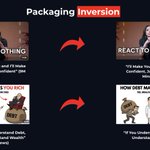
YouTube idea hack: invert outlier packaging.
You can invert the title structure…
Original: “Give Me 15 Minutes and I’ll Make You Dangerously Confident” (9M views)
Inverted: “I’ll Make You Dangerously Confident, Just Give Me 15 Minutes”
Original: “How To Write Off Everyday Expenses, LEGALLY In 2026”
Inverted: “Write Off Everyday Expenses LEGALLY In 2026 (Here’s How)
Invert the promise…
Original: “If You Don't Understand Debt, You Don't Understand Wealth”
Inverted: “If You Understand Debt, You Understand Wealth”
Or even invert the entire packaging…
Original Title: “How to Explain Complex Ideas So People Listen”
Original Thumb Text: “The Onion Method”
Inverted Title: “ Use The ‘Onion Method’ To Explain Complex Ideas To Anyone”
Thumb text: “Make People Listen”
If you already have winning titles and packaging, this is an insanely easy move you can make to iterate.
Day 13 of #Publish30.
I have a confession…
My women’s burner account is my secret weapon for YouTube ideas.
I believe no other market has mastered the feeling of mood and aesthetic in packaging better than general women’s niches.
And it has some of the most underrated titles I have seen:
5 Odd Beauty Habits That Changed My Face Completely (1M views)
Things Married Women Won’t Tell Single Women (But I Will) (300K views)
I DREAM BIG BUT DO NOTHING. the neuroscience behind why & how to fix (3.4M views)
As for actually setting up a burner account in the niche:
1/ Create a new account
2/ Use ChatGPT to make a photo of you as a woman because why not lol
3/ Watch 6-8 videos (on mute) in the women's niche from channels like these:
*Christina Mychas
*Jillz Guerin
*Glucose Revolution
*Dr Faye Bate
4/ Let the YouTube algo flood you with women’s niche outliers
Tada.
Oh yeah, and one final tip:
Study their packaging (title and thumbnails) obsessively.
They have a completely different visual language from any niche you will have seen before.
And if you can understand their language, it will help you master other niches.
Day 12 of #Publish30.

Kyle | Copywriter & Strategist @ Acquisition(.)com retweeted
I handwrote some of the most aggressive video sales letters ever created for 9 months straight.
I have over 3 full notebooks and god knows how many pages of marked-up copy.
When I first started writing long-form scripts, my mentor told me that if I really wanted to get good at writing long-form scripts and copy...
I needed to understand the psychology and flow behind those VSLs.
(Sidenote: I hate aggressive blackhat copy.
But something I’ve learned from Sharran Srivatsaa and Alex Hormozi is to never judge the source of your information and use the lessons for good).
Every morning for 30 minutes I would:
→ Set my egg timer
→ Hand copy the VSLs with a pen
→ Then once I had finished hand-copying, I would go back through the VSL with a red pen and look for these things:
1/ Lead
The intro to the VSL. What type of lead did they use?
2/ Unique mechanism problem
What was the unique mechanism problem? Was it parasites, leaky gut etc.
3/ Unique mechanism solution
What was the unique mechanism solution (that just so happened to be in their product)?
4/ But-Therefore chains between each section
To consciously mark up the flow.
5/ Proof (and type of proof used)
Was it studies, testimonials, anecdotes?
Apart from actually writing the scripts themselves, I believe this was one of the most important things I did to switch over to long-form scriptwriting.
Here’s a swipe file of some GundryMD VSLs I handwrote:
drive.google.com/drive/folde…
Day 11 of #Publish30.
Kyle | Copywriter & Strategist @ Acquisition(.)com retweeted
Social media loves to talk about the wins, but my biggest lessons have always come from the “losses”.
I’ve created scripts that were so rough they never even got published…
I’ve had plenty of 1-of-10s and posts bomb…
And I’ve had ideas torn to shreds by mentors.
But I don’t even believe in losses… I only believe in lessons.
If shit hits the fan and you learned something, it’s still a win.
So here’s my mental model for learning from the “losses”:
1/ What is the constraint or problem
2/ Why does it exist
3/ What is the solution(s)
4/ Next steps
So if a YouTube video bombs, it’s:
1/ What is the problem with the video (hypothesis)
“Well, the packaging wasn’t good, there was no intrigue in the thumbnail or title”
2/ Why does the problem exist
“Because there wasn’t enough time spent on packaging strategy before launch”
3/ What is the solution(s)
“Spend less time on post-production cleanup and more time on packaging”
4/ Next steps
“Write 10 titles for the next video and 6 new thumbnail concepts before even thinking about launching”
Day 10 of #Publish30.
Kyle | Copywriter & Strategist @ Acquisition(.)com retweeted
I just hit 5,000 followers on LinkedIn. But I did the opposite of what most people do with their content…
It took me over 2 years to get here.
This wasn’t some overnight dramatic transformation like a classic “guru’s journey”.
My posts were sh*t. I didn’t copy any of the outlier formats or follow best practices.
I was posting more bombs than winners, learning what posts work, and spent the weekends writing them.
And I believe that’s why it worked for me.
I posted what I wanted (my love for the YouTube game), broke down channels that I found interesting, and didn’t get hung up when a post tanked.
I wasn’t an expert (still am not), instead I took the student frame and just shared what I was learning.
So if you’re just getting started out, I highly recommend you do the same thing:
1/ Post personal stories
2/ Post about your skill
3/ Post about what you're learning
This is literally all I’ve been doing.
So make the post, watch it get 100 impressions, and enjoy the journey.
After all, you can’t win the game if you’re always sitting on the sidelines.

Social media loves to talk about the wins, but my biggest lessons have always come from the “losses”.
I’ve created scripts that were so rough they never even got published…
I’ve had plenty of 1-of-10s and posts bomb…
And I’ve had ideas torn to shreds by mentors.
But I don’t even believe in losses… I only believe in lessons.
If shit hits the fan and you learned something, it’s still a win.
So here’s my mental model for learning from the “losses”:
1/ What is the constraint or problem
2/ Why does it exist
3/ What is the solution(s)
4/ Next steps
So if a YouTube video bombs, it’s:
1/ What is the problem with the video (hypothesis)
“Well, the packaging wasn’t good, there was no intrigue in the thumbnail or title”
2/ Why does the problem exist
“Because there wasn’t enough time spent on packaging strategy before launch”
3/ What is the solution(s)
“Spend less time on post-production cleanup and more time on packaging”
4/ Next steps
“Write 10 titles for the next video and 6 new thumbnail concepts before even thinking about launching”
Day 10 of #Publish30.
I just hit 5,000 followers on LinkedIn. But I did the opposite of what most people do with their content…
It took me over 2 years to get here.
This wasn’t some overnight dramatic transformation like a classic “guru’s journey”.
My posts were sh*t. I didn’t copy any of the outlier formats or follow best practices.
I was posting more bombs than winners, learning what posts work, and spent the weekends writing them.
And I believe that’s why it worked for me.
I posted what I wanted (my love for the YouTube game), broke down channels that I found interesting, and didn’t get hung up when a post tanked.
I wasn’t an expert (still am not), instead I took the student frame and just shared what I was learning.
So if you’re just getting started out, I highly recommend you do the same thing:
1/ Post personal stories
2/ Post about your skill
3/ Post about what you're learning
This is literally all I’ve been doing.
So make the post, watch it get 100 impressions, and enjoy the journey.
After all, you can’t win the game if you’re always sitting on the sidelines.
Kyle | Copywriter & Strategist @ Acquisition(.)com retweeted
This right here is THE perfect example of a unique mechanism being used on the thumbnail


This is one of the biggest reasons I believe some of the biggest education channels' views are flatlining today.
And it goes back to an old direct response principle from a legendary copywriter called Eugene Schwartz.
The principle is called market sophistication.
Market sophistication simply means how many products/videos have been there before you
For example, let’s say it’s the business market with Hormozi:
Level 1 is first to market, so you just make a claim: “How To Get Rich”.
Level 2 is second to market when there’s more competition, so now you need to make a bigger claim: “How to Get Rich in 90 Days”
Now level 3 is where I believe MOST of the entire education market is stuck.
This is when the market is sick of all the same overblown claims and they need novelty.
(Hat tip to Arnav Kadian for really hammering the concept of novelty into my strategist skull).
Novelty is a new, sexier way to GET that outcome they haven't heard about before, called the unique mechanism.
“If I Wanted to Get Rich in 90 Days, I’d Do THIS”
The unique mechanism is the THIS.
It’s completely hidden or revealed to create curiosity and attach the claim to this novel concept.
If we’re going for revealed:
“The Buffet Formula to Get Rich in 90 Days”
The Buffett Formula being the unique mechanism.
So testing new ideas around unique mechanisms you already have or find could be worth exploring to make the videos feel novel and new to your core and new audience.

This right here is THE perfect example of a unique mechanism being used on the thumbnail
This is one of the biggest reasons I believe some of the biggest education channels' views are flatlining today.
And it goes back to an old direct response principle from a legendary copywriter called Eugene Schwartz.
The principle is called market sophistication.
Market sophistication simply means how many products/videos have been there before you
For example, let’s say it’s the business market with Hormozi:
Level 1 is first to market, so you just make a claim: “How To Get Rich”.
Level 2 is second to market when there’s more competition, so now you need to make a bigger claim: “How to Get Rich in 90 Days”
Now level 3 is where I believe MOST of the entire education market is stuck.
This is when the market is sick of all the same overblown claims and they need novelty.
(Hat tip to Arnav Kadian for really hammering the concept of novelty into my strategist skull).
Novelty is a new, sexier way to GET that outcome they haven't heard about before, called the unique mechanism.
“If I Wanted to Get Rich in 90 Days, I’d Do THIS”
The unique mechanism is the THIS.
It’s completely hidden or revealed to create curiosity and attach the claim to this novel concept.
If we’re going for revealed:
“The Buffet Formula to Get Rich in 90 Days”
The Buffett Formula being the unique mechanism.
So testing new ideas around unique mechanisms you already have or find could be worth exploring to make the videos feel novel and new to your core and new audience.
Every week I write at least 35 tweets, 7 long-form posts, 2 long-form articles, 20 YouTube video ideas, long-form YouTube scripts and much more…
(This is before writing my own content).
But the reason I never run out of ideas isn’t praying to the ideation gods every day…
It’s because I’ve turned ideation into a system with mental models and frameworks.
And the one I always go back to is the creative combustion playbook.
It has 9 Viral Format Filters and 10 Idea Frames that help me come up with ideas when my brain is fried.
Inside it is also:
- The most powerful viral format filter in the education market that nobody on YouTube understands UNLESS they've studied a specific direct marketing book from 1966… (filter 5)
- The deceptively simple 3-word question from viral format filter 4 that breathes life into a dead idea and gives it the potential to be a winner
- The borderline stupid idea technique that accidentally uncorks a flood of genius ideas (Idea frame 4)
- Instantly use viral format filter 9 to bake tension into any video (even if it sounds boring)
- One of the most popular types of ideas across all of YouTube today that you can use 30 seconds after claiming your playbook (Idea frame 9)
Plus much more…
If you want it, DM me "playbook."
Twitter will promptly eject me from the platform for doing “comment to get your thingy” posts.


Kyle | Copywriter & Strategist @ Acquisition(.)com retweeted

everything I know about ideating 1M view YouTube titles, in one article:
→ the 3-step splice behind a 4,459,407 view video
→ 5 real title containers you can steal today
→ the one that flopped (and why it still did 2x)
→ a fill-in-the-blank worksheet
bookmark this before your next upload

Kyle | Copywriter & Strategist @ Acquisition(.)com retweeted
For the past few weeks, I've been binge-watching cop shows like a Netflix junkie. Here’s how to use them to write viral scripts.
(I’m watching The Rookie, it’s actually pretty good).
And while I love watching them… it’s like a bloody mini-workout for my heart.
Every single damn time there’s a twist or tension built up, my body thinks it’s running a half marathon.
But between the heart palpitations and spilled popcorn… I realised something:
If they can make me sweat bullets from their show writing… I gotta study more cop shows!
And so today I’m going to share with you the simple storytelling formula behind some of the most popular cop shows (and how you can use it for any niche)…
The Detective Story Formula.
1/ The Introduction of the Crime (Initial Context)
2/ The Entry of the Detective (Introducing Character)
3/ The Investigation Phase (First Twist)
4/ Misdirection/Red Herrings (Second Twist)
5/ The Climax and Resolution (Third Twist and Payoff)
While this formula is overpowered for the true crime niche... we can adapt it for education scripts:
Beat 1: The initial problem
Beat 2: The first solution
Beat 3: The first solution has all these problems and flaws
Beat 4: Red Herrings (OTHER failed solutions)
Beat 5: The ultimate solution and final payoff
Example for the business niche:
Beat 1: The initial problem
20% of new US small businesses fail in year one.
Not because they lack knowledge, but because they don't realize how much money is needed before reaching profitability.
Beat (optional): Personal story/character introduction
Beat 2: The first solution
BUT there's a way to fund it without using your own money... small business loans.
Beat 3: The first solution has all these problems and flaws
BUT these loans come with heavy interest rates that cripple the business in 5 years. People end up in severe debt. Back to the 9-to-5.
Beat 4: Red Herrings (OTHER failed solutions)
BUT they try again by bootstrapping with savings. One slow month and the money is gone. So they bring on investors.
Now someone else owns 30% and tells them how to run it.
Beat 5: The ultimate solution and final payoff
BUT there IS a way without savings, loans, or giving up a piece of your business: Joint partnerships.
Now you can see the adapted formula actually follows a really clean belief-shifting bridge for an education video.
1 - Start with their current beliefs and initial problem
2 - Toss out the most common solution
3 - Toss out all the other failed solutions (red herrings)
4 - Belief shift them into the final payoff
The absolute key is to overdeliver with value in each beat.
Otherwise, you'll suffer retention loss from constantly twisting and never delivering.
Give them tactics and implementation for how they could use the failed solutions properly if they wanted to.
Day 6 of #Publish30.

Kyle | Copywriter & Strategist @ Acquisition(.)com retweeted
Over the past year, I've helped my clients get over 13M long-form views. Here’s how I research and create YouTube video ideas from scratch in 60 seconds (or less):
1/ Look at the beliefs, values, and strategy of the client I’m writing (or strategising for)
2/ Look at my outlier swipe file to get a pulse of the market and for inspiration from titles, thumbnails, and topics
3/ Write a 2-3 sentence summary of the big idea behind the video
“This video is a listicle about 3 tips about XYZ. Tip 1 is X, tip 2 is Y, tip 3 is Z. Each tip MUST escalate to the next, and there must be an early payoff after the intro for retention.”
4/ Come up with 3-5x more ideas than I need minimum
5/ Eliminate 80-90% of the ideas to only find the best 10-20%
6/ Combine my client's unique positioning with a video idea that aligns with the brand
Unique positioning is looking at your client's proof elements and the market for ways you can position them to stand out.
E.G., positioning a doctor who’s a specialist in gut health as “The Gut Doctor” or for peptides “The Peptide Doctor”
7/ Write 5-10 titles and 5-7 thumb text ideas for the video to find the positioning
8/ Use the gun-to-the-head approach to decide my packaging
This is an old principle used by copywriter legend Gary Halbert:
"With a gun to my head that would go off if the piece didn't become the winner, would I use that word? That USP? That headline?”
This also stops you from getting sloppy with split testing.
9/ Now go write the script.
Would you add anything to the list?
P.S. Here’s a mugshot of my lead strategist/boss
Day 7 of #Publish30.
