


We've long meant to share code, but lacked time to package well. Would you be willing to lead an open access project on this? We can support w/ sample code, but need some documentation, maybe some videos & samples. We could start a Github & a Discord channel. 1/

G&P 2009: "A simple method for calibrating force plates and force treadmills using an instrumented pole" Does anyone have code/experience with this calibration they would be willing to share with our lab. @StevenHCollins @KuoArt @adamczyk_peter @Ferris_vball @maxdonelan
@PKudzia_BioMech if you're up for leading, we could consider making whole project public, and anyone could participate & contribute (& possibly co-author). End/
1
3
458
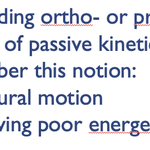
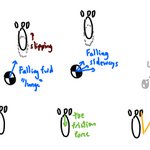
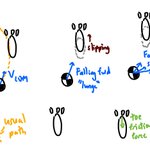
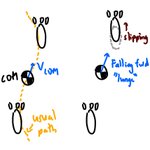
Short answer: No idea. Have to wonder what peeps wanna do for unexpected, unpracticed slip. Should they try to recover, or make fall less bad? Here they can't know exact context (1 & only 1 slip). Is their reaction based on prev exp slipping on bananas? 1/

last thoughts: i think we need to shift to frontal plane mechanics to understand severe slips better. 8/end
thoughts?
1
Note that all models, even fancy computational ones, are dream sequences. They're fiction & mostly worthwhile if taken skeptically & tested. This model obv silly but at least falsifiable. Wish peeps wouldn't try to "validate" models, better to try to prove them wrong. 8/
1
1
Cool paper shows people fall 2-3x more from slipping if arms constrained! (Lee-Confer… HMS'22) Sure we all flail arms when unbalanced, but surprising is effect hugeness. Arms only weigh ~10% body, relatively small inertial effect, even if flailed perfectly. 1/

ALT Lee-Confer, Kulig, Powers (2022) Constraining the arms during a slip perturbation results in a higher fall frequency in young adults. Human Movement Science 103016. Fig 2
Tubes from water backpack to wrist bladders, pump to fill & add mass to aid flailing. A laptop that detects a fall (already in hard drive technology), backs itself up wirelessly so U can flail it & land on it if needed. (Anyone makes a fortune on this, they owe me $1.) 11/
1
1