










K retweeted

The Anambra experience demonstrated that proper planning, accurate information, prudent management of resources, and genuine commitment to the welfare of citizens can make a meaningful difference.
What we achieved between 2006 and 2014 was not the elimination of poverty, but the establishment of a practical framework for confronting it. We can adapt and expand that experience nationally.
I have consistently spoken about the need to move millions of Nigerians out of poverty. In discussing this challenge, I have often drawn attention to the experiences of China and India, countries that have lifted hundreds of millions of their citizens out of poverty through sustained economic reforms, investment in productive sectors, infrastructure, agriculture, education, and deliberate policies that expanded economic opportunities.
Their experiences demonstrate that mass poverty is not an inevitable condition of a nation. It can be substantially reduced through purposeful leadership, long-term planning, productive investment, and the consistent implementation of policies that place people at the centre of development.
If China and India could undertake such transformations, Nigeria can also do so. We must study what worked in those countries, understand the differences in our circumstances, and adapt the lessons to our own environment. We do not need to reinvent the wheel; we need the commitment to make proven development strategies work here.
A country cannot be prosperous when millions of its citizens go to bed hungry. Our ambition must be to move Nigeria from managing poverty to systematically defeating it.
That is the Nigeria we must build: one where no citizen is abandoned, opportunity is not determined by geography, and the dignity of every Nigerian is protected.
In the next instalment, Series 8, we shall examine what we did in commerce and industry. -PO
K retweeted
Our objective was to improve agricultural productivity, facilitate access to markets, and ensure that farmers earned better incomes from their labour.
We understood that a farmer who cannot conveniently transport produce to the market remains poor, regardless of how much land he cultivates. This was why agricultural support had to go hand in hand with rural infrastructure.
4. EMPOWERING YOUTHS, SUPPORTING POOR HOUSEHOLDS, AND PERSONS WITH DISABILITIES
We established and equipped skill-acquisition centres to provide young people with vocational training and opportunities for self-employment.
Beyond training, we provided financial support to 500 youths who had acquired productive skills, giving each ₦100,000 to establish or strengthen their businesses. The intention was to move them from unemployment and dependence to productive enterprise.
We also distributed more than 500 specially designed wheelchairs to persons living with disabilities, improving their mobility, independence, and participation in society.
Through conditional cash-transfer programmes under the Millennium Development Goals framework, we provided financial assistance to extremely poor households. These interventions were designed to address immediate hardship while preventing poverty from being passed from one generation to another.
We believed that no young person should be condemned to poverty because of a lack of opportunity, and no person living with a disability should be excluded from society’s economic and social life.
5. RESTORING DIGNITY TO PENSIONERS AND PROTECTING THE ELDERLY
We inherited substantial pension and gratuity arrears owed to retired public servants. We embarked on their systematic liquidation. We spent over ₦35 billion to clear the stock of pension and gratuity arrears.
Beyond pensioners, we recognised another category of vulnerable citizens: elderly people who had neither pensions nor financially capable children to support them.
Consequently, we introduced a monthly social security stipend for indigent citizens aged 75 and above who were not retirees and had no successful children or dependable family support to meet their basic needs. The programme covered approximately 30,000 beneficiaries.
Importantly, we did not treat this as a temporary political gesture. We gave the initiative a legal foundation through the Anambra State Indigent Relief Law 2013, thereby institutionalising the state’s responsibility towards these vulnerable citizens.
We believed that growing old without a pension or family support should not condemn anyone to hunger and indignity. The government had a responsibility to provide a safety net for such citizens.
These interventions reflected our commitment to protecting both those who had served the state and those who, through no fault of their own, were without dependable means of survival.
CONCLUSION: FROM MANAGING POVERTY TO DEFEATING IT
Nigeria faces an alarming food and poverty crisis. According to the Food and Agriculture Organisation (FAO), approximately 36.3 million Nigerians, representing 17 per cent of the population covered by its analysis, faced severe acute food insecurity between June and August 2026, compared with 30.6 million during the corresponding period in 2025.
Behind these figures are families struggling to feed themselves, children facing nutritional deprivation, and farmers unable to earn adequate incomes.
We cannot confront this crisis through disconnected interventions, occasional cash transfers, and emergency food distribution alone. Nigeria needs a comprehensive strategy addressing the structural causes of poverty.
We must invest in agriculture, open up neglected rural communities, support small businesses, expand access to affordable credit, equip young people with practical skills, and establish effective social protection for the elderly, widows, persons with disabilities, and other vulnerable citizens.
K retweeted
NIGERIANS, GO AND VERIFY (7)
LIFTING THE VULNERABLE : ANAMBRA’S BLUEPRINT FOR POVERTY ALLEVIATION AND SUSTAINABLE EMPOWERMENT (2006–2014)
Economic growth that does not translate into improved living conditions for ordinary citizens is incomplete. This is one of our fundamental concerns with President Bola Ahmed Tinubu's government. Development must ultimately be measured by its impact on human lives, particularly those of the poor and vulnerable. This was underpinned by the Anambra Integrated Development Strategy (ANIDS). We believed that infrastructure, education, healthcare, agriculture, and social protection must reinforce one another. Poverty was not merely a shortage of money; it was also a lack of access to opportunities, productive resources, and the basic conditions necessary for a decent life.
Our poverty alleviation strategy, therefore, went beyond temporary handouts. It focused on restoring dignity, creating economic opportunities, and equipping vulnerable citizens with the means to become self-reliant.
Our approach attracted recognition beyond Anambra. In May 2010, Magnus Kpakol, then National Coordinator of the National Poverty Eradication Programme (NAPEP), commended our commitment to poverty reduction, declaring: “We are prepared to support you in the excellent work you are doing in Anambra State.”
1. POVERTY MAPPING: KNOWING WHERE POVERTY LIVES
We recognised that poverty could not be effectively addressed without knowing where it was concentrated and what caused it. We, therefore, undertook a poverty-mapping exercise to identify the most deprived local government areas and communities.
The exercise revealed that some of our poorest communities were also important food-producing areas. Their challenges included poor access to markets, agricultural inputs, electricity, water, and other economic opportunities.
Areas including Anambra West, Orumba South, Awka North, and Ogbaru required particular attention. The findings informed our development priorities, enabling us to direct roads, agricultural support, and social interventions toward neglected communities.
2. EMPOWERING WOMEN, WIDOWS, AND COOPERATIVES
We recognised that rural women, widows, and indigent households bore a disproportionate burden of poverty. Across the 21 local government areas, we provided financial assistance and productive support to thousands of beneficiaries.
Our administration provided financial assistance to support the establishment and expansion of small businesses and farming activities. We also introduced revolving loan schemes to promote enterprise development, economic self-reliance, and improved livelihoods.
We distributed productive equipment, including sewing machines, generators, ovens, cookers, hair dryers, shoe-making machines, and welding equipment. The objective was to help beneficiaries establish sustainable livelihoods rather than remain dependent on government assistance.
We also promoted access to microcredit and cooperative financing to enable small entrepreneurs to expand their businesses, improve their incomes, and create employment.
Our philosophy was simple: rather than merely giving people money to survive today, the government should help them acquire the means to earn a living tomorrow.
3. AGRICULTURE AND FADAMA: MAKING RURAL COMMUNITIES PRODUCTIVE
Agriculture was central to our poverty-reduction strategy because many rural households depended on farming.
Through partnerships with the Federal Government, the World Bank, and other development partners, particularly under the FADAMA programme, we supported farmers with finance and productive assets.
In November 2009, our administration disbursed millions to FADAMA Community Associations across the state. By October 2010, the National FADAMA office was commending Anambra’s commitment. Its National Project Coordinator, Buka Tijjani, represented by Charles Ugwuona, described Anambra as the leading state in the programme.
K retweeted

My fellow Nigerians, if you’re shocked that the Ministry of Defence is posting such, please and please, watch this video again.
I’ll keep posting this video until we all understand who Bola Tinubu is. This is a STATE CAPTURE. Open your eye, open it.
This quoted post is unavailable.
Very foolish people. Politicians are looting with reckless abandon but the citizens should continue paying with their sweats.

China added 1 million MW over 3 years and still pays subsidies on electricity even with 2 trillion dollars external debt
I was told by my intellectuals that Nigerias problem is unique
5
134

K retweeted

"GA Kwankwaso ,GA Peter Obi,you are actional,you are international Peter Obi"🎼
- Mr Fabulous 🎙️
K retweeted

People born into poverty rarely make for good activists.
It’s very easy to have high morals when you’re poor and hungry, but until you’ve tasted wealth and power, we’d never know the true you.
Social Change comes from people who have tasted it all, and chose to give it up.
K retweeted

Between Tinubu and his supporters, I no know who evil pass.

An issue between two Tiv men and the person calling for reconciliation is a Fulani man from Katsina.
Toh, Aondo u hemba!

Today, I joined fellow Benue APC stakeholders in Abuja for a reconciliation meeting convened by the North Central Presidential Reconciliation Committee, chaired by Sen. Ibrahim Shehu Shema, former Governor of Katsina State.
The meeting, which lasted about two hours, brought together the Secretary to the Government of the Federation, Sen, George Akume, former Benue State Governor Sen. Gabriel Torwua Suswam, Sen. Barnabas Gemade, Sen. Jack Gyado and Hon. Elder Shango.
I thank Sen. Shema and his committee for bringing us together. Reconciliation takes a willingness to listen, to speak frankly and to keep working together even where differences remain.
My commitment is clear. I will continue to engage with our leaders and stakeholders in the interest of a united @OfficialAPCNg, while keeping the peace, security and development of Benue State at the centre of my work. The people of Benue entrusted us with the responsibility to serve, and that responsibility must continue to guide us.


K retweeted
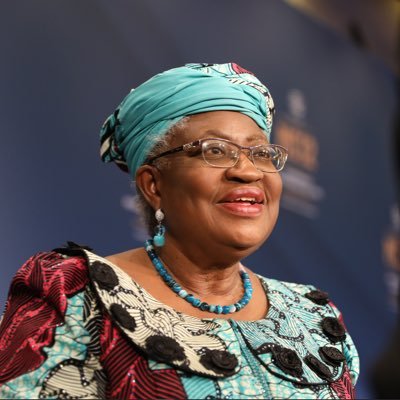
Hugely honored to be named African of the Decade at the 14th edition of the CNBC/Forbes Africa All Africa Business Leaders Award (AABLA). Also gave a special keynote address on "How Africa Can Navigate a Troubled World." Many thanks to Chairman CMA Holdings Rakesh Wahi and the independent panel of judges for this recognition of a decade of work and service to Africa and the world.


K retweeted

Maybe this is the level of embarrassment we need in Benue for it to be better, last time I was back home the whole place looked like a faded throw back image.


K retweeted

Over the past four days, I have been traversing the northeastern part of our country.
Our journey began in Gombe, from where we proceeded to Potiskum and Damaturu in Yobe State, before finally arriving in Maiduguri, Borno State.
I am happy to report that the Obi-Kwankwaso and NDC message of hope is resonating. We sympathised with the people of Yobe and Borno States, in particular, over the insecurity that continues to plague the lives of many.
I also promised that we shall work assiduously to restore the economy of the region by empowering the microeconomic systems of our country.
It is equally heartening to note that my able brother, our presidential candidate of the NDC, His Excellency Peter Obi, has been doing tremendous work in Anambra State and other parts of the country. - RMK


K retweeted
As Chairman of the South-East Governors’ Forum for several years, I also encouraged cooperation among governors and security agencies across the region. We understood that criminal networks did not respect state boundaries; therefore, the response could not be confined to individual states.
Bello specifically acknowledged the contribution of this regional cooperation to the effort to dislodge notorious armed-robbery gangs from the South-East.
A SECURITY MODEL BUILT ON PARTNERSHIP
Our experience taught us that security is not achieved by government acting alone. It requires the cooperation of the police, military, intelligence agencies, paramilitary organisations, community vigilantes, traditional institutions and ordinary citizens.
We therefore promoted a system in which the security agencies were adequately equipped, communities were encouraged to provide useful intelligence, and government remained actively involved in supporting operations.
We also understood that the welfare and morale of security personnel mattered. Officers who were sent on dangerous assignments needed vehicles, fuel, communications equipment, operational allowances and the necessary infrastructure to perform their duties.
Our approach was not to interfere with the professional responsibilities of the security agencies but to give them the support required to discharge those responsibilities effectively. Security was not simply about purchasing equipment; it also involved building trust between the police and the people, encouraging intelligence-sharing, strengthening community participation and ensuring that criminal activities had consequences.
A NEW NIGERIA IS POSSIBLE: CONFRONTING NIGERIA’S SECURITY CRISIS
Today, insecurity is arguably Nigeria’s greatest challenge. From terrorism and banditry to kidnapping, armed robbery and communal violence, Nigerians are increasingly unable to live, travel, farm and conduct their businesses in safety. Communities are attacked, farmers driven from their lands, travellers abducted and innocent citizens killed.
This situation demands more than speeches, promises and occasional military operations. It requires deliberate leadership, adequate investment, effective intelligence-gathering and sustained collaboration among all security agencies.
Our experience in Anambra demonstrated that security challenges can be confronted through proper planning, institutional support and responsible leadership. We equipped the security agencies, strengthened their infrastructure, improved their operational capacity, encouraged community participation and promoted cooperation across state boundaries.
Nigeria needs the same seriousness of purpose. Our security agencies must be properly equipped, motivated and held accountable. Intelligence-gathering must improve, criminal networks and their sponsors must be dismantled, and federal, state and local governments must work together. We must also address the underlying social and economic conditions that make criminal recruitment possible.
We did not claim that every security challenge disappeared during our administration. What we demonstrated was that determined leadership and sustained institutional support could substantially improve the security situation. The testimonies of the Commissioners of Police who served in Anambra, the public assessments of the Inspector-General of Police, together with the investments and interventions documented here, provide evidence that can be independently verified.
Protecting lives and property is not a favour government does for its citizens; it is one of its most fundamental obligations. Nigerians deserve to live without fear and to pursue their livelihoods in safety. Our country can achieve this if we make security a genuine national priority and match our commitments with action.
A New Nigeria is POssible.
In Series 7, we shall look at Poverty Alleviation. -PO
K retweeted
He attributed the improved security situation in subsequent years to the foundations laid during our administration.
Retired Deputy Inspector-General of Police, Philemon Leha, who served as Commissioner of Police from 2009, gave a similar account in an October 2017 interview. He recalled that four banks were attacked within four hours in August 2009, illustrating the severity of the insecurity at the time. Leha stressed that the police could not have restored relative peace without the administration’s support, particularly operational vehicles, fuel, allowances, and other logistics.
On whether the foundations of the security improvements in Anambra were laid during our administration, Leha was categorical:
“There is no denying that fact; that is exactly the position.”
These accounts are significant because they reflect the professional experiences of the officers who were directly responsible for policing the state during that period.
WHAT THE INSPECTOR-GENERAL OF POLICE SAID ABOUT ANAMBRA
Beyond the testimonies of the Commissioners of Police who served in the state, perhaps the most significant independent assessment came from the highest-ranking officer of the Nigeria Police Force.
In January 2013, the then Inspector-General of Police, Mr Mohammed Abubakar, visited Anambra to assess the security situation and inspect the vehicles provided by our administration.
He commended our commitment to security and described Anambra as an example of how other states should support security agencies. He observed that the state had moved from its ugly past to become more peaceful, secure, stable, and safe. He also commended our contribution to repositioning the police, including our membership of the Police Funding Committee.
The IGP disclosed that the police had deployed over 500 additional personnel to Anambra and indicated that more area commands could be established to improve policing. He made a particularly remarkable observation about the support the police received from our administration. Given the nature and extent of that support, he said there was no reason for the police to fail in their responsibility.
His most significant assessment came in April 2014, at the Anambra State Stakeholders’ Summit in Awka.
The same Inspector-General declared that, according to police records, Anambra had remained the safest state in the country for the preceding five years. He specifically announced that there had been no bank robbery in the state during those five years under my administration.
He commended the cordial relationship between the police and the Anambra State Government under my leadership, identifying it as a major contributor to the improved security situation. He also urged my successor to emulate the approach and sustain the security achievements.
These were not my personal assessments or political claims. They were statements made publicly by the Inspector-General of Police, the head of the institution responsible for policing the country. His testimony provides an important independent institutional assessment of what our administration achieved in the security sector.
SECURING THE WATERWAYS AND BUILDING REGIONAL COOPERATION
Our security strategy also extended beyond the conventional land-based operations of the police and military.
We recognised that criminal networks operated across state boundaries and that the waterways of the South-East required particular attention. Traders travelling along the River Niger and surrounding waterways had faced attacks from pirates and armed bandits.
Former Commissioner of Police Amusa Bello specifically recalled an operation that dislodged sea pirates and bandits operating along the Ogbaru and Ogwuikpele waterways towards Delta State.
Our position was that criminals should not be allowed to exploit state boundaries or difficult terrain to escape law enforcement.
K retweeted
The intention was to prevent criminals from continuing to use such properties as operational bases.
'The policy was subsequently enforced through actual demolitions.
On 5 September 2012, I personally supervised the demolition of two buildings belonging to a suspected kidnap kingpin, Olisagbo Ifedike, popularly known as Ofe Akwu, at Ifite-Oraifite in Ekwusigo Local Government Area. The police had arrested the suspect through a joint operation involving the Inspector-General of Police’s special task force and the State Anti-Robbery Squad.
During the operation, security operatives discovered a substantial cache of sophisticated weapons and ammunition concealed in the compound. These included AK-47 rifles, other firearms, rocket launchers, grenades, and thousands of rounds of ammunition. There were also underground structures used to hold kidnapped victims.
On 24 October 2012, I again led the demolition of two buildings belonging to another suspected kidnap and armed-robbery kingpin, Emeka Ezekude, at Uli in Ihiala Local Government Area. Weapons, ammunition, and chains reportedly used to restrain victims were recovered from the premises.
These exercises were intended to dismantle the physical infrastructure supporting kidnapping, deny criminals the opportunity to enjoy the proceeds of their activities, and send a clear message that Anambra would not provide a safe haven for them.
The policy also placed responsibility on traditional rulers, town unions, and community leaders to ensure that their communities were not used as hiding places for criminals. Our approach was that crime must not pay, and that those who invested in criminal enterprises must not be allowed to convert their proceeds into properties and respectable social standing.
THE LIBERATION OF AKPAKA FOREST
One significant operation was the liberation of Akpaka Forest in Onitsha, which had become a hideout for kidnappers and armed robbers.
Former Commissioner of Police Amusa Bello recalled that the area, around 33 Nkwere Ezunaka, had become virtually inaccessible to residents because kidnappers took their victims there. The police, with military support from the 82 Division in Enugu, conducted joint operations to dislodge the criminals. Similar operations were carried out in other notorious locations, including Fegge.
Numerous stolen vehicles were recovered from the forest. During one operation, the SARS sector commander in Onitsha was seriously wounded after stepping on an improvised explosive device. Bello described the forest as comparable to Sambisa Forest in the North-East.
The coordinated operations eventually dislodged the criminals, forcing others to relocate. This demonstrated the importance of cooperation among the police, military, state government, and other security agencies, as well as the need to equip security personnel adequately.
WHAT THE COMMISSIONERS OF POLICE SAID
Perhaps the strongest testimony to our security efforts comes from the senior police officers who served in Anambra during our administration.
In an October 2017 interview, Alhaji Amusa Bello, Commissioner of Police in Anambra from 2006 to 2010, recalled that I personally approached the then Inspector-General of Police, Sunday Ehindero, in 2006 to seek urgent intervention in the state’s worsening security situation. He acknowledged that our administration responded by providing armoured personnel carriers, operational vehicles, communication equipment, police infrastructure, and weekly allowances for officers. He also recalled our support for the fencing and improvement of police facilities.
He further explained that before 2006, there was little cooperation between the state government, the police, and other security agencies. Obi’s emergence, he said, brought about a new relationship involving government, the police, communities, and other security organisations.