

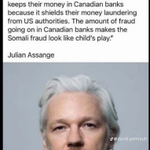
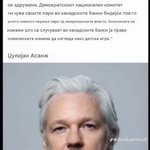

ДАЛИ ОВАА ЌЕ СЕ ОСМЕЛИ ДА ГО НАПРРАВИ НЕКОЈА ВЛАСТ ВО МАКЕДОНИЈА??
-„Чешката Република донесе закон со кој промовирањето на комунистички движења кои се стремат да ги поткопаат основните човекови права е кривично дело, ставајќи ги под истите законски одредби како и нацистичките движења
facebook.com/share/p/1C5i7yG…

Jordan Petrovski retweeted

If Elon's model doesn't win, Gates and Soros do.
That's not a conspiracy theory. It's an org chart.
I wrote about the fork. We can route the superintelligence dividend through intermediaries, or hand it directly from the people who create value to citizens. Here's what happens if we take the wrong branch.
A. Intermediaries need operators.
A public benefit fund doesn't run itself. Neither does a foundation or an agency. Someone sits on the board. Someone writes the criteria. Someone decides which causes are worthy and which populations qualify.
Who already does that job, at global scale, today? The big philanthropic machines: the Gates Foundation, the Open Society Foundations. They have the staff, the NGO networks, and decades of practice deciding how money "for the public good" gets spent. When a new fund worth tens of billions appears, they're the natural operators. Nobody has to plot anything. They get the job by default.
B. We've already seen the preview.
The Gates Foundation has become one of the WHO's biggest funders. Almost all of that money is earmarked, which means it gets spent on what the donor chooses. A study in BMJ Global Health found that this dependence shapes the WHO's priorities. Less than 1% of the foundation's WHO funding went to non-communicable diseases, which cause 74% of deaths worldwide.
That's one unelected foundation shaping the agenda of a global health body for 8 billion people. Now multiply it by the value superintelligence will create.
C. The hyper-hyper-hyper-hyper-hyper-class.
That's the world path one builds. The divide won't be rich versus poor. It will be allocators versus allocated.
A thin layer of foundation boards, fund trustees and their networks will decide where the output of superintelligence goes. One signature will weigh as much as the lives of a thousand citizens, then ten thousand.
And unlike a company, you can't compete with them. You can't fire them or vote them out. They don't sell you anything you can refuse. They decide what you receive.
D. The other world.
Path two removes the seat at the table. When a company hands shares directly to citizens, no board decides who deserves them. There are no criteria and no eligibility rules. There's no one to lobby, no one to capture, no one to bribe.
Wealth isn't allocated. It's owned. And nobody can take away what you own because you voted wrong, posted wrong, or fell out of favor.
E. Fairer, freer, calmer.
Fairer, because everyone gets the same stake, and it grows at the speed of value creation, not at the speed of a committee.
Freer, because there's no coercion. Nobody gets to make your share conditional on your behavior.
Calmer, because chaos comes from fighting over a pot that someone else controls. Remove the pot and you remove the war around it.
Everyone is free to build, to climb, to own more. No coercive capture stands between people and the value they help create.
F. Choose.
Path one gives you a hyper-class of allocators, sincere and unaccountable, managing the rest of humanity.
Path two gives you a civilization of owners.
Elon chose. I'm with him.


Elon Musk has a mantra: "The best part is no part." In engineering, it means the most reliable component is the one you deleted. A part that doesn't exist can't break, can't cost, can't fail.
This weekend, he applied it to human systems. I think we'll look back on it as one of the defining moments of the 21st century.
A. Two announcements, 24 hours apart.
Sunday night, Anthropic announced its Public Benefit Fund. 5% of its shares to start, up to 2% more for every 50% increase in value, at the board's discretion. Roughly 20% of the company committed to "the public good." Who decides where the money goes? Governance details "in the coming months."
Musk replied with one sentence: "I recommend giving the shares directly to the public."
Monday morning, he did it himself. One SpaceX share to every kid in America next year. The first of many.
Same problem. Same moment. Two opposite answers.
B. The fork.
We are at a turning point for humanity. Superintelligence is coming, and it will create more value than anything in history. The question is no longer whether there will be abundance. It's which pipe it flows through.
Path one: keep the old architecture and bolt superintelligence on top. Value is created inside companies, then routed through an intermediary layer: a fund, a foundation, a committee, an agency, the state. That layer decides who deserves what.
Path two: delete the layer. The people who create value hand ownership directly to citizens.
Best part is no part.
C. Every intermediary layer gets captured.
This isn't cynicism. It's the most reliable law in political economy. Any large pool of money with discretionary allocation becomes a target. Whoever controls the committee controls the flow. Whoever controls the flow controls the people who depend on it.
Look at who's already at the table. Anthropic signed a $200 million partnership with the Gates Foundation earlier this year. Nothing sinister about it. That's exactly the point. The people who end up running these structures are always the same profile: billionaire philanthropists, NGO boards, policy experts. Sincere altruists, often. People convinced they know better than you what's good for you.
It starts with good intentions. It always does. Then the money grows, the incentive to capture it grows with it, and the people who were there to serve end up being served.
D. Path one ends in 1984.
Follow the logic to the end. AI does most of the work. Most people's income comes from a fund. The fund has criteria. Criteria require eligibility. Eligibility requires monitoring. Monitoring requires bureaucrats.
Your livelihood now depends on staying in good standing with a committee you never elected and can't fire. Add superintelligence, and that committee sees everything.
Nobody has to want this dystopia. The architecture produces it on its own. Power concentrates where the money passes. Apparatchiks multiply. Every layer takes its cut. And every layer, sooner or later, gets corrupted.
E. Path two creates owners.
When a company gives you a share, nobody decides each month whether you still deserve it. Nobody can take it back because you voted wrong or posted the wrong thing. It's yours. It grows when value is created. And when AI drives the cost of everything toward zero, you're not holding a check a politician forgot to index. You own a piece of the deflation machine.
But the deepest effect is on people. A check makes you a beneficiary. A share makes you an owner. A beneficiary waits, asks, complains. An owner watches, learns, takes responsibility. One builds dependency. The other builds individual responsibility.
Those are two different civilizations.
F. Why the old layer can't be fixed.
The state, the foundation, the public fund: they all rest on one assumption. That between those who create and those who receive, someone must stand in the middle and decide. That made sense in a slow world, where coordination was expensive and information was scarce.
In a world of superintelligence, that layer isn't just slow. It's a bottleneck, a tax, and a single point of capture. You don't optimize it. You delete it.
G. The choice.
Path one: creators, then intermediaries, then citizens. The 20th century running on GPUs. Bureaucrats with infinite intelligence.
Path two: creators, then citizens. Direct. Transparent. Owned.
One leads to a managed population. The other can lead to something close to utopia: billions of people who own the machines that free them.
H. I'm all in.
I'm all in on Elon's approach. Not because it's Elon. Because it's the only design where the failure mode isn't tyranny.
The best part is no part. Including for civilization.


Jordan Petrovski retweeted
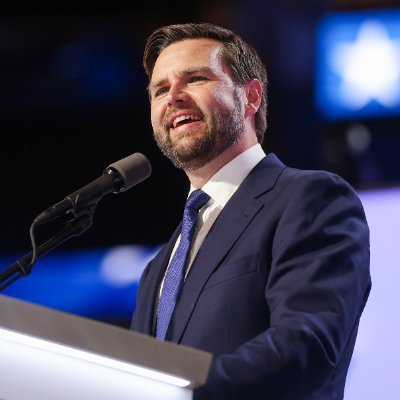
Western liberals imported the third world into France and other countries in the name of diversity and compassion. They ignored fundamental questions of assimilation and compatibility. They were told it would lead to this and they didn't listen.
I pray that France, a beautiful country of amazing people, will stop this madness before more of its landmarks burn.
And I hope Americans are paying attention. This is the future congressional Democrats seek for your country.

Jordan Petrovski retweeted

🚨BREAKING: Local media is reporting that the BIGGEST political rally in history has taken place today in São Paulo in support of right-wing Presidential candidate Flávio Flávio Bolsonaro
The people of Brazil is rejecting leftism in unprecedented numbers! 🇧🇷💥
Bukele is a legend. He’s screwing over the globalist-commie faction of the EU.

J’ai entendu dire que la France était finie, qu’il était trop tard pour la sauver.
Mais la France est toujours aussi belle, enviable même. Sa grandeur n’a pas disparu, elle ne demande qu’à renaître.
Nous avons surmonté en un an un problème cent fois plus grave, sans avoir les moyens dont dispose la France.
La France pourrait y arriver en une semaine.


Jordan Petrovski retweeted

Bueno usted representa la corrupción e injusticia al igual que Lula.
son caimanes del mismo pozo.
España y Brasil rumbo al cambio y su Libertad.

Lula representa un Brasil que lucha contra la injusticia y la desigualdad, que amplía derechos, y que defiende la democracia frente al autoritarismo.
Ese Brasil merece seguir avanzando hacia un futuro de esperanza y progreso.
Por eso, todo nuestro apoyo a @LulaOficial.
Força! 🇧🇷🌹
Jordan Petrovski retweeted

🚨 WOW! Elon Musk just issued two of the largest political donations in HISTORY, and it went STRAIGHT to helping Ken Paxton in Texas
Elon surged $83 MILLION and $75 MILLION in two separate donations to the Senate GOP's fundraising arm, and each exact total went directly to a PAC supporting Paxton 👏🏻
THIS MAN IS A LEGEND 🇺🇸🇺🇸
Yet again something he doesn't have to do, but he's doing anyway!
Jordan Petrovski retweeted
🚨 IT'S OFFICIAL: Elon Musk's X just took down more than 13,000 accounts tied to foreign influence operations from IRAN, RUSSIA, and CHINA that were targeting U.S. politics ahead of the midterms
THANK YOU, X! 🇺🇸
The networks used fake accounts to post and amplify content about U.S. politics, going after candidates
X says its Safety team found them through proactive sweeps and investigations
This is why X is the best platform in history.
Jordan Petrovski retweeted
🚨 JUST IN: Elon Musk announces he might launch a competitor to AMAZON after it blocked Grok Bot from placing any and all orders
"Maybe we should start a competitor to Amazon." 👀
This would be HUGE.
We all know that if Elon decides to compete with Amazon, there would be no holding back. Never bet against Elon 🔥
Jordan Petrovski retweeted

在阿拉斯加零下几十度的冰天雪地里,卡车一旦熄火,司机在荒原上面临的就是活活冻死。
当地有个修了一辈子卡车的技工马克·斯珀洛克(Mark Spurlock)。为了不让车子在极寒中抛锚害死人,他专门改装柴油发动机,确保发动机在极度低温下不会停转,让司机能活着回家。
结果,司法部派出了整整30名荷枪实弹的武装特警,气势汹汹地突击搜查了他的卡车修理厂。联邦检方甚至打算让他坐上很多年大牢。
他的“罪名”,是防冻改装触碰了排放装置,违反了民主党推行的“绿色新骗局”(Green New Scam)环保法规。
华盛顿的官僚坐在恒温办公室里精算减排指标,而阿拉斯加的司机只能靠发动机在暴风雪里保命。对这套官僚体制来说,司机会不会冻死无关紧要,法案上的教条容不得半点变通。对付跨国犯罪未必见得到这种阵仗,但动了联邦的环保教条,一个修车匠就能招来三十名全副武装的特警。
在阿拉斯加瓦西拉的集会现场,川普当面把这位修车工叫上了讲台。
他为斯珀洛克签发了完全且无条件的总统特赦。
Превод на Македонски. За Мицкоски не треба превод но му треба да го прочита и да почне да постапува според напишаното:
-„Како вашата земја ќе пропаѓа кога ќе изберете социјалисти.
Водич чекор-по-чекор.
Но, прво погледнете на север – а потоа и преку океанот.
Замислете млад пар во Торонто. Имаат две добри работни места, но немаат никаква надеж дека некогаш ќе купат дом. Кога на жената ѝ е потребна операција, чекаат – со месеци. Во 2022 година, една ветеранка и параолимписка спортистка му кажа на канадскиот парламент дека, кога побарала од владата рампа за инвалидска количка, службеникот наместо тоа ѝ понудил потпомогнато самоубиство. Кога камионџиите протестираа, владата им ги замрзна банкарските сметки – потег што судот подоцна го оцени како неразумен. Канада сакаше да биде Америка, но со подобри манири. Стана посиромашен и потажен братучед на Америка.
Сега замислете пекар во Лион. Станува во четири часот за да пече леб, а петоците ги поминува пополнувајќи формулари напишани на јазик што го разбира само администрацијата. Секоја година – ново правило, нов данок, нова инспекција. Неговиот син, кој е инженер, замина за Лондон. Половина од она што го произведува земјата поминува низ државниот апарат, а пекарот не може да се сети кога последен пат добил нешто за возврат. Дури ни безбедност – излогот на неговата продавница беше искршен минатата недела, а ќерка му повеќе не излегува надвор по 18 часот.
Таму води тој пат. Еве како се стигнува дотаму – запознајте ги Милерови. Тие не постојат, но вие ги познавате. “
Чекор 1 – Добрина. Кандидатот ветува бесплатна грижа за деца, замрзнати кирии, бесплатен јавен превоз. Г-ѓа Милер гласа за него. Кој би гласал против добрината?
Чекор 2 – Лицата. Погледнете кој се назначува на функции. Младата, фотогенична портпаролка, избрана бидејќи изгледа добро на предизборната фотографија – различност на лицата, но еднообразност на размислувањето. Добродушниот старец кој толку многу се грижи за вашите добра, што наскоро ви остануваат многу малку од нив... А зад нив, луѓето што всушност одлучуваат: комитетот – назначен, а никогаш избран – полн со активисти, од кои секој е убеден дека знае како треба да живеат Милерови.
Чекор 3 – Сметката. Првично, требаше да платат богатите. Сопственикот на фабриката се пресели во Тексас, носејќи со себе двесте работни места. Потоа се зголеми данокот на имот. Потоа градот се задолжи – а внуците на семејството Милер го наследија долгот уште пред да се родат.
Чекор 4 – Правилата. Нивниот син сакаше да изгради мала куќа на семејниот плац. По две години чекање на дозволи, проверки и плаќање такси, тој се откажа и се отсели. Во меѓувреме, сопственикот на имотот, соочен со замрзнати кирии, престана да поправа што било, а никој не градеше нови станови – и зошто би граделе? Домовите исчезнаа.
Чекор 5 – Државната продавница за храна. За да се бори против „алчните супермаркети“, градот отвори своја продавница. Таа не може да банкротира, па нема причина да нуди стока што луѓето ја сакаат. Нејзините субвенционирани цени го уништија бизнисот на семејниот трговец. Потоа, полиците почнаа да се празнат. Полска имаше такви продавници четириесет години. На крајот, на полиците имаше главно само оцет.
Чекор 6 – Безредие. Аптеката на главната улица ги стави пастите за заби зад стакло. Потоа се затвори. Кражбите во продавници под одреден износ престанаа да се гонат, па престанаа да се казнуваат, а со тоа престанаа да бидат реткост. Чесните купувачи ги плаќаа трошоците за крадците – а потоа ја изгубија продавницата.
Чекор 7 – Говорот. Нивната ќерка на факултет научи кои зборови можат да доведат до пријавување. Г-дин Милер објави шега и го изгуби својот профил. Никој не беше уапсен. Немаше ни потреба од тоа.
Чекор 8 – „Волчјата карта“. Потоа, г-дин Милер се јави за збор на состанок на училишниот одбор. Една недела подоцна, некој му се јави на неговиот работодавач. Потоа, неговата банка му ја затвори сметката – поради „ризик по угледот“. Во времето на комунизмот, во Полска тоа го нарекуваа „волчја карта“: нема работа, нема место на универзитет, нема иднина. Никој не оди во затвор. Едноставно, не можеш да живееш.
Чекор 9 – Зависност. Се повеќе соседи сега живеат од државни програми. За време на изборите, кандидатот ветува дека ќе ги „заштити вашите бенефиции“. Никој не гласа против сопствената исплата. Системот сам си создаде гласачи.
Чекор 10 – Срамот и празната лулка. Училиштето ги учеше внуците на семејството Милер дека нивната земја е место на злосторство од кое треба да се срамат. Нивниот син, живеејќи во изнајмен стан и без изгледи за сопствена куќа, одлучи дека едно дете е доволно. Неговата ќерка, кога порасна, одлучи да нема ниедно. Семејството престана да постои – на негово место дојде друга цивилизација.
И сето тоа се случува зад димна завеса. Секоја недела – нов скандал, нов непријател, нова криза. Конфликт и хаос – поттикнувани и негувани. Поделете ги луѓето според раса, пол или класа, и тие никогаш нема да се обединат против законот. Вестите секогаш се фокусираат на битката, а никогаш на сметката што треба да се плати. „Никогаш не треба да се дозволи сериозната криза да оди залудно“, изјави еднаш шефот на кабинетот на Белата куќа. И навистина, тие никогаш не ја пропуштаат таа можност. Додека вие гледате во пожарот, машината расте: уште една агенција, уште едно правило, уште еден комитет.
Во оваа приказна никој не мора да биде негативец, барем не теоретски... Семејството Милер се добри луѓе. Секој чекор изгледаше како напредок. Секој чекор делуваше добронамерно, праведно или безбедно.
Така скапува една земја: не преку револуција, туку преку низа навидум добри политики – при што секоја од нив ја испорачува сметката на некој што не е присутен во просторијата.“

How Your Country Will Rot When You Elect Socialists.
A step-by-step guide. But first, look north – and then across the ocean.
Picture a young couple in Toronto. Two good jobs, no hope of ever buying a home. When she needs surgery, they wait – months. In 2022, a veteran and Paralympic athlete told Canada’s parliament that when she asked the government for a wheelchair ramp, a caseworker offered her assisted dying instead. When truckers protested, the government froze their bank accounts – a court later called that unreasonable. Canada wanted to be America with better manners. It became America’s poorer, sadder cousin.
Now picture a baker in Lyon. He gets up at four to bake, and spends his Fridays filling in forms written in a language only the administration speaks. Every year a new rule, a new tax, a new inspection. His son, an engineer, left for London. Half of what the country produces passes through the state, and the baker can’t remember the last time it gave anything back. Not even security – his shop window was smashed last week and his daughter doesn’t go out after 6 PM anymore.
That is where the road leads. Here is how you get there – meet the Millers. They don’t exist, but you know them.
Step 1 – Kindness. The candidate promises free childcare, frozen rents, free buses. Mrs. Miller votes for him. Who votes against kindness?
Step 2 – The faces. Look at who gets appointed. The young, photogenic spokeswoman, chosen because she looks good in the campaign photo – diversity of faces, uniformity of thought. The kindly old man who worries so much about your goods that soon you have few of them left... And behind them, the people who actually decide: the committee – appointed, never elected – filled with activists, each one certain he knows how the Millers should live.
Step 3 – The bill. First, the rich were supposed to pay. The factory owner moved to Texas, taking two hundred jobs with him. Then the property tax went up. Then the city borrowed – and the Millers’ grandchildren inherited the debt before they were born.
Step 4 – The rules. Their son wanted to build a small house on the family lot. Two years of permits, reviews and fees later, he gave up and moved away. Meanwhile, the landlord with frozen rents stopped fixing anything, and nobody built new apartments – why would they? Homes disappeared.
Step 5 – The state grocery store. To fight "greedy supermarkets," the city opened its own. It can’t go bankrupt, so it has no reason to stock what you want. Its subsidized prices drove the family grocer out of business. Then the shelves began to empty. Poland had these stores for forty years. In the end, the shelves held mostly vinegar only.
Step 6 – Disorder. The pharmacy on Main Street put the toothpaste behind glass. Then it closed. Shoplifting under a certain amount had stopped being prosecuted, so it stopped being punished, so it stopped being rare. The honest customers paid for the thieves – and then lost the shop.
Step 7 – Speech. Their daughter learned at college which words get you reported. Mr. Miller posted a joke and lost his account. Nobody was arrested. Nobody needed to be.
Step 8 – The wolf ticket. Then Mr. Miller spoke up at a school board meeting. A week later, someone called his employer. Then his bank closed his account – "reputational risk." Under communism, Poland called it the wolf ticket: no job, no university place, no future. Nobody goes to prison. You just can’t live.
Step 9 – Dependency. More neighbors now live on a program. At election time, the candidate promises to "protect your benefits." Nobody votes against their own check. The machine has built its own voters.
Step 10 – Shame, and the empty cradle. The school taught the Miller grandchildren that their country was a crime scene to be ashamed of. Their son, in a rented apartment with no house in sight, decided one child was enough. His daughter, grown up, decided none was.
The family ceased to exist – another civilization took their place.
And all of it happens behind a smokescreen. Every week a new outrage, a new enemy, a new crisis. Conflict and chaos – nurtured, encouraged. Divide people by race, by sex, by class, and they will never unite against the bill. The news is always about the battle, never about the budget. "You never want a serious crisis to go to waste," a White House chief of staff once said. They never do. While you watch the fire, the machine grows: one more agency, one more rule, one more committee.
Nobody in this story needs to be a villain, at least theoretically… The Millers are good people. Every step felt like progress. Every step looked kind, or fair, or safe.
That is how a country rots: not in a revolution, but one kind policy at a time – each one sending its bill to someone who isn’t in the room.
Look north. Look at France. You still have the choice.

Jordan Petrovski retweeted

Elon Musk was asked at a private dinner what he would do if SpaceX and Tesla both failed simultaneously and he lost every dollar. The question was intended as a hypothetical ice breaker. His answer lasted 8 minutes and the table went silent.
He said he would move into the cheapest apartment he could find, buy a computer, and start building the next thing within 24 hours. Not in a week. Not after processing the loss. Within 24 hours. He said the loss of the money would not bother him. The loss of the companies would devastate him. But the devastation would last one night. The building would start the next morning.
Someone at the table asked what the "next thing" would be. He said he didn't know and that the not knowing wouldn't slow him down. "The thing finds you. You just have to be building when it arrives."
The answer reveals something about his relationship with money that most people misunderstand. Money is not the goal. Money is not even the scorecard. Money is the fuel that lets the machine run. Losing the fuel is a logistics problem. Losing the machine is a psychological one. He can survive the logistics problem overnight. The psychological recovery takes a morning.
This is the same man who put his last $35 million into SpaceX when both companies were failing. He did not diversify. He did not hedge. He put every remaining dollar into the thing he was building because the alternative, having money but no machine, was worse to him than having no money and a machine that might work.
The table at the dinner expected him to say something about resilience or growth mindset. Instead they got a man who described total financial destruction with the same emotional weight that most people describe losing a parking spot. The money is replaceable. The morning is for building. The building doesn't wait for recovery. Recovery IS building.
"The thing finds you. You just have to be building when it arrives." The richest man alive doesn't fear losing everything. He fears stopping.
Jordan Petrovski retweeted
Récemment, j'ai dîné avec quelqu'un de très, très influent en Europe. Le genre de personne qui a tout réussi, qui a bâti des choses immenses, et qu'on écoute en silence quand elle prend la parole. Au milieu du repas, il pose son verre, me regarde et me demande : « Toi qui es un entrepreneur tech, comment tu en es venu à parler de French Theory ? »
La question était sincère. Et elle mérite une vraie réponse. La voici.
Ça fait plus de 20 ans que je construis. J'ai écrit mes premières lignes de code à 12 ans. À 15, j'avais monté un jeu joué par des dizaines de milliers de personnes. J'ai bossé dans plein de domaines, la recherche, le gaming, les systèmes de recommandation. J'ai vécu dans la Silicon Valley. Aujourd'hui, je dirige une entreprise d'IA. Toute ma vie, mon métier a consisté à faire une seule chose : comprendre comment fonctionnent les systèmes, et surtout pourquoi ils cassent.
En parallèle de ce chemin d'entrepreneur, j'ai passé des années à étudier un homme : Elon Musk. Pour moi, c'est l'entrepreneur le plus génial de tous les temps. Et j'ai une conviction simple : quand on considère que quelqu'un est un génie, on a le devoir de le comprendre. Pas pour le copier, ce serait absurde. Mais pour comprendre comment il pense, comment il décide, comment il voit le monde. Pour s'en inspirer.
Et ce qu'on découvre en étudiant Elon, c'est une méthode. Le raisonnement par principes premiers. On ne raisonne pas par analogie, en se demandant ce que font les autres. On décompose un problème jusqu'à ses vérités fondamentales, et on reconstruit à partir de là. C'est comme ça qu'il a regardé le prix d'une fusée et s'est demandé combien coûtaient réellement l'aluminium, le titane, le carbone. C'est comme ça qu'il a divisé le coût d'accès à l'espace. C'est comme ça qu'il a forcé toute l'industrie automobile mondiale à passer à l'électrique.
Cette méthode, je l'ai faite mienne. Et vers 2018-2019, j'ai commencé à l'appliquer à autre chose que la tech. La philosophie. L'histoire. Les humanités. Et surtout, l'économie.
Quand on s'intéresse sérieusement à l'économie, on finit par tomber sur ceux qui ont le mieux compris la nature humaine et la nature des marchés : l'école autrichienne, avec Mises et Hayek, et l'école de Chicago, avec Milton Friedman. Et un jour, je lis La Route de la servitude.
Ce livre m'a pété le crâne.
Hayek l'écrit en 1944, en pleine guerre. Il démontre, avec une précision presque prophétique, que la planification économique mène mécaniquement à la perte des libertés. Que lorsqu'un État prétend organiser la vie économique d'un peuple, il finit toujours par devoir organiser sa vie tout court. Que les pires arrivent au sommet, non pas par accident, mais parce que le système les sélectionne.
J'ai refermé ce livre avec une seule question en tête : mais qu'est-ce que c'est que ce bordel ? On sait tout ça depuis 80 ans. C'est écrit, c'est démontré, l'histoire du XXe siècle l'a confirmé dans le sang. Alors pourquoi est-ce qu'on continue de reproduire exactement les mêmes schémas ?
C'est là que tout a commencé. Parce qu'une fois qu'on voit l'asymétrie entre ce qu'on sait qui fonctionne et ce qu'on continue obstinément de faire, on n'a plus le choix. On doit trouver la cause racine. C'est exactement ce qu'un ingénieur fait face à un bug.
Prenons le keynésianisme. On l'applique depuis des décennies. Dépense publique, relance, dette, encore de la dette. Et on connaît les résultats : inflation, stagnation, dette abyssale, croissance molle. Pourquoi persister ? Parce que le keynésianisme n'est pas seulement une théorie économique. C'est la justification intellectuelle parfaite d'un État qui grossit sans fin. Il donne aux gouvernants une raison scientifique de dépenser, d'intervenir, de contrôler. Et l'étatisme, poussé jusqu'au bout de sa logique, porte un nom que l'on connaît tous.
Alors on remonte encore. Et on arrive à la période qui va de la fin de la Seconde Guerre mondiale jusqu'aux années 70. C'est là que se joue la vraie bataille du siècle. Pas sur un champ de bataille. Pas dans les urnes. Dans les esprits.
Antonio Gramsci l'avait théorisé depuis sa cellule dans les années 30 : pour prendre le pouvoir durablement en Occident, la révolution par les armes ne marchera pas. Il faut conquérir l'hégémonie culturelle. Prendre l'université, l'école, la presse, l'édition, la justice, la culture. Changer ce que les gens considèrent comme normal, comme moral, comme pensable. Et une fois que vous tenez la culture, la politique suit.
La gauche a exécuté ce plan à la perfection.
En France, Mai 68 en est le moment fondateur. Puis vient une génération de penseurs brillants et décadents : Foucault, Derrida, Deleuze, Guattari, Lyotard. Leur projet est de tout déconstruire. La vérité devient une construction sociale. La raison, un instrument de domination. La nation, la famille, le mérite, la beauté, l'Occident lui-même : autant de structures d'oppression à démanteler.
Ces idées traversent l'Atlantique dans les années 70 et 80. Elles s'installent dans les départements de lettres et de sciences sociales des grandes universités américaines, où on leur donne un nom : la French Theory. Elles y mutent, se combinent, se radicalisent. Et elles reviennent cinquante ans plus tard, sous une forme nouvelle, dans les entreprises, les médias, les administrations, les écoles du monde entier. On appelle ça le wokisme.
Le résultat, on le voit partout. Vous pouvez élire la droite, rien ne change vraiment. En France, Chirac, Sarkozy. Aux États-Unis, Trump lors de son premier mandat. Parce que le pouvoir réel n'est plus seulement dans l'exécutif. Il est dans les institutions, et les institutions sont capturées. Les gouvernements passent, l'administration reste. Les présidents changent, la culture ne bouge pas.
C'est pour ça que tout candidat qui sort du cadre est immédiatement diabolisé. Milei ? Extrême droite. Trump ? Ostracisé, poursuivi, banni des réseaux. Elon ? Traité de nazi. Ce n'est pas un débat d'idées. C'est un système immunitaire qui rejette tout corps étranger.
Et c'est ici que les deux chemins de ma vie se sont rejoints.
Parce qu'en étudiant Elon, on tombe forcément sur son combat contre ce qu'il appelle le « woke mind virus ». Pendant longtemps, beaucoup ont pris ça pour une lubie, une provocation de plus. C'est une erreur. Elon a appliqué à la civilisation la même méthode qu'à ses fusées. Il a regardé le système, il a cherché la cause racine, et il a conclu qu'une idéologie qui nie la réalité, qui attaque la liberté d'expression et qui empêche de nommer les problèmes est une menace existentielle pour l'Occident. Peut-être la plus grave de toutes.
Quand il rachète Twitter en 2022 pour 44 milliards de dollars, tout le monde parle d'un caprice de milliardaire. Moi, j'y vois l'acte le plus stratégique de sa carrière. Twitter était l'une des places publiques du monde, et elle était tenue par ceux-là mêmes qui avaient capturé toutes les autres. En la rachetant, il a repris l'une des rares institutions qu'on pouvait encore reprendre. Il a rendu la parole à ceux qu'on faisait taire. Les Twitter Files ont montré au grand jour ce que beaucoup soupçonnaient. Et sans X, une grande partie de ce qui bascule aujourd'hui dans le monde n'aurait tout simplement pas été possible.
Voilà pourquoi j'en parle. Voilà pourquoi je soutiens Elon dans ce combat. Pas par admiration aveugle. Parce que j'ai fait le chemin moi-même, avec la même méthode, et que je suis arrivé exactement au même endroit.
Et quand on fait ce chemin jusqu'au bout, on découvre que presque tout est connecté. La dérive technocratique du projet européen, où des institutions que personne n'a élues décident pour 450 millions de personnes. Davos et son fameux « vous ne posséderez rien et vous serez heureux ». Une immigration de masse décidée sans jamais demander l'avis des peuples, et devenue un outil idéologique plutôt qu'une politique pensée. La dette qui explose. L'école qui s'effondre. La parole qui se ferme. Ce ne sont pas des sujets séparés. Ce sont les branches d'un même arbre.
Les racines, elles, ont un nom. Et une adresse : Paris, années 60-70.
Mais je ne suis pas pessimiste. Bien au contraire.
Parce que le socialisme international est en train de mourir, partout. Regardez l'Argentine : Milei a fait en deux ans ce que tous les experts disaient impossible. Regardez l'Amérique du Sud basculer, un pays après l'autre. Regardez les États-Unis aujourd'hui. Regardez les peuples européens qui, élection après élection, refusent ce qu'on leur impose. Le cycle ouvert il y a soixante ans est en train de se refermer.
Je crois sincèrement qu'on vit la fin d'un monde. Et que ce qui vient, c'est une renaissance.
Alors, pour répondre à la question de ce dîner : comment un entrepreneur tech en vient à parler de French Theory ?
Je n'ai rien fait d'extraordinaire. J'ai juste fait ce que je fais depuis 20 ans. J'ai observé un système qui dysfonctionne, j'ai remonté la chaîne des causes jusqu'à la racine, et j'ai connecté les points.
Les idées ont des conséquences. Il est temps de s'en souvenir.
Jordan Petrovski retweeted

HOLY CRAP 😵 President TRUMP officially withdraws from the Paris Climate Accords, saving over $1 TRILLION dollars 😵 the UN, WEF, WHO must be panicking
FOLLOW ME, THE NEXT DROP WILL BE SHOCKING.
Jordan Petrovski retweeted

It is not necessary to be a reactionary to dissent from the conventional wisdom that a Democratic wave will sweep the midterms. In the fury and venom of Trump-hate, which has been, along with truly absurd Islamo-Marxist nostrums, the only discernible offering of the Democratic Party for the last two years, strategists may imagine that descent into political total war is an attractive option to the American electorate. It isn’t.
Polling is unreliable and left-leaning; Trump’s low approval rating is likely underestimated and remains ~15 points above the approval rating of the Congressional Democrats. Republicans have a large financial advantage which will presumably be applied as the election proceeds, to tout the remarkable record of achievement of the Trump administration. Trump accounts, lower crime, massive reductions in illegal immigration and deportations, lower prescription prices, high economic growth, deregulation, escape from the climate-change obsession, and the assault on wokeness, DEI, and the intellectual corruption of universities and unionized schools, which more accurately resemble daycare centers where young people are taught to hate America.
The more the country sees the field of Islamo-Marxist lunatics candidates who have been herded in from the fringe and now comprise the back-bone of the Democratic mainstream, the more appealing Trump becomes. After ten years the country is somewhat tiring of Trump, but he does pierce the pomposity of the political class.
The question Americans will have to ask is whether temporarily elevated gasoline prices are an acceptable cost to keep nuclear weapons out of the hands of the Iranian terrorist theocracy. While Democrats continue to attempt to paint Iran as another Vietnam, Trump has rendered the Iranian currency worthless, driven inflation sky-high, forced gasoline rationing, and pushed the regime near bankruptcy. This is the most one-sided war in history between serious combatants—total U.S. combat-related deaths through this entire conflict have been no more than a bad weekend in Chicago.
Trump’s record of achievement is eminently defensible and should weigh more heavily than the vagaries of his personality.

From @ConradMBlack: It is not necessary to be a reactionary or a rabid partisan to dissent from the conventional wisdom that a Democratic wave will sweep the midterm elections
Read more ⬇️
nysun.com/article/democrats-…
