
Retail Consultant- working with you to maximise sales and profit when trading with the UK multiples.
London
Joined November 2010
- Tweets414
- Following211
- Followers125
- Likes5.9K




Gershon Odze retweeted

As we have been doing for many years, we will pause before the Kol Ha'Nearim aliyah, a painful time for many waiting to have children, to recite a special prayer.
To submit names for me to confidentially have in mind, please use this form: tinyurl.com/tefillachildren
May we hear and share only good news and simchas!

Gershon Odze retweeted

A story about how a sage behaves:
When I was in rabbinical school, I asked the Talmud scholar David Weiss Halivni — teaching at Columbia as the first named professor of Talmud in the country — whether I might sit in on his PhD seminar. “If you can keep up,” he said.
For the next year, however much I struggled, I had one of the great learning experiences of my life.
Several years later, after we had not spoken for some time, I heard he was moving to Israel. While in New York, I stopped by his office unannounced. As always, he was standing at a lectern, writing. He looked up and recognized me immediately — his memory was nearly eidetic.
“Why haven’t you been in touch?” he asked.
I was startled that he would even care. “Well, Professor,” I said, “I assumed you were busy.”
“I am,” he replied, “but this is part of the busyness.”
He then kept me there for nearly an hour, asking about my life with complete attention.
I learned a great deal in his seminar. But I learned even more in that single hour.
Gershon Odze retweeted

To the Nakba glorifiers:
The Nakba was the result of the Arab rejection of the UN Partition Plan & decision to launch war to annihilate the State of Israel.
You can't start war, openly vow to “throw the Jews into the sea,” and then pretend being the victim of the conflict you started.
The real forgotten victims are the 850,000 Jewish refugees expelled from Arab countries at the same time.

Gershon Odze retweeted

😂 This “Nakba Survivor” is literally a “European settler”
In the late 19th century, Muslim Bosnians (including Inea’s grandparents), fled Bosnia to Ottoman Syria, after Austria-Hungary took control of Bosnia.
They feared that now, the Christians will seek revenge after years of mistreatment.
Inea’s father’s family lived in Tulkaram, but he himself lived in Jerusalem where Inea was born.
In the 1930’s, Inea’s father had a Job in England, he returned to Mandatory Palestine after a few years, but in 1948 they decided to move back to England.
They were not expelled, and no one forced them to move to England. As a matter of fact, Tulkaram, and the old city of Jerusalem remained under Jordanian Arab control. Not a single Zionist to bee seen there.
So in summary, this is a European with no strong roots in the land of Israel, whose family made the decision to immigrate back to the continent of their grandparents instead of remaining under Arab control.
(And the “visit Palestine” poster on her wall is a Zionist poster by Franz Kraus to encourage Zionist tourism to the holy land. It’s not even the original poster, but a replica of the poster, with an additional Hebrew description mentioning his name 🤦♂️)


Today marks Nakba Day, an annual day of remembrance to commemorate the expulsion of more than 700,000 Palestinians between 1947 and 1949 during the creation of the State of Israel and the year that followed.
Inea is a New Yorker and a Nakba survivor. She shared her story with us — one of home, tradition and memory over generations.
Gershon Odze retweeted

This is a devious rhetorical trick. Labeling someone a “Nakba survivor” is designed to evoke instant sympathy and a false sense of moral clarity, but it is little more than taxpayer-funded propaganda.
Consider the absurdity: roughly 99% of Palestinian Arabs alive in 1949 survived the war and its displacements. Calling the displaced a “survivor” stretches the word beyond recognition. It is a newly coined term, crafted in academia and activist circles long after the events.
Its real genius lies in creating false equivalence. It places ordinary Palestinian civilians who were displaced amid a war their own leaders launched on the same moral plane as Holocaust survivors (of whom only about one-third emerged alive).
It airbrushes away the ~6,000 Jews killed in 1948, elevates the ~12,000 Arab deaths, and erases the thousands of Jews forcibly expelled from the Old City of Jerusalem and other areas.
By anointing the displaced as sacred “survivors,” the term invites us to forget that the Nazi-aligned Palestinian leadership rejected the UN partition plan, chose war to prevent any Jewish state, and promised quick victory while urging Arabs to flee.
It glosses over Israel’s Declaration of Independence, which explicitly invited Arab inhabitants to “participate in the upbuilding of the State on the basis of full and equal citizenship.” And it conveniently overlooks the ~150,000 Arabs who stayed put, accepted Israeli citizenship, and whose descendants now form over 20% of Israel’s population.
This is international grievance politics pushed by the Mayor of New York City, who genuinely believes that Palestinians should be able to “return to their homes” – a nonsensical idea designed to justify perpetual victimhood and violence.
The move weaponizes real civilian hardship while inverting roles: turning a war of choice and rejectionism into an unprovoked “catastrophe” inflicted by the intended victims. It sustain grievance and does not nothing to advance peace.
Today marks Nakba Day, an annual day of remembrance to commemorate the expulsion of more than 700,000 Palestinians between 1947 and 1949 during the creation of the State of Israel and the year that followed.
Inea is a New Yorker and a Nakba survivor. She shared her story with us — one of home, tradition and memory over generations.
Gershon Odze retweeted

🔴 BREAKING 🔴
Suspect being treated by Hatzola Jewish paramedics, and yet he tried to cut the throats of two Jewish people just outside my front door.

Gershon Odze retweeted

I used to volunteer for St John Ambulance, a charity with its own fleet of vehicles providing volunteer first aid services across the country.
It traces its origins back to an 11th-century hospital established in Jerusalem to care for sick and injured pilgrims.
If their fleet had been attacked I do not think we would have the same number of people asking about the premise of the organisation rather than condemning the action itself.
Gershon Odze retweeted

Four ambulances destroyed. Hatzalah is a lifeline for so many, Jew and non-Jew alike. I know that personally. Just a few months ago, Hatzalah were there for my newborn granddaughter, within minutes, calm, skilled, saving her life. That’s who they are. Everyday heroes.
If you can justify attacking an ambulance because Jews might use it, you have crossed the line from politics and so-called context, into pure hatred.
The government stepping up to fund new ambulances is welcome and commendable. But it's reactionary. This needs to stop now!
Too much has been allowed to fester for too long. Too much emboldening of those who think this is acceptable.
We don’t just need funding. We need leadership. When ambulances are attacked it is not just Jews under threat - it's the moral fabric of our society. If that isn't confronted now, we will all pay the price.
@LBC @itvnews @JewishChron @TheJewishWeekly @BBCBreaking @DailyMail @GBNEWS

Gershon Odze retweeted

Just did a Bar Mitzvah (wrapped tefillin for the first time) with a pro-Palestinian Jewish protester.
Walking out of the annual ADL conference today, I saw a group of protesters. Instead of shouting back, I said to my friend, “Let’s have a conversation.” We started talking with Isaac. When he said a few Yiddish words, I asked if he was Jewish. He said both his parents are.
I said, “Let’s wrap tefillin.” He agreed.
As we wrapped, some fellow protesters started yelling vile insults at us. Isaac defended us and said: “This has nothing to do with politics. This is religion and a connection to God. I’m a Jew and I’ll always be a Jew.”
Afterward, he even encouraged another Jewish protester to wrap.
A powerful reminder: sometimes Judaism can unite where politics divides. I wish there were more Isaacs in the world.

Gershon Odze retweeted

Hamas just announced it will hand out 9.6 million shekels (over $3 million) to the widows of 19,306 martyrs from the war. That’s an official admission that at least 19,306 Hamas operatives were killed.
But that’s only the married ones. Plenty of fighters are single, so the real combatant death toll is even higher (experts estimate ~30,000+ including Islamic Jihad).
Yet Hamas’s Ministry of Health still claims 72,037 total Palestinian deaths — a number the entire world media and UN keep quoting as gospel.
What they “forget” to subtract: Their own people they murdered (collaborators and opponents of Hamas); Gazans killed by their own misfired rockets (10-12% of launches); and natural deaths (over 6,500 per year from old age/illness).
When you do the basic math, even if we accept Hamas's dubious death total, Hamas accidentally revealed that the combatant-to-civilian fatality ratio collapses to somewhere between 1:1 and 1:2. In other words: One of the lowest ratios in modern urban warfare history. Hamas literally exposed its own lie — but the world is still running with the inflated propaganda.

Gershon Odze retweeted
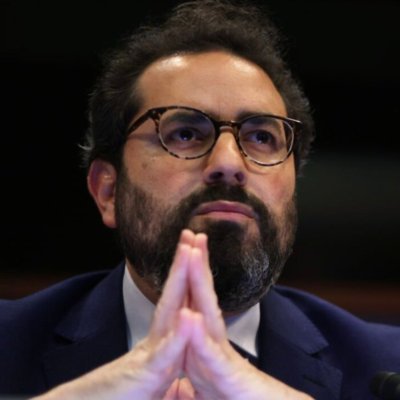
Thank you, @piersmorgan, for your principled voice.
xitter.cf/piersmorgan/status/728…
xitter.cf/piersmorgan/status/130…
xitter.cf/piersmorgan/status/110…


Very emotional message from the first Muslim to play for the @AllBlacks. 🙏 #christchurch
Gershon Odze retweeted

Don't be grateful because life is good, the reason life is good is because you're grateful!

Gershon Odze retweeted
People who doubt your vision, doubt it because YOUR vision.
They are not meant to understand it...
The opposite is true; if they do understand your vision, then it's not Divine enough to be yours!
Gershon Odze retweeted

New @HJS_Org paper coming soon, but I think I’ve found the most misunderstood aspect of the Gaza war.
Most of the damage you see to buildings happened during ground manoeuvres, not from airstrikes.
Correct me if I’m wrong, but I genuinely don’t think most people realise that.
Gershon Odze retweeted

People in greenhouses (or Greenland) shouldn’t throw stones. Last year the Danish government strongly criticised Israel for its defensive war in Gaza. The PM said the level of violence was “unacceptable”. Denmark used its presidency of the EU at the end of 2025 to advocate for stronger pressure on Israel but failed due to opposition by Germany, Hungary and others.
Israel was lawfully defending its people against jihadist aggression. But around the same time that the Danish PM was trying to “punish” Israel she also was forced to apologise for the Danish government sterilising half of Greenland’s Inuit population of fertile females without their knowledge or consent from the 1960s to 1990s. The purpose was to limit the size of the indigenous population.
The word “genocide” is often falsely and obscenely used to attack Israel, including by some Danish politicians, but Denmark’s actions in Greenland come clearly within the definition of genocide. Where is the outrage? Where is the ICJ? Where is South Africa?

Gershon Odze retweeted

Holy Smokes!!
A Hasidic Jew just OBLITERATED @tyleraloevera with unrelenting truth.
“The Jews in America built the hospitals. They built the economy. They do not even use public schools… We save the government trillions.”
Gershon Odze retweeted

Let me tell you a little bit about Kiryas Joel.
Kiryas Joel was founded in the mid-1970s by Rabbi Joel Teitelbaum, the Satmar Rebbe, as an intentional act of preservation and responsibility. Post-war NYC had become loud, immodest, and chaotic, and he believed that a serious Torah-centered life, especially one focused on raising large families, couldn’t realistically survive there long term. Instead of protesting culture or demanding the city change, the community chose separation and self-governance. They bought land in Orange County and built an entire town from the ground up around shared values.
Homes, schools, shuls, mikvaos, and social institutions were all planned with families in mind. Everything was built within walking distance and oriented around community life.
Today, Kiryas Joel is one of the fastest-growing municipalities in NY. The population is overwhelmingly young. Families are large. Streets are full of children. And there’s essentially no crime. Not low crime. No meaningful crime. No violent crime. No gangs. No carjackings. No muggings. Break-ins are extremely rare. Police presence is minimal because it’s basically unnecessary. Social accountability, shared norms, and strong family structures do what policing often fails to do elsewhere.
Children walk alone. Elderly residents move freely. Parents don’t live in fear. It isn’t enforced by surveillance or force, but by culture.
What truly sets Kiryas Joel apart, though, isn’t just safety. It’s moral infrastructure.
The community is widely known in the Jewish world for adopting children with Down syndrome. The rate of adoption is extraordinary. Families routinely step forward to take in these unfortunate and special children that others might refuse. These children come not only from Satmar families but from Jewish communities across the country. They aren’t hidden. They attend family events. They’re part of daily life. They’re treated with dignity and patience, not pity. In a world that endlessly lectures about inclusion, Kiryas Joel practices it quietly and consistently.
The chesed network is massive and deeply embedded.
Hatzalah operates entirely on a volunteer basis and is completely free. EMTs respond within minutes. No insurance discussions. No billing. No forms mailed later. Lives are saved because that’s the obligation, not because there’s profit involved.
Sha’arei Chemla and Hamaspik are homes and schools for special-needs children, giving them structure, safety, education, and dignity. These aren’t institutions that warehouse people. They’re carefully run environments focused on care, development, and long-term stability. Children who would otherwise be forgotten are raised, educated, and protected in a way most societies struggle to provide, even with massive government budgets.
There are organized chesed groups that drive patients hundreds of miles to major hospitals and specialists, often overnight, often repeatedly, at no cost. Volunteers take days off work, sleep in cars, and do it without recognition. There are medical advocates who sit with families in hospitals, translate medical language, and fight bureaucracies on their behalf, all for free.
Interest-free loan funds help families cover weddings, medical emergencies, housing needs, and business setbacks. Food distribution networks ensure that no family goes hungry, especially before Shabbos and Yom Tov. Clothing drives, furniture exchanges, and emergency response teams operate year-round.
It all runs on trust, obligation, and volunteers.
And this isn’t a community built on poverty or dependency, no matter how some have tried to paint it.
Kiryas Joel produces significant economic output. Many multimillion-dollar companies are owned by people from the community or run by residents who live there. The owners of Mehadrin and KJ Meat are based in the community. Fabuwood, owned by Joel Epstein, grew into one of the largest cabinetry manufacturers in the United States. Akiva Klein, one of the largest Amazon sellers in the country, operates a massive national e-commerce business competing at the highest level of modern retail. Beyond these recognizable names, there are large logistics and trucking companies, national wholesalers, importers, manufacturers, and major real-estate operators with portfolios across New York, New Jersey, Pennsylvania, Florida, and beyond. Together, these businesses employ thousands of people nationwide and move enormous volumes of goods, all while remaining largely invisible to the public eye.
Men work. Women work. Teenagers volunteer. Responsibility starts young. Charity is expected. Family stability is assumed. Elders provide continuity. Young couples receive support. The community plans long term.
Haters will focus on what Kiryas Joel isn’t. It isn’t flashy. It isn’t loud. It doesn’t perform morality for outsiders. It doesn’t apologize for wanting separation, discipline, or a life built around values that aren’t negotiable.
They call it a “closed” town. They call it “segregated,” “backwards,” or “dependent.” They obsess over voting patterns, poverty statistics completely out of context, language, dress, and demographics, while carefully and deliberately ignoring outcomes.
They never mention the absence of crime.
They never mention children walking freely at night.
They never mention families adopting special-needs children no one else wanted.
They never mention volunteer emergency services that arrive faster than most paid departments.
They never mention chesed networks that quietly replace entire welfare bureaucracies.
They never mention businesses employing thousands of people across the country.
But if you judge societies by outcomes instead of aesthetics, the results are hard to ignore.
A town with basically no crime.
Children raised without fear.
An unmatched culture of chesed and good deeds.
Families adopting the most vulnerable.
Economic productivity without chaos.
Social order without force.
You don’t have to agree with their lifestyle.
You don’t have to want to live there.
But taken honestly, without bias, the conclusion is simple.
It works.
