

Our lab @UCSF focuses on protein design to engineer advanced functions and understand cellular processes! Tweets by lab members unless signed with TK.
San Francisco, CA
Joined November 2016
- Tweets45
- Following47
- Followers1.1K
- Likes34



We’re excited to share our new perspective in @MolecularCell on designing programmable biological behavior! (1/3)
doi.org/10.1016/j.molcel.202…

AI-guided de novo protein design has advanced remarkably in recent years, especially for binder design. We propose that the next frontier lies in integrating designed molecular functions into reaction networks, so we can program emergent cellular behaviors. (2/3)
Kortemme Lab retweeted

Excited to share our preprint from @KortemmeLab, where we establish protein shape as a programmable design layer using CAD blueprint-guided diffusion. By programming shape across scales, we explore a path toward designing proteins more like machines. (1/7)
biorxiv.org/content/10.64898…

Kortemme Lab retweeted

Excited to finally release ProteinZen, an SE(3) equivariant all-atom protein generative model enabling unconditional all-atom monomer generation and SoTA all-atom motif scaffolding performance!
Preprint here: biorxiv.org/content/10.1101/…
🧵1/n

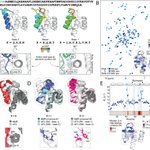
We are excited to share our new preprint, “An improved model for prediction of de novo designed proteins with diverse geometries”. (1/9) biorxiv.org/content/10.1101/…

This work highlights how augmenting existing models with informative experimental data, as presented here, could expand our exploration of designable protein space and ultimately enable more challenging design problems to be addressed than currently possible. (8/9)
Model weights have been uploaded to zenodo. Fine-tuning and analysis code to be released soon. Work by @BenOrr_, Stephanie Crilly, @DenizAkpinaro, Eleanor Zhu, @keiser_lab, and Tanja Kortemme. (9/9) zenodo.org/records/15580792
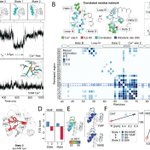
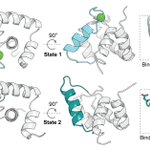
We’re thrilled to share our new pre-print exploring how we can design and control dynamic proteins! (1/6) biorxiv.org/content/10.1101/…

Physics-based simulations further uncovered the molecular origins of the observed dynamics and modulation, which we used to further tune the conformational landscape (5/6)

We showed new modes of motions are accessible to de novo design, enabling new functions & compatibility with natural states, allowing one to engineer non-native dynamics into existing biological systems! Work by @amyguo1997, @DenizAkpinaro, MJS Kelly & T Kortemme (6/6)