

Scaling and monetizing brands on X & LinkedIn (Generated 200M+ impressions and multiple 6-figure leads for clients).
See if you’re a good fit →
Joined October 2026
- Tweets382
- Following219
- Followers195
- Likes3.3K


Pinned Tweet
my previous 𝕏 brand got hacked.
the account I've been active since day 1 is completely lost.
ngl I got shocked at first, but now all I see is a massive opportunity to build the 2.0 version properly.
starting from zero (again) never felt better.
(p.s shoutout to @X and @Support for not replying to 4+ applied tickets to resolve the problem).
if a founder/CEO wanted an 𝕏 brand generating MILLIONS of impressions and leads starting from 0, here's how i'd make it happen by the end of november:
1. fix the profile. pfp that's an actual face, banner with proof, bio that says what the company does in one line, pinned tweet that's the best case study or result they have
2. book a 45 min call with them this week
3. build 10 content prompts before the call 4 top of funnel, 4 middle, 2 bottom
4. record the call, interview them like a podcast guest ask the question, shut up, let them ramble
5. turn that one recording into 10-14 posts mix of single tweets and threads, mapped out in notion, posted daily for 2 weeks
6. pair every post with real media. founder's face, the team, screenshots of actual results. no stock photos, no ai images
7. send drafts back for a 15 min review, ask what they'd change about tone and word choice, log every note
8. build a list of 20-30 accounts with the founder's ICP as followers. 15 min a day, reply first, reply well, before the founder ever posts their own content
9. pull a list of accounts that are the founder's actual ICP follow 20-30 a day, engage before you ever pitch anything
10. publish from the founder's account reply to every single reply on every post, route the technical ones to whoever on the team actually knows the product
11. track impressions, followers, and profile visits weekly in a sheet, one summary a week so the founder sees the number move
12. between the posts and the replies, people start showing up in the mentions who weren't there a month ago
13. dm the ones who engage the most, once a week:
"saw you replying a lot lately, appreciate it. built [resource], want me to send it over?"
there's a step 14 that drives more engagement than everything above combined.
DON'T MISS THE MOST IMPORTANT PART IN THE COMMENTS!
(if you want to build a strong 𝕏 presence without lifting a finger, DM me "GROW" and I'll send over the details).
14. every founder who dms in gets asked one question before anything else:
"what's the one thing you wish people understood about your company that nobody ever asks you?"
that answer becomes the best performing post of the month. every time.
it works because it's the one angle the founder has never had to pitch. no polish, no marketing voice, just the thing they actually think about.
that's what makes people stop scrolling.
Konstantinos Chasiotis retweeted
in 2005 Bill Gates and Warren Buffett told 92 Nebraska students how they could legally live the rest of their lives without paying a dollar of income tax.
only students could ask. neither man saw a question in advance.
one lunch with Buffett sold for $19 million in 2022.
fifty-five minutes of him and Gates answering these students is free.
that September Forbes ranked them first and second in America: Gates at $51 billion, Buffett at $40 billion.
between jokes about Halo 2 and losing at ping-pong to a nine-year-old, they lay out six rules.
the newspaper test. before any decision, imagine a smart, unfriendly reporter writing it up for your family tomorrow.
anything close to the line is out.
Gates said one of his favorite lessons from Buffett was a calendar with almost nothing in it. you have to be good at saying no.
Buffett said brilliant investment decisions never come out of a large committee.
poll enough people and you buy what everyone already owns.
you are the asset. getting comfortable with public speaking, he said, pays off for 50 or 60 years, and avoiding it costs you just as long.
omissions: his worst mistakes never hit a statement: about $10 billion in profits from deals he understood and skipped, or made too small.
the unsold gain. tax arrives when you sell.
his version: hold the stock, borrow against it every year to live on, and let the estate pay off the loan.
he said he could have done it for decades and called it very unfair.
his 1989 letter to shareholders has the math. double $1 twenty times, selling after each double at a 34 percent tax, and you end with about $25,250.
hold through all twenty doubles and sell once, and you keep about $692,000. Same returns. the only difference is when the tax gets paid.
“they have really taken care of the rich.”
that is Buffett on the cuts that took capital gains and dividends to a 15 percent tax.
Gates answered: "I go along with that wholeheartedly."
everyone in his office paid payroll tax on their first $90,000 plus income tax, and he said their rate was often the same as his, maybe higher.
every paycheck you get loses 7.65 percent before income tax starts. a stock that rises and stays unsold has paid nothing.
billionaires do not avoid income tax by earning less. they avoid it by selling less.
price the tax bill before you cash out your next winner.
same works with your personal brand as well.
every post you publish stays on your profile, working. founders who post for six months and quit are selling after every double.
the ones who keep going let it compound, and by year two their old posts are still pulling in readers who then go read everything else.
i've written content for founders across business, AI and fitness niches.
most of them sit on that kind of knowledge for years before posting a word of it.
the best part? it had never been easier to start building your personal brand…


“fitness niche is too saturated on X.”
a fitness coach pulled 35.4M impressions in 3 months anyway.
most fitness accounts recycle the same 5 threads and that's the part that feels saturated.
I backed every claim with a study or a number, wrote protocols people could save and follow and cut any take that wouldn't annoy at least one person in the replies.
if your niche feels crowded, look at what everyone in it is posting before you blame the niche.
p.s. if you're a founder/entrepreneur/coach in a “crowded” niche, DM me “GROW” (serious inquiries only).

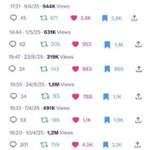
672k views, 2.5k likes and 560 bookmarks in the first 2 days of building my brand from zero.
follower count literally means nothing when your posts are well-written.
there’s no such thing as new or burned account — only quality content.
p.s. if you want to work with me to nail your brand positioning and add leads to your business, shoot me a DM (serious inquiries only).


in 1975, Steve Jobs told Steve Wozniak that Atari had paid them $700 for a game they built together.
he handed Woz a check for $350.
Atari had actually paid Jobs about $5,000.
Woz said: “Who cares about money? Well, you do care about friendship and honesty.”
Jobs was working the night shift at Atari.
the company wanted a new arcade game called Breakout, built with as few chips as possible.
Jobs couldn't build it. Woz could.
he already had a full-time job at Hewlett-Packard, and Jobs said they had four days. Woz went four days with no sleep.
both of them came down with mono.
Woz did it in 45 chips. Atari's own engineers were using 150 or more.
he took his $350 and was happy with it. Jobs took the rest and went up to Oregon to buy into a farm.
about ten years later, Woz read the real number in a book about Atari.
by then the two of them had built Apple, and Woz was a multimillionaire.
if Jobs had just told him he needed the money, Woz says, “I would say take it all.”
it wasn't the last time. before Apple went public in 1980, Jobs refused to give stock options to Daniel Kottke, his friend since college, who had helped build the first Apple computers.
Woz did the opposite.
he sold his own shares cheaply to Kottke and other early employees who had been left out.
one friend kept almost all of a $5,000 bonus.
the other gave away millions.
was Jobs a genius who knew what business takes, or just a bad friend?


Konstantinos Chasiotis retweeted
in 1975, Steve Jobs told Steve Wozniak that Atari had paid them $700 for a game they built together.
he handed Woz a check for $350.
Atari had actually paid Jobs about $5,000.
Woz said: “Who cares about money? Well, you do care about friendship and honesty.”
Jobs was working the night shift at Atari.
the company wanted a new arcade game called Breakout, built with as few chips as possible.
Jobs couldn't build it. Woz could.
he already had a full-time job at Hewlett-Packard, and Jobs said they had four days. Woz went four days with no sleep.
both of them came down with mono.
Woz did it in 45 chips. Atari's own engineers were using 150 or more.
he took his $350 and was happy with it. Jobs took the rest and went up to Oregon to buy into a farm.
about ten years later, Woz read the real number in a book about Atari.
by then the two of them had built Apple, and Woz was a multimillionaire.
if Jobs had just told him he needed the money, Woz says, “I would say take it all.”
it wasn't the last time. before Apple went public in 1980, Jobs refused to give stock options to Daniel Kottke, his friend since college, who had helped build the first Apple computers.
Woz did the opposite.
he sold his own shares cheaply to Kottke and other early employees who had been left out.
one friend kept almost all of a $5,000 bonus.
the other gave away millions.
was Jobs a genius who knew what business takes, or just a bad friend?
Bob Kittell: “The people who take action fast are the ones who win every time, no exceptions.”
I recently rewatched this video and it later became the inspiration for my article.
trust me it’s worth a listen:


Konstantinos Chasiotis retweeted
starting on LinkedIn today is WAY easier than in 2024.
you just need to know what the feed rewards now.
screenshot is straight from a client's content analytics, last 365 days.
7 MILLION IMPRESSIONS IN 8 MONTHS.
7% in-network.
93% out-of-network.
they started posting in January.
i've run this with clients who started at 200 connections, and they hit numbers creators with 300K get.
if "I don't have enough followers" is your excuse, this is your year.
LinkedIn is interest-based now.
it tests a post on a small group who care about the topic and keeps pushing if they react.
having x amount of followers stopped mattering.
eight months of posts built those impressions. waiting for followers builds nothing.
what number were you waiting for?


