

Nothing in life is to be feared, it's only to be understood. NOW is the time to understand more, so that we may fear less. Marie Curie
Worldwide 🌐
Joined June 2019
- Tweets57K
- Following2K
- Followers2.4K
- Likes15K


Ajeeeeeeeeee, fear X people ooooooooo.
My list is growing by the day.
- @Yhur1stLuV
- @lollypeezle

"For next year ileya, someone needs to buy you as Ram. Not to kill you for meat, but to make you fight other rams. At least, they can make sure you use your head for once"
2
118

KÒLÁPÒ ‘Nedu retweeted

Diana London, the woman helping President Bola Tinubu burnish his drug-tainted reputation, was indicted in 2018 when she pleaded guilty to larceny: embezzling nearly $30,000 from Pigman’s Bar-B-Que in Kill Devil Hills during her employment there in 2017. gazettengr.com/recall-bola-t…


Same APC that has been killing "her people - Southern Kaduna"
✌🏿🤣

Kafanchan baddie, @YarKafanchan, defending the vegetable Tinubu @officialABAT from her safe haven in the United States of America. What a f00lish w0man.
4
271
KÒLÁPÒ ‘Nedu retweeted

“Our APC pastor EA adeboye, in 2021 visited Yahaya Bello and called him ‘man of faith’…..
2024 Yahaya Bello thief N80bn….”
📺 tymverse

You were caught and not sorry.
Rubbish

I do not believe that Nigerian youths are lazy. That has never been my belief, nor the message I intended to communicate. We are some of the most hardworking people I know.
I sincerely apologise for any hurt my remarks may have caused. I also recognise that my words may have come across as overlooking the privileges I have and the challenges many young Nigerians face daily.
Young Nigerians work incredibly hard, often in the face of significant economic challenges, and deserve every opportunity to thrive.❤️
21
"Community Rigging"
🤣🤣🤣

Take note NDC - There will be no community rigging in the South East in 2027. Like many Nigerians have alluded, if you try rigging in the South East, you face the consequence from the people of the grassroots. Ala Igbo have seen the Industrialisation program, the Gas development program, the Agro development program And other projects by the APC through the South East Development Commission. If you rig, you go for it. Ala Igbo is for Tinubu.
59
Another dead man reappearing....... 1st Buhari calling from the grave, now Jimmy papa.
@ibukunmi_ @BOTAD01 are you sure our pipu still dey there?

𝗠𝘆 𝗹𝗮𝘁𝗲 𝗳𝗮𝘁𝗵𝗲𝗿 𝗮𝗽𝗽𝗲𝗮𝗿𝗲𝗱 𝗶𝗻 𝗱𝗿𝗲𝗮𝗺, 𝘄𝗮𝗿𝗻𝗲𝗱 𝗺𝗲 𝗻𝗼𝘁 𝘁𝗼 𝘀𝘂𝗰𝗰𝘂𝗺𝗯 – 𝗝𝗶𝗺𝗺𝘆 𝗢𝗱𝘂𝗸𝗼𝘆𝗮
𝗥𝗲𝗮𝗱 𝗠𝗼𝗿𝗲: punchng.com/my-late-father-a…

KÒLÁPÒ ‘Nedu retweeted
This video broke me....got 2 niece who work 2 jobs and run a business on the side.
How they do it I have no idea, until I spent a week with them. I manage to get a 12 hours of their full attention.
Calling others LAZY bcos you privileged is the new low.
Nigeria MUST work.
😡

This video broke me....got 2 niece who work 2 jobs and run a business on the side.
How they do it I have no idea, until I spent a week with them. I manage to get a 12 hours of their full attention.
Calling others LAZY bcos you privileged is the new low.
Nigeria MUST work.
😡
KÒLÁPÒ ‘Nedu retweeted
These centers were intended to provide basic medical services, maternal care, immunization, treatment of common illnesses, and health education.
We also supplied medical equipment, essential drugs, and other materials to these facilities.
We provided solar-powered boreholes and sanitation facilities to improve hygiene and the general conditions of healthcare delivery. These interventions were particularly important in rural communities where access to clean water and adequate sanitation was limited.
Maternal and Child Healthcare
We paid special attention to maternal and child health because we understood that a society cannot develop properly when mothers and children are exposed to preventable deaths.
Anambra State won the Bill & Melinda Gates Foundation’s US$1 million award as the best-performing state in immunization in the South-East. We complemented the prize money with government resources and used the funding to construct 10 maternal and child care centers, particularly in remote communities, in partnership with religious institutions.
In September 2013, we also provided an additional ₦330 million for the construction of 11 more rural maternity and child health centers.
These interventions were designed to bring antenatal care, childbirth services, immunization, and other essential healthcare closer to women and children who would otherwise have difficulty accessing them.
We considered this particularly important because many maternal and infant deaths can be prevented when appropriate medical attention is available at the right time.
Beyond maternal and child healthcare, we also pursued broader public health interventions, working with development partners, including UNICEF, the World Bank, and DFID, on immunization, malaria prevention, maternal health, and other disease-control programs. We recognized that a good healthcare system must not only treat illnesses but also prevent them through sustained public health interventions, community awareness, and accessible preventive services.
Ambulances, Medical Equipment and Emergency Services
We also understood that healthcare infrastructure without effective emergency response was incomplete.
Consequently, we purchased and distributed close to 100 ambulances to selected hospitals and medical institutions across the state. We also provided medical utility vehicles to improve transportation and service delivery.
We regularly supplied medical equipment and essential drugs to hospitals and primary healthcare centers. Our interventions included improvements in diagnostic facilities and other specialized medical equipment required for effective treatment.
In addition, we distributed medical equipment worth ₦135 million, sourced through the Millennium Development Goals program, to over 105 government and mission health institutions across the state. This intervention was intended to improve their capacity to provide effective medical services and ensure that healthcare facilities had the necessary tools to attend to patients.
The objective was to improve the capacity of our hospitals to diagnose illnesses, respond to emergencies, and provide appropriate treatment.
Specialised Healthcare: The Joseph Nwilo Heart Centre
Another important intervention was the establishment of the Joseph Nwilo Heart Centre at St Joseph’s Hospital, Adazi-Nnukwu.
Through our partnership with the Church, we supported the construction and equipping of this specialised cardiac facility, where heart operations could be performed at affordable costs.
This was particularly significant because specialised cardiac treatment was largely concentrated in a few major centres in the country. We believed that Anambra people deserved access to such services without always having to travel outside the state.
KÒLÁPÒ ‘Nedu retweeted
We also invested in sophisticated diagnostic equipment to strengthen specialist healthcare. These included CT scan machines, mammography machines, digital X-ray equipment, and ultrasound machines. We further procured ventilators to improve intensive care services, including the provision of four ventilators for the Teaching Hospital’s Intensive Care Unit.
The centre and these investments demonstrated our determination to move beyond basic healthcare and develop facilities capable of handling more complex medical conditions.
Strengthening Mental Healthcare: The Neuropsychiatric Hospital, Nawfia
We also recognised that healthcare must address not only physical illnesses but also mental and psychological conditions. Mental health is an essential component of human well-being and deserves adequate attention in our healthcare system.
We, therefore, invested in the development and modernisation of the Neuropsychiatric Hospital at Nawfia, in Njikoka Local Government Area, supporting improvements in its infrastructure and equipment to strengthen its capacity to provide specialised mental healthcare. The project received national recognition when Dame Patience Jonathan, then First Lady of Nigeria, commissioned the improved infrastructure of the hospital in September 2010.
We also supported the development of the School of Psychiatric Nursing to train professionals in specialised psychiatric care. These interventions reflected our belief that people living with mental health conditions deserve appropriate medical attention, professional care, and human dignity.
Our Partnership with Mission Hospitals
One of the most important aspects of our healthcare policy was our decision to work closely with religious institutions.
We recognised that the Church had historically played a major role in healthcare delivery in Anambra State. Mission hospitals had served communities for generations, often providing services where government facilities were inadequate or unavailable.
Rather than ignore these institutions because they were not government-owned, we decided to support them. We restored government grants, provided vehicles, and funded infrastructure, equipment, wards, theatres, and other facilities required to improve their services and secure accreditation.
Our interventions covered institutions including:
Our Lady of Lourdes Hospital, Ihiala.
Iyi-Enu Hospital, Ogidi.
Holy Rosary Hospital, Waterside, Onitsha.
St Joseph’s Hospital, Adazi-Nnukwu.
St Charles Borromeo Hospital, Onitsha.
Immaculate Heart Hospital, Nkpor.
Diocesan Hospital, Amichi.
In 2013, we released an additional ₦3 billion to selected mission and government-owned health institutions. At that time, Our Lady of Lourdes Hospital, Iyi-Enu Hospital, and St Joseph’s Hospital received ₦200 million each, Holy Rosary Hospital received ₦150 million, while Diocesan Hospital, Amichi, received ₦100 million. Other institutions also benefited from the intervention.
The funds were intended to improve facilities, purchase equipment, upgrade wards and theatres, and help institutions meet accreditation requirements.
This partnership produced remarkable results. Institutions that had previously struggled to meet accreditation requirements began developing recognised schools of nursing, midwifery, and health technology. Iyi-Enu Hospital and Borromeo Hospital have also developed into university teaching hospitals.
Our philosophy was that government should not monopolise healthcare delivery. If a mission or private hospital was providing quality services to our people, it deserved government support. What mattered was the service rendered, not who owned the institution.
Training and Accreditation of Healthcare Professionals
We also understood that buildings and equipment alone could not produce a functional healthcare system. We needed qualified doctors, nurses, pharmacists, midwives, laboratory scientists, and other healthcare professionals.
KÒLÁPÒ ‘Nedu retweeted
The experience we acquired in Anambra State, as well as the lessons we observed elsewhere, provides a practical foundation for this national ambition. What we did in a state can be adapted and expanded to serve a country of over 200 million people. The scale is different, but the principles of planning, prudent management, accountability and measurable results remain the same.
In the next instalment, Go and Verify (5), I will discuss our efforts in the road sector. -PO
KÒLÁPÒ ‘Nedu retweeted
NIGERIANS, GO AND VERIFY (4)
Building a Healthy Nation: Our Health Sector Record in Anambra
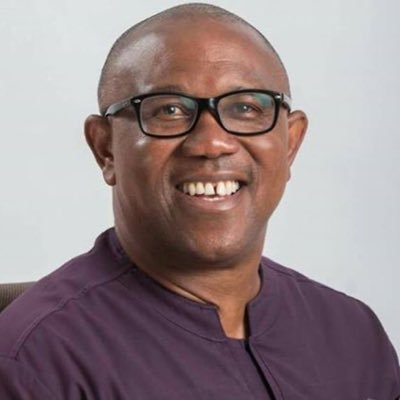
Peter Obi
In the previous instalment of this series, I discussed our investments in education and explained why we considered human capital development central to the progress of Anambra State. Another sector that received considerable attention under our administration was healthcare. We understood that education gives people the tools to build their future, while good healthcare enables them to live healthy and productive lives.
When we assumed office in 2006, the healthcare system in Anambra faced serious challenges. Our health institutions required rehabilitation, medical equipment was inadequate, many communities lacked accessible primary healthcare facilities, and several medical training institutions had not secured accreditation. We therefore decided to approach healthcare as a comprehensive development priority, rather than concentrate resources on a few prominent hospitals.
Under our Anambra Integrated Development Strategy (ANIDS), we invested simultaneously in primary, secondary, and tertiary healthcare, medical training, maternal and child health, medical equipment, and partnerships with religious and private institutions.
Our approach was simple: healthcare should be accessible to people wherever they live, and the quality of treatment they receive should not depend on their status or whether they live in a city or a rural community.
Building a Teaching Hospital and College of Medicine
One of our most significant achievements was the establishment of the Chukwuemeka Odumegwu Ojukwu University Teaching Hospital at Awka.
We initiated, constructed, equipped, and secured accreditation for the institution, building it virtually from scratch. When I discovered that the state university was admitting medical students without having a teaching hospital through which they could complete their training, possibly with the intention of assigning them elsewhere, I considered the situation unacceptable. We therefore embarked on the construction of a modern teaching hospital to address this deficiency.
We constructed more than 25 buildings and provided facilities for the College of Medicine, laboratories, pathology, accident and emergency services, pediatrics, male and female wards, special wards, consultant clinics, and other essential departments.
We also provided vehicles, including ambulances and staff buses, to support the hospital and the College of Medicine as part of the accreditation requirements.
The objective was not merely to build another hospital but to establish an institution capable of providing specialist healthcare while training the next generation of Nigerian medical doctors.
Rehabilitating General Hospitals
We also recognized that a teaching hospital alone could not meet the healthcare needs of the population. General hospitals had to function effectively because they provide the essential link between primary healthcare and specialist treatment.
We rehabilitated and resuscitated 15 general hospitals across the three senatorial zones of Anambra State. We undertook substantial improvements in their buildings, wards, equipment, and general facilities.
In 2013, we provided ₦400 million for the ongoing renovation of 11 selected general hospitals, alongside other healthcare interventions.
Our intention was to ensure that people did not have to travel unnecessarily long distances to obtain basic secondary medical care.
Taking Primary Healthcare to the Communities
We believed that the best healthcare system is one that prevents illnesses and treats people early, rather than one that waits until minor health problems become emergencies.
That informed our extensive investment in primary healthcare. We built over 120 primary healthcare centers across communities in the 177 autonomous communities of Anambra State and rehabilitated existing facilities.
KÒLÁPÒ ‘Nedu retweeted
Nigerians are REALLY angry and you want to gaslight us.
Go ask from the Chicago State University @ChiStateWBB
@dianalondon_usa few hours later.......👇🏿
Nigerians are REALLY angry and you want to gaslight us.
Go ask from the Chicago State University @ChiStateWBB
@dianalondon_usa few hours later.......👇🏿


