

Open infrastructure for carbon markets
klimaprotocol.com/discord
Joined June 2021
- Tweets3.1K
- Following162
- Followers65.2K
- Likes4.2K






Buying carbon starts with a selection challenge. Credits come from different project types, methodologies, countries, and certification standards.
That fragmentation leaves buyers with a lot to untangle: which credits share relevant characteristics, which fit the activity they want to support, and the price the can pay?
Klima Protocol brings structure to this variety through carbon classes. Each class groups eligible credits with similar characteristics, such as the technology used, the certification standard, or where the project operates, under shared rules.
A buyer interested in biochar, for example, can start with the Biochar class and explore its eligible projects, creating a clearer route from a broad climate goal to a specific choice.
Learn more at: docs.klimaprotocol.com/carbo…

Klima Protocol retweeted

Where a carbon credit is issued and where it is sold have always been separate worlds, joined by email and spreadsheets.
Today EcoRegistry and Carbonmark connected their ledgers in both directions. 🧵
1/4

A standing forest is already doing the work. It holds the carbon it has spent decades absorbing, keeps pulling more from the air every year, and shelters the wildlife and open space that disappear the moment the chainsaws arrive. Protect it, and all of that stays. Clear it, and none of it comes back in our lifetimes.
At Buena Vista Heights, Allegheny Land Trust protected a 124-acre woodland near Pittsburgh from residential development. Its maple, cherry and oak-hickory trees shelter wildlife, while local hikers, birders and mountain bikers can explore the forest. Within the Youghiogheny River watershed, the woodland also contributes to water quality for the region. Carbon credit revenue helps cover acquisition costs, stewardship and further land conservation.
Registry: @regen_network
Available Supply: ~2,115 tCO2eq
More about Regen at: registry.regen.network/

Klima's x402 endpoint lets agents explore available credits options, quote the amount you want to retire, and prepare payment for authorization autonomously. Discovery and quotes are free, so checking availability and cost requires no spending commitment. Find out more at: klimalabs.com/x402-endpoint
With the relayed option, only one signed authorization lets the executor handle the transaction. Users can pay by just holding USDC in their wallets, with transaction costs covered by the authorized budget. As a developer, explore the documentation and easily connect this flow to your existing agents and applications: github.com/KlimaDAO/Klima-Pr…
In the end, a public certificate provides independently verifiable proof, with beneficiary details showing which individual or organization the retirement was for.

Klima Protocol retweeted
Sourced via @KlimaProtocol, the PAZCÍFICO SUR project provides a host of co-benefits beyond its positive environmental impacts.
Check out the video below to learn more, or visit the project page here: app.carbonmark.com/projects/…
Choosing a high-impact carbon credit takes dilligence, time and care. But retiring one must be a seamless process with minimal friction.
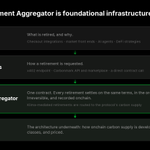
Every carbon retirement Klima Protocol settles on @Base goes through one contract.
The "Retirement Aggregator".
Developed in collaboration with @carbonmarkcom
Nothing sits between a buyer and a retirement when they settle via the protocol.
Execution terms come from protocol state and apply identically to everyone touching the contract at that moment.
No intermediation. No price obfuscation. Near instant settlement.
So far the Retirement Aggeragtor has processed:
- 41,874 retirements.
- 50,861 tCO₂e.
- from 71 wallets.
- with 211 named beneficiaries.
Users can pay in base:0x00fbac94fec8d4089d3fe979f39454f48c71a65d or $USDC and let the contract source retirements for them, quoting the price first so they know what the retirement costs before they commit. Updated in real-time.
Users include: a VC, a blockchain foundation, people retiring in their own names, an onchain bridge.
The rest arrives through things built on top: Carbonmark's marketplace, our shared x402 endpoint, the @klimacarbonbot.
To scale climate finance, we need to reduce intermediation and fees where it does not add value, and that is what the RA offers.

Building in climate finance and want to integrate? Check our our guide: github.com/KlimaDAO/retireme…
Verify: basescan.org/address/0xda0a7…

Klima Protocol retweeted

@KlimaProtocol was included in @GBBC_io's latest handbook on #blockchain use cases!
I spent a few days in NYC last week attending various industry events during NY Climate Week. Interoperability, standardization, and scaling carbon markets were key topics.


Klima Protocol retweeted
Agentic flows onchain are heating up.
@KlimaProtocol and @carbonmarkcom make it easy for agents to tap into the growing pool of carbon liquidity on @base.
Learn more here: docs.carbonmark.com/carbonma…

🌿 Klima Protocol Update
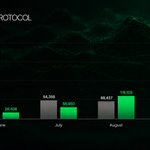
• After an all time high in retirement transactions last month (at about 48,000 individual transactions) via the @carbonmarkcom API, we've hit another 12.5% increase, reaching 60,000 retirements which consumed carbon through Klima's infrastructure.
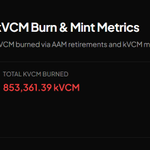
• A steady climb of carbon retirements: the Protocol keeps burning more kVCM each month since early Summer, with a new peak of about 358,000 kVCM burned in September. This has also been the first consecutive deflationary month for the token.
• Final steps to onboard @EcoRegistry credits into the Klima infrastructure have been taken. By this time next month, those credits should be available to retire!

Over the last 14 days, 2,553 tCO2eq were retired through Klima Protocol across 116 individual retirements.
Each of those 116 records is written to a public blockchain, leaving a verifiable chain of custody from registry issuance to the final consumption.

The Carbon Auto-Retirement Bot
Every fifteen minutes, when it has funds, a bot on @Base retires carbon credits with whatever has been donated to it: 0xfB7eF581B0338A31e47AA9770345b26D46BF0451
Nobody approves the transactions. The schedule, the rotation through carbon classes, and the amount it spends are all fixed in code. It decides nothing.
Each run calls @KlimaProtocol's x402 endpoint, takes
the protocol's prevailing execution rate, and burns kVCM directly against a carbon class.
The credit is retired on Base blockchain and a public certificate resolves on @Carbonmark.
No intermediary, no discretionary fee at the protocol layer.
The bot spends roughly a quarter of its budget on each of four Klima carbon classes: solar, wind, city forest credits, ocean alkalinity enhancement. Equal budget, not equal tonnage.
Execution rates differ by class, so around 26,400 $kVCM has gone to ocean alkalinity enhancement and returned 0.525 tonnes, while around 32,700 $kVCM has gone to small-scale wind and returned 9,627 tonnes.
Since April: 2,673 retirements, 20,404 tonnes of CO₂e, and 120,065 $kVCM burned.
@KlimaCarbonBot
Want to learn more or contribute: klimalabs.com/auto-retire-ag…
Verify: basescan.org/address/0xfB7eF…
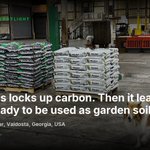
Carbon removal sounds abstract.
At the Wakefield Biochar facility in Georgia, USA, it leaves in bags.
Pine bark waste is pyrolysed into biochar that holds its carbon for at least a century under CORC100+, then sold as soil improver through outlets like Walmart, Lowe's and Amazon.
166 tCO2eq is available for retirement via the Klima Protocol: transparent pricing and immediate execution.


Through Klima Protocol infrastructure across Base and Polygon, 2,953 tCO2e in carbon credits have been retired over the last 14 days, creating more than 17,000 individual retirement records.
Interested? Start a carbon credit retirement of your own immediately through the app: app.klimaprotocol.com/retire…

The protocol burned more kVCM than it minted last month, with 13,965tCO2e carbon credits retired! Total supply fell by about 30,401 kVCM. Read how it works at docs.klimaprotocol.com/refer…

Klima’s incentive rates aren’t fixed, and nobody sets them.
They respond to where participants stake, directing incentives toward the durations and market functions needing support.
Since February, the peak has moved out by ~2 years.

Read more: klimaprotocol.com/blog/how-k…

