

Kinetic Impact strives to make people feel better, providing you with the knowledge to stay active and do the things you love to do.
San Diego, CA
Joined September 2017
- Tweets1.7K
- Following511
- Followers139
- Likes9.9K





Kinetic Impact retweeted

New study suggests that RIR and RPE are similarly effective methods for estimating proximity to failure and the results were applicable to both trained and untrained individuals. Note that findings are specific to the machine chest press and leg extension at 75% 1RM so it's unclear how this may apply to other exercises and loading zones.
pubmed.ncbi.nlm.nih.gov/4303…

Kinetic Impact retweeted

How Effective is Stretching for Injury Prevention? A Large-Scale Systematic Review with Meta-analysis
pubmed.ncbi.nlm.nih.gov/4306…
Kinetic Impact retweeted

Physiotherapy shouldn't end at the hospital or rehabilitation centre.
A 2020 systematic review of 54 workplace studies found strong evidence supporting workplace strength training for reducing musculoskeletal disorders among workers in...
link.springer.com/article/10…

Kinetic Impact retweeted

Speed is the main stimulus, but it doesn’t exist in isolation. Strength, plyometrics, and conditioning all have a role.
Good programming is understanding how much of each, when to use them, and how they fit together.
Maximum Output is my complete 8 week speed system,

Kinetic Impact retweeted
New study provides further evidence that resistance training is a viable alternative to HIIT for improving body comp and metabolic health in the overweight/obese. Given the totality of evidence of the topic, combining the modalities likely provide synergistic effects
pubmed.ncbi.nlm.nih.gov/4305…
Kinetic Impact retweeted

This one found maximal lower body strength to be associated with hip bone mineral density across adulthood.

Kinetic Impact retweeted
Communicating With Patients About Physical Activity jamanetwork.com/journals/jam…

Kinetic Impact retweeted

Weakness precedes injury.
It’s actually a difficult claim to validate with research but I found a piece that did it.
Those who had a peak isometric force of 1.8x bodyweight (on a single-leg) went on to injury their calf or Achilles.
Those who had a peak isometric force of 1.92x bodyweight stayed healthy.
In elite sport, with the fear of Achilles ruptures, it’s wise to check the box here and test peak plantarflexor force.
bjsm.bmj.com/content/58/Supp…

Kinetic Impact retweeted

You need lots of easy... to make a difference, even for health.
You can't shortcut it. You need a decently high volume of movement.
It's the same thing Bowerman, Lydiard, and Van Aaken told us 60+ years ago.

The current physical activity guidelines are too low.
I've been saying this for a while. And a new study confirms it.
Meeting the standard 150 minutes/week was associated with only a modest ~8–9% lower cardiovascular risk.
The biggest protection occurred at roughly 560–610 minutes/week, about 3–4× higher, where cardiovascular risk was 30% lower.
We need to distinguish between the minimal activity volume required for basic protection, and the substantially higher volumes required for optimal resilience.

Kinetic Impact retweeted

The current physical activity guidelines are too low.
I've been saying this for a while. And a new study confirms it.
Meeting the standard 150 minutes/week was associated with only a modest ~8–9% lower cardiovascular risk.
The biggest protection occurred at roughly 560–610 minutes/week, about 3–4× higher, where cardiovascular risk was 30% lower.
We need to distinguish between the minimal activity volume required for basic protection, and the substantially higher volumes required for optimal resilience.
Kinetic Impact retweeted

Supplementation with Vitamin D or calcium, or both does not help prevent fractures or falls. From a new systematic review of 69 randomized trials and >150,000 participants

Kinetic Impact retweeted

Walking ~7000 steps/day vs. ~2000 steps/day is associated with:
- 47% lower all-cause mortality
- 47% lower cardiovascular disease mortality
- 37% lower cancer mortality
- 38% lower dementia risk
- 22% lower depression
If you care about your health, start walking.

Kinetic Impact retweeted

Advanced lifting methods are not automatically better.
Current evidence suggests they do not produce greater muscle growth or strength gains than traditional resistance training.
Keep it simple: big lifts, hard sets, progressive overload, consistency.
link.springer.com/article/10…

Kinetic Impact retweeted
”Effective reps” matter for hypertrophy
Heavier loads require fewer reps to reach high motor unit recruitment; lighter loads can also build muscle, but only if taken close to failure
Practical rule: use ~3–15 reps for most sets and stop around 0–2 RIR
link.springer.com/article/10…

Kinetic Impact retweeted
Exercise may help slow aspects of biological ageing.
📚Recent research suggests regular physical activity can improve mitochondrial function, reduce chronic inflammation.
➡️Not a magic fix—but one of the best long-term investments for healthy ageing
pubmed.ncbi.nlm.nih.gov/4135…

Kinetic Impact retweeted
Running can get complicated. But for most, it should be simple:
1. Lots of Easy
2. Occasionally Moderate
3. Sometimes Hard
4. Do work that is feel good fast
thegrowtheq.com/the-4-rules-…
Kinetic Impact retweeted
Many lifters don’t “fail” because of bad genetics—they stop far too early.
📚A classic study showed self-selected loads are often too light for the intended reps
➡️for hypertrophy, sets generally need to be performed close to failure
pubmed.ncbi.nlm.nih.gov/2911…

Kinetic Impact retweeted

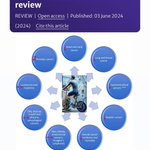
Potential mechanisms in the pathogenesis of “Tendinopathy”
- mechanical loading
- oxidative stress
- cellular senescence
- systemic diseases
- inflammation
#tendon #tendinopathy
sciencedirect.com/science/ar…

Kinetic Impact retweeted

Prolonged sitting is not the kiss of death if you take daily walks
Do the associations of daily steps with mortality and incident cardiovascular disease differ by sedentary time levels? A device-based cohort study bjsm.bmj.com/content/bjsport…
