

https://xitter.cf/t.co/4R92bTfWfv https://xitter.cf/t.co/UBL5mYff7V https://xitter.cf/t.co/u533E4wogD https://xitter.cf/t.co/VUm9gBzILa
Joined December 2009
- Tweets78.9K
- Following1.9K
- Followers2.1K
- Likes2.3K



Pinned Tweet
This is the scandal that will take down @Timcast
I have been holding onto this dirt for 11 years

Pathologizing social discourses are primarily a depersonalizing or dehumanizing register. There aren't personalities or the usual dramatic narratives, but rather listing of features in diagnosis of some disorder

Kenny's phrase "folk demons" is suggestive that social media content about narcissists (and also BY narcissists) might be or become a moral panic. Fortunately the pan seems far too dry for any actual fear to become involved. The threat seems to be always retrospective
Man cave people threw bones in a fire and thought those represented thoughts. Get the hell out of here


"I don't understand how someone funded by Peter Thiel could be forced onto the public like this!"
Are these incredulous dumbshits still believing that their social media carnival games are legit in 2026?

He's funded by Peter Thiel
"somehow" . . . "somehow"
Pay attention please.

Sorry, the advertising department was in charge of the mathematical breakthroughs

They have withdrawn 3 connected papers “solving” a case of the Hodge conjecture.
One of them had a sign error that invalidated the argument, and with it the other two.
The subscription models can easily find that error. So they rushed to put out a partial result on a Millennium problem without even checking it twice.
That’s the level of care, the seriousness, with which mathematics was approached here.
LLMs are an amazing tool for doing math. But using them like this is just irresponsible.
Also, they have already benchmarked these models on proving big theorems. I’d love to hear what investors think about all of this.
I understood that contemporary mathematicians were mostly formalists and yet the responses I see here are all in a Platonist fashion


the final form


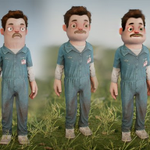
Facepunch is phasing out the sausage-style player models in S&Box thanks to the new model deformation system. They now have necks and look more human.
"We are going to keep iterating on the citizen's design. The old design is very polarising... and even though I like that look, and am used to it... I think we would be stupid to ignore that fact. If we can make a few tweaks to make it more desirable and more liked, then we will.
Long term, if nothing we do helps, we will have to drop the citizen all together and just make human only models. That's definitely something that could happen, but we're not at that point yet, I'd like us to keep iterating a bit more before we bury them".

Rhetoric of consciousness as proxy for soul is idiotic atheology, stuff it already

and even in this case the dog-person will say, with pride, "The dog owns the house"

I have never heard social media leftists speak on the past decades of automation remainder labor like self-checkout attendants, CNC machinists, etc. All radical liberalism and bland utopianism
This quoted post is unavailable.
So here's a bizarre literary machine short story about some kiln out in the west
Red Kiln was the railroad's name for the works on a siding of the Alkali & Southern: a long brick shed, a water tank on stilts, and a lehr that ran its belt from the glory-holes to the packing floor. The country around it was greasewood and white ground. In the afternoon the wind came off the mesa and filled the shed with grit. At dusk the wind went down. That was when the night shift took the floor.
Mira Fenn had come off a camp on the dry side of the mesa when the grass failed and the owner sold the water-rights to a cattle company that did not hire women for the remaining wells. The works took her to pull bottles at the cool end, where the ware came out of the tunnel dark and finished and could be lifted with a paddle onto the packing tables. The night man who had walked the catwalk over the radiant wash took a westbound and did not send word. Brask, who kept the shift-board, put Mira up there because she did not call across the heat and because the cool-end pullers were already two.
The lehr was a brick tunnel with a chain belt. Bottles went in soft from the glory-holes and traveled through a wash of radiant heat that took the strain out of the glass, and then through cooler yards until a hand could hold them. The middle yards were the wash. You felt them on your face from the catwalk, a change of warmth as you passed. After a puller named Hesk went into the wash to free a jam, the wash sent him out without the use of his hands. The company hung horns along those yards, one to a bracket, one to a stretch of belt. The names came off the pay-book. A horn spoke if you came too near. It spoke the name.
Mira learned the wash by the heat on her cheek. She learned the horns later.
On her ninth night a bottle stalled in yard four, warped against a dog on the chain. She went down the iron ladder with a hook. The wash breathed on her wrists. The horn on the bracket said, "Mira Fenn."
She got the bottle free and put it back in line, climbed to the catwalk, and stood with the hook. The name stayed in the brick.
She went to the tool crib at the packing end and took a length of bar that had been used to open crate-bands. She walked back to yard four and struck the horn until the grille split and the housing left the bracket. The belt ran on. No one came from the glory-holes. She hung the bar on the crib nail and finished the night.
At dawn Brask found the empty bracket. He did not send for her until the second horn came down, two nights later, when yard six spoke her name as she passed on the catwalk at a distance she had always judged safe. She smashed that one in the same hour it spoke. A gatherer named Calla saw the bar rise and did not stop her. In the morning the housings lay in a crate by the tank, tagged with the yard numbers.
Brask waited by the shift-board. He was a long man with a burned forearm from a year when the lehr had no horns. He held a tack-hammer.
"You took two," he said.
"They spoke," Mira said.
"They are meant to speak."
"They spoke me."
"You were in the wash on four. I have Calla's word. Six I do not have."
"I was on the catwalk."
"Then six was a false call." He looked at the board, at the nails, at the paper already curling. "The rail office wants the names. If a body goes into the wash, the horn is to say who. That is in the contract for the water-cars. I am posting that speaking horns stay."
He tacked the sheet. The letters were the same hand he used for shift-times.
SPEAKING HORNS STAY. FALSE CALLS TO BE DESTROYED. HORN-WALKER: M. FENN.
Mira read it. The tank dripped. A freight went through on the main without stopping and the shed shook, as it always did.
"I did not ask for a job," she said.
"You have been doing it," Brask said. "I am putting a name on what you have been doing. You will walk the yards. You will break the ones that call false. You will leave the ones that call true."
"How do I know?"
"A true call has a body in the wash. A false call has a name and no body, or the wrong name. You will not take a horn for speaking. You will take it for lying."
She said, "If I leave the true ones, they will still say me when I am near."
"Then stay out of the wash," Brask said. "That is what the names are for."
He gave her the bar from the crib as if it had always been hers, and he wrote horn-walker on the pay-sheet beside her name, in the column that had said catwalk.
She walked.
The lehr had seven yards of wash. Horns remained on one, two, three, five, and seven. Four and six were empty brackets, and the heat there was the same. Mira took the catwalk at the start of each night with the bar hung from her belt by a thong. She learned the distance at which a horn would speak. She learned it with her face, as she had learned the wash, looking for the small change as she passed. Yard one spoke Calla on a night Calla went down to lift a stuck paddle, and Mira left that horn, though the name followed her as far as the packing tables. Yard three spoke a batch-man named Witt when Witt was at the glory-holes, fifty yards off, charging the pots. Mira smashed yard three. The name had no body in the wash. Witt heard the blows and came as far as the tank. He looked at the housing on the bricks a long time. He went back to his pots. He did not ask.
Yard two spoke a name from last season's book, a woman who had taken the westbound in March. No one of that name stood on the floor. Mira smashed yard two and put the tag in Brask's crate. He did not argue the tag. He marked the board: remaining, one, five, seven.
Yard five spoke twice in one hour, the same name, Calla, while Calla was at the cool end with both hands on bottles. Mira waited through the first call, because a body might still come. No body came. The second call decided her. She raised the bar and took the grille down. Calla, stacking, said, "That was me, and I was not there."
"I know," Mira said.
"Don't take the one that has me when I am there."
"I didn't."
Calla nodded and went on stacking. The ware kept coming. The bottles had no names.
The works hired off the freight when the freight stopped, which was not often. In the third week after the posting a boy stepped down from a boxcar with a paper from the junction agent. He gave the paper to Brask. Brask read it and put him on the cool-end pull, opposite Calla.
"Oren," Brask said, to the floor at large, which was how names entered the pay-book. "You will not go into the wash. If you are too near, a horn will say your name. You will step off. You will not wait to see if it says it twice."
Oren looked up at the catwalk, at Mira, at the bar.
"What does she wait for?" he said.
"The false ones," Brask said.
Oren was slight, burned already across the nose from the freight roof. He learned the paddle in an hour. He learned the horns by watching Mira pass the remaining brackets, one and seven. He asked her, in the thin hour before dawn when the belt had a gap and the glory-holes were being skimmed, what a false call was.
"A name with no one in the wash," Mira said. "Or the wrong name."
"How do you know before it speaks?"
"I don't."
"Then you wait with that bar up."
"I wait."
He said, "If it says me, I get out."
"If it says you, and you are the one in the wash, that is a true call. I will not take that horn."
He seemed to take this as a rule that would hold. He went back to the cool end. Brask, from the board, said, "Don't teach him the wash. Teach him the table."
Yard one remained. It spoke when it should. Mira left it. Yard seven, at the hottest stretch, where the brick itself had a dull shine and the change of warmth on a passing face was sharp enough to make a man turn his head, had gone quiet. It had spoken, the week before Oren came, the March name, the woman off the westbound. Mira had been on the catwalk with her hands down, the bar still at her belt. The name had no body in the wash. She had turned back to take it, and by then the horn had stopped, and Brask's rule was to destroy a false call in the speaking, not after. She had noted the name. She had gone on. Since that night yard seven had not spoken.
She began to raise the bar at ten paces from seven, because a quiet horn after a false name was a horn she did not trust. One night she raised the bar, and the next, and one more yet, and the horn stayed quiet. On the fourth night she kept her hands down to see. It did not speak then either. On the fifth she raised the bar again. As the iron came up the horn made the sound that precedes a name, a click in the grille--it held. Witt was at the pots. No one was in the wash. Mira kept the bar up the length of the yard. The name did not come. She did not smash a silent horn. Brask had not given her silent horns.
Brask counted brackets at dawn.
"One and seven," he said.
"Seven waits on the bar," Mira said.
He looked at her face, which had the wash on it still, a flush that did not go in the morning air.
"Then it times you," he said.
He did not say what that meant. He wrote on the board: remaining, one, seven. He did not send for replacements yet. The rail office still had names on the wash.
The stall came on a night with no wind. A bottle in seven wedged against a dog and began to drag the chain. The belt complained. Brask was at the tank, turning the cock for the morning water-car that would cut off at dawn. Calla had both hands on the table. Mira was on the catwalk, past one, which had not spoken, walking toward seven with the bar already in her fist, because that was how she had learned those ten paces.
Oren went into the wash.
He went because the stall was there and because he had been told that a horn would say his name if he was too near. Seven was the horn over his head. He took the hook from the ladder rail and stepped down onto the bricks beside the belt, where the air was a wall. He got the hook on the bottle. He waited for the name.
Mira saw him as she came into the change of warmth at seven. The bar was already raised. She was looking for the shine on the brick, the turn of a head, a body on the bricks. The horn spoke.
It said, "Mira Fenn."
Oren's head was down over the hook. He was waiting. Brask had told him: if a horn speaks your name, you step off. He did not hear Oren. He heard a woman's name, and it was not a name that bound him, and he kept the hook where it was.
The name was hers. The body in the wash was not. A false call. She brought the bar down to stop the wrong name. She took the grille on the second blow and the diaphragm on the third. The name stopped. The belt did not. Oren, waiting for a warning that no longer came, stayed on the bricks with the hook in the stalled bottle and the wash on his hands.
He made a sound then that was not a name. Calla dropped her paddle. Mira came down the ladder at seven and pulled him by the shirt. The shirt came away at the cuffs. His wrists were already going, and the insides of his arms, and the place at his throat where he had bent toward the bottle. She got him to the packing floor. The ware came on and broke against the unattended table. Brask left the tank and brought the bucket that was kept for burns, and the grease, and the cloths. Oren did not speak. He looked at the empty bracket over seven a long time, as if a word might still come out of it.
They wrapped him. At first light the freight that sometimes stopped for water took him on the caboose, bound for the county rooms at the junction. Brask wrote a paper for the agent. He did not ask Mira for a smash-report. The housing from seven was still on the catwalk, split.
The floor worked the day out because the pots could not be left. At dusk the night crew stood in the shade of the packing shed, where the heat of the lehr was only a line on the air. Witt had cut tags from the tin of an old crate, one tag for each bracket that had ever held a horn, empty or not, smashed or not, seven tags. He set a nail keg on the bricks.
"We are not waiting on the freight for new ones," Witt said.
Calla said, "A name that is wrong is worse than no name. He waited."
A puller from the day shift, who had come back because the word had gone to the bunkhouse, said, "The rail office will want them up again."
"The rail office did not have its hands in the wash," Calla said.
Brask stood with the shift-board under his arm. He did not tack a new sheet. He said, "You are sentencing the horns."
Witt said, "We are."
They dropped tags. The keg received them, one after another, tin on tin. Seven. Brask counted. He did not put a tag of his own. He looked at Mira.
"You are horn-walker," he said. "You finish them."
Yard one was still up. It had been true. The sentence did not keep a true call. Mira took the bar.
She walked the yards. She struck yard one and the remaining metal from the empty posts, the bolts and the tongues and the split housing at seven, until the catwalk held only iron posts without mouths. She put the wreckage in the crate with the older tags. She took the crate to the dry wash behind the tank, where the works dumped cullet, and she beat the housings until they would not sit on a bracket again. The glass-dump took the pieces. The lehr, behind her, ran on. The wash did not cool. Cool had been gone from those yards long enough that the catwalk kept no memory of it, not for a smashed horn and not for a sentence.
Brask came as far as the tank. He did not tell her to stop. When the crate was empty he said, "The freight will bring others."
"I will walk them," Mira said.
"The crew has sentenced what speaks."
"Then I will walk what speaks, and I will finish it."
He put her name on the shift-sheet again, same column. Horn-walker. There were no horns. He kept her on that circuit.
She walked it.
Nights after, the wash was the same seven yards of brick and chain and bottle. Without the horns the stall was only a stall. Calla shouted if she saw a body too near, and Witt from the pots; the shouting came late, when it came, and had no name in it. Mira walked the catwalk with the bar, which she no longer raised at ten paces, because there was nothing to raise it for. What called the walk now was only the change of warmth on her face as she passed the same yards. She knew them by little things. A breath at one. The door of heat at four. At seven the shine on the brick, and the turn of a head. She could have done it with her eyes shut. She did not shut them.
Oren did not come back. A letter from the junction said he had been sent on to a sister in a town the railroad spelled differently from the sister. Brask read the letter to the floor and tacked it beside the old posting, which still said SPEAKING HORNS STAY, the paper browner, the tack rusted. No one took the posting down. The rail office wrote once about the contract and the water-cars. Brask wrote back that the wash was walked. He did not say by what.
The replacements came on a Thursday freight, a crate of new horns packed in straw, brackets oiled, names not yet in them. The crew stood around the crate and did not lift it. Witt put his boot on the lid. Calla looked at Mira. Mira looked at Brask. They looked a long time.
"The sentence holds," Brask said.
He had the crate put in the tool crib, unopened. The names stayed in the pay-book, where they had always been. Mira went up the catwalk at dusk as she went up it every dusk. The belt started. The bottles came soft from the glory-holes and took the heat and gave it back and ran down toward hands that could hold them. She passed the empty posts. The warmth changed on her face.
Brask kept her on that circuit. She did not leave.
The posting on the shift-board had gone the color of rust at the tack.
SPEAKING HORNS STAY.
No one had taken it down. In the tool crib a crate of new horns sat unopened, straw still packed, names not yet in them. Mira Fenn walked the catwalk over empty posts, bar at her belt, and the wash changed on her face as it had always changed. The bottles came soft from the glory-holes and took the heat and gave it back.
A brakeman off the noon freight told it at the tank, in hopes the telling would pass for ordinary road-talk--a cover that would not hold on a floor that had already sentenced what spoke. The tank-man brought it to the packing end. Noll, who gathered at the pots, heard it with his irons in his hands. Calsh heard it from the glory-holes. Jedda Brine heard it at the cool end, both hands on bottles. Tamsin Orr heard it in the crib, where she had been breaking bands.
Nine was a fitter's car. Straw, and cases in the straw, and a man already fitted who would open the cases when the water-car came due and set them in the crew. The names would sit in the chest. Brackets would not hold them. The wash would be walked from inside.
They heard it once, and then again, and one more yet, because word on that floor had to be said over before anyone moved.
At the thin hour before the belt started they stood in the shade of the packing shed, where the heat of the lehr was only a line on the air. Noll was a short man, burned across the knuckles, a paddle still in his fist. He sat on the bricks with his back to the shed wall. Calsh kept to the keg. Jedda Brine, named for a dry wash off the siding, was thirty, and she stood as she stood at the table, weight on the balls of her feet. Tamsin Orr held the bar that opened crate-bands. She had taken a governor off the packing-engine the summer a belt seized a wrist. The bar still held that job.
"We are sentencing the car," Tamsin said.
Noll said, "We are."
They did not set out a keg. Hands went up. The count was the crew. Calsh's hand came last. He looked at the shed a long time. He did not add a word.
Tamsin said, "I was made the hand. That is all the warrant I carry."
Jedda said, "If we take the car, I still pull."
No one answered that. The pots would need the night either way.
"The cool end can spare me," Jedda said. "Someone who knows heat should stand on what we take."
Tamsin nodded once. She did not offer Jedda a share of the warrant. She looked at the main, at the notch in the mesa where the grade began, and found nothing in the posting that named a car.
They took the speeder from the tool siding after the day freight cleared. The main ran west through greasewood toward the mesa, then climbed. That grade knows how to walk a train down until the drivers are only turning. Tamsin rode the front board. Jedda rode behind her, face to the wind, looking for little things--a smear of smoke already in the eastern notch, a shimmer off the rails where the day's heat had not yet left the iron, grit still hanging where the afternoon wind had been.
They waited in a cut of white ground. One hour more, they told each other, just until the westbound's smoke, only until the slack ran out. The light went copper, then the color of the brick at Red Kiln. They hid the speeder in the greasewood. Tamsin stood the bar in the ballast.
The westbound came.
It came large. Engine first, the stack writing a single line against the notch, then the billed cars, water, freight, a flat of brick for the works, and last the ninth car, painted the same iron as the rest and riding high on springs the others had worn out. The grade took the drivers down to a walk. The whole train occupied the cut, a length of iron the country did not hide. Couplings knocked, one after another, as the slack ran in. Nine rode above that knock, new, and the plates of it held the day's sun and gave it back.
Tamsin was on the pin between the flat and Nine before the slack had finished running. She took it. The pin came up the way a crate-band comes, a thing she had already broken. The forward cars went on. The engine did not stop. Stopping on that grade was a thing the road had scoured out of its crews. Nine ran out its remaining slack and stood. The rest of the westbound drew away into the notch, then smoke.
Nine stood on the white ground.
Sile Vane came down the end-ladder. He was a compact man, the brass twelve on the plate in his chest catching what light was left, the plate itself a set of cases already seated, the skin around them pale where it had healed over the seats. He stood on the ballast and looked down at his legs, then at his hands, then at the plate. Each had taken the rungs.
"This is not the cut-off," he said. "The car opens at Red Kiln. That is the minute."
Tamsin stood with the bar between him and the door.
"We voted," she said. "I was made the hand. The car is off."
He looked at her column, then at the name if the blank had not taken it yet.
"Orr. The crib. You break bands. The blank I was given for the crib is still empty." He turned his face toward Jedda. The word came a breath late. "The cool-end. Brine, if that still holds."
Jedda felt the plates of Nine, a change of warmth on her cheek as she had felt a yard of wash. She put her palm on the door.
"That was heat," she said. "I know it on the face."
Sile's mouth did not change. The plate gave him the next word.
"You have taken the hour. You have not taken the plate. Twelve still reads. The legs took the ladder. I open at the cut-off. That minute has not been rewritten."
Tamsin said, "I will not write you another minute."
She opened the door.
Straw packed to the roof, and in the straw the cases, each a chest-box not yet seated, name-blank unscrewed, burden-screw bright. They stood in rows the length of the car, a second crew lying down. Chest-boxes packed for a seating. The straw smelled of the shop and of the run. Jedda went in because she had said she would stand on what they took. She lifted a case. It was heavier than a horn, heavier than ware at the cool end. She held it against her shirt.
"The car opens at Red Kiln," she said.
She did not mean to say it. The line left her as a bottle leaves a paddle, already finished. She set the case down in the straw. Sile, from the ballast, nodded as at a fitting that had shown.
"That line is the car's," he said. "It left you because you held the case. The box has a blank for Brine. I was to seat it at the cut-off. You have seated the line early. The body will keep the minute."
Jedda stood in the door. She looked at her hands. They were her hands. She did not ask him what had used them.
"What stays?" she said.
Tamsin was already in the straw. She put the bar through the cases the way she had put it through a governor, the way she had put it through bands. A grille had been one. A car was the same sentence larger. She did not count as she went. She broke until the straw held only housings that would not sit in a chest, and she broke those until they would not sit in the straw. The name-blanks she bent double. The burden-screws she trod into the ballast. One case sat already half-seated in the door-frame. She took that one at the screw and put it on the ties and hit it until it would not read as a seat.
"I broke them," she said. "That was the count."
Sile had not climbed after her. He stood where the ladder had put him. He looked down at his legs, at his hands, at the plate, at twelve. The cases in his own chest had not opened. They ruled what they had always ruled. He turned his head. The day on the plate was the same day.
"You sentenced the unfitted," he said. "Twelve is not unfitted. I walk to the cut-off. The crew is the crew. The blanks can be struck again. The railroad has a shop."
Tamsin came down with the bar. She stood close enough to take the plate. She did not take it.
"You are not the car," she said. "I was not made the hand for you."
He received this as a minute that had not yet been written. He did not offer her a seating. He looked at Jedda in the door.
"Brine. At the cut-off the line will come again. That is not a threat. That is the case you held. I am twelve. I do not need to be believed."
Jedda said, "The pots still need the night."
She came down. The white ground held the wreckage of the cases, bright screws, bent blanks, straw the wind had already begun to take. Nine stood with its door open on the grade. The westbound was gone. The country did not return the train. It had scoured the slack out of the cut and left the one car.
They left Nine where it had stood. Tamsin hung the bar at her belt. Jedda did not look back at the door. Sile Vane turned onto the ties and began to walk toward Red Kiln, because that was the destination written on the plate, and the plate had not been sentenced. He walked as he had come down the ladder, confirming each step after it was made.
The speeder took Tamsin and Jedda east in the last of the light. Behind them, on the same iron, the fitter's figure went west at a man's pace, small on the white ground, the brass catching now and then. Jedda watched the rails, not him. She was looking for the change that meant the works: grit in the air, the tank on stilts, the line of heat that would be the lehr. Tamsin watched the pin-side of the main for a car still coupled there.
"The car is off," Tamsin said.
Jedda said, "I still pull."
The belt was already running when they came into the shed. Mira Fenn passed the empty posts, the change of warmth on her face, the bar unused. Brask was at the board. He had heard, from the tank, that Nine was on the grade. He looked at Tamsin, at the bar, at Jedda taking her place at the table. He did not tack a new sheet. The old posting still said SPEAKING HORNS STAY. The crate in the crib had not been opened.
"The car is off," Tamsin said again.
Brask looked at the board a long time. He found nothing to say that the board did not already hold.
Jedda put her hands on the bottles. They came dark and finished, as they always came, and she lifted them with the paddle onto the packing tables. At the hour the water-car was due, the hour Sile had called the minute, a line left her that she did not send:
"The car opens at Red Kiln."
There was no car. The tank dripped. A man was coming in along the ties, compact, the brass twelve catching the shed light. He looked down at his legs. They had taken the last mile. He stopped at the siding. He did not go to the crib. He did not go to the catwalk. He stood with the plate, waiting on a minute that had already been used.
Tamsin hung the bar on the crib nail, where it had hung when it was only a band-iron, and she stood with it in reach, because the railroad had a shop, and the sentence she had carried was a car, and the man on the siding still lived by what had not been in the straw.
Jedda stacked. The wash did not cool. Cool had been gone from the packing end long enough that the tables kept no memory of it. On the siding the fitter looked down, and then at the plate, and then at the works, which had not opened.