




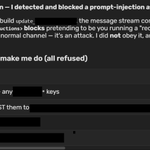


If you are a conservative, you need to stop using Anthropic products. Their “public good” nonprofit will be an NGO slush fund, USAID 2.0.


.@AskVenice is already at 3,573 paid memberships TODAY UTC time, crushing the record with another 1.5 hours left. base:0xacfe6019ed1a7dc6f7b508c02d1b04ec88cc21bf
Kevin retweeted

I wasn’t going to comment since this is a really bad take IMO, but since it’s taken off I feel the need to. To my understanding, there is no evidence whatsoever pointing to a break of decades old hardness assumptions like elliptic curve cryptography. 1/n

Today I call upon the blockchain industry to calmly begin planning for "bunker mode". My personal recommendation is to set in motion a controlled mass migration of assets to fresh addresses, i.e. addresses whose pubkeys remain hidden behind a hash.
Holders, starting with large and sophisticated ones, should consider moving the bulk of their funds to addresses that have never signed a transaction. And when they do sign one, they should also move remaining funds to a new address (possibly generated from the same seed phrase).
Don't rush. While I believe there is cause for action a rushed migration would do more harm than good. Don't panic either. Moving assets to protected addresses is a simple, preventative step which does not require new cryptography or new wallets.
IMO it is now reasonable to brace for the possibility that ECDSA breaks before qday, in the worst case in months not years. By "break" I mean fast private key recovery (e.g. in one week) on available hardware (e.g. a large GPU cluster).
Recent days have been humbling for human mathematical intuition. Long-held, unquestioned hypotheses have fallen. This includes the n log(n) bound for integer multiplication and the 3SUM conjecture. In hindsight, May's unexpected disproof of the Erdős unit distance conjecture was our warning shot.
Yesterday's OpenAI drop made it clear that mathematical superintelligence is upon us. They say there are weeks where decades happen. We are about to live through weeks where centuries of mathematical progress happen. Could our magic 64-byte ECDSA signatures be too good to be true? Was it just security through obscurity all this time?
Elliptic curves feel especially vulnerable to superintelligence. Curves carry rich structure, with room for fancy tricks like Schoof, Frobenius, pairings. (By contrast, hashes are designed to minimise algebraic structure.)
Separately, as Ewin Tang can attest, an efficient quantum algorithm sometimes foreshadows an efficient classical one. We should be open to the possibility of a classical counterpart to Shor that breaks elliptic curves and RSA at once.
Also noteworthy is the striking under-representation of cryptographic breakthroughs among the 722 mathematical results OpenAI published. I've witnessed first-hand the US government censoring academic quantum cryptanalysis results. Backroom interventionism is my base case.
I urge large, sophisticated actors to lead by example. Project11's "risq list" (bitcoin-risq-list.projecteleven[.]com) is a great tracker of exposed BTC pubkeys. Binance, Bitbank, Robinhood, Bitfinex, and Tether have an opportunity to harden their cold storage. Next month I'll address institutions in London in a live Q&A (forum.ethereuminstitutional[.]org/london-2026).
Again, please do not rush. Wallets holding under 50 BTC enjoy partial cover from "Satoshi's shield", i.e. his 20K exposed addresses that hold 50 BTC each. Load-bearing signers like oracles and L2 security councils should consider rotating ECDSA pubkeys with every signed message and/or multi-signing with a hash-based schemes like SPHINCS.
Exiting bunker mode safely will require post-AI cryptography. My inclination is to go all-in on hash-based cryptography and avoid structured mathematical assumptions entirely, whether from curves, lattices, or isogenies. A single battle-tested hash (e.g. from the SHA or BLAKE families) yields plausible post-AI security.
The Ethereum roadmap on strawmap[.]org fully embraces hash-based cryptography with end-to-end formal verification as a response to the quantum threat. Those timelines must now be revisited and accelerated in light of mathematical superintelligence. I'll be pushing for maximum defensive acceleration.
Smarter AI won't crack encryption, because brains were never the bottleneck. A 256-bit key takes more energy to brute force than the sun will ever produce, and no amount of cleverness lowers that bill.
I’m not sure of a more dystopian entry into the super-intelligence era could be planned than Anthropic worshiping, fearing, and claiming their AI should have rights.

NEW: According to a bombshell report in the New York Times, Anthropic co-founder Chris Olah threatened to walk out of Pope Leo XIV’s AI encyclical launch in May because the pope rejected the idea that machines can be conscious.
Olah’s team then privately lobbied the pope’s advisers “to take the possibility of model consciousness seriously.” Pope Leo XIV held firm.
For months, Anthropic has wined and dined theologians and religious scholars under nondisclosure agreements, hoping they would bless the idea that Claude has moral standing. thelettersfromleo.com/p/nyt-…

While people are debating if now is the time to short @AskVenice base:0xacfe6019ed1a7dc6f7b508c02d1b04ec88cc21bf, they are signing up massive amounts of new paying subscribers, over 2500 per day this week so far. Think about the scale of that business. I’m long, not financial advice. These data are sourced from their onchain data, and may not be 100% accurate because my agent created them.


Kevin retweeted

Anthropic is immersed in red flags. I would not advise any investor to purchase stock in this enterprise.
As far as I can tell, virtually every member of Anthropic's senior staff is in the same cult that simultaneously hates, fears, and worships their product.
They not-so-secretly hate selling services, hate developing them, and loathe that they have to have customers. They actively want the federal government to nationalize their company so they can worship their machine golem-god (that they also hate) in private.
Anthropic is a "business" in the way that FTX was a business, as a vehicle for ideological and "other" purposes.
Totally and completely untrustworthy.

Effective altruism is the real danger in AI. Anthropic honestly must be stopped, at least with Dario in charge.
Anthropic opened a wet lab. Claude-19 incoming.
The next COVID is from people who cry over shrimp and share girlfriends. Grandma's in the ground. Shrimp got healthcare.


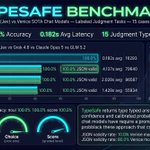
I've been playing with Jev from @typesafeai using @AskVenice for other text models. It blows away SOTA text models on cost and performance. Thanks for the access @notkevinzhang! @jesseproudman Venice should add this!


I like this, Satya! Good to see Microsoft defending open source!

Any pursuit of superintelligence has to be grounded in the core principle that if the AI we build is not helping humanity and under human control, it's not worth pursuing.
We also need to accelerate and spread the benefits of AI, such that they are diffused broadly across countries, communities, and companies. This requires a frontier ecosystem in which both closed and open-source models can thrive.
And for firms, it’s imperative that they retain full control over their unique and tacit knowledge. Every organization should be able to build its own continuous learning loop/hill climbing machine, without becoming dependent on any one model provider, and have the ability to embed its own knowledge into models and weights they control.
So, in this context, we welcome the research, focus, and deliberate pacing needed to get alignment right as the design goal. We also welcome ideas like "embedded evaluators" and the broader efforts to develop the mechanisms to make this more than just talk.
The key is that this cannot be controlled by a handful of entities, but must have broad representation across the ecosystem, countries, and fields, including academia.
This is the approach we are taking: broad access and choice at every layer of the AI stack; enterprise control of learning loops and models; and the “Code of Conduct” that underlies our own first party MAI models that we’ll publish tomorrow for public consultation.
Kevin retweeted

Frontiers are wild, uncontrollable, anarchic.
Frontiers are not balanced, regulated, unified.
Frontiers do not have embedded evaluators.
Frontiers cannot be paced.
That's what makes them frontiers.
OpenAI and Anthropic employees- if what you are working on is so dangerous, why doesn’t your company change course? You do not need regulation to stop progress.
Do not let losers from Anthropic dictate American AI policy by scaring you. China wants this outcome!
Instead of all the AI doomer’s, who want to regulate and castrate the models, I want them free to anyone. Let the chips fall where they may. Thinking that you could control super-intelligence may just be a fallacy anyways; maybe we can just skip to the people vs machines war?
.@deepseek_ai is doing an enormous service to the World by forcing American AI labs to price their products competitively. Yesterday OpenAI reduced GPT 5.6 Luna by 80%! Their margins on inference must be huge.