






I'm not sure this country is going anywhere with these hypocrites.

A FORMAL PETITION TO THE FEDERAL GOVERNMENT OF NIGERIA FOR THE REGULATION, RESTRICTION OR POSSIBLE BAN OF AI-POWERED SMART GLASSES IN SENSITIVE LOCATIONS ACROSS THE COUNTRY
To:
The President and Commander-in-Chief of the Armed Forces, @officialABAT
Federal Republic of Nigeria,
Through the Federal Ministry of Information and National Orientation, the Federal Ministry of Communications, Innovation and Digital Economy, the Federal Ministry of Interior, and relevant national security agencies.
Subject: Urgent Call for Stronger Regulations and Restrictions on AI-Powered Smart Glasses to Protect Privacy, Dignity, Cultural Heritage and National Security
Your Excellency,
I respectfully write to draw the attention of the Federal Government of Nigeria to the growing privacy, security and cultural concerns associated with AI-powered smart glasses, particularly devices equipped with discreet cameras, microphones, audio recording and artificial intelligence capabilities.
Recent public controversy surrounding a foreign tourist’s visit to the palace of the Emir of Daura has brought these concerns into sharper focus. Questions surrounding the recording and circulation of content allegedly connected to that visit have generated public debate about privacy, consent, the dignity of traditional institutions and the protection of sensitive cultural spaces.
Regardless of the outcome of any investigation into that particular incident, it has highlighted an important gap that deserves urgent government attention: the potential misuse of wearable recording technology in places where people reasonably expect privacy and where unauthorised recording could have serious consequences.
WHY THIS MATTER REQUIRES URGENT ATTENTION
AI-powered smart glasses can look like ordinary eyeglasses while carrying cameras and microphones capable of recording people, conversations and surroundings, sometimes without those nearby immediately realising that recording is taking place.
This creates several concerns:
1. Violation of Privacy and Personal Dignity
Individuals may be recorded without their knowledge or consent in private or sensitive environments. Such recordings can subsequently be edited, shared or circulated online, potentially exposing people to embarrassment, harassment, reputational damage or other forms of harm.
2. Threats to National Security
Unauthorised recording around government buildings, military installations, security facilities, the Presidential Villa, critical infrastructure and other protected locations could expose sensitive information. Criminals or individuals with malicious intentions could potentially exploit such technology for surveillance, intelligence gathering or other unlawful activities.
3. Threats to Traditional Institutions and Cultural Heritage
Nigeria’s traditional institutions, palaces, royal residences and cultural gatherings deserve appropriate protection. These places are not ordinary entertainment locations. They represent our history, identity, customs and heritage.
Unauthorised recording in such environments can expose private interactions, create misunderstandings and damage the reputations of respected traditional institutions and individuals.
4. Misinformation, Manipulation and Reputational Damage
Recorded footage can be taken out of context, selectively edited or combined with misleading narratives. As AI technology develops, the possibility of manipulated audio and visual content also creates additional challenges for verifying what is authentic.
False or misleading content can spread rapidly online, damage reputations and create unnecessary tension within communities and across the country.
5. Risks to Women, Children and Vulnerable Individuals


20


Professor as how? Which university Council approved that? Reckless use of titles among Nigerians is cringy and irritating.

FULL TEXT:
PRESS BRIEFING
Fuel Prices and the Subsidy Question
By Professor @taiwoyedele
Honourable Minister of Finance and Coordinating Minister of the Economy
Good afternoon, ladies and gentlemen of the press. Thank you for joining us.
Today we want to speak plainly about the price of fuel. We know what it means for the commuter in Lagos, the farmer in Kano and the trader in Aba. Prices have risen, and Nigerians are feeling it. That concern is legitimate, and this government recognises it.
In recent weeks, there has been debate about proposals to return to fuel subsidy, including one described as a “production subsidy” for local refining. We do not question the motives of those who propose it. We agree on the problem. Where we differ is on the remedy.
So I will do three things this afternoon, with proper context using data and evidence.
First, I will explain what is driving prices. Second, I will clarify why a subsidy would make matters worse. Third, I will set out what the government has done, and what more we are prepared to do, to ease the burden.
1. Elevated fuel prices is caused by a global shock, felt everywhere
The pressure on fuel prices today began far from our shores, in the Gulf, a conflict now in
its eighth month. By mid-September, shipping through the Strait of Hormuz was running at roughly 13 percent of its pre-war level. Brent crude is trading at over 100 dollars a barrel, almost 50 percent higher than before the war.
The squeeze is sharpest in refined products. Diesel exports from the Middle East and Russia are down 75 percent from a year ago. On the other hand, crude tanker rates from West Africa reached record highs in September as the world scrambled for supply outside the
Gulf. Unfortunately, the International Energy Agency expects the pressure on refined products to last for months.
No country has been spared. In the United States, diesel has reached a record 6.50 dollars a gallon, about 73 percent above its pre-war price. In the Philippines, diesel has nearly doubled. Bangladesh is paying close to three times the pre-war price for spot cargoes of gas.
Closer to home, Zambia offers a lesson. Its government suspended fuel duties to hold prices down. When that relief ran out this month, pump prices rose by about 24 percent in a single adjustment. Relief that cannot be sustained does not remove the pain. It postpones it, and then delivers it all at once, often with greater force.
Our own numbers tell the same story. Before the conflict, with crude near 70 dollars a barrel, petrol sold for about 830 naira a litre. Today it averages about 1,400 naira. That increase was caused by a global conflict in which we had no say. Ironically, without the removal of subsidy, the impact would have been far greater.
For Nigeria, the impact of higher crude prices is mixed. It supports the budget and Federation revenue. But production is below forecast, and legacy crude commitments from the subsidy era absorb much of the gain. At the same time, households and businesses face higher fuel, transport and logistics costs, and the burden falls hardest on the most vulnerable.
Yet there is one thing Nigerians have not faced through these months: queues. Fuel has remained available in every state. In a crisis of this kind, availability is the first form of affordability.
1. Why a return to subsidy would raise prices, not lower them
Let me turn to the proposals to bring back fuel subsidies in one form or another. I offer four reasons for caution.
First, the pump price follows the exchange rate. Crude, freight and refining inputs are all priced in dollars. To force the naira price down, the government must in effect subsidise the foreign exchange. That is the multiple exchange rate system that brought the economy close to a collapse before President Bola Ahmed Tinubu’s administration reformed it in 2023.

37


"Working from home." 😄😂

BREAKING: Tinubu Doesn't Need To Be In Abuja To Do His Job - Presidency
dailytrust.com/breaking-tinu…

32
Hmmmm...

My appreciation to the good people of Irepo Local Government for the love, support, and confidence.
-
Kishi is particularly dear to me, being the hometown of my mother. I am proud of this connection and look forward to serving and working with our people towards a better and more prosperous Oyo North.
-
#Ayedero
29


How far?


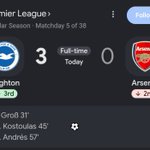
Manchester United fans watch and learn, we will teach you how to beat Brighton with ease
Readers added context they thought people might want to know
Arsenal lost 3-0 to Brighton in the Premier League on 19 September 2026.
espn.com/soccer/story/_…
theguardian.com/football/2026/…
nytimes.com/athletic/75972…
25
Some of you are really dogmatic. What's the correlation between Islam and the justified prosecution? Are you okay?

Let it be clear that we do not support or condone the recent actions taken by @OPay_NG regarding the arrest of @haifah_er_abba (Cute Hafserh). What OPay did is completely wrong and unjustifiable.
A few weeks ago, she mistakenly shared a viral fake graphic about OPay. The moment the organization flagged it, she did the honorable thing: she deleted the post, pinned a public apology, and cleared the air. For OPay to turn around and have her arrested after she fully complied with their request is a massive abuse of power. It shifts the narrative from protecting a brand to corporate oppression.
Legally, Section 39 of the 1999 Constitution of Nigeria protects Freedom of Expression. Turning a corrected mistake into a criminal arrest is completely out of line. While we are deeply disappointed by OPay’s heavy-handed actions, we are still appealing to their management to swallow their pride, accept her initial apology, and release her immediately.
Furthermore, to those celebrating her arrest this goes entirely against Islamic teachings. Islam commands us to show mercy and seek reconciliation, not to rejoice in the distress of others. We stand against this unfair treatment. OPay must do the right thing, fix this mistake, and free Hafserh.


27
If @OPay_NG don't deal with her comprehensively, I will be disappointed.
This quoted post is unavailable.
26
Prof. Awojobi, take your flowers. You were what a thoroughbred academic should be.

Ibrahim Babangida, former military President of Nigeria, on the best critic he knew in Nigeria
He says it was Prof Ayodele Awojobi. He was a scientist, engineer and economist who had the knowledge of everything he said.
Whenever he talks, you'll know he's a master in that subject.
He also didn't have any problem with Gani Fawehinmi.
2
68