

Cardiac Radiologist @ImagingToronto | Clinician Scientist @UHN | Associate Professor and Vice Chair Research @UofTMedIm | Mom | Sustainability & Imaging 🫀🌎🌱
Toronto, Ontario
Joined October 2012
- Tweets3.2K
- Following1.8K
- Followers4.2K
- Likes7.6K





Pinned Tweet
Happy to share our latest research on sustainable radiology hot off the press in @radiology_rsna 🌎🩻
doi.org/10.1148/radiol.24162…
We found that short-term exposures to higher ambient temperature and worse PM2.5 air pollution are associated with increased medical imaging utilization

Special news to share! I’m incredibly honored to be named a candidate for an at-large director position on the @RSNA Board. RSNA has played such an important role in my professional journey, and I’m tremendously grateful for the opportunity to give back!
rsna.org/news/2026/september…

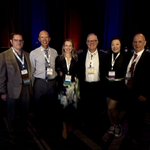
Fantastic @NASCISociety meeting in beautiful Denver! 🏔️ Great science, friends, and an incredible community. Loved our mini @StanfordRadCVI reunion 💫 Congrats to Gold Medal winner @GeoffRubin, Young Investigator winner @Mastrodicasa_MD, and #NASCI26 president @DanielVargasMD! 👏

Kate Hanneman retweeted

Now NASCI 2026 president welcome address, with @DanielVargasMD sharing the advances of cardiovascular imaging and our society! @KateHanneman @ElsieRadiology @prachipagarwal @CardiacRad

Kate Hanneman retweeted

Attention trainees!
You wouldn’t want to miss this opportunity.
The #NASCI26 Cardiac Imaging Bootcamp is live-streamed for free to trainees!
A full day of learning Cardiac CT and MR 🫀
Link to register (under bootcamp):
nasci.org/annual-meeting/reg…
@NASCISociety

Kate Hanneman retweeted

🚨 A new episode of the @radiology_rsna podcast is now available! 🚨 @rnicola04 and @KateHanneman discuss how long-term air pollution exposure may contribute to coronary atherosclerosis and what cardiac CT reveals about cardiovascular risk. bit.ly/4vYv1WW

Kate Hanneman retweeted

🎙️ How much can the air we breathe affect heart health?
@rnicola04 and @KateHanneman discuss the link between long-term air pollution exposure and coronary atherosclerosis, and what cardiac CT can reveal about cardiovascular risk. 👇

🚨 A new episode of the @radiology_rsna podcast is now available! 🚨 @rnicola04 and @KateHanneman discuss how long-term air pollution exposure may contribute to coronary atherosclerosis and what cardiac CT reveals about cardiovascular risk. bit.ly/4vYv1WW
Toronto’s air quality is currently among the worst in the world due to wildfire smoke.
Air pollution isn’t just a respiratory issue. It also affects the heart. Children and older adults are at increased risk.
On days like today, limit outdoor activity and keep windows closed.


Wildfire smoke is affecting air quality across Toronto. People with heart or lung conditions, older adults and young children may be more affected.
If you experience severe symptoms or trouble breathing, seek medical attention.
Check current conditions: bit.ly/4w87svW

Wonderful trip to San Diego for #SCCT2026 ☀️ A highlight was “Cardiac CT at a Crossroads,” exploring how access, equity, patient experience, workforce well-being, sustainability, and global collaboration will shape the field. Great science, discussion, and community! @Heart_SCCT


Kate Hanneman retweeted

Best part of #SCCT2026 --> spending time with friends and colleagues, especially those who I have been fortunate to train and mentor @BWHCVImaging

Passion for #yesCCT, outstanding care for patients & paradigm-changing research, all with humility & grace: no amount of gratitude can describe how indebted countless fellows feel for the inspirational mentor extraordinaire @RonBlankstein - TY #SCCT2026 for the priceless moments!


Kate Hanneman retweeted

“Burnout is not a personal failure,” says @ChinnaiyanMD at #SCCT2026. The more we try to hide it, the more pervasive it becomes and the less likely systems are to change. Burnout is not a wellness problem, but a “workforce problem,” she adds.

Kate Hanneman retweeted
Up to 50% of imaging programs in the US leave scanners on overnight in a ready-to-scan mode. By focusing on powering down, the field can have a significantly lower environmental footprint, argues @KateHanneman at #SCCT2026


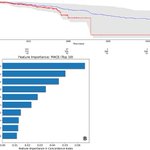
In patients with HCM, can machine learning plus cardiac #MRI tell us not just who is at risk, but what kind of risk? We tested exactly that in 604 patients. New publication hot off the press @RadiologyCTI @RSNA @HayleyAMcKee
📄pubs.rsna.org/doi/10.1148/ry…

A machine learning model trained on 33 variables (clinical, genetic, and imaging) in 604 HCM patients performed comparably to the ESC risk score (C-index 0.75). #WhyCMR features were key predictors, including apical aneurysm, LV volumes, extensive LGE and T1 mapping ⬇️

Different outcomes (MACE, NSVT, and AF) had distinct top predictors, emphasizing phenotype-specific risk and the value of #WhyCMR in #HCM risk stratification.
With thanks to @HunainShiwani for the thoughtful accompanying editorial 📄 pubs.rsna.org/doi/10.1148/ry…
Grateful to participate in the first @SiemensHealth Clinical Summit in Munich and present alongside Amira Romani on sustainable imaging and planetary health in a keynote on innovation driven by purpose 🌎
@MengLaw1 @ReedOmary @imagingtoronto @UofTMedIm – at Munich, Bavaria

Kate Hanneman retweeted

Chronic air pollution exposure (even moderate) and more advanced coronary artery disease
pubs.rsna.org/doi/10.1148/ra…


Happy to share our latest study in @radiology_rsna! In 11,128 adults with #yesCCT, long-term air pollution was linked to more coronary calcium, plaque & obstructive disease, even at exposures below national air quality standards. #radiology #cardiacCT
🔗 pubs.rsna.org/doi/10.1148/ra…

Huge thanks to wonderful coauthors Felipe Castillo, Aly Ladak, @chloedesroche, Scott Delaney, Rathel Nethery, @dineshpmcc1 @hearthealthydoc & the @RSNA R&E Foundation for supporting this work through an Emerging Issues Grant! pubs.rsna.org/doi/10.1148/ra…

🌍 New @CanRadJournal publication: a global bibliometric analysis of environmental #sustainability in #radiology! Acceleration is remarkable with over half published in the last two years. Huge thanks to wonderful coauthors @Mazzi771 & Michael Patlas 🙏
🔗 journals.sagepub.com/doi/10.…

Kate Hanneman retweeted

Landmark #whyCMR paper on HCM
From @JAMA_current
Among patients with #hypertrophic #cardiomyopathy followed for nearly 7 years, key predictors of adverse outcomes included
1. late gadolinium enhancement (LGE) percentage on #whyCMR,
2. left ventricular (LV) mass index,
3. LV end-systolic volume index,
4. history of heart failure, and
5. log(N-terminal pro–B-type natriuretic peptide [NT-proBNP]).
LGE ≥9% of LV mass was associated with substantially increased risk for the composite of hypertrophic cardiomyopathy–related deaths, ventricular arrhythmias, and transplant or LV assist device implant.
These findings provide prospective evidence for integrating #whyCMR and blood biomarkers in risk assessment for hypertrophic cardiomyopathy. #HCM
ja.ma/3Rd42s3
Congratulations Dr. @ChrisKramerMD and others from HCM registry on this terrific paper.
