

Associate Professor of Pharmacology, University of Vermont College of Medicine We study how the histone code is read and what the words mean. #epigenetics
Burlington, VT
Joined September 2017
- Tweets1.5K
- Following966
- Followers706
- Likes7K




Karen C. Glass, PhD retweeted

In Science, researchers present RFdiffusion3, a new generative AI system that designs proteins and nucleic acids atom by atom, which could enable the ability to engineer novel biomolecules with precise, complex functions.
Learn more: scim.ag/4hOQVIF

Karen C. Glass, PhD retweeted

💎📦 The @USCrystalComp crew is at it again!
This time at @UCFChemistry , where Fernando @fjuriberomo and grad student Abdullah have been busy packing alum for our #2026USCGC crystal growers! 🧪
It takes a village to grow a crystal… and apparently a LOT of packing tape! 😂


Karen C. Glass, PhD retweeted

Nucleosome Core Allostery Governs Chromatin Recognition and Cell Fate biorxiv.org/content/10.64898…

Karen C. Glass, PhD retweeted

“When you start looking at the brain at high resolution, you see that it’s almost galactic in its complexity. And somehow it all works together to achieve a unified function.” — Davi Bock, Ph.D.
Watch the full video: bit.ly/4iRVpiD
#UVM #UVMLarnerMed

Karen C. Glass, PhD retweeted
Structural principles underlying the evolution of SWI/SNF chromatin remodelers science.org/doi/10.1126/scia…

The blueprint for life, neatly folded asbmb.org/asbmb-today/scienc…


I was honored to present our work in the "Protein-nucleic acid interactions in essential cellular functions" session today at #IUCr2026. It was fun to share our story about how learning cryo-electron microscopy has enabled us to gain new insights into the function of human ATAD2B

I'm out in Calgary for the @IUCr2026, and visited with my friends and collaborators at the University of Lethbridge. Thanks to Dr. Demeler and Dr. Patel for hosting me! Their new science building is impressive and comes with a cool periodic table of elements.

Another fun place in the new Science Commons building is the Agility Innovation Zone, a 'maker space' where everyone can access tools put their ideas into action.

But what I loved most about this building is that they have a full-time and dedicated space for community STEM education. Destination Exploration hosts and educates K-12 students right on the college campus! Year round! ulethbridge.ca/destination-e…. @uLethbridge
Karen C. Glass, PhD retweeted

Today in @Nature we report how AI-guided redesign enhances protein evolution. Integrating ProteinMPNN sequence design with autonomous laboratory evolution, we establish a workflow to engineer enzymes with improved properties over those evolved from natural proteins. Redesigned starting points consistently evolve an expanded fitness landscape, reaching new function with higher activity, specificity, and stability than their natural counterparts.
drive.google.com/file/d/1C-Q…
1/14

Karen C. Glass, PhD retweeted

The next #CryoEM Current Practices Webinar speaker will be @Jen_Cash_11 from UCSD speaking on "Cryo-EM single-particle analysis of small and dynamic proteins" 7/30/2026 at 12 PM ET / 9AM PT
Registration is at no-cost, but sign-up is required:
us02web.zoom.us/webinar/regi…

Vermont summers are short but sweet! The Glass Lab is making the most of it by soaking up some sunshine at The Spot on the Dock. Also, someone may have sketched cryo-EM plans on a napkin. Stay tuned. ☀️🌊 #GlassLab #UVM #VermontSummer #LabLife


Karen C. Glass, PhD retweeted

Honored to have the support of @pewtrusts —thrilled to join such an amazing group of scientists.

Rockefeller's @Steve_Bonilla has been named a 2026 scholar by @pewtrusts! Steve is recognized for his work investigating how RNA molecules fold into three-dimensional structures to drive complex biological processes.
Congratulations!

Karen C. Glass, PhD retweeted

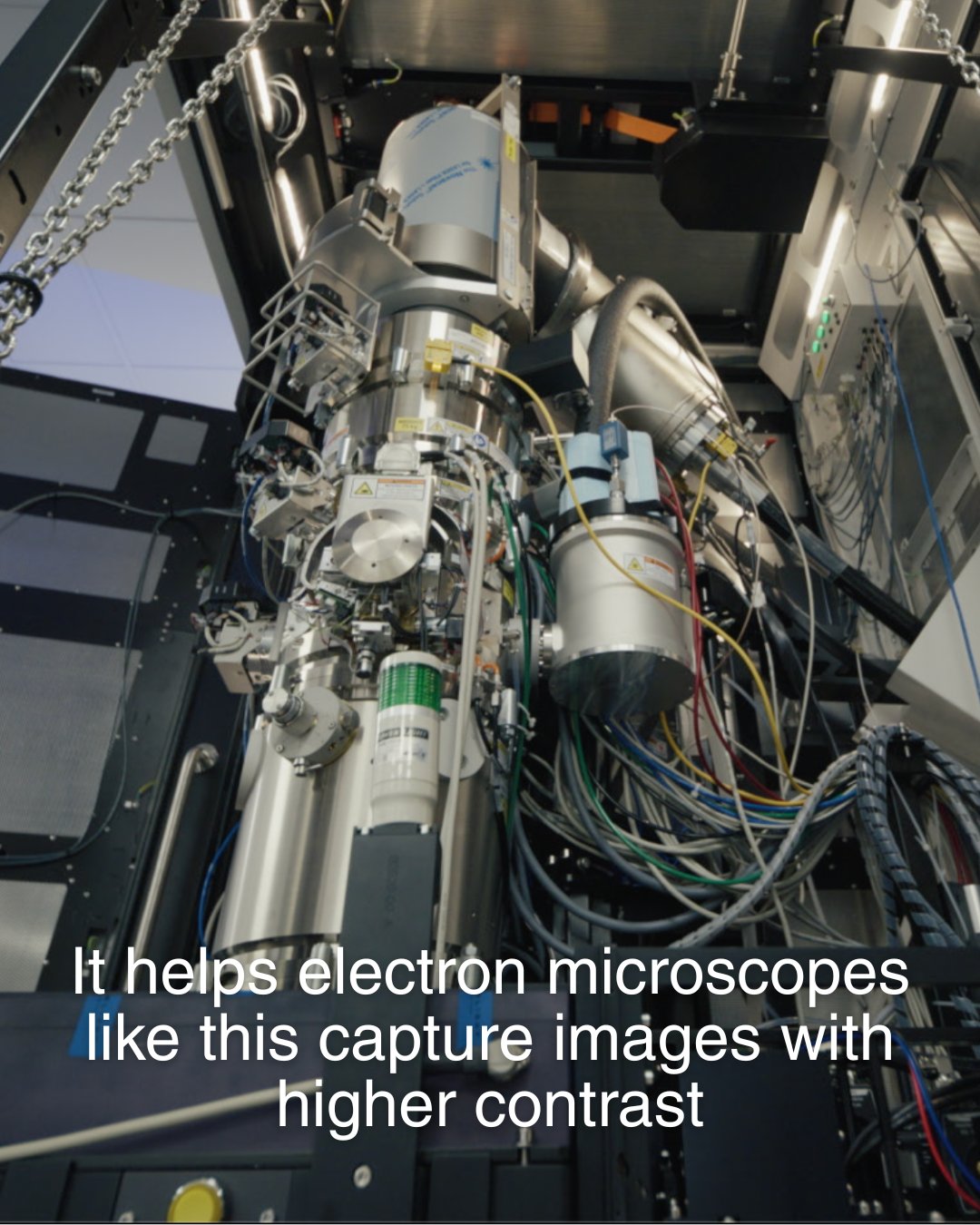
The laser phase plate is leveling up cryoEM so we can see biology like never before. Learn more: bit.ly/4vIPC1U



Karen C. Glass, PhD retweeted

Together with UC Berkeley we are announcing the laser phase plate - a breakthrough in atomic resolution imaging. This is the brightest continuous wave laser in the world, 100 million times the intensity of the surface of the sun.
Phase contrast plays an important role in microscopy, but it was thought close to impossible for electron microscopy, where it would require interfering with an electron beam. Holger Mueller and Robert Glaeser proposed exactly this using a standing wave laser. It has taken over 15 years to make this a reality. Biohub partnered with UC Berkeley and Mueller to support this work and to engineer and build the technology.
Contrast has been the critical barrier to achieving atomic resolution imaging of the cell. In cryo-electron tomography, a cellular imaging technology that uses electron microscopy, the low contrast makes it impossible to resolve anything but the largest proteins within their cellular context. The laser phase plate removes that barrier.
With advances in AI this breakthrough in contrast will start to open up a new frontier in structural biology, that will allow us to see the molecular machines of the cell, and how they assemble into far more complex and dynamic systems, and understand how they work.