

Working at the intersection of art and neuroscience. Exploring sleep, memory, and perception. Represented by Waterstone Gallery Active on IG & BSk
🌌
Joined September 2010
- Tweets3.7K
- Following375
- Followers2K
- Likes9.3K





Pinned Tweet
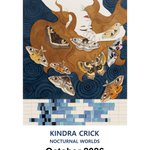
Nocturnal Worlds, my show at Waterstone Gallery, opens Oct 1
For >year, I’ve recorded my brainwaves while asleep & kept a sleep diary
I transformed nighttime data of deep sleep, dreams & insomnia into paintings and prints to explore the mysterious inner world of sleep.
#sciart

Nobel Prize winner, Karl Deisseroth, said he was inspired by Francis Crick’s original call for precision targeting of neurons in a Scientific American called "Thinking about the Brain" and kept a copy of the original 1979 issue on his desk.
stanfordmag.org/contents/new…


Today's Nobel Prize in Physiology or Medicine began with a question about pond algae.
Peter Hegemann and Georg Nagel wanted to understand how Chlamydomonas, a single-celled green alga, swims toward light. The answer was channelrhodopsin, a protein that opens a tiny channel when struck by blue light. Karl Deisseroth then placed that protein into brain cells, giving scientists a way to switch specific neurons on and off with a flash of light.
The result is optogenetics, a tool that has transformed how researchers map the brain and study which circuits drive behavior and disease. It is also opening new paths toward treatment, including early work on restoring vision.
Decades ago, Nobel Laureate Francis Crick, a longtime member of Salk's faculty, imagined exactly this. He proposed that the ideal way to turn neurons on and off would be light, while admitting the idea seemed "rather far-fetched." Today, that far-fetched idea earned a Nobel Prize.
No one studying algae set out to change neuroscience, but that’s the power of foundational science. A curious question about how life works can become the basis for tools and therapies no one could have predicted. It's why Salk scientists, from plant biologists to neuroscientists, keep reaching across disciplines to ask those questions.
Congratulations to Karl Deisseroth, Peter Hegemann, and Georg Nagel!
#NobelPrize #Optogenetics #FoundationalScience #Neuroscience #PlantBiology

Kindra Crick 🧩🧠🧬 retweeted

En memoria de Cajal por Kindra Crick santiagoramonycajal.org/2024… a través de @joseadserias


Kindra Crick 🧩🧠🧬 retweeted

Open science is not just for researchers. Artist @k_crick created these beautiful neuron portraits with inspiration from Ramón y Cajal's drawings and reference images from our Cell Types Database.
Explore our open brain cell datasets: portal.brain-map.org/cell-ty…
#OpenScienceWeek


“Ring out, wild bells, to the wild sky, the flying cloud, the frosty light, the year is dying in the night
- ring out, wild bells, and let him die.
Ring out the old, ring in the new, ring, happy bells, across the snow, the year is going
- let him go...”
~ Alfred Lord Tennyson
Health data from millions of Americans shows that people on western edges of a timezone ( later sunrise) get less sleep every night than people on the eastern edges, and have significantly higher rates of obesity, diabetes, and heart attacks 📈👇
sciencedirect.com/science/ar…

Russia tried what we have, then permanent DST from 2011-2014 and then because of poor adolescent mental health
( especially in northern latitudes) and an increase in car accidents they moved to permanent Standard Time in 2014
Standard is healthiest!👇
researchgate.net/publication…

Ramaswamy & @elonmusk are considering ending #DaylightSavingTime w/
@DOGE
Question is, will they choose the healthier Permanent Standard Time option that Arizona & Hawaii have been on for decades.
Or, recreate the failed Permanent Daylight Saving disaster the US tried in 1974?

BREAKING🚨: Musk, Ramaswamy considering ending daylight savings time as a part of the @DOGE program
Mexico has switched to Permanent Standard Time.
Russia tried permanent DST from 2011-2014 and then because of poor adolescent mental health ( especially in northern latitudes) and an increase in car accidents they moved to #permanentStandardTime in 2014.
Health data from millions of Americans shows that people on western edges of a timezone ( later sunrise) get on average 19 min less sleep every night than people on the east, and have significantly higher rates of obesity, diabetes, and heart attacks 📈
sciencedirect.com/science/ar…
Kindra Crick 🧩🧠🧬 retweeted

Not only should the clock change be abolished, but Permanent Standard Time should be adopted for its alignment with our circadian biology and relevance to health and safety. Read NSF's Position Statement on Permanent Standard Time published in 2021. thensf.org/wp-content/upload…

We agree that daylight saving time should end. Let’s talk about the benefits of natural permanent Standard Time and make it happen! #DitchDST @elonmusk @VivekGRamaswamy @RobertKennedyJr @DOGE
Kindra Crick 🧩🧠🧬 retweeted
The idea of limiting morning sunlight exposure by permanent daylight savings is terrible. A macaque monkey could look at the (vast) scientific literature on this & understand that our mental & physical health benefits from more morning & daytime (sun)light & less light at night.
Kindra Crick 🧩🧠🧬 retweeted
Excerpt from the Huberman Lab podcast with Dr. @SamerHattar, Chief of the Section on Light and Circadian Rhythms at the National Institute of Mental Health (@NIMHgov), discussing the adverse effects of daylight saving time.
Kindra Crick 🧩🧠🧬 retweeted

Happy Election Day! Remember to vote like our future depends on it. Oh wait, it actually does! 🇺🇸
Kindra Crick 🧩🧠🧬 retweeted

Lack of daylight and bright light at night is associated with a higher risk for metabolic- and heart disease @PNASNews @circadian247 @CircadianClocks
pnas.org/doi/10.1073/pnas.24…

Kindra Crick 🧩🧠🧬 retweeted
The humble fruit fly has a surprisingly complex brain. After a decade of work, all 139,255 neurons have been mapped. 🪰✅
The ~300 person international team was led by @princeton and incl. #ElectronMicroscopy experts from @AllenInstitute.
🔗 princeton.edu/news/2024/10/0…
#studyBRAIN

Kindra Crick 🧩🧠🧬 retweeted
Direct quote: “The early morning transition from dim to bright light suppressed melatonin secretion, induced an immediate, greater than 50% elevation of cortisol levels, and limited the deterioration of alertness normally associated with overnight sleep deprivation. No effect was detected on TSH profiles. Afternoon exposure to bright light did not have any effect on either hormonal or behavioral parameters. The data unambiguously demonstrate an effect of light on the corticotropic axis that is dependent on time of day.” pubmed.ncbi.nlm.nih.gov/1123…
Thrilled to catch Northern Lights looking across the Columbia River Gorge in Oregon.
#auroraborealis


Kindra Crick 🧩🧠🧬 retweeted

Day 30 of great biology papers. 🎆The final day.🎆
"General Nature of the Genetic Code for Proteins," by F. Crick, S. Brenner, L. Barnett & R.J. Watts-Tobin (1961).
This paper is, in my opinion, the most impressive in the history of molecular biology. Here's why...
****
When the structure of DNA was solved in 1953, molecular biology was a relatively barren landscape. By that, I mean that messenger RNA had not yet been discovered, nobody was quite sure whether there was any link between DNA and proteins, and there were zero technologies to isolate a gene, let alone sequence one.
And yet, just 8 years after that seminal paper, these four scientists used a simple experiment — and fragmentary evidence — to correctly determine that...
1. Each amino acid in a protein is encoded by a triplet code...
2. The letters in this code do not overlap (e.g. AUGACC is read by the ribosome as 'AUG' and 'ACC,' rather than 'AUG,' 'UGA,' 'GAC' etc.)...
3. There is a start codon.
Again, they discovered all of these things in the absence of tools to sequence DNA, or to compare a DNA sequence with a protein's amino acids. But before I tell you how they did it, I want to set the scene.
The year 1961 was, essentially, the annus mirabilis for molecular biology:
- In May, two separate groups reported that they had isolated and proved the existence of messenger RNA, and they postulated that it probably carried information from DNA to proteins.
- Jacob and Monod argued that there are two types of genes: Those that encode proteins, and others that regulate gene expression.
- Marshall Nirenberg showed that a chain of RNA containing the letters "UUUUUUUUUUUU" encoded a protein filled with phenylalanine amino acids, thus demonstrating a profound, initial insight into the genetic code.
(See the excellent review by Matthew Cobb: onlinelibrary.wiley.com/doi/…)
With these prior experiments in mind, Brenner, Barnett, Crick, and Watts-Tobin set out to understand how, exactly, the genetic code works.
Their experiments began with a bacteriophage that infects bacteria, called T4. When these bacteriophage are doused with mutagens, and their genetic material is altered, they sometimes lose their ability to infect bacteria.
Now, there is also a dye, called acridine, that causes single nucleotides to be added or deleted from a piece of DNA. This is quite important, because most other mutagens just randomly change sections of DNA. But acridine always adds or removes just one nucleotide.
So Crick put these two things together and had a brilliant idea. He took a T4 bacteriophage, exposed it to acridine, and found that it had lost its ability to infect E. coli. This strain was called FC0 — Francis Crick Zero. But then, he (and the others) used acridine to add or remove more letters in the bacteriophage DNA until it regained its ability to infect bacteria.
If they added one base and then removed one base, the phage infected the bacteria.
If they added two bases, the phage did not infect bacteria.
If they added three bases, the phage infected bacteria.
From these observations, they argued that the genetic code must use triplets to encode each amino acid. It was a brilliant takeaway, based on partial experimental evidence. From the paper:
"The simplest postulate to make is that the shift of the reading frame produces some triplets the reading of which is ‘unacceptable’; for example, they may be ‘nonsense’, or stand for ‘end the chain’, or be unacceptable in some other way to the complications of protein structure."
Even though the "combination of mutations strongly suggested that the code was based on units of three bases, the experiments could not prove that to be the case – a code using groups of six bases was consistent with the results," writes Cobb in his review.
"This, however, would raise all sorts of problems by massively increasing the number of either meaningless or degenerate sequences (there would be 4096 possible combinations of bases, rather than a mere 64). As Crick later put it, this was 'hardly likely to be taken seriously.'"
In his classic book on the history of molecular biology, The Eighth Day of Creation, Horace Judson called this experiment, "a classic of intellectual clarity, precision and rigour." And I agree.
Thanks for reading this series!
Paper: nature.com/articles/1921227a…
Full text: labs.bio.unc.edu/Goldstein/1…

ALT Leslie Barnett, Francis Crick and Sydney at the MRC. (© MRC LMB.)

Kindra Crick 🧩🧠🧬 retweeted

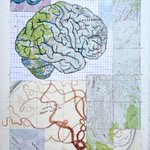
Amazing🧠#SciArt from @K_Crick 👏
Congratulations to Dr. Gelareh Zadeh @gelarehzadeh on receiving the prestigious 2023 Canada Gairdner Award for her ground-breaking #research on #BrainTumours!🎉

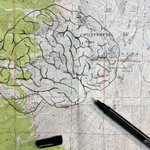
Excited to share a time-lapse of the mixed-media work created in collaboration with @GairdnerAwards to celebrate Dr. Gelareh Zadeh (@gelarehzadeh) for advancing our molecular and genomic understanding of brain tumors and for her 2023 Gairdner Award! 🌟🧵
#SciArt #Cancer